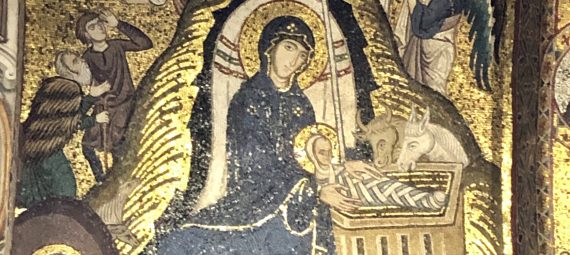
Stepping into the Church of Santa Maria dell’Ammiraglio, better known as La Martorana, is like entering a glittering world of medieval splendour. Located in the heart of Palermo’s Piazza Bellini, the church contains some of the finest Byzantine mosaics in Italy, their gold backgrounds still glowing nearly nine centuries after they were created.
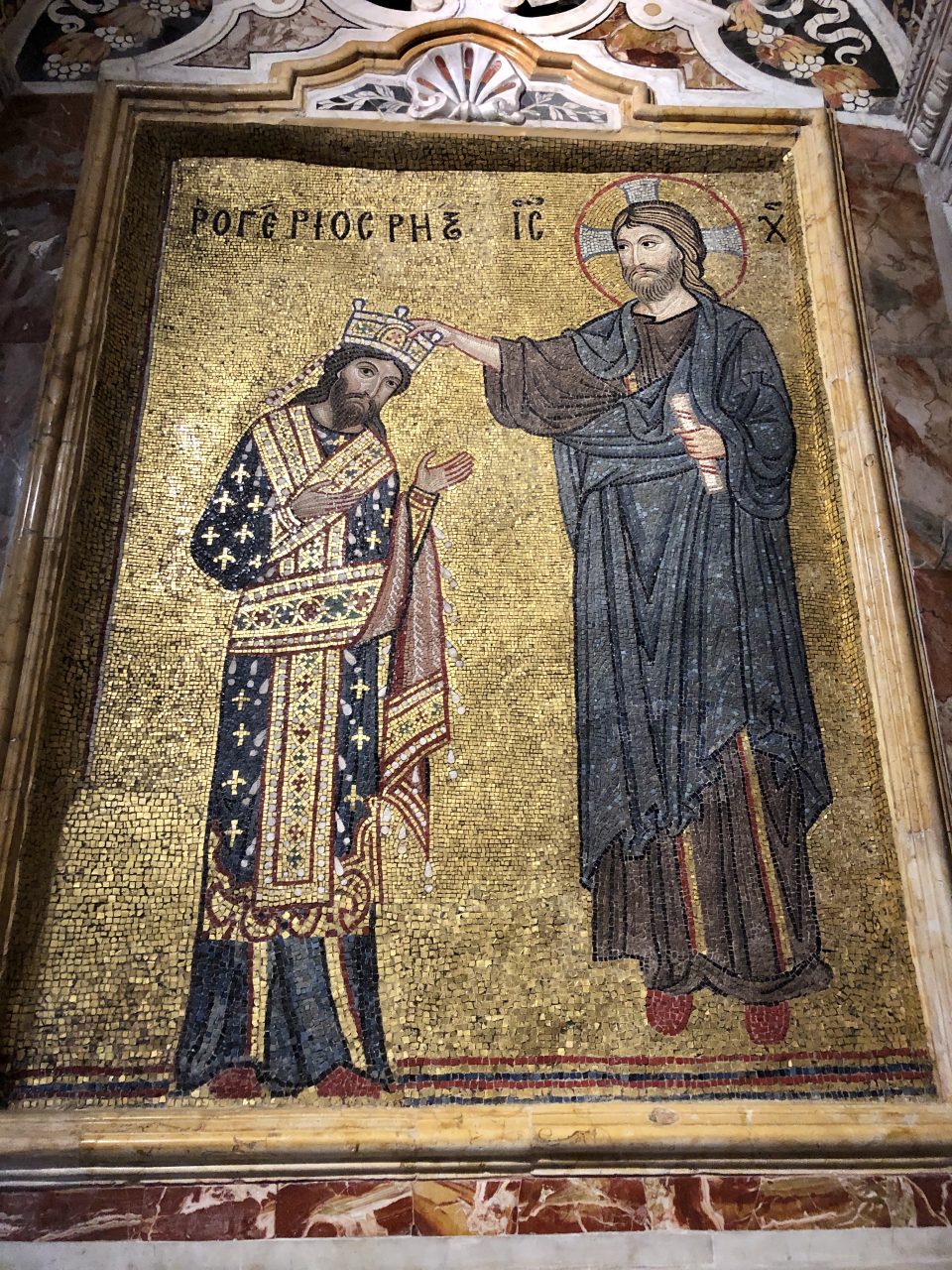
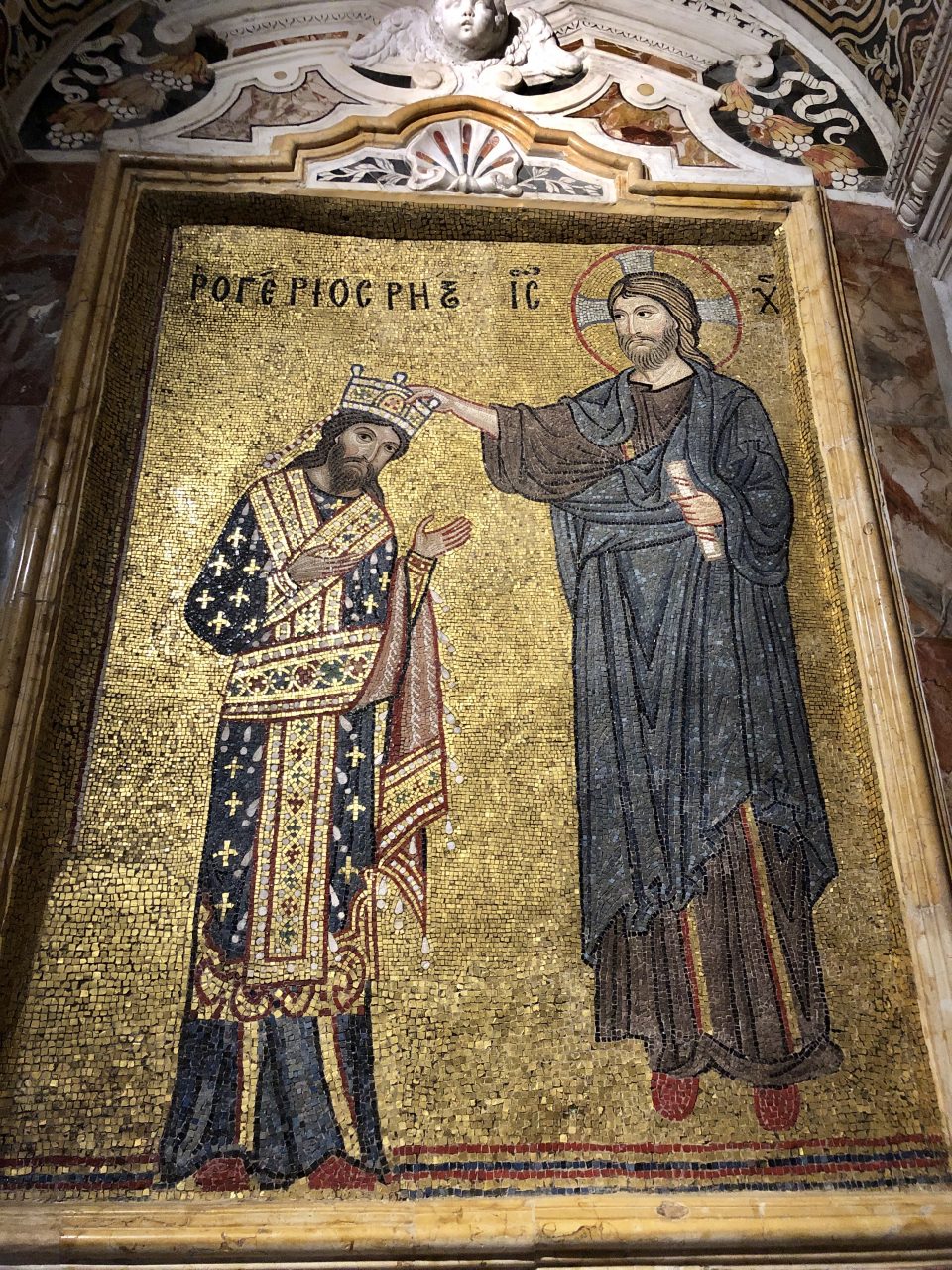
Among the church’s treasures are its famous royal mosaics, unique survivals from Norman Sicily. One panel shows King Roger II clothed in imperial Byzantine robes while Christ Himself places the crown upon his head. The image breaks with Western traditions of royal coronation and aligns instead with Byzantine imperial ideology. The gold tesserae surrounding the figures transform the political message into a vision of sacred kingship, underscoring Roger’s ambition to present himself as a ruler equal to the emperors of Constantinople.
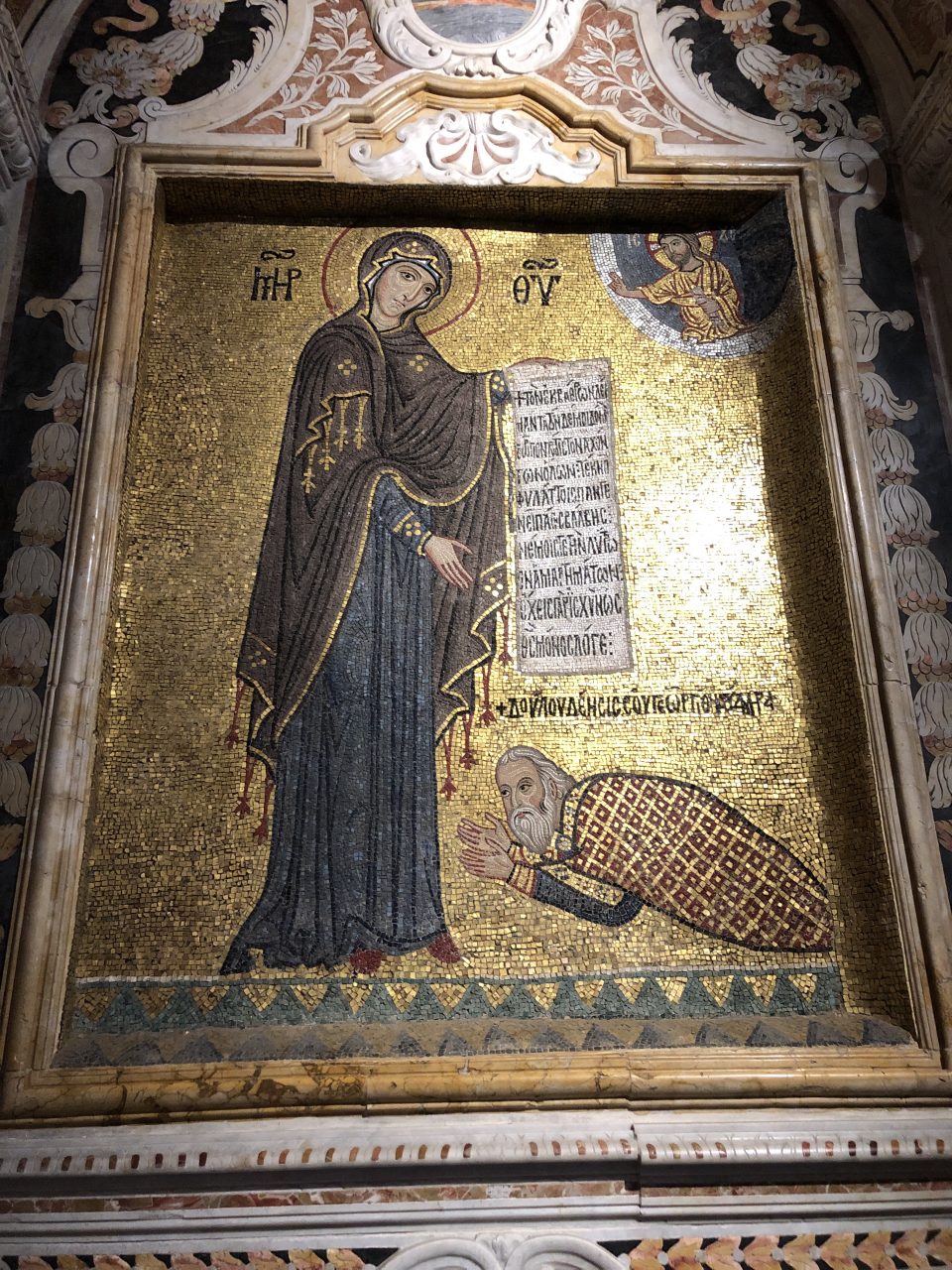
Nearby is perhaps the most personal mosaic in the church: the portrait of George of Antioch, the admiral who founded La Martorana. He is shown kneeling at the feet of the Virgin Mary, who gently receives him beneath her protective mantle. The composition is notable not only for its artistic quality but also for its humanity. Unlike many medieval donors who appear stiff and formal, George seems genuinely devout, offering himself to the Virgin’s protection.
The technical skill displayed throughout the church is extraordinary. Tiny cubes of glass, stone, and gold leaf were set at slightly different angles so that light would flicker across the surfaces throughout the day.
As the sun moves, the mosaics seem almost animated, with halos, robes, and architectural details shimmering in constantly changing patterns. This interplay of light was a hallmark of Byzantine art, designed to suggest the radiance of the heavenly kingdom.
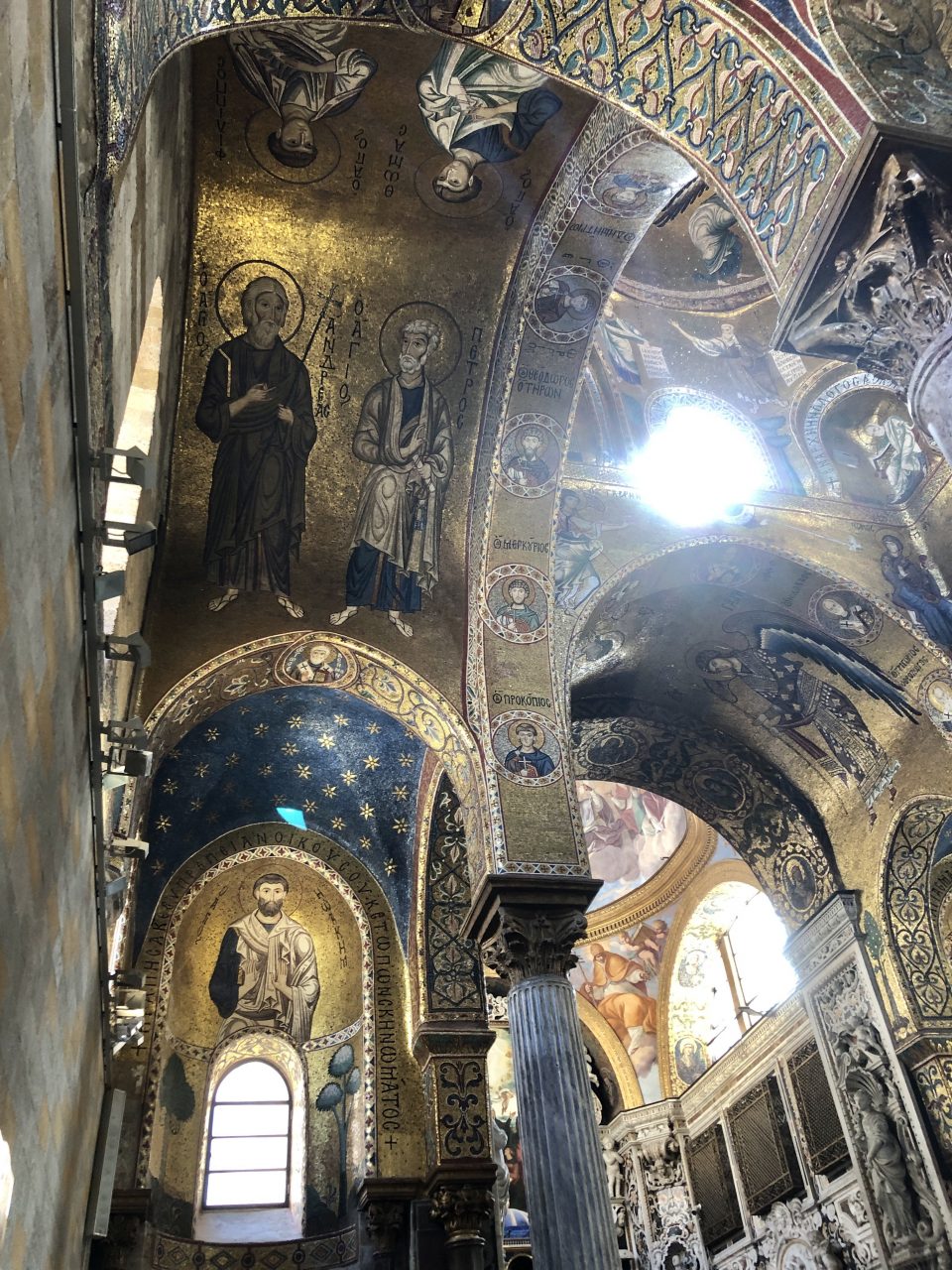
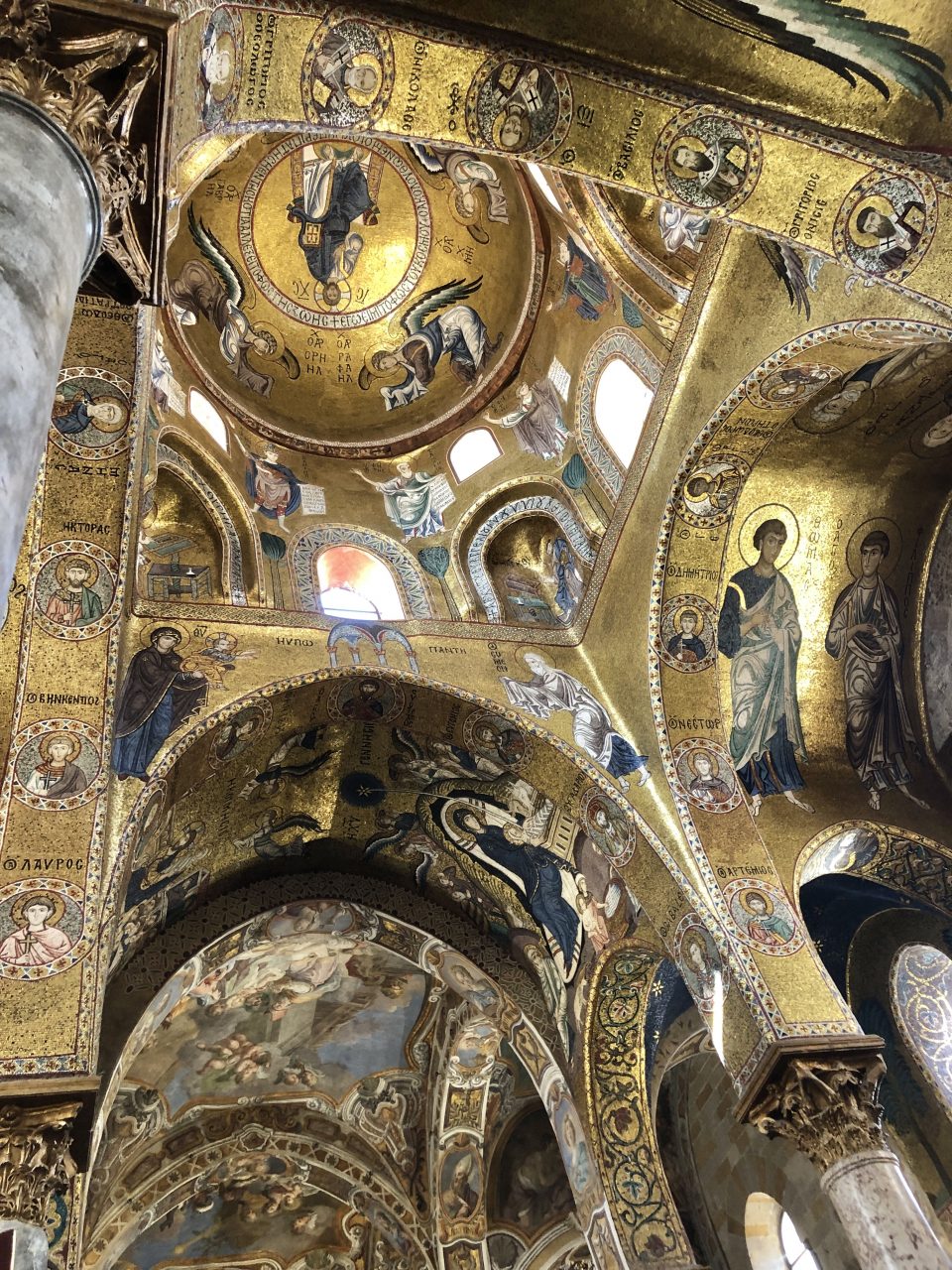
The true glory of La Martorana lies not in its architecture alone, but in the extraordinary mosaic cycle that covers much of its original Norman interior. Created between the 1140s and 1150s by Byzantine craftsmen, these mosaics rank among the most important examples of medieval art in the Mediterranean.
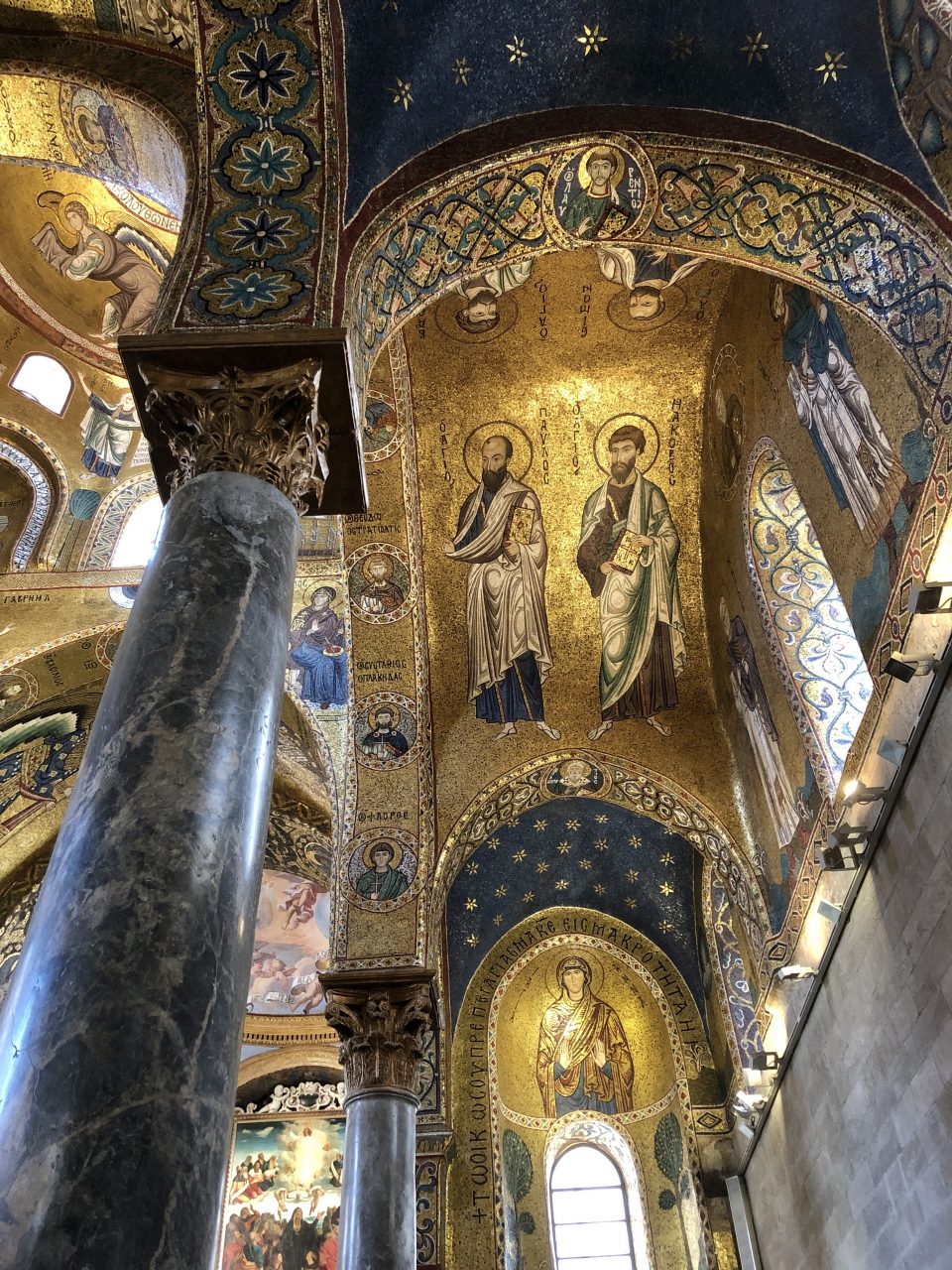
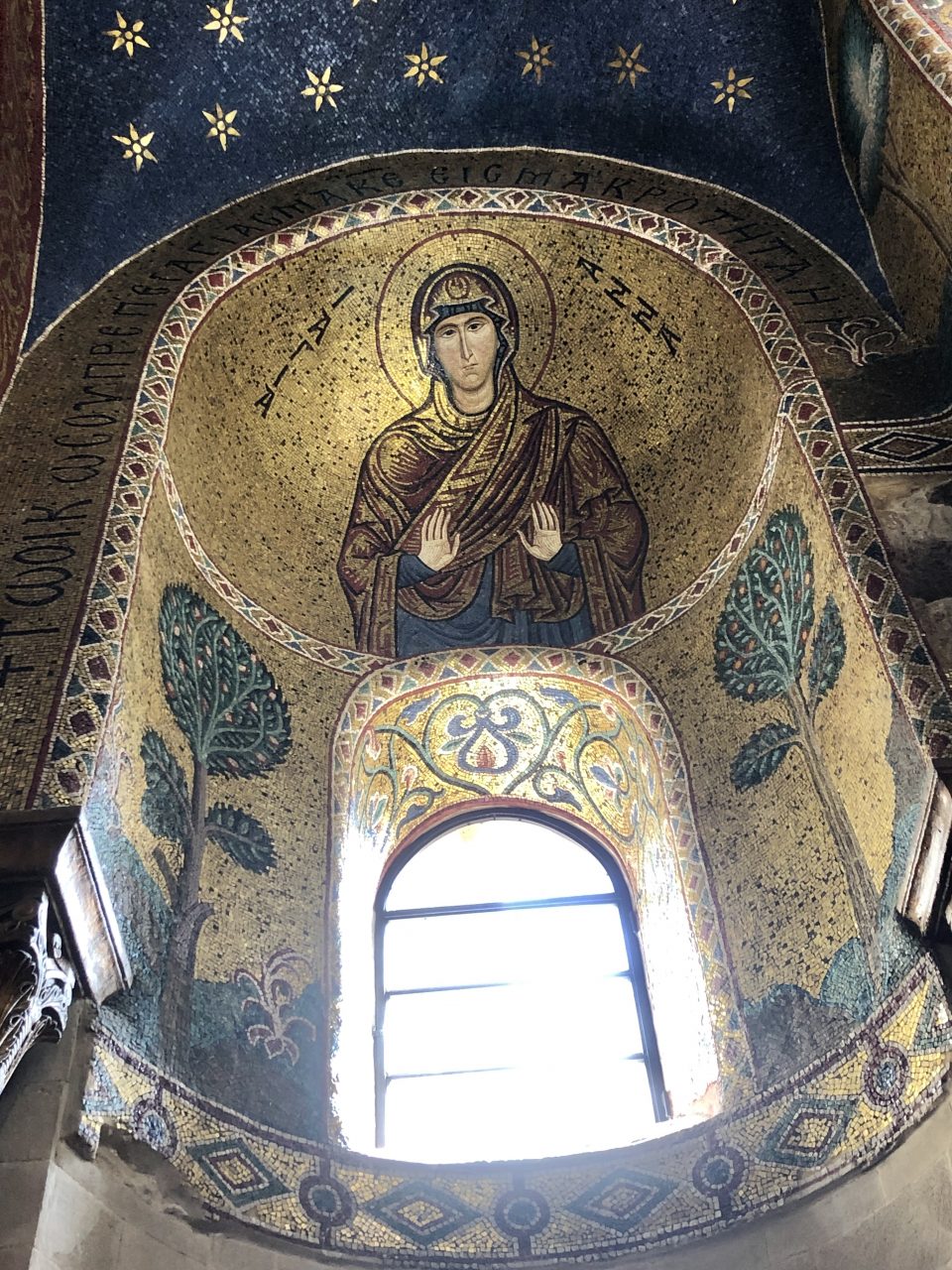
Their brilliance is not merely a result of the gold tesserae that cover vast areas of the walls and domes; it stems from the sophistication of their iconography, their technical excellence, and their remarkable state of preservation.
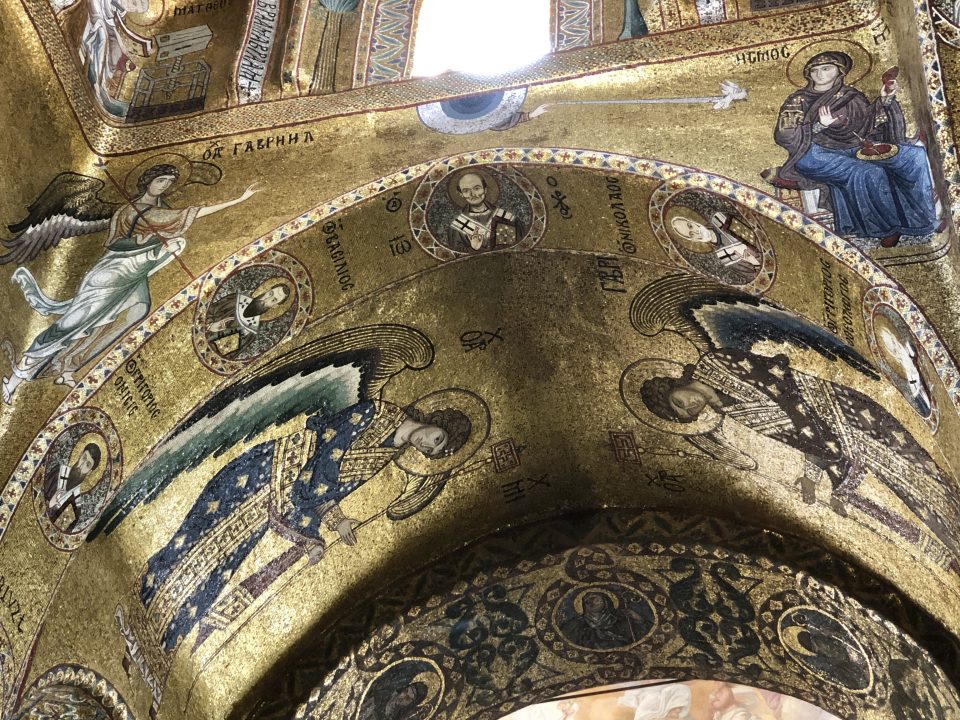
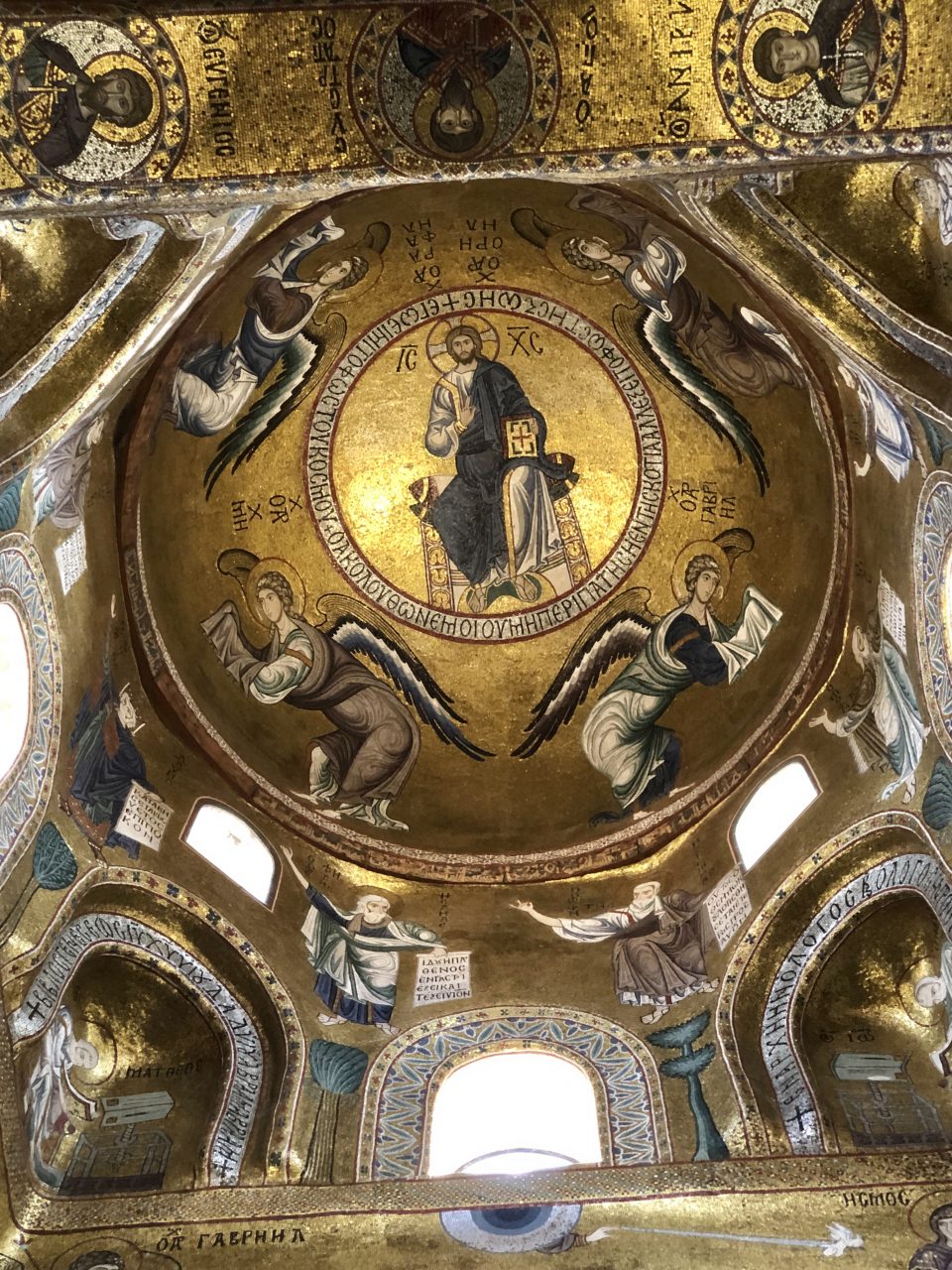
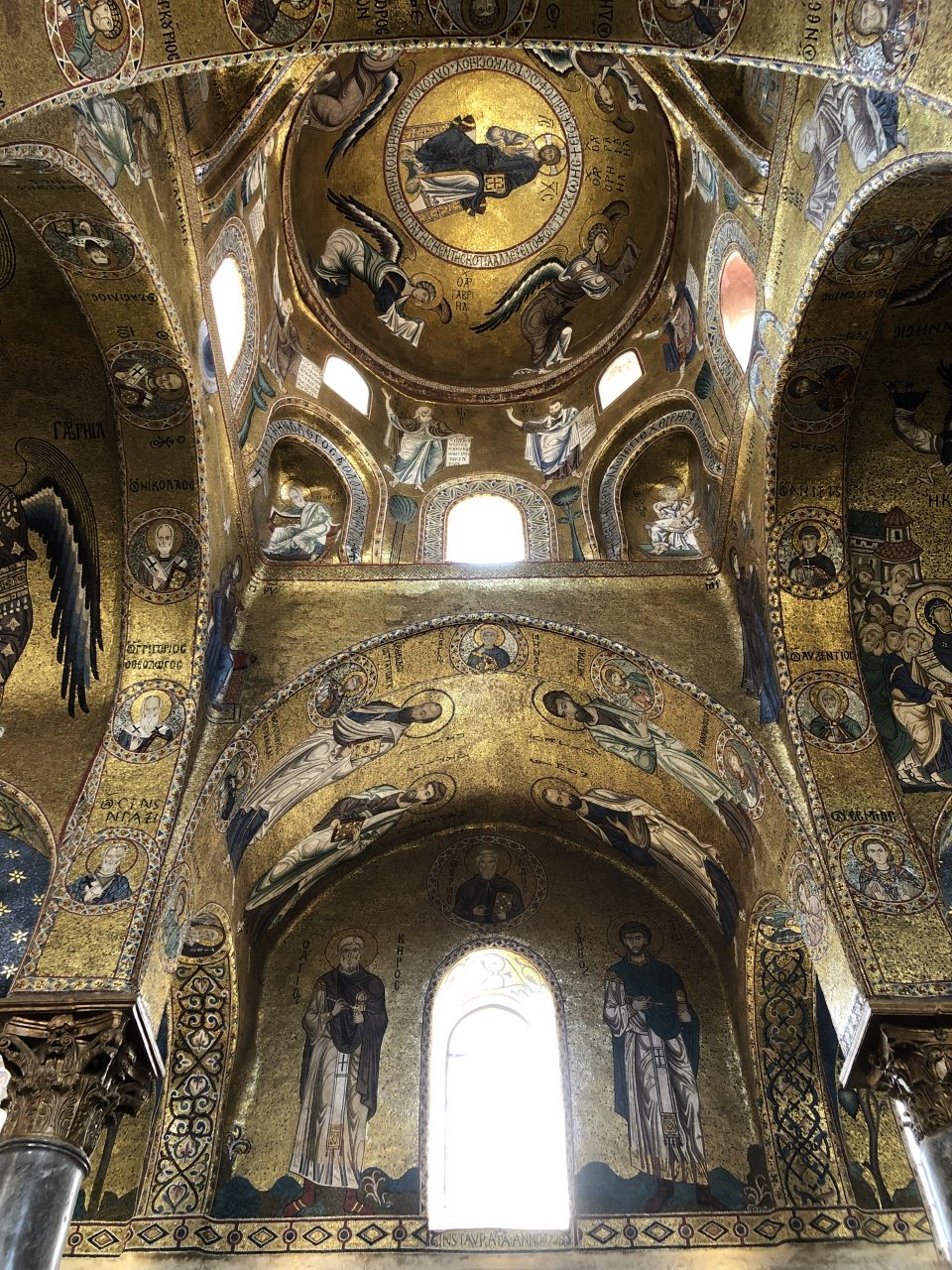
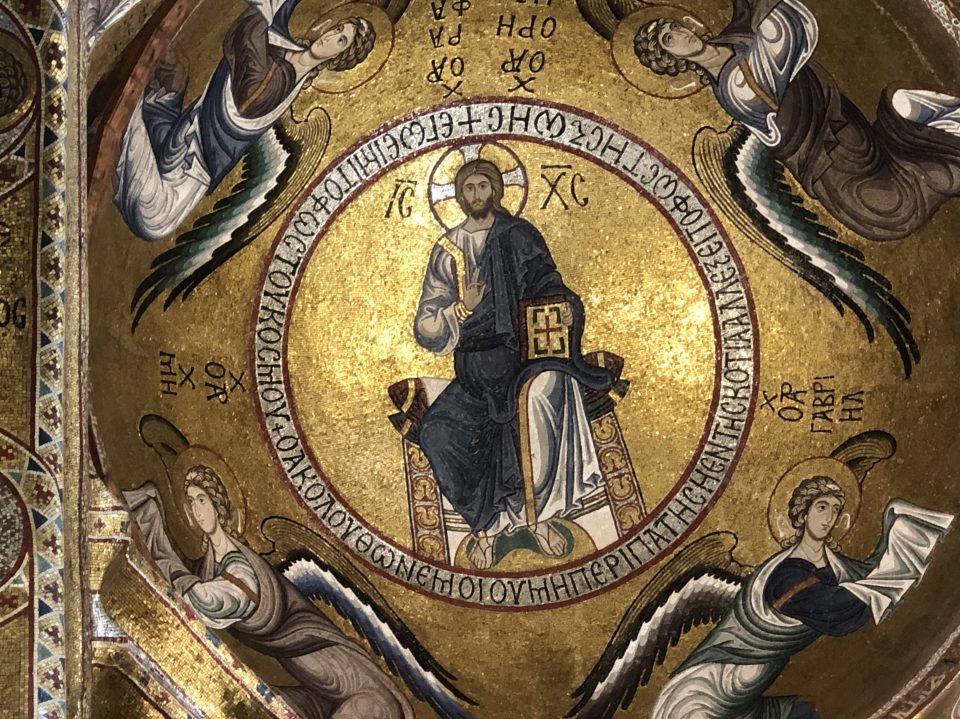
The centrepiece is the great dome mosaic of Christ Pantocrator, one of the most powerful images in Byzantine art. Christ gazes downward with a stern yet compassionate expression, blessing the faithful below while holding the Gospel in his left hand.
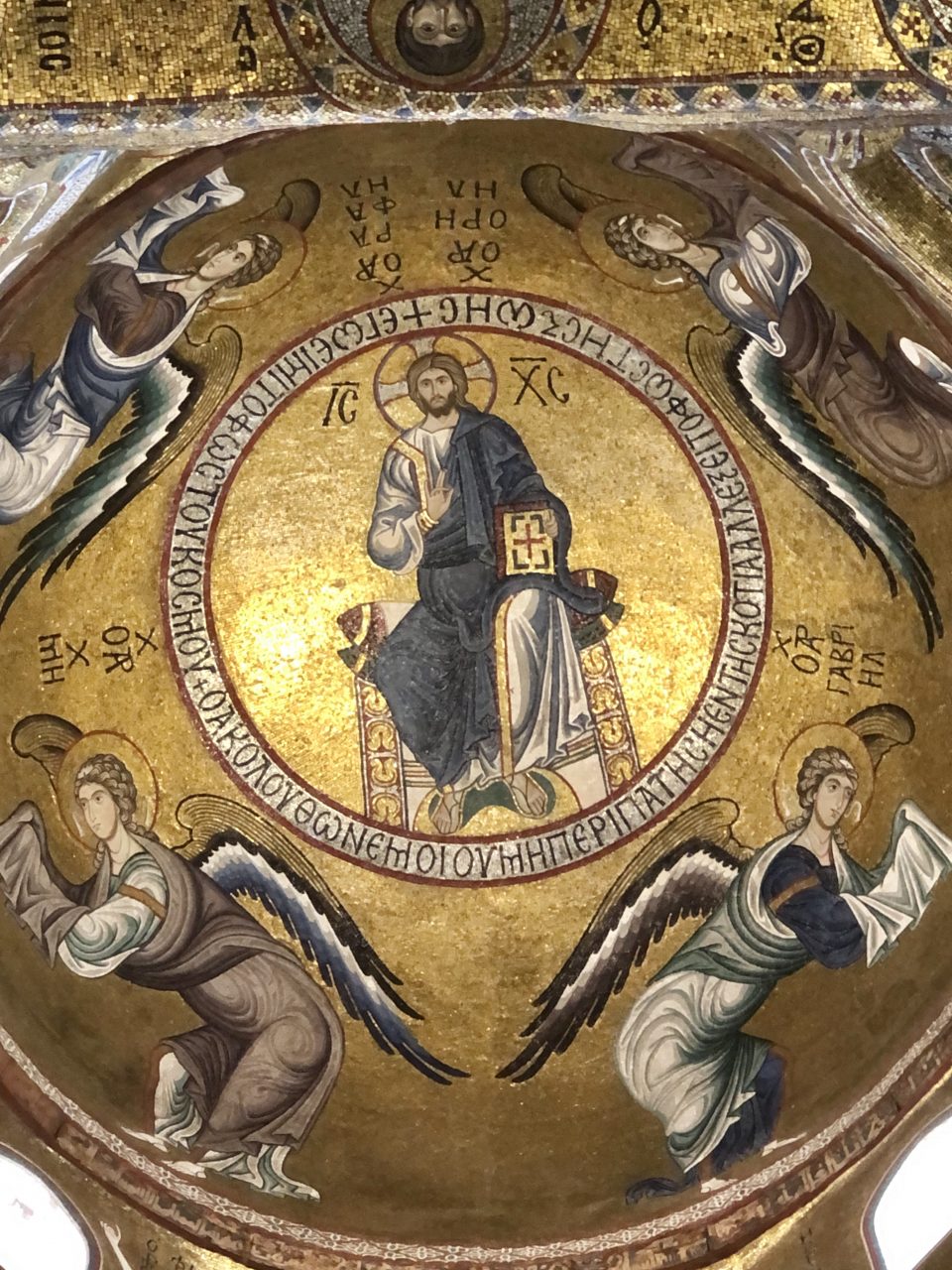
Around him, a circle of archangels appears suspended against a field of gold, creating the impression that heaven itself has opened above the congregation. The artists arranged the figures according to a strict celestial hierarchy, reflecting the Byzantine understanding of divine order.
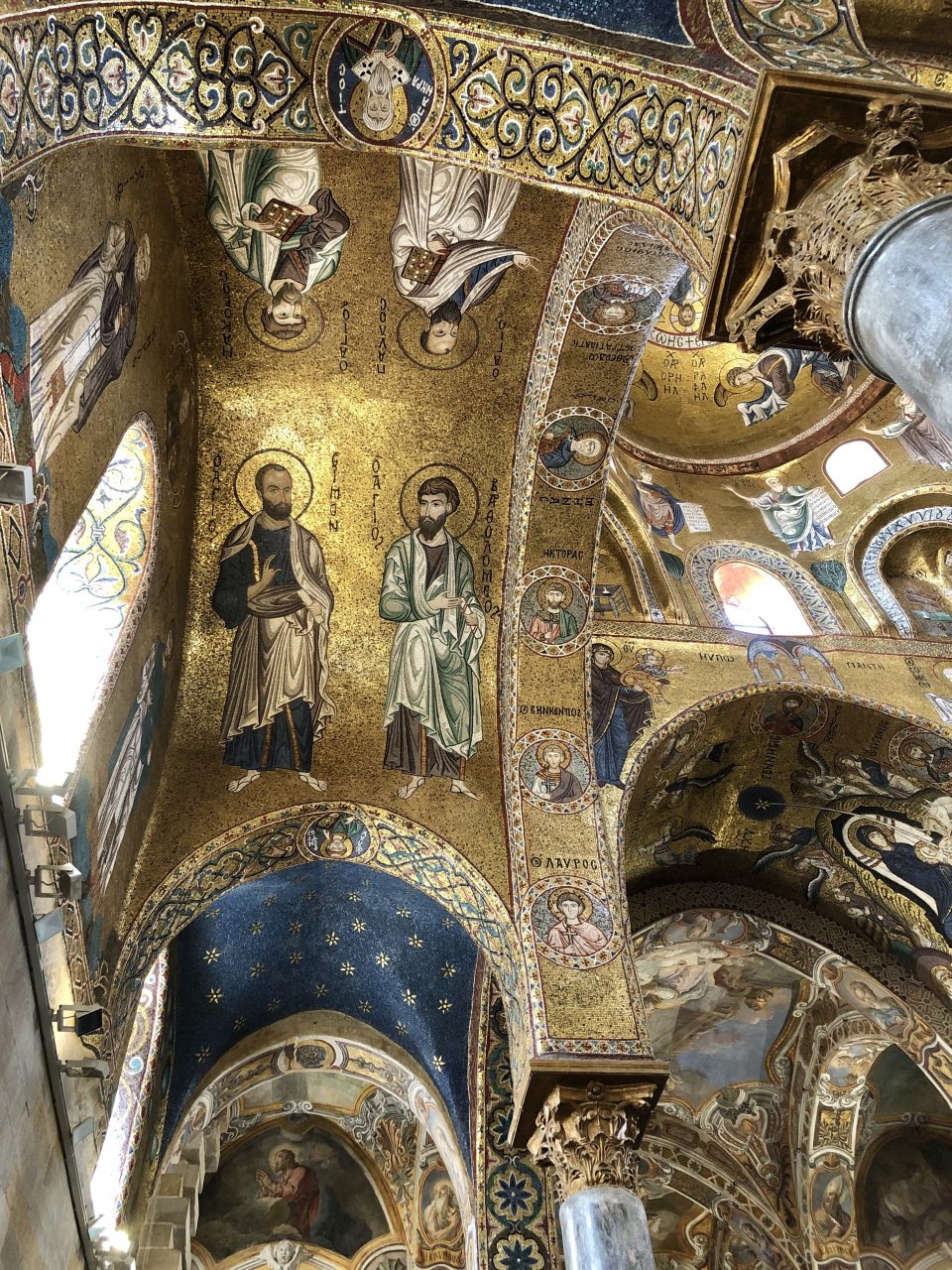
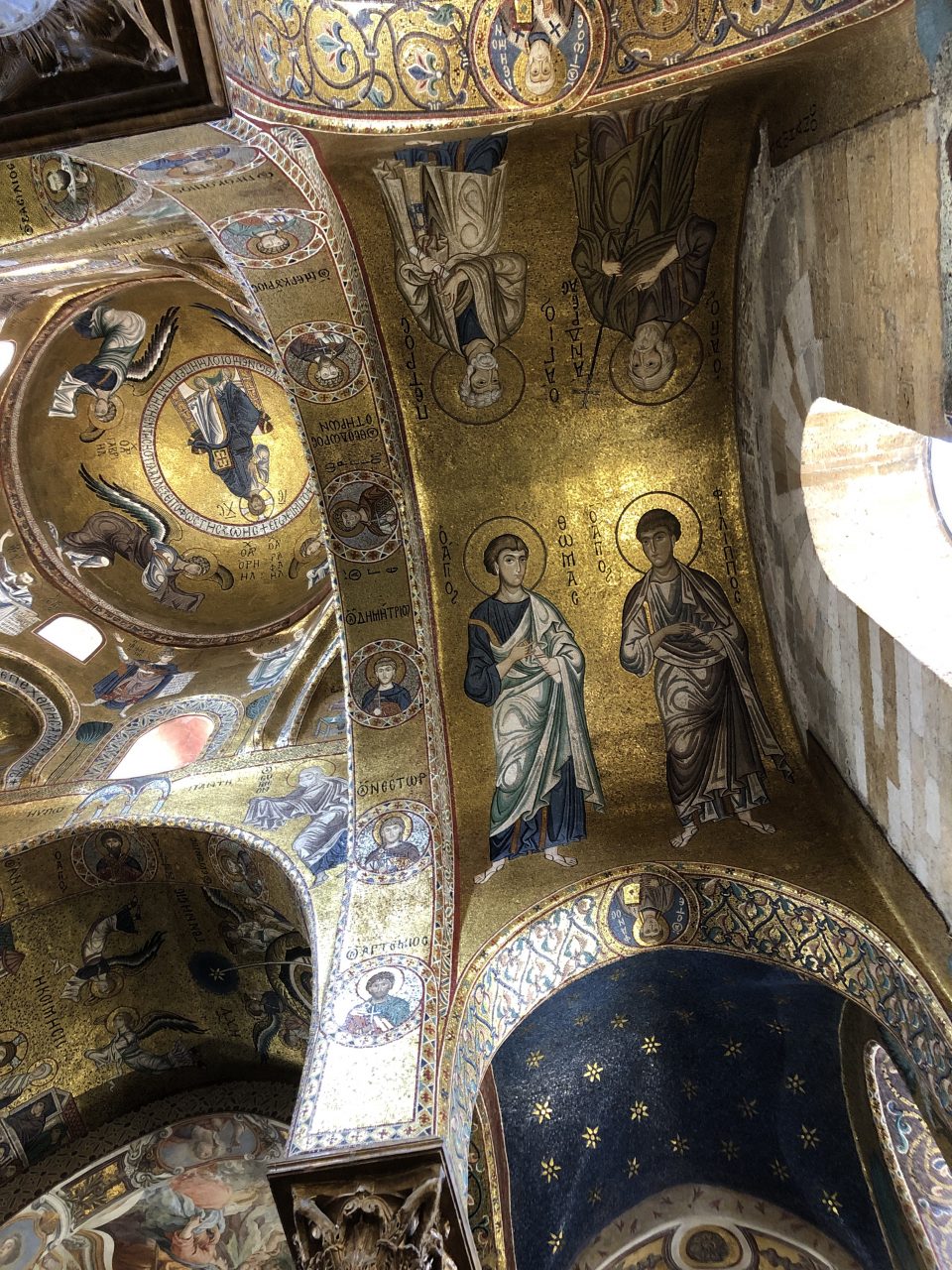
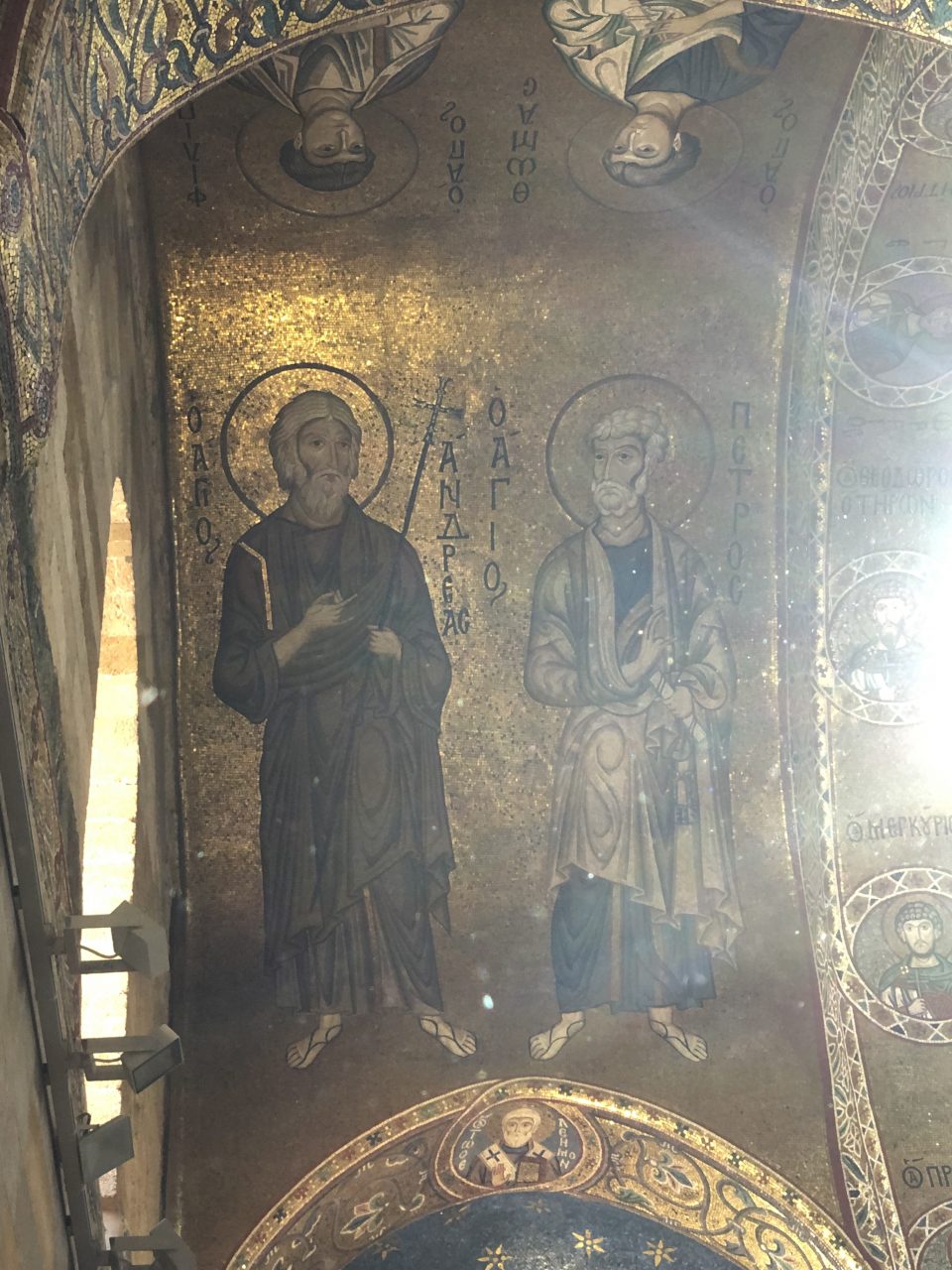
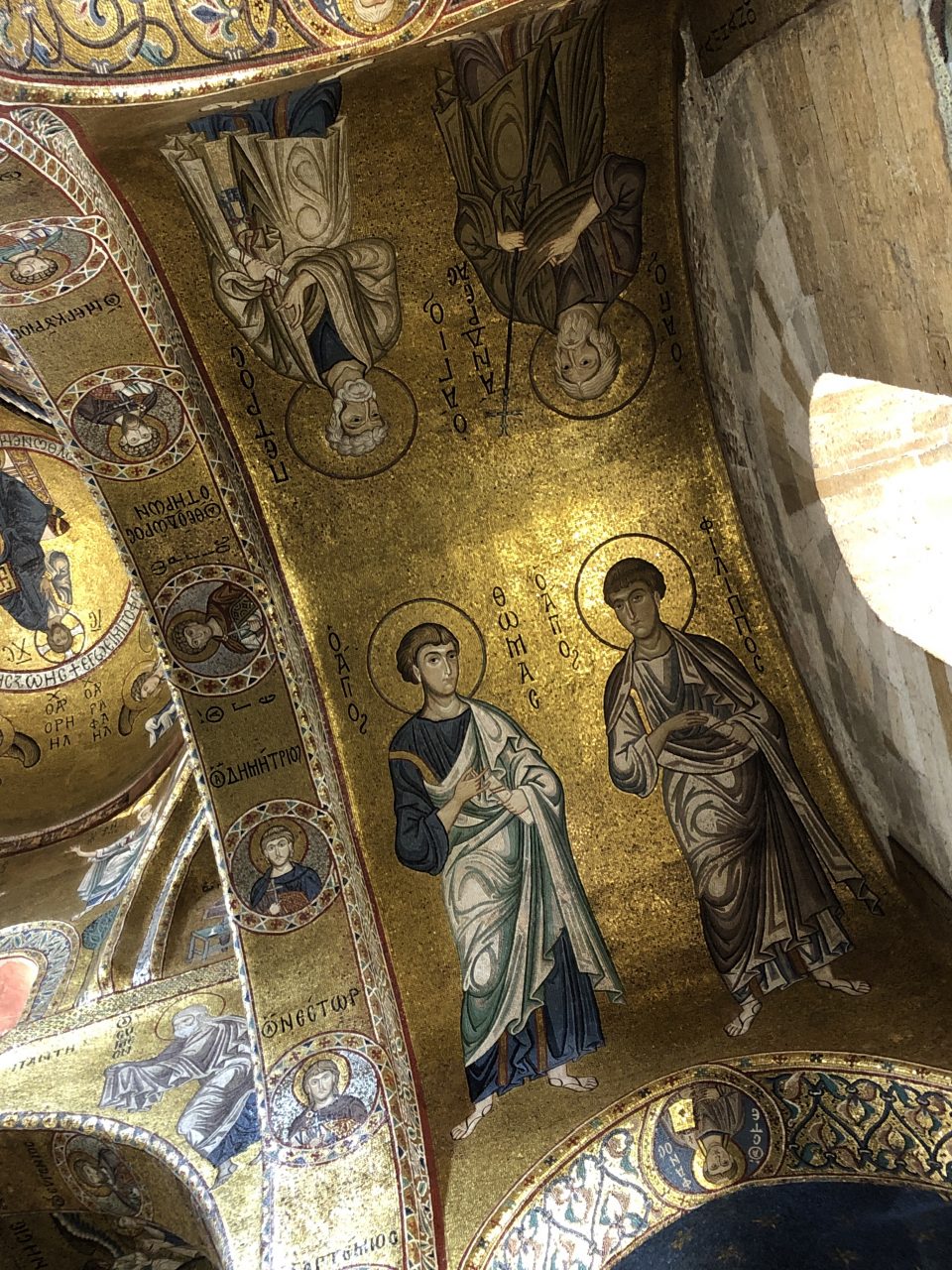
Below the dome, the mosaics continue across the vaults and walls with a rich assembly of saints, prophets, and apostles. The figures are elongated and solemn, their faces marked by large eyes, delicate modelling, and finely detailed garments.
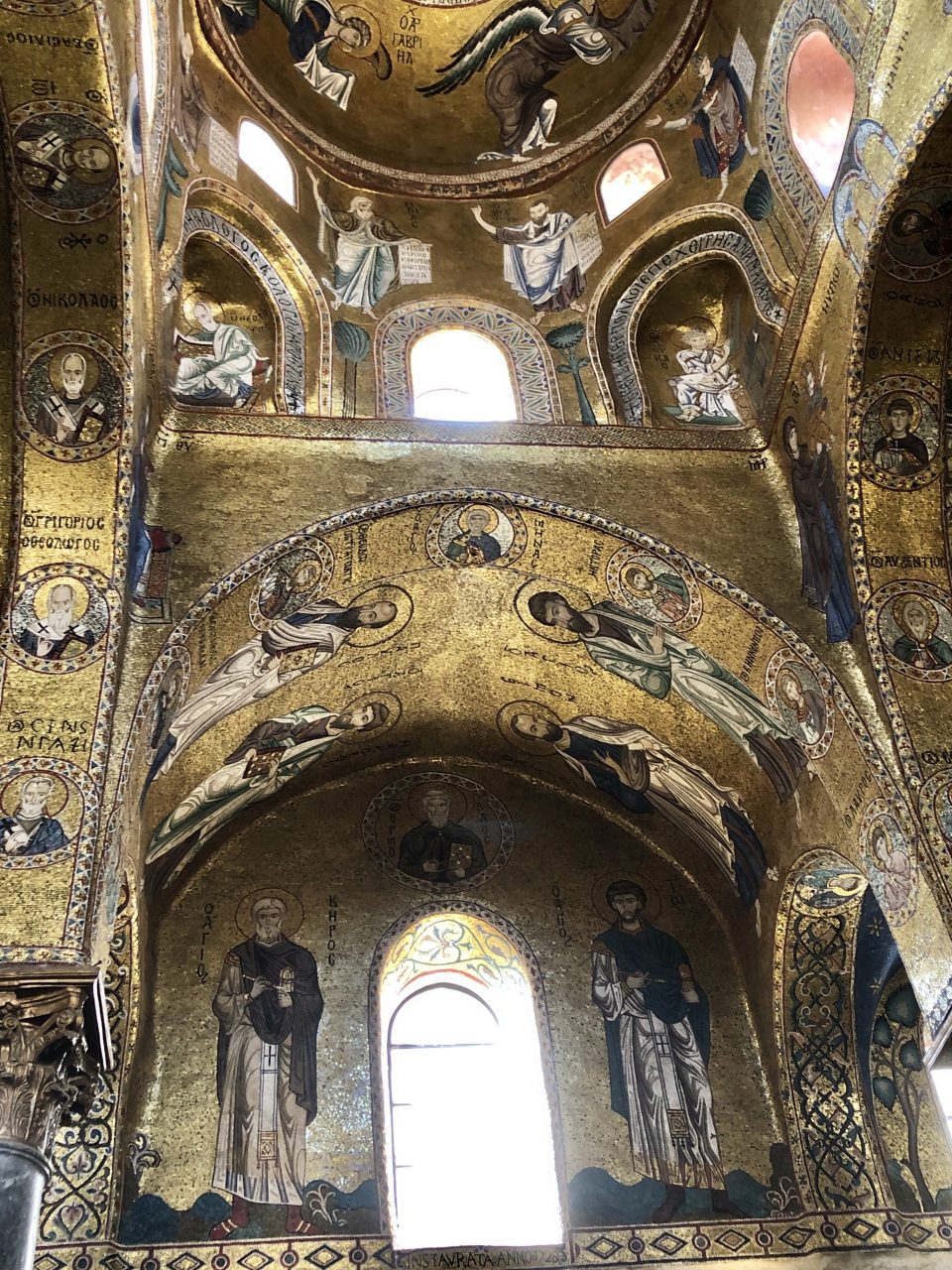
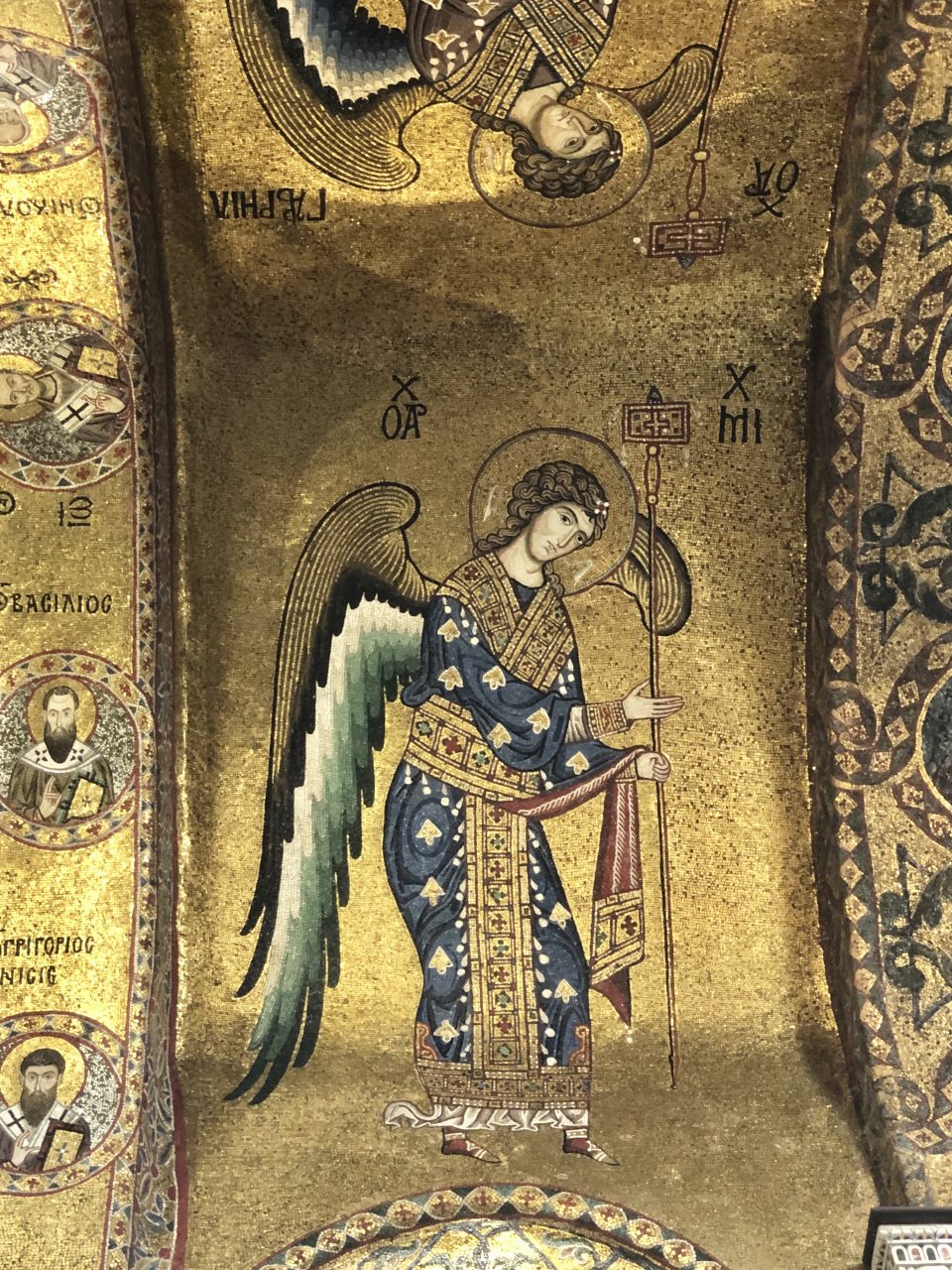
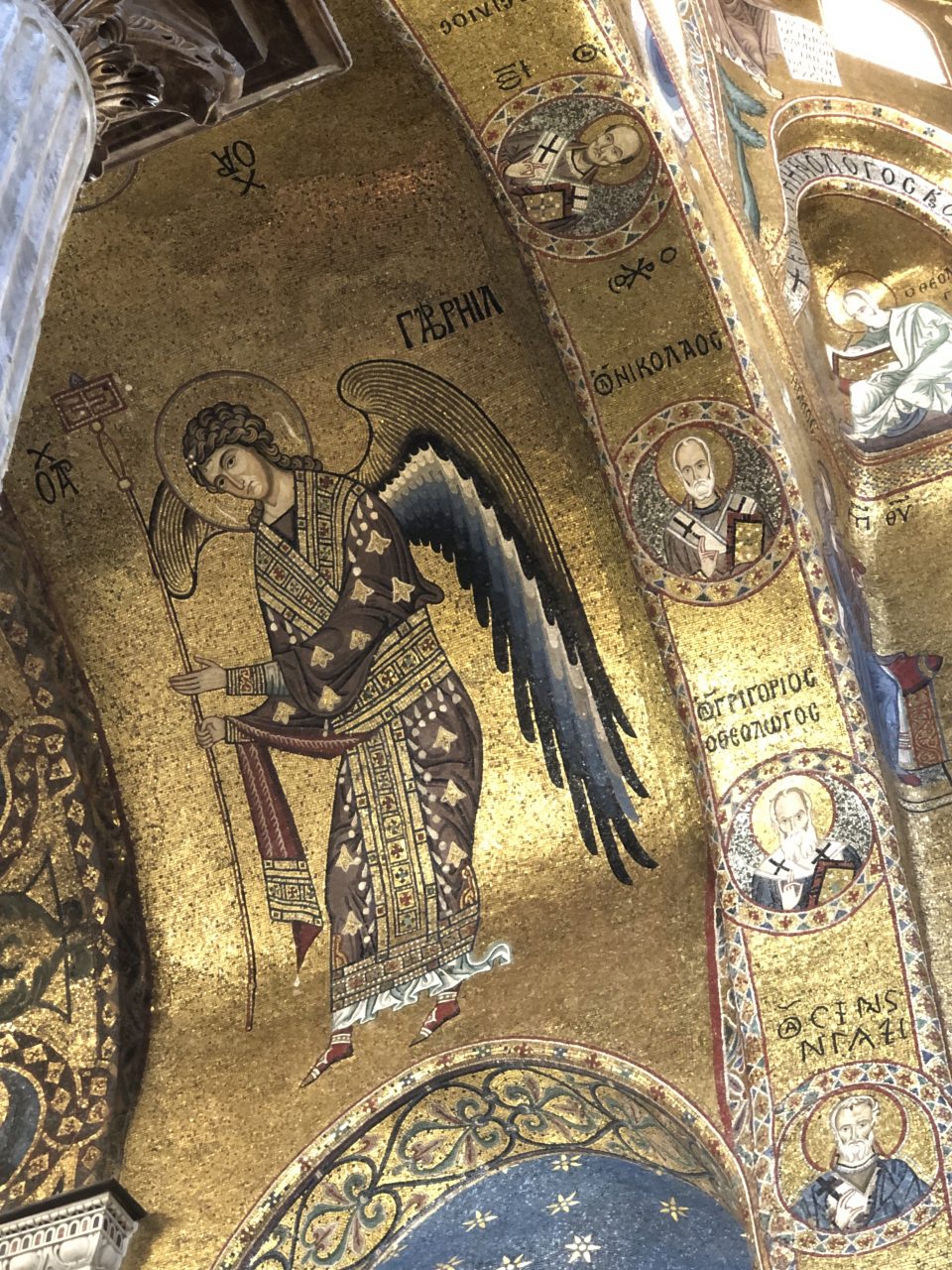
Unlike later Renaissance art, which sought naturalism and perspective, these mosaics were designed to evoke a spiritual realm outside ordinary human experience. The gold backgrounds dissolve any sense of earthly space, directing the viewer’s attention toward the sacred.
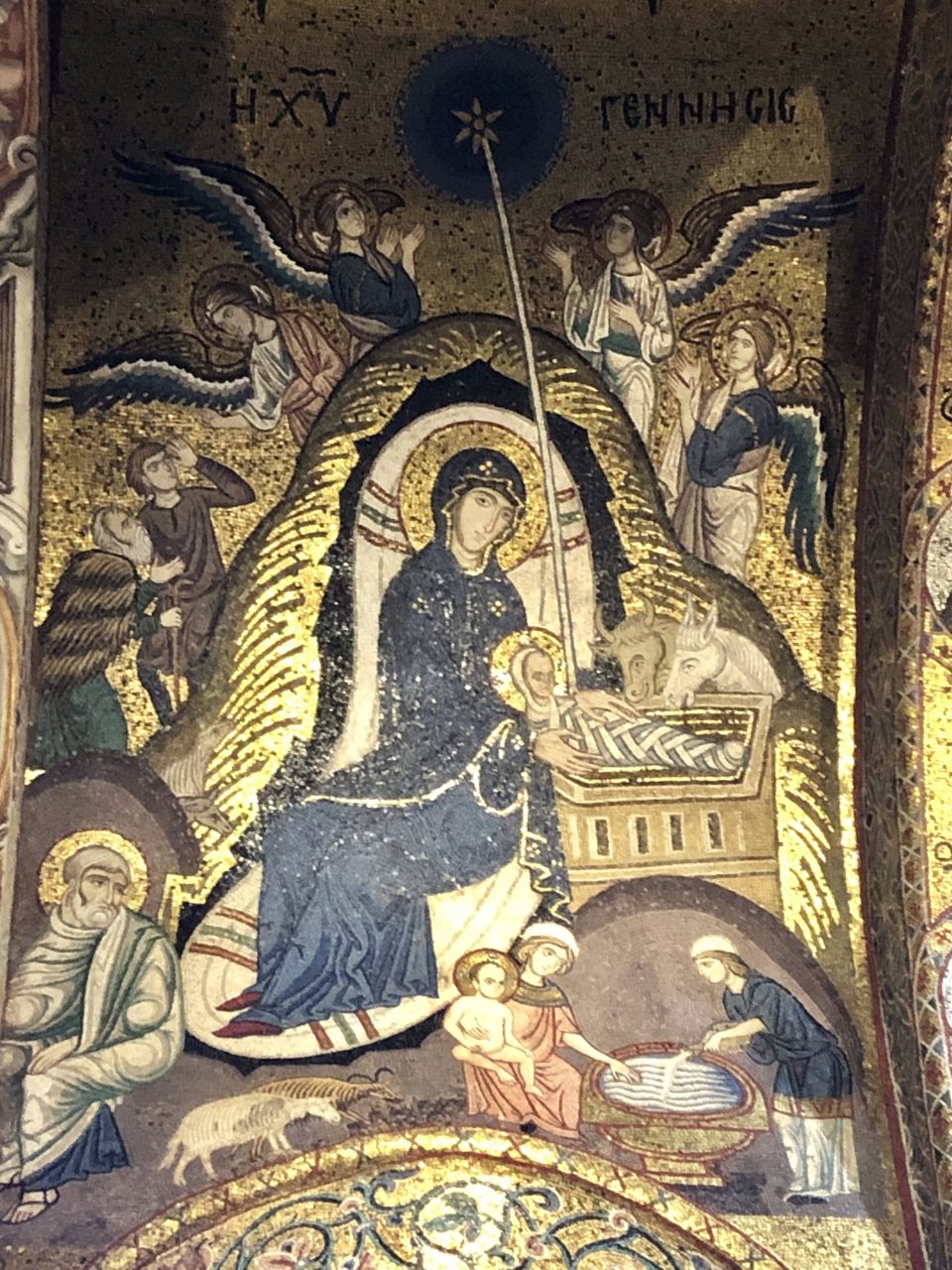
Particularly striking are the scenes depicting the lives of the Virgin Mary and Christ. The Annunciation, the Presentation in the Temple, and the Dormition of the Virgin are rendered with remarkable elegance and clarity. Despite their formal style, the artists conveyed subtle emotions through gestures and expressions. Drapery folds, architectural details, and carefully chosen colours lend the scenes a richness that rewards close inspection.
What makes the Martorana mosaics especially significant is their place within the multicultural world of Norman Sicily. Greek-speaking artists employed Byzantine techniques for a Norman patron in a city deeply influenced by Arab culture. The mosaics therefore stand as visual evidence of a society where different traditions met and flourished together. In Palermo, the artistic languages of East and West were not rivals but partners, and nowhere is that synthesis more beautifully expressed than in the glowing gold mosaics of La Martorana.
 Users Today : 2
 Users This Month : 759
 Users This Year : 28547
 Total Users : 53848
 Views This Year : 34866
 Total views : 70044
 Who's Online : 0