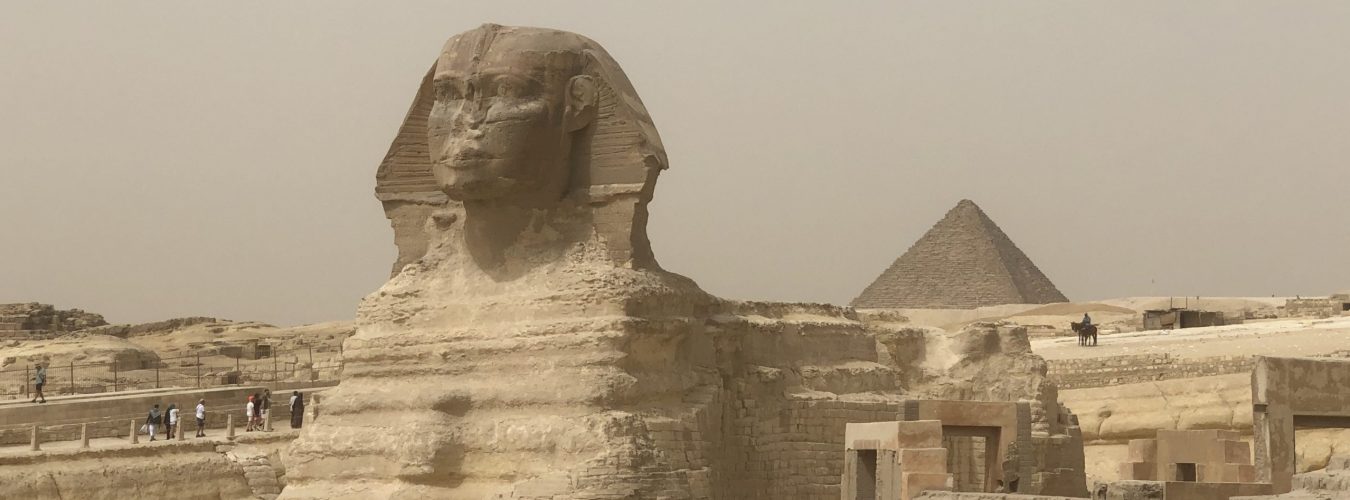
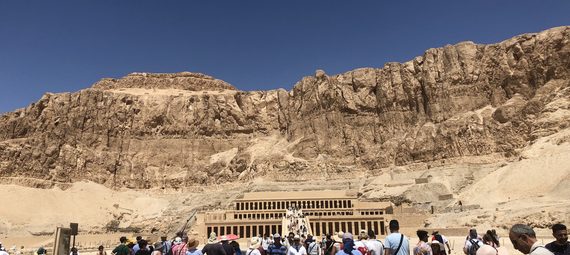
Nestled beneath the towering limestone cliffs of Deir el-Bahari on the west bank of the Nile near Luxor stands one of the most breathtaking monuments of ancient Egypt: the Mortuary Temple of Hatshepsut. More than just a temple, it is a masterpiece of architecture, a political statement carved in stone, and a lasting tribute to one of the most extraordinary rulers in Egyptian history. Even today, nearly 3,500 years after its construction, the temple appears almost otherworldly, its elegant terraces rising from the desert floor as though they were a natural extension of the cliffs behind them.
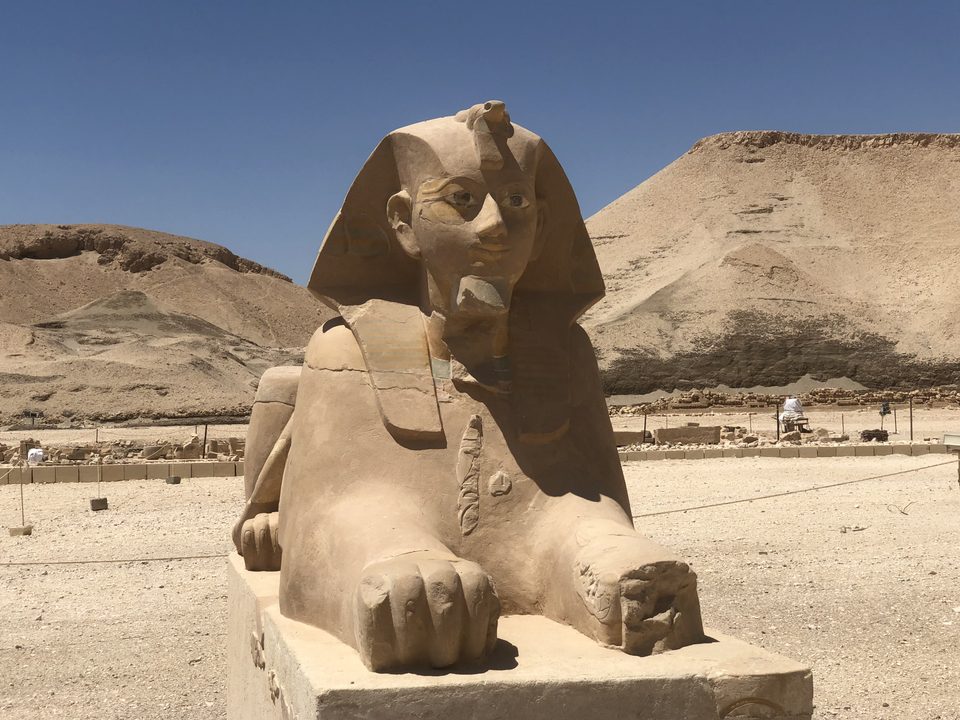
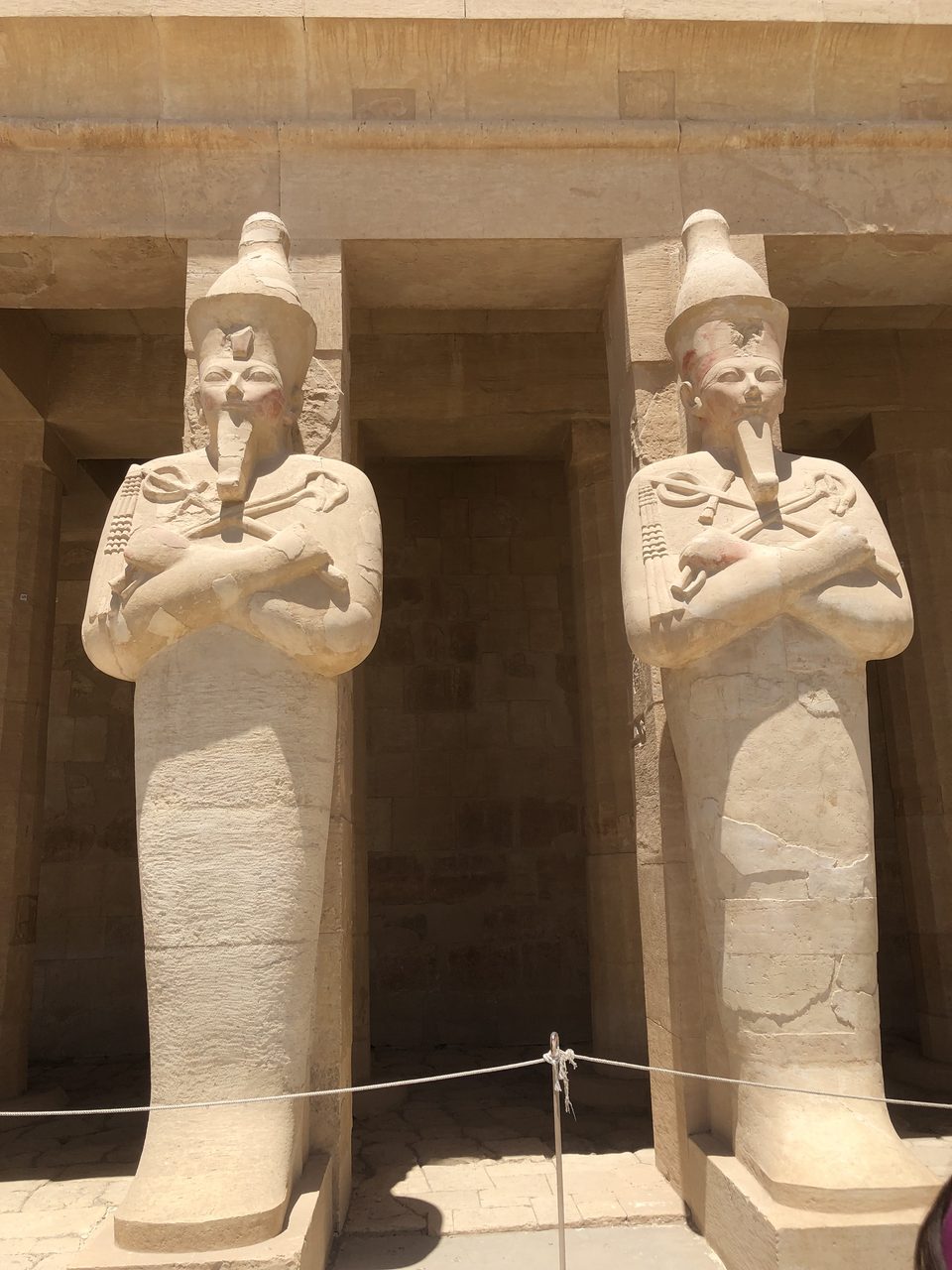
Hatshepsut was no ordinary queen. Born a royal princess of the 18th Dynasty, she initially served as regent for her young stepson, Thutmose III. However, around 1479 BC, she took the unprecedented step of proclaiming herself pharaoh. In a society where kingship was traditionally a male role, Hatshepsut faced significant challenges to her authority. To reinforce her position, official artworks often depicted her wearing the symbols of kingship, including the royal kilt, ceremonial beard, and crown. Yet her reign would become one of the most peaceful and prosperous periods in Egypt’s New Kingdom.
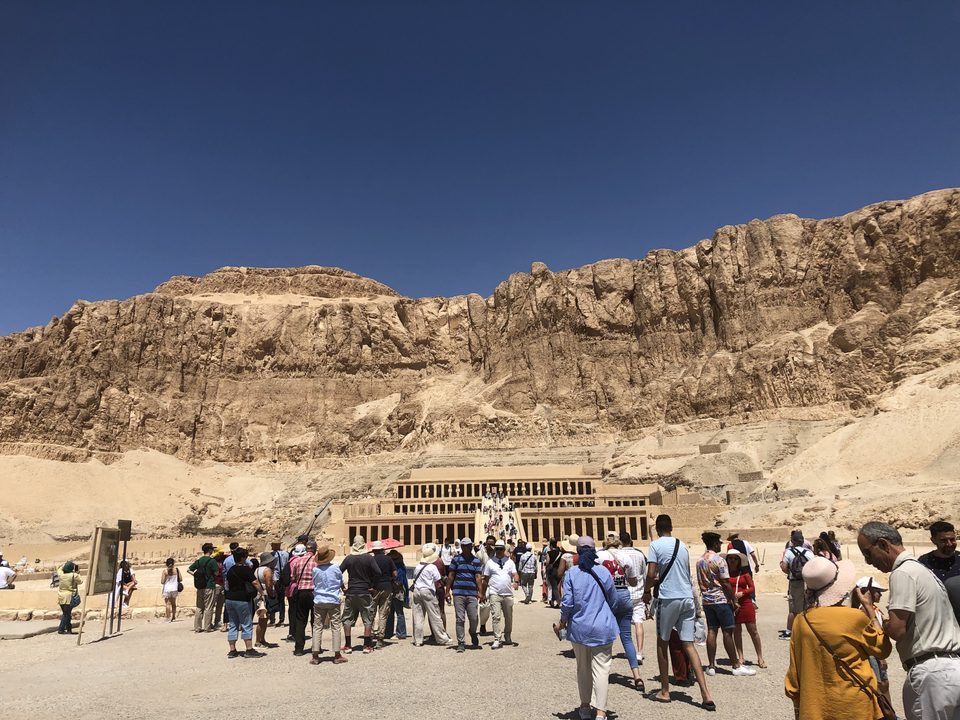
To commemorate her achievements and ensure her memory would live forever, Hatshepsut commissioned a grand mortuary temple unlike anything Egypt had previously seen. Designed by her trusted architect and adviser Senenmut, the temple was carefully positioned beside the much older temple of Mentuhotep II, blending harmoniously with the dramatic landscape. Its design features three vast terraces connected by broad ramps, creating a sense of grandeur and symmetry that continues to captivate visitors today.
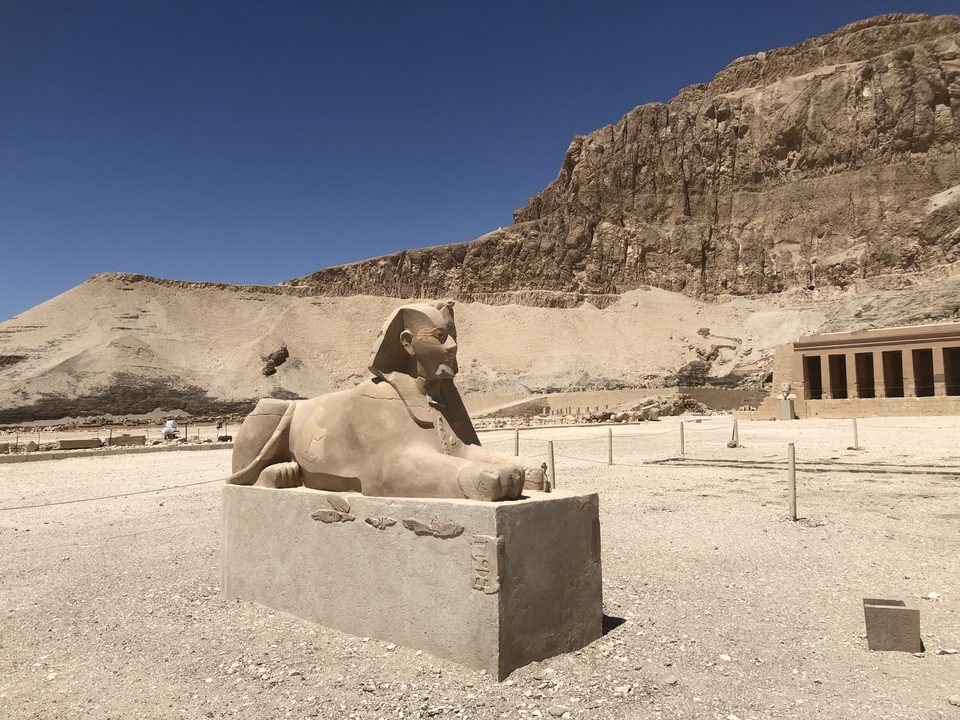
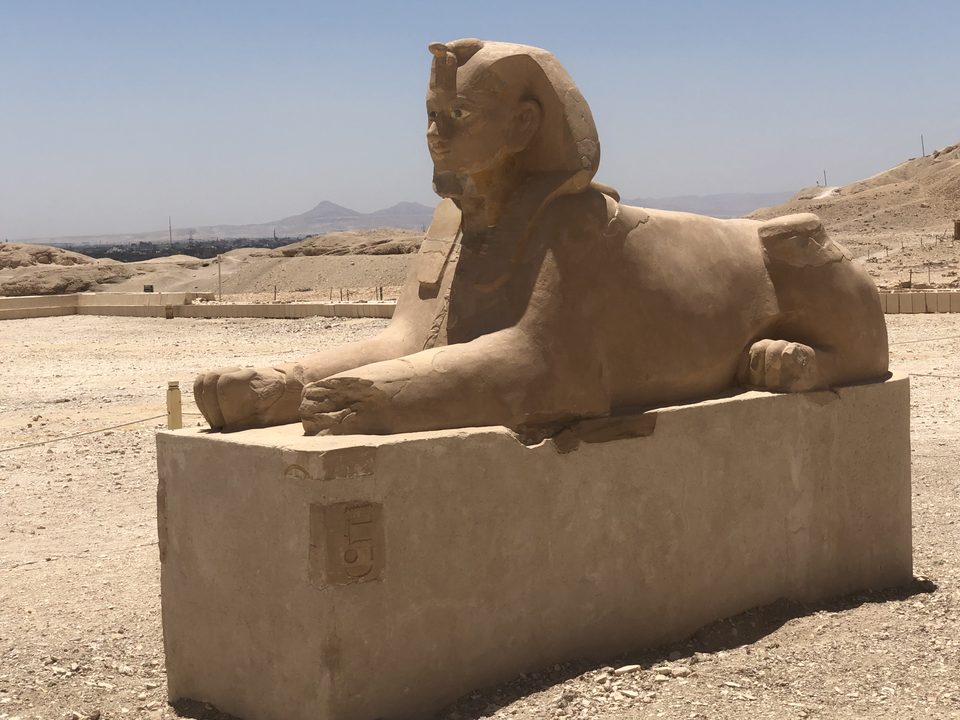
Approaching the temple in ancient times would have been an awe-inspiring experience. Visitors would have walked along a long processional avenue lined with sphinxes and fragrant gardens filled with exotic trees. The lower terraces were decorated with colonnades and colourful reliefs, while the upper levels led worshippers ever closer to the sacred sanctuary carved into the mountain itself. Gleaming white limestone reflected the sunlight, making the temple visible from great distances across the Nile Valley.
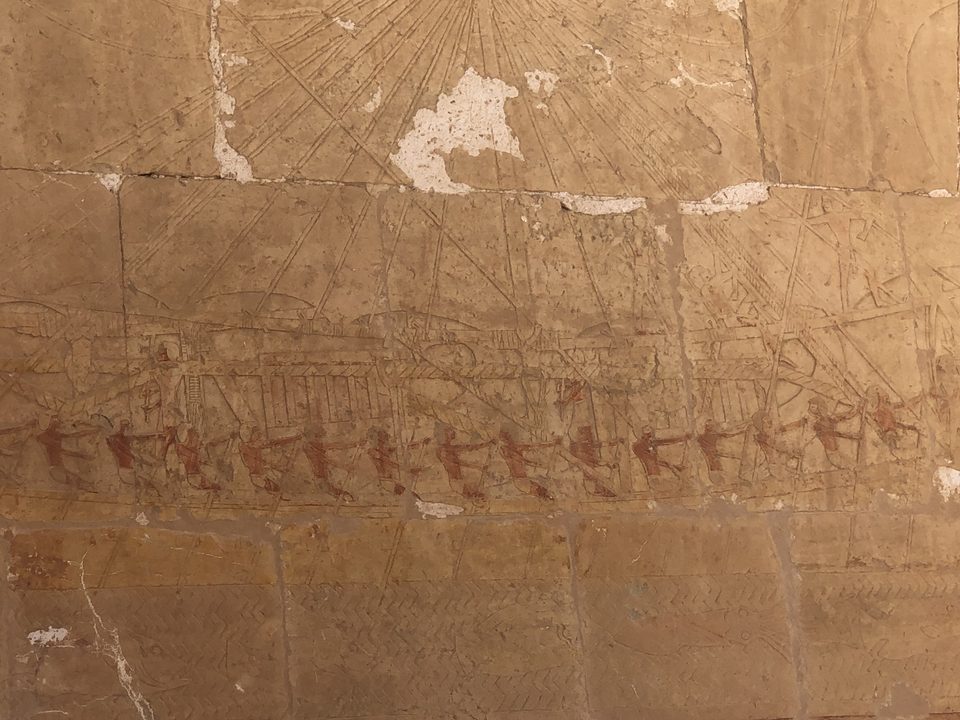
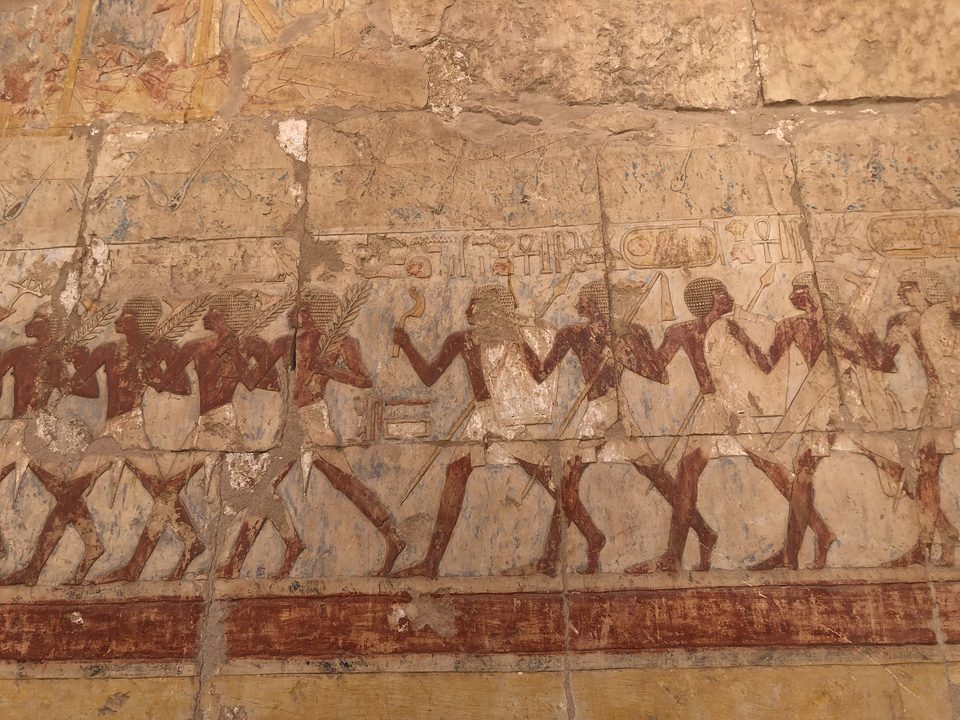
One of the temple’s most fascinating features is its extensive relief decoration, which tells the story of Hatshepsut’s reign. Among the most famous scenes are those depicting her trading expedition to the mysterious Land of Punt. This distant region, believed to have been located somewhere along the Red Sea coast of East Africa, was considered a land of riches and wonders. The reliefs vividly show Egyptian ships sailing across the sea and returning with gold, ebony, ivory, incense, exotic animals, and even living myrrh trees. These scenes provide one of the most detailed records of international trade from the ancient world and demonstrate the prosperity Egypt enjoyed under Hatshepsut’s rule.
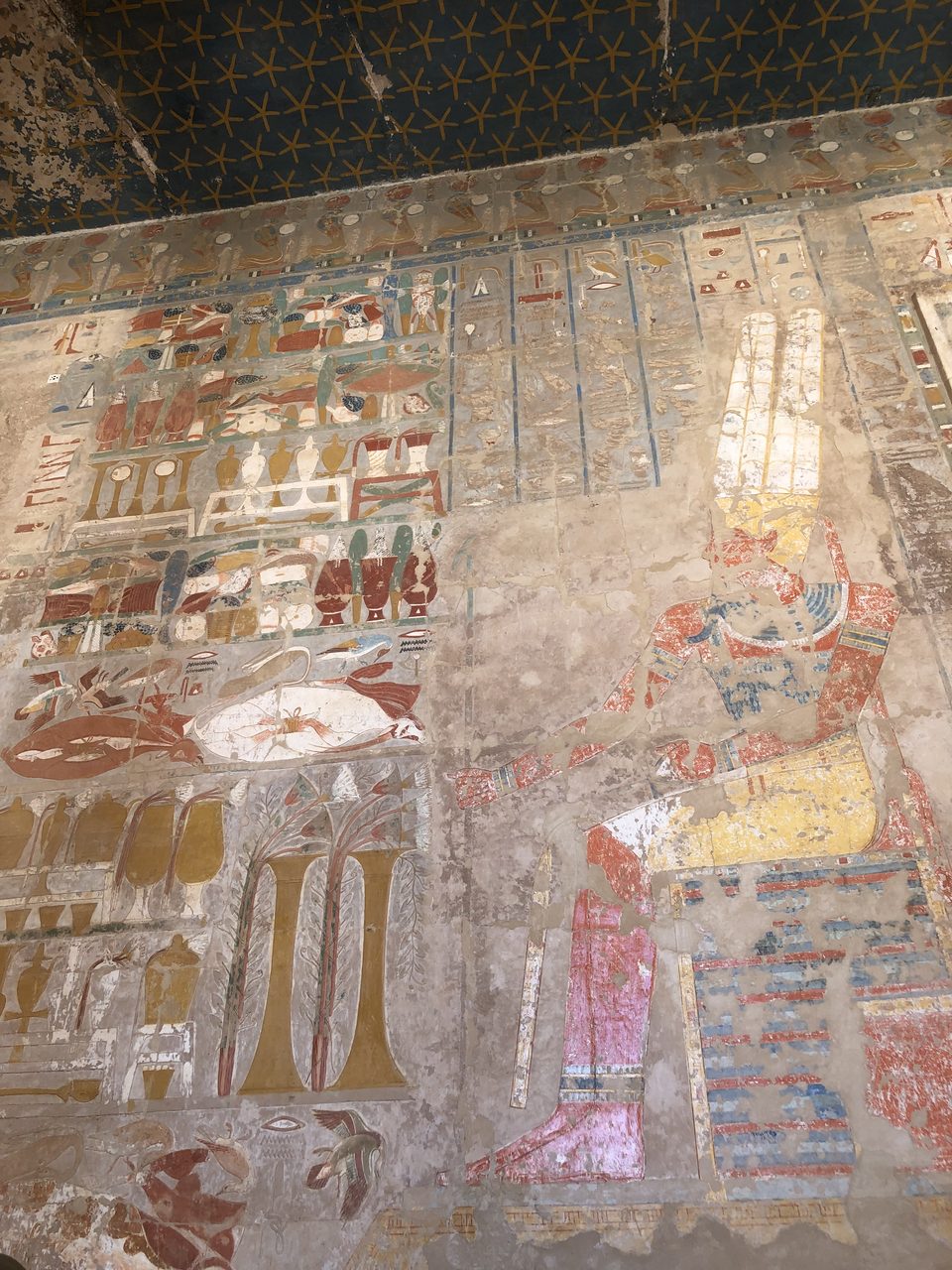
Another remarkable series of reliefs tells the story of her divine birth. According to these inscriptions, the god Amun visited Hatshepsut’s mother in the form of her husband and conceived the future queen. By presenting herself as the literal daughter of Egypt’s most powerful deity, Hatshepsut strengthened her claim to the throne and asserted that her rule was part of a divine plan. These scenes were not merely religious stories but powerful political propaganda intended to convince both the Egyptian people and the priesthood of her legitimacy.
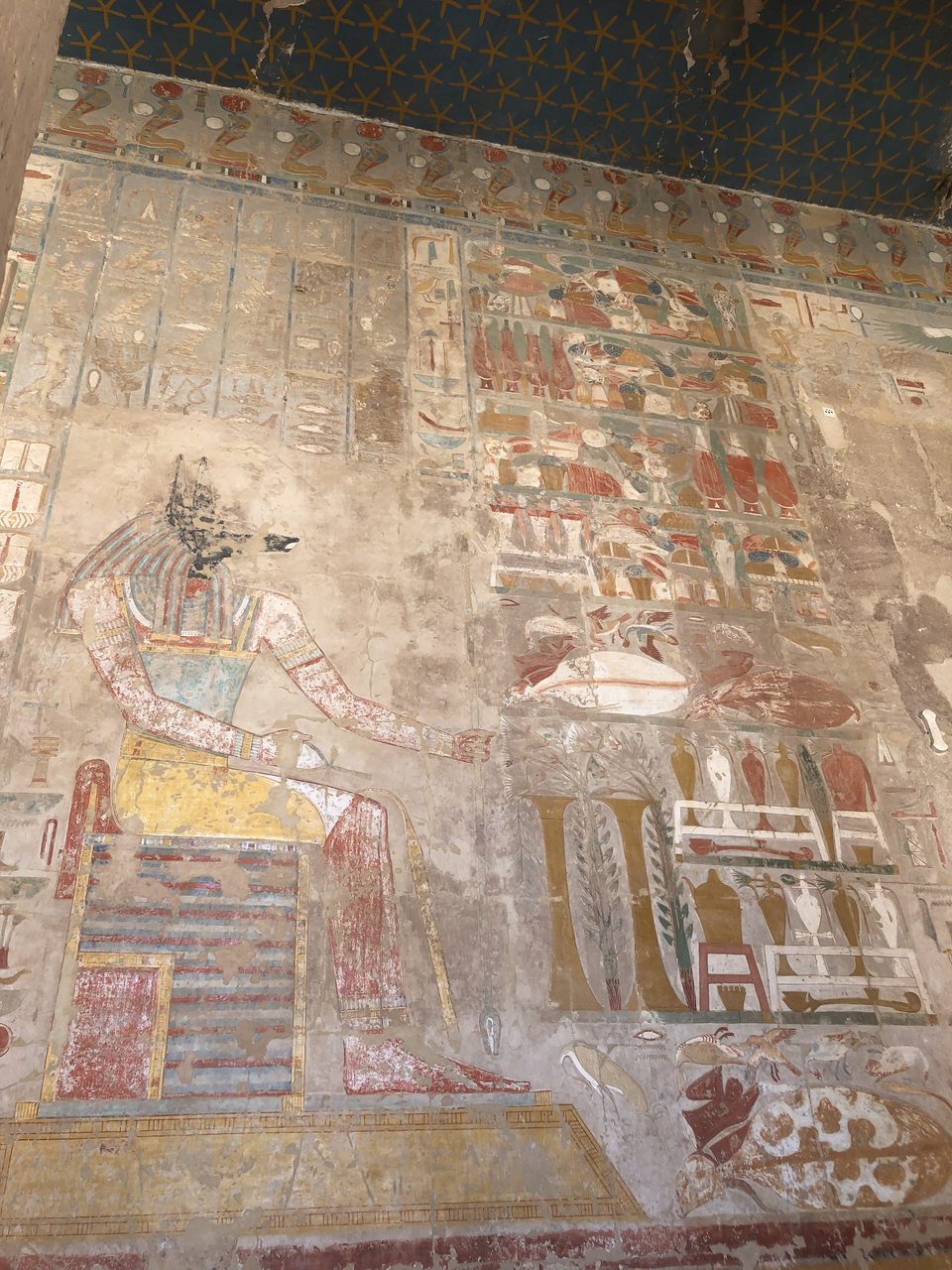
The temple also played a vital religious role. Dedicated primarily to Amun, as well as the gods Hathor and Anubis, it served as an important center for rituals and festivals. During the annual Beautiful Festival of the Valley, sacred statues of the gods were carried from Karnak across the Nile to visit the temples of the west bank. Hatshepsut’s temple became a key destination in these celebrations, linking the world of the living with the world of the dead.
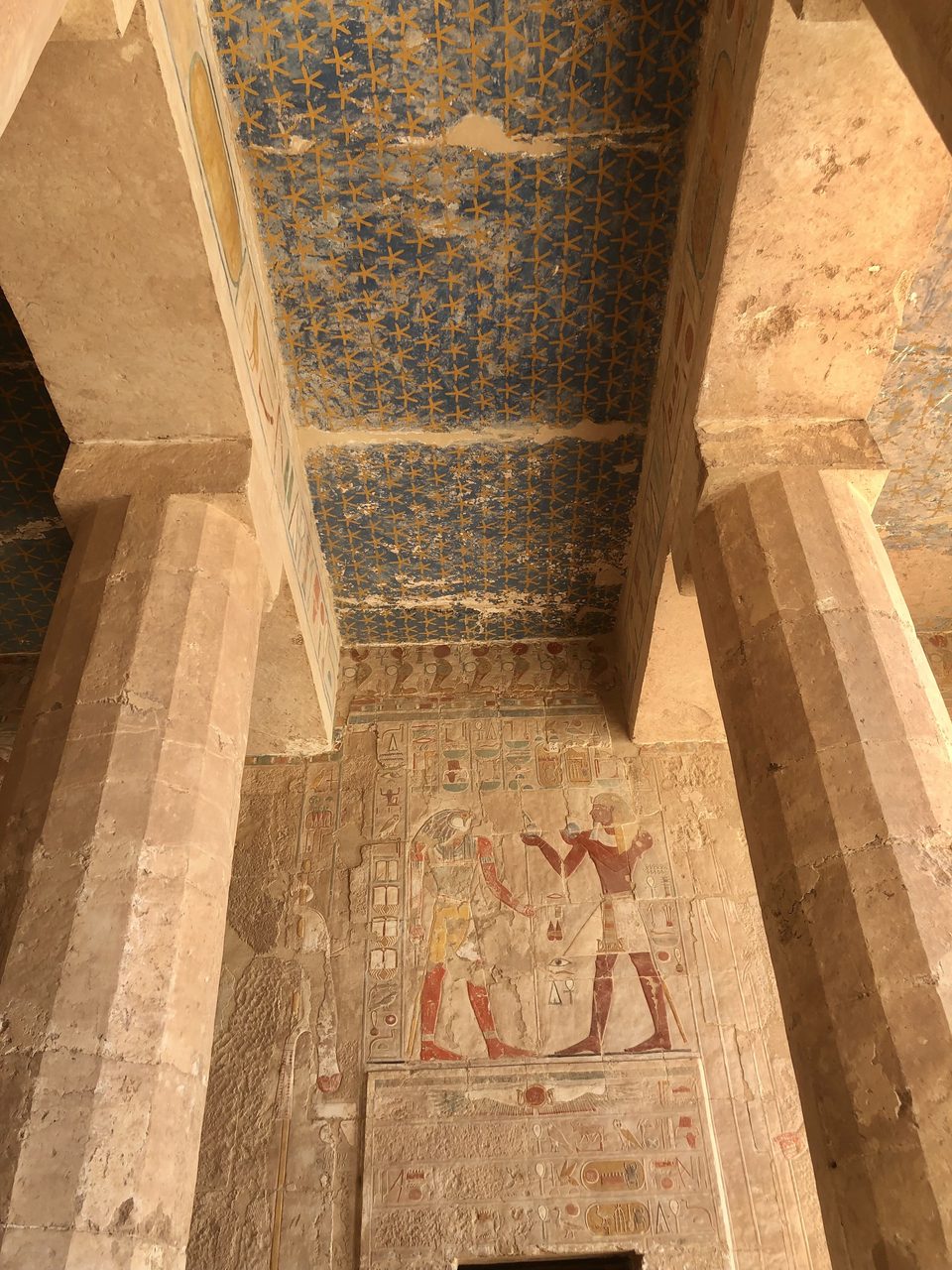
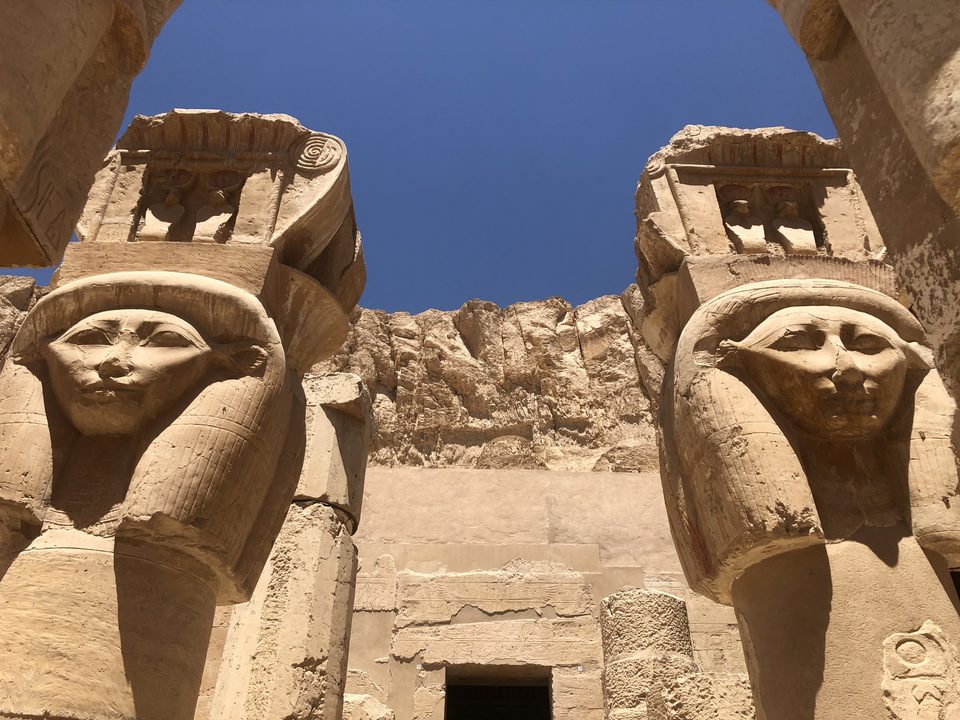
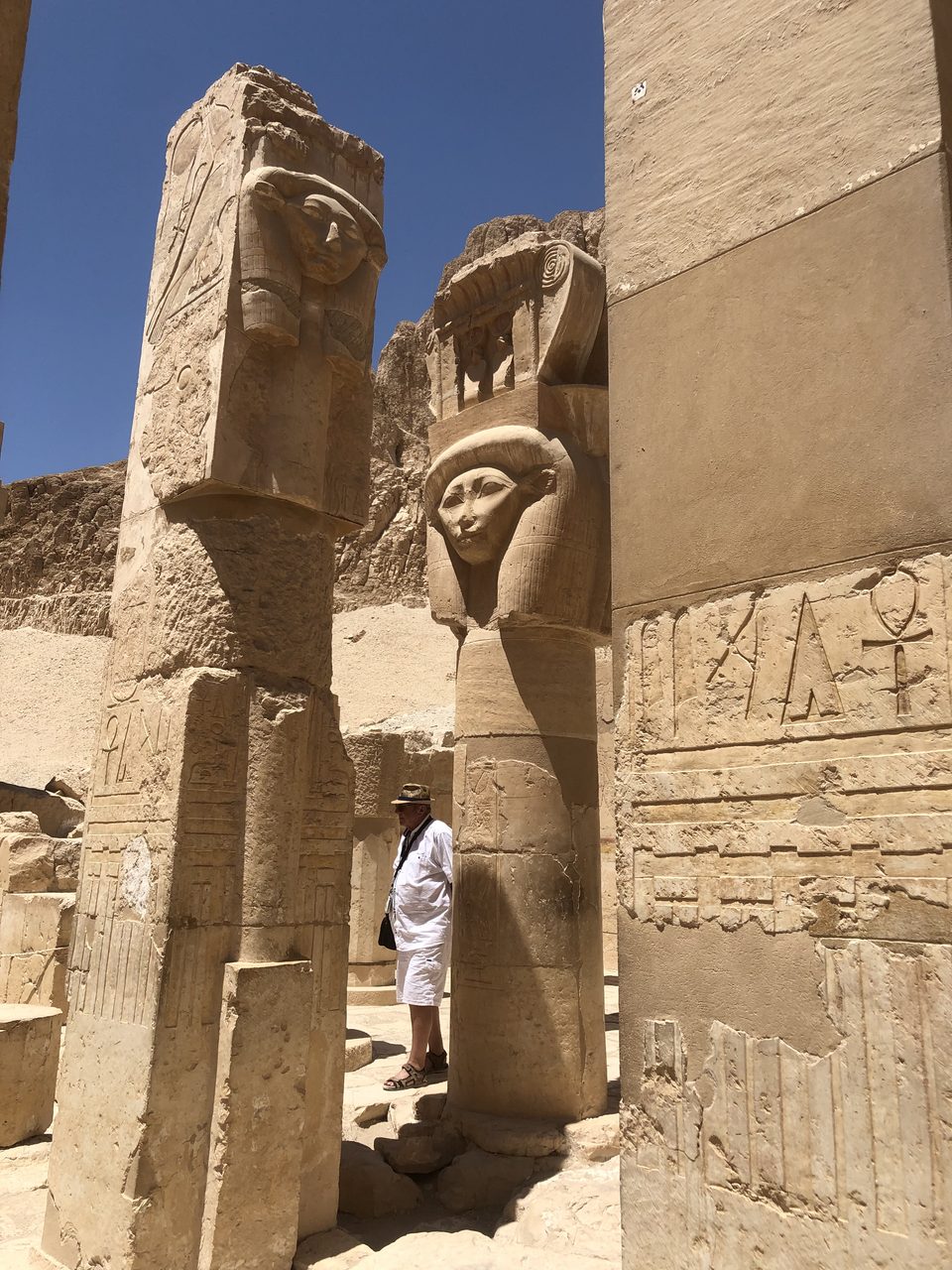
Within the temple complex are several remarkable chapels. The Chapel of Hathor features columns topped with the face of the cow-goddess, while the Chapel of Anubis honours the jackal-headed god associated with mummification and protection of the dead. Deep within the complex lies the sanctuary of Amun, a sacred space carefully aligned with the sun. During certain times of the year, sunlight penetrated deep into the temple, creating a dramatic effect that reinforced its religious significance.
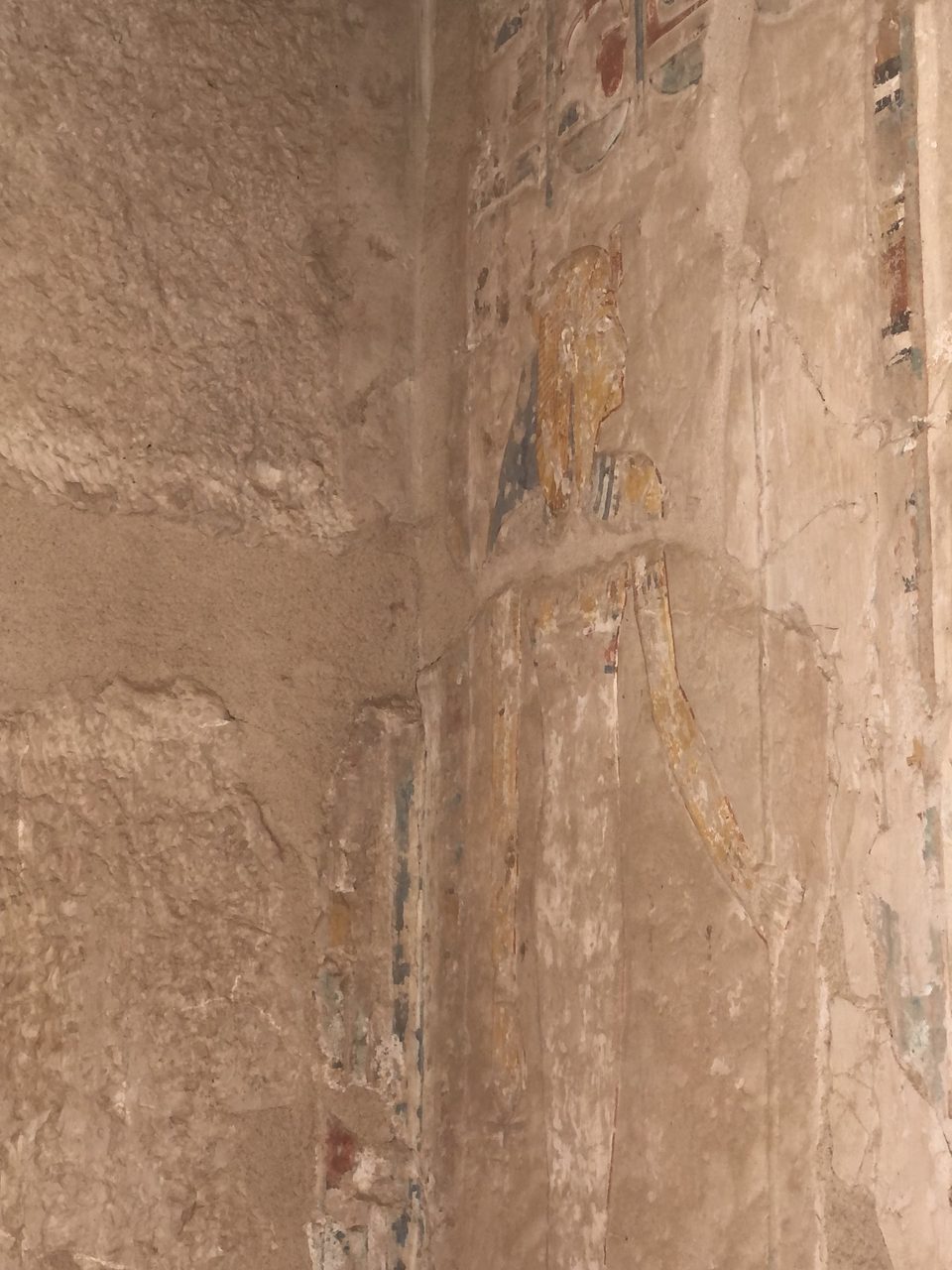
Despite Hatshepsut’s successful reign, her memory faced a determined attack after her death. Years later, many of her statues were smashed, and her names and images were chiseled from monuments. Historians continue to debate why this occurred. Some believe Thutmose III sought to strengthen the traditional line of male rulers, while others suggest political motives connected to later dynastic concerns. Whatever the reason, the attempt was surprisingly thorough, and for centuries much of Hatshepsut’s story was forgotten.
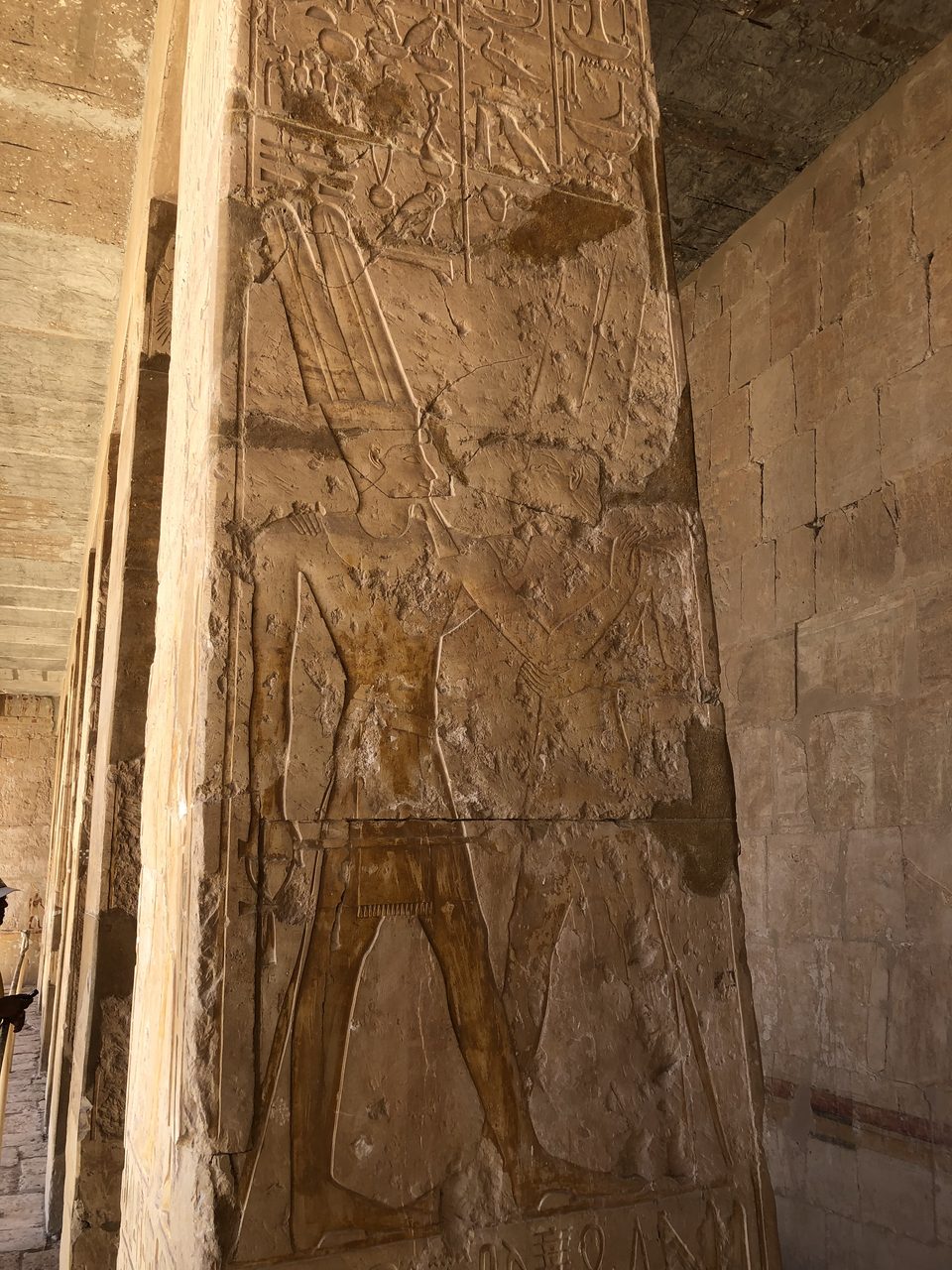
Yet the temple itself endured. Buried at times by debris and sand, its magnificent remains eventually attracted archaeologists and explorers. Through decades of excavation and restoration, scholars reconstructed much of the monument, revealing its original splendour. Numerous statues, inscriptions, and reliefs uncovered within the temple have helped historians piece together the life of one of Egypt’s greatest rulers.
Today, the Mortuary Temple of Hatshepsut stands as one of Egypt’s most iconic landmarks. Visitors who climb its terraces are rewarded not only with stunning views of the surrounding mountains and desert but also with a deeper appreciation of a woman who challenged convention and ruled one of the ancient world’s greatest civilizations. The temple is more than a tomb monument; it is a testament to ambition, ingenuity, and resilience.
The Architecture and Design of Hatshepsut’s Temple
The Mortuary Temple of Hatshepsut, known as Djeser-Djeseru (“Holy of Holies”), is one of the most remarkable architectural masterpieces of ancient Egypt. Built during the reign of Queen Hatshepsut (c. 1479-1458 BCE) of the Eighteenth Dynasty, the temple stands dramatically against the towering cliffs of Deir el-Bahari on the west bank of the Nile near Luxor. Its elegant design and harmonious integration with the natural landscape make it one of the finest examples of ancient Egyptian architecture.
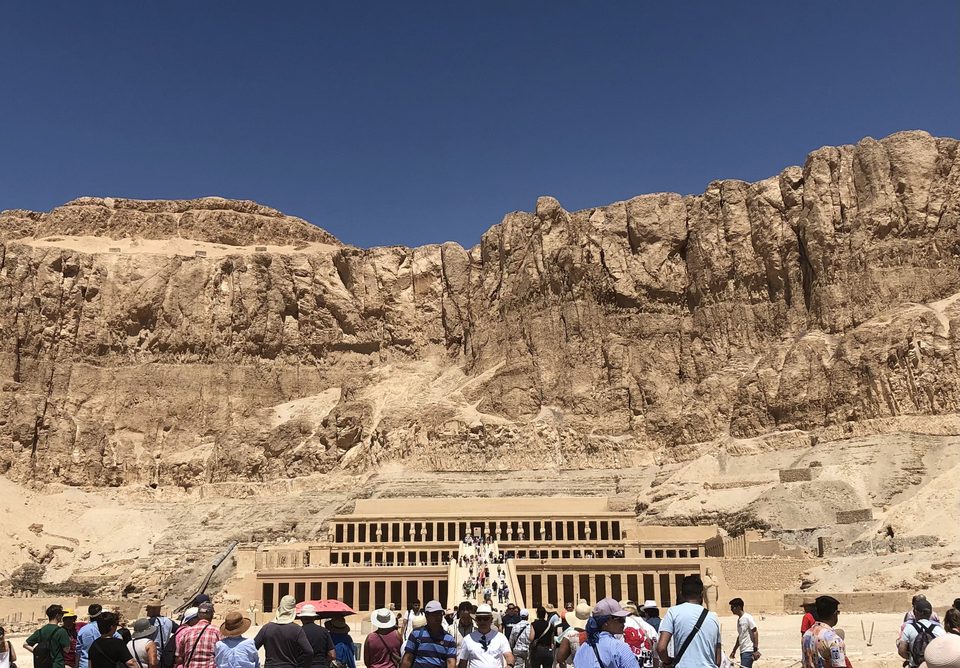
A Unique Terraced Design
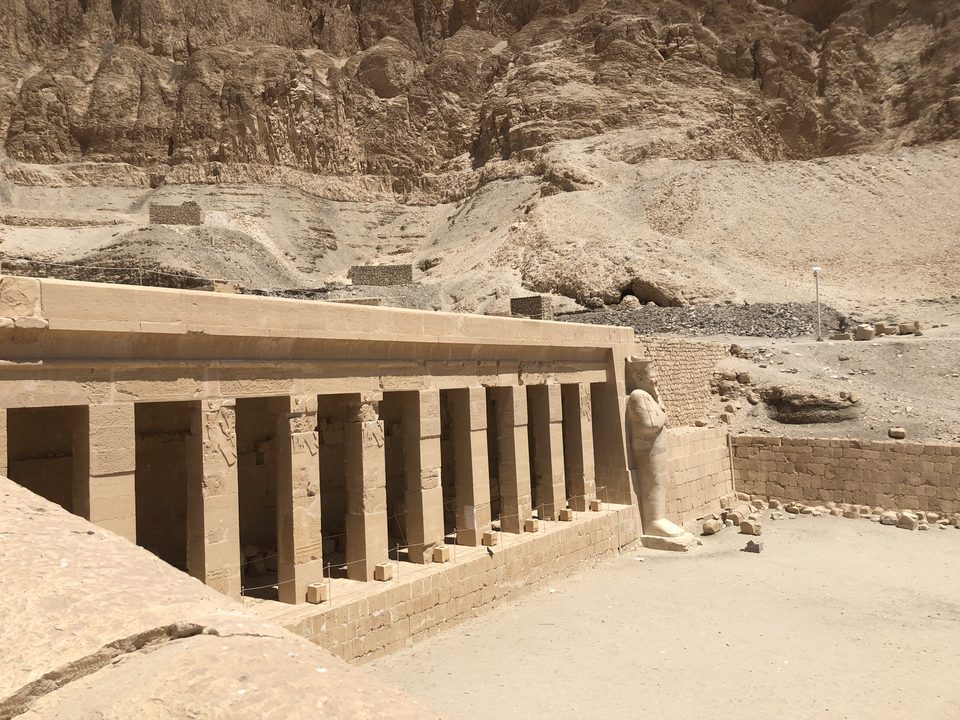
Unlike the massive pyramid complexes of the Old Kingdom, Hatshepsut’s temple was designed as a series of three ascending terraces, connected by long central ramps. Each terrace is lined with impressive colonnades of square pillars, creating a sense of symmetry, balance, and grandeur.
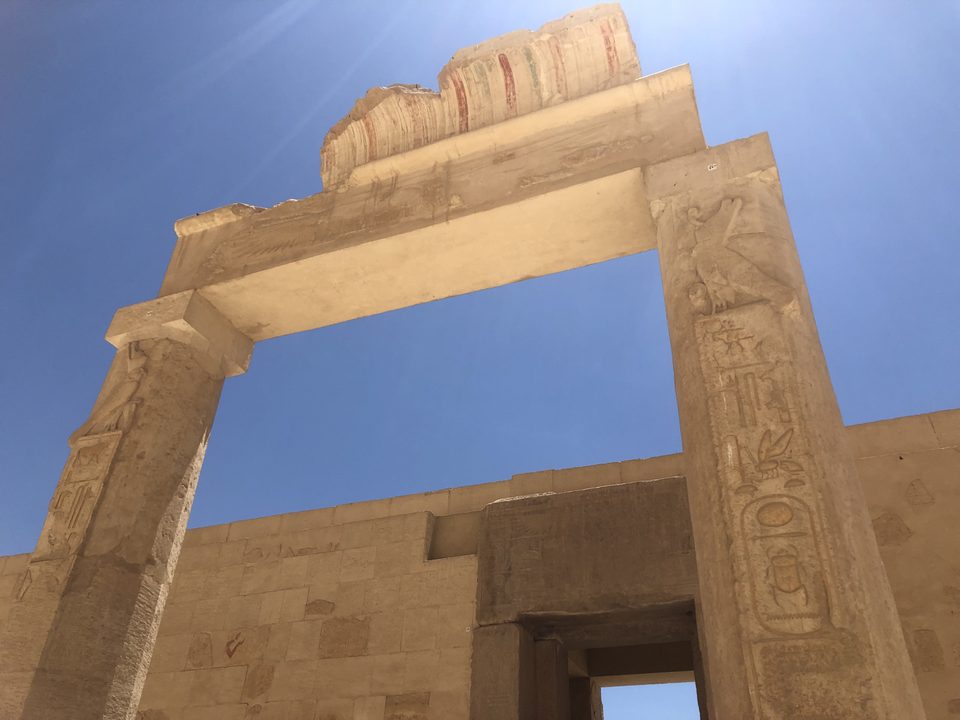
The terraces rise gradually toward the cliffs behind them, making the temple appear as though it emerges naturally from the mountain itself. This seamless connection between architecture and nature was revolutionary for its time and remains one of the temple’s most striking features.
Harmony with the Landscape
One of the temple’s greatest architectural achievements is its integration with the surrounding environment. The limestone terraces mirror the horizontal layers of the cliffs behind them, while the central axis leads visitors toward the sacred sanctuary carved into the mountain.
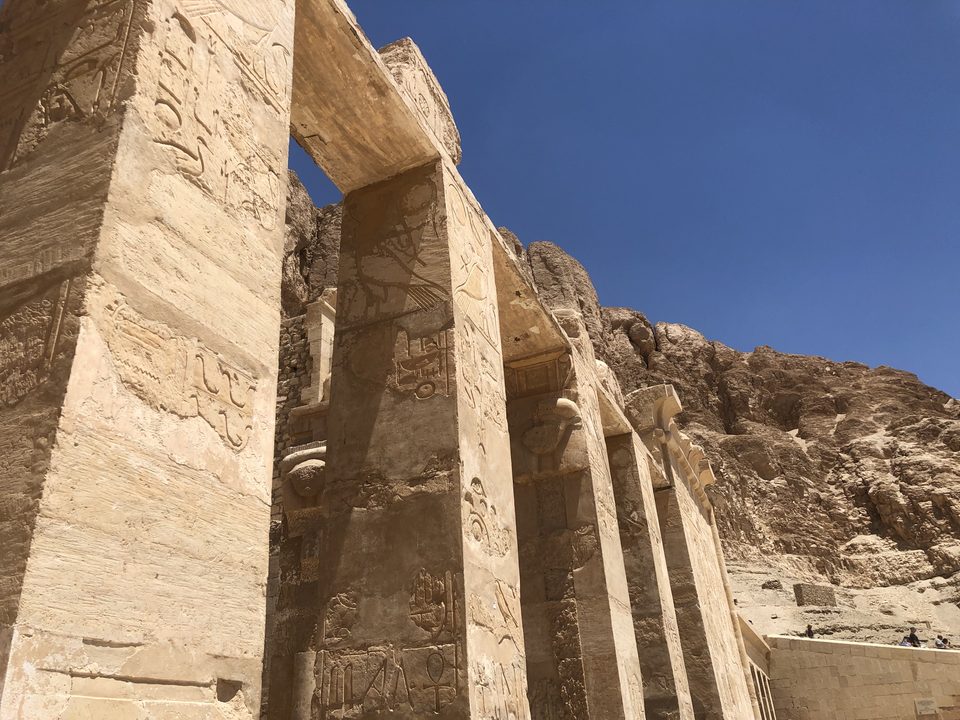
This careful alignment was deliberate. Ancient Egyptian architects designed the temple to symbolize the connection between the earthly world and the divine realm. The cliffs formed a natural backdrop that enhanced the temple’s sacred atmosphere and emphasized Hatshepsut’s association with the gods.
Colonnades and Statues
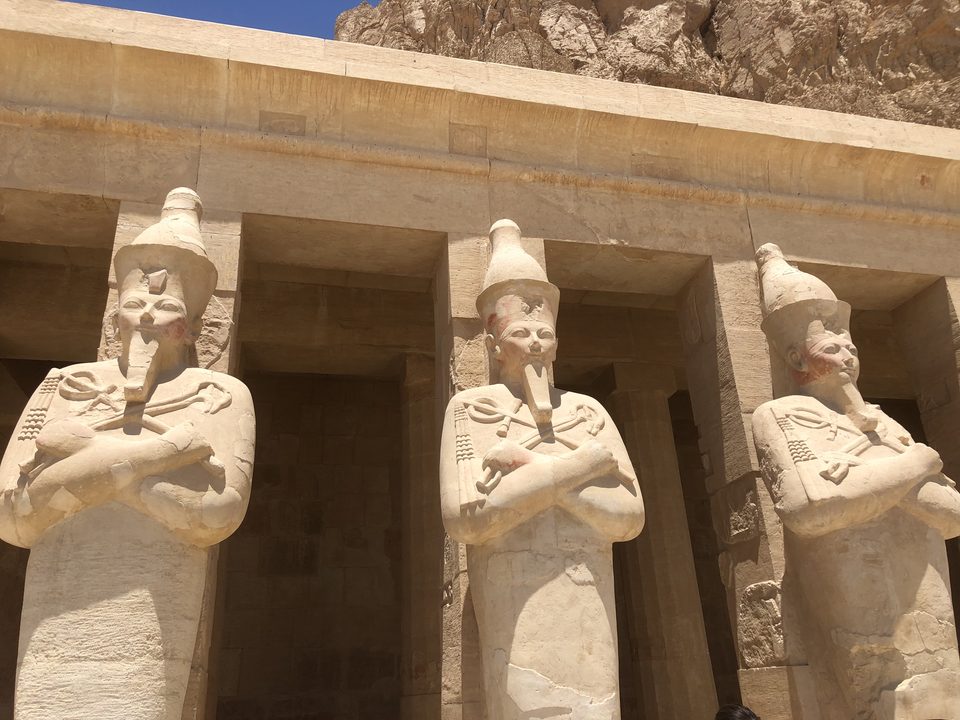
The temple’s colonnades are among its most distinctive features. Rows of elegant pillars create long, shaded walkways that guide visitors through the complex. These columns are decorated with relief carvings depicting important events from Hatshepsut’s reign, including her famous trading expedition to the Land of Punt and stories of her divine birth.
Large statues of Hatshepsut once stood throughout the temple. Interestingly, many portray her in the traditional form of a male pharaoh, wearing the royal kilt and false beard. Through this imagery, Hatshepsut reinforced her legitimacy as ruler of Egypt.
Sacred Spaces
At the highest level lies the temple’s most sacred area, including sanctuaries dedicated to Amun-Ra, the chief god of Egypt. Chapels dedicated to Hathor, goddess of love and motherhood, and Anubis, god of mummification and the afterlife, were also incorporated into the design.
The sanctuary of Amun was strategically positioned so that sunlight could penetrate deep into the temple during certain times of the year, enhancing its religious significance.
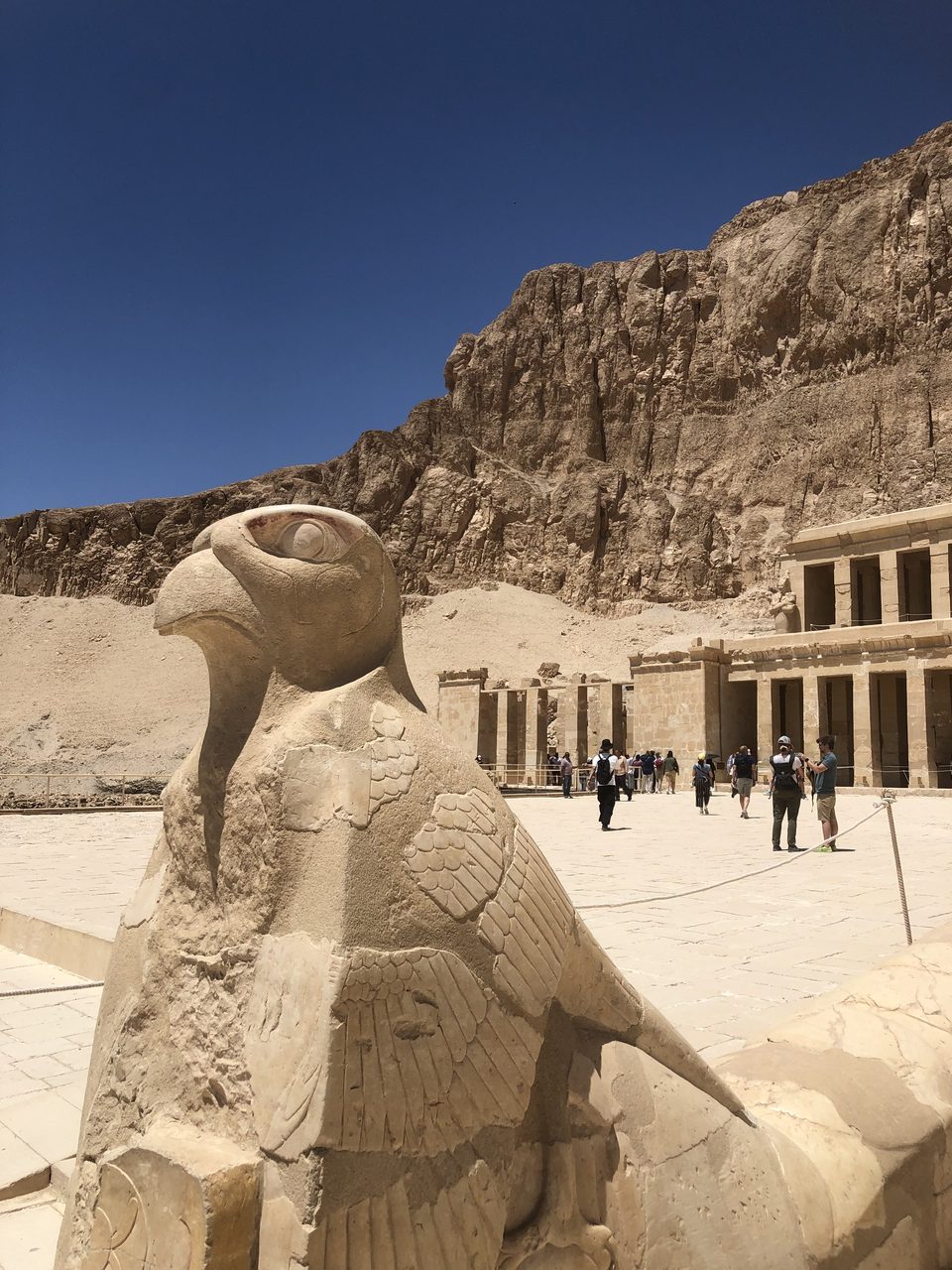
Artistic Decoration
The walls of the temple are covered with beautifully preserved reliefs and inscriptions. These carvings served both artistic and political purposes. They celebrate Hatshepsut’s achievements, religious devotion, and divine right to rule. The vivid scenes depicting the expedition to Punt provide some of the most valuable records of trade and international relations in ancient Egypt.
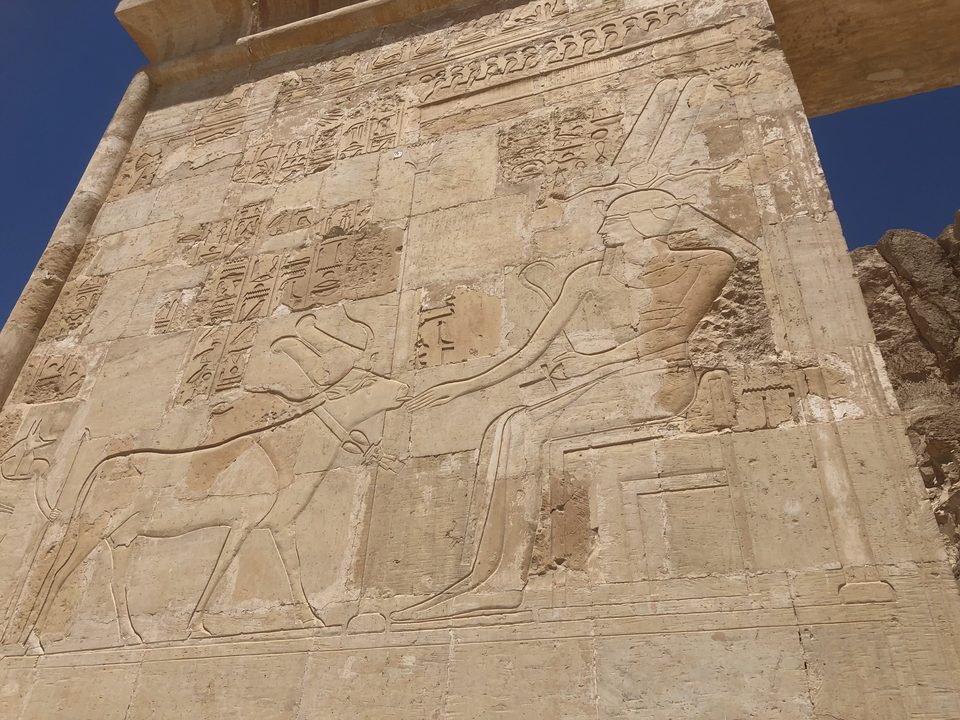
Architectural Legacy
The temple was designed by Hatshepsut’s trusted architect and advisor, Senenmut, whose innovative vision transformed traditional Egyptian temple architecture. The temple’s clean lines, balanced proportions, and terraced layout influenced later mortuary temples, including those built by subsequent New Kingdom pharaohs.
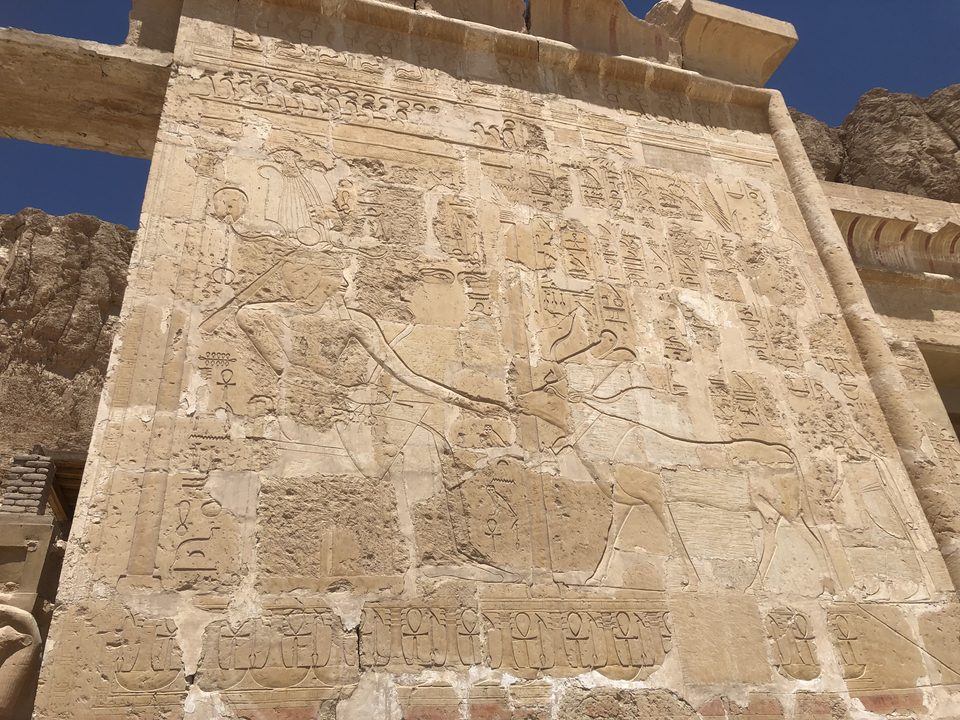
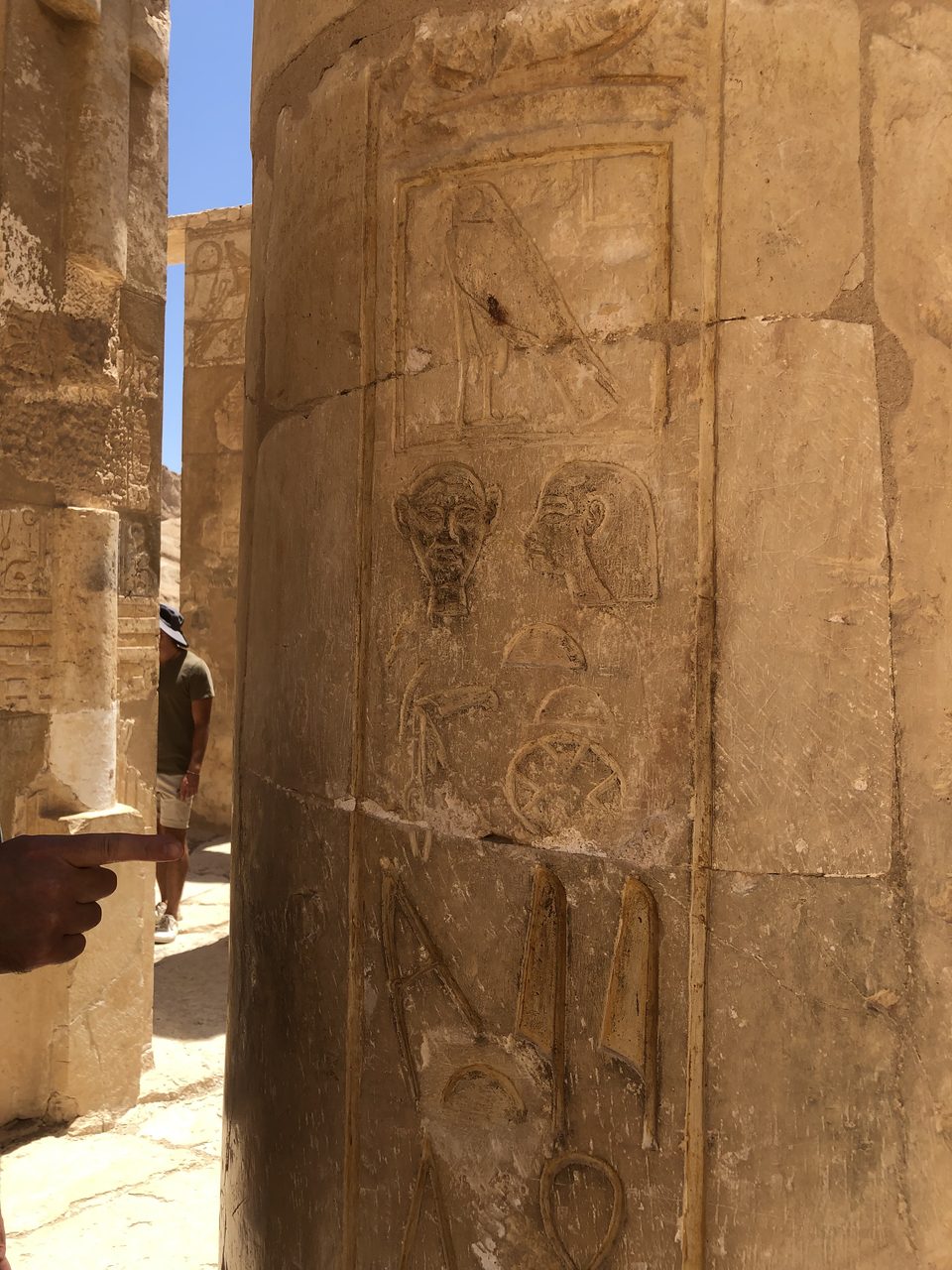
Today, the Temple of Hatshepsut is regarded as one of the greatest architectural achievements of ancient Egypt. Its graceful terraces, monumental colonnades, and perfect harmony with the surrounding cliffs continue to inspire archaeologists, historians, and visitors from around the world, standing as a lasting testament to the ambition and ingenuity of Egypt’s most successful female pharaoh.
 Users Today : 29
 Users This Month : 568
 Users This Year : 28356
 Total Users : 53657
 Views This Year : 34572
 Total views : 69750
 Who's Online : 0