If there’s one place in Egypt that truly captures the scale and splendour of ancient civilisation, it’s Karnak Temple. Located just north of Luxor, Karnak isn’t a single temple—it’s a vast complex of sanctuaries, pylons, and halls that evolved over 1,500 years, making it the largest religious structure ever built. Visiting Karnak feels like stepping into a monumental story carved in stone.
A Journey Back in Time
As you enter through the imposing first pylon, the sheer size of the complex takes your breath away. Karnak was dedicated primarily to Amun-Ra, the king of the gods, but also honoured Mut and Khonsu, forming the Theban Triad. Every pharaoh from the Middle Kingdom to the Ptolemaic era left their mark here, adding chapels, statues, and inscriptions that turned Karnak into a living chronicle of Egyptian history.
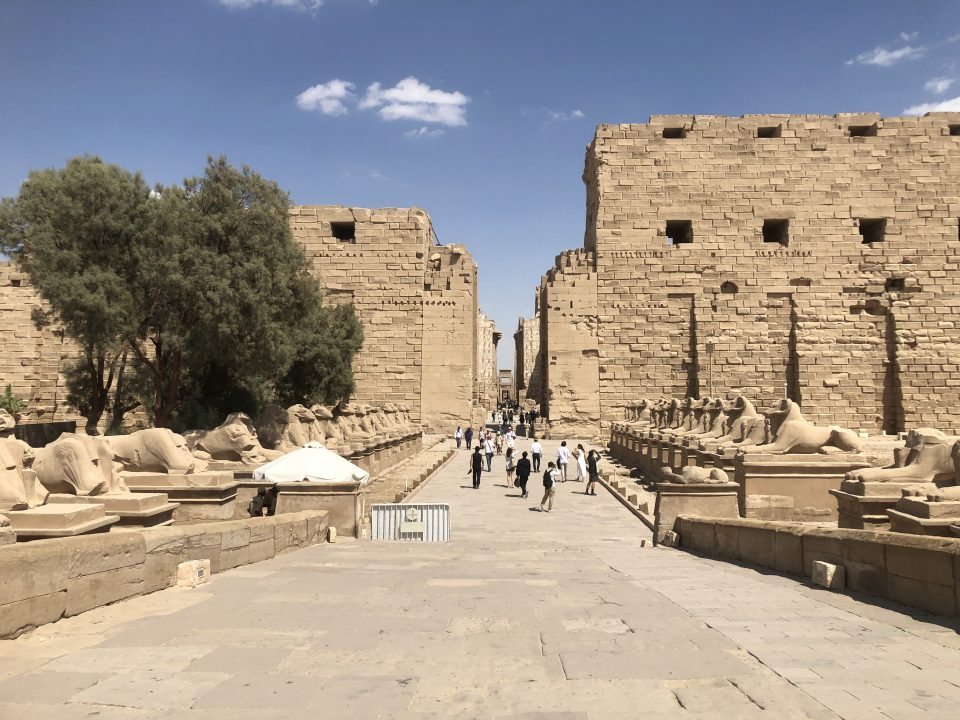
The Avenue of Sphinxes: Guardians of Karnak’s Sacred Way
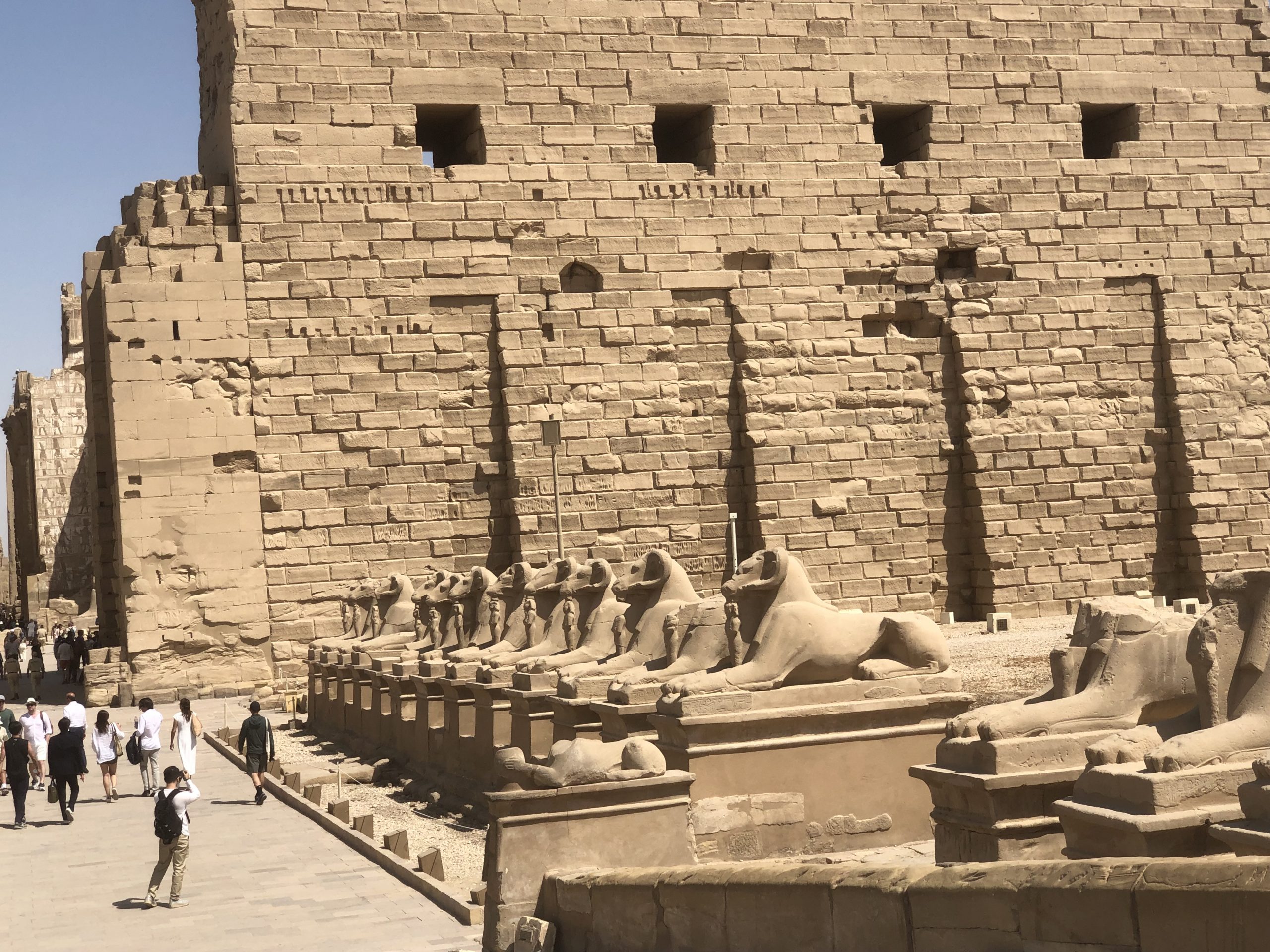
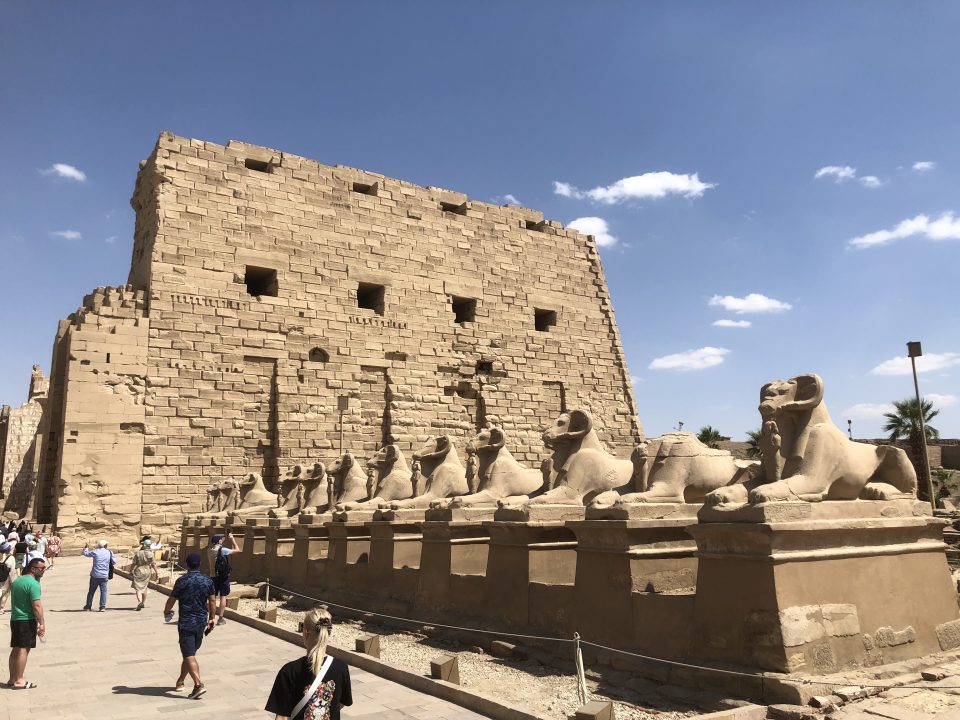
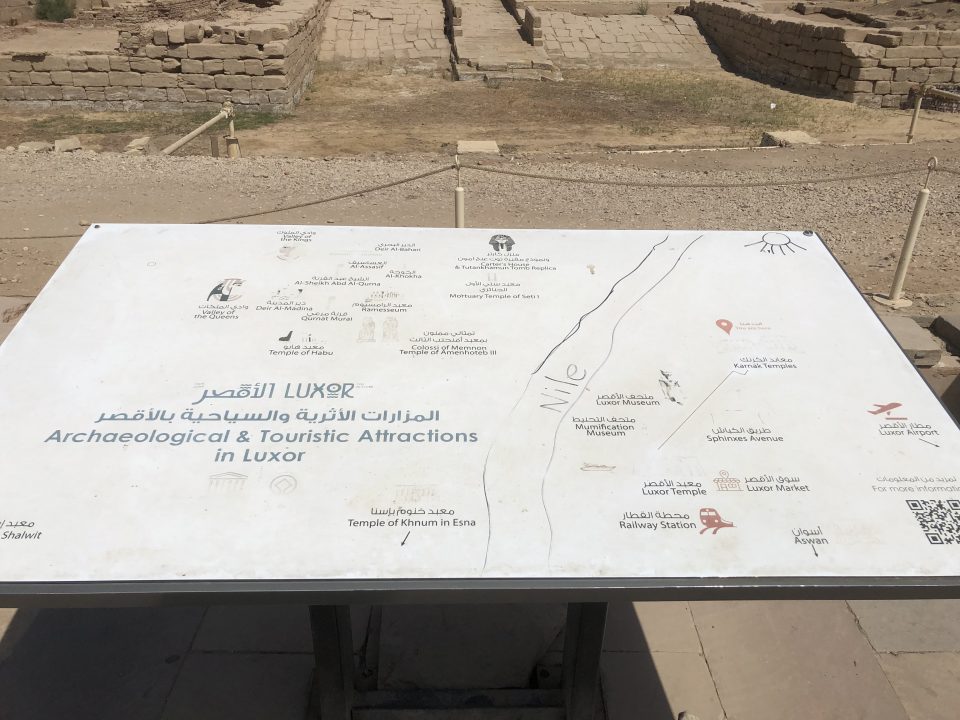
Before you even step inside Karnak Temple, you’re greeted by an extraordinary sight—the Avenue of Sphinxes, a processional path lined with majestic statues that once connected Karnak to Luxor Temple. These sphinxes are not the human-headed figures you might expect; most here are ram-headed, representing the god Amun, to whom Karnak was primarily dedicated. Each sphinx cradles a small statue of a pharaoh between its paws, symbolising divine protection and the inseparable bond between king and god.
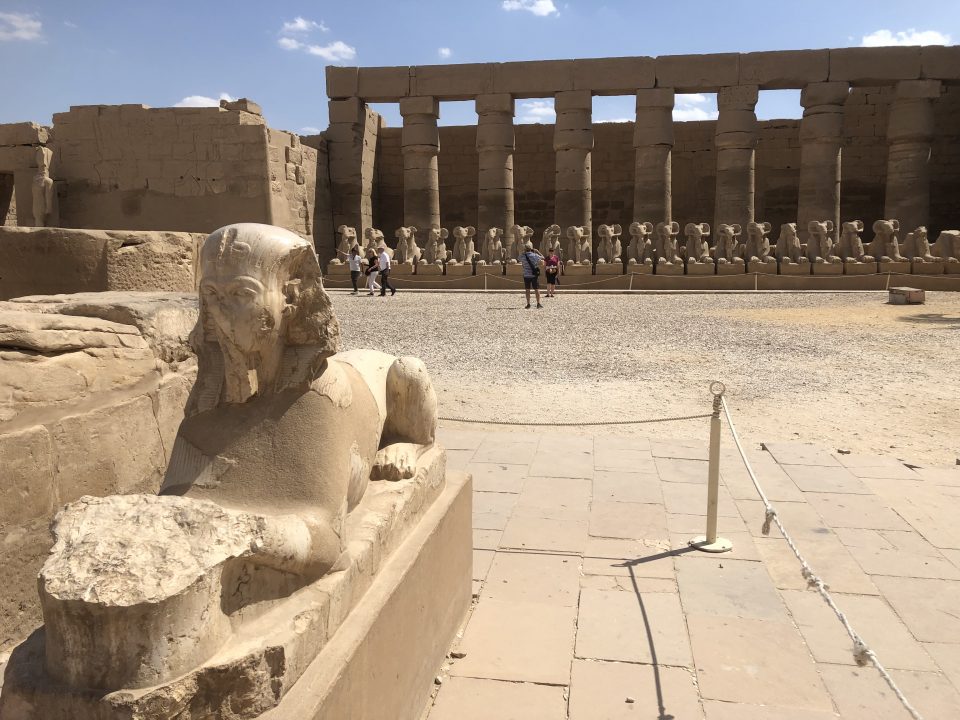
This avenue was the ceremonial route for grand festivals, including the Opet Festival, when statues of Amun, Mut, and Khonsu were carried in procession from Karnak to Luxor. Imagine the scene thousands of years ago: priests chanting, incense swirling, and crowds gathered as the sacred barques passed between these silent stone guardians.
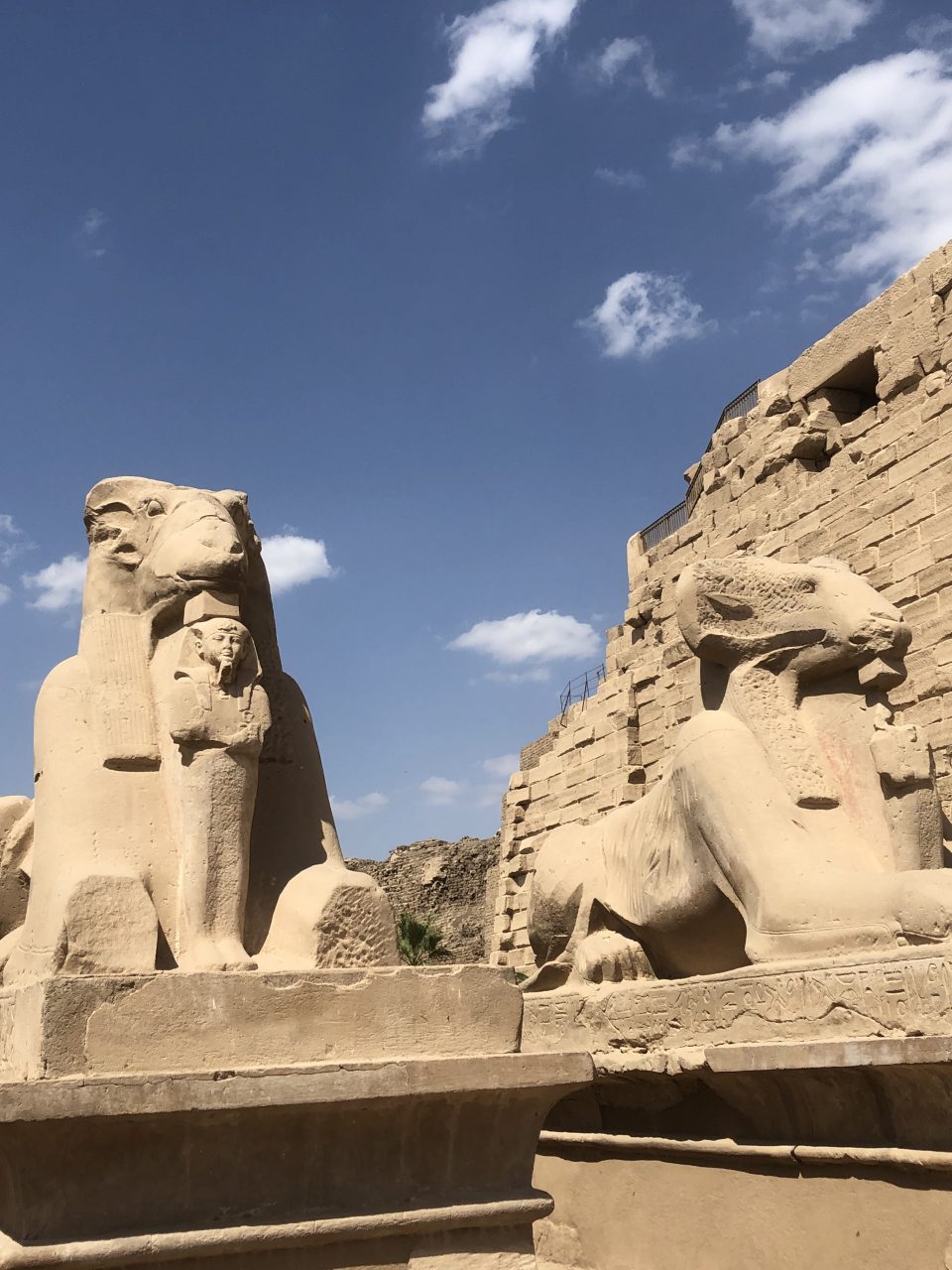
Today, many of these sphinxes remain in place, weathered but dignified, offering visitors a glimpse into the grandeur of ancient ritual life. For photographers, the avenue is a dream—especially at sunrise or sunset when the golden light casts dramatic shadows across the statues.
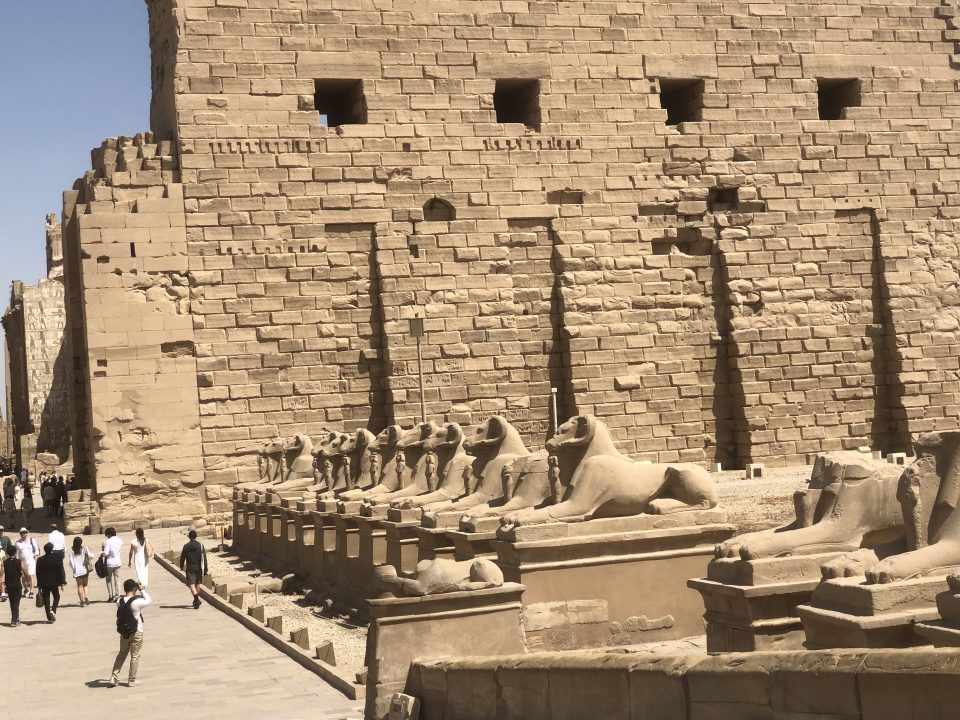
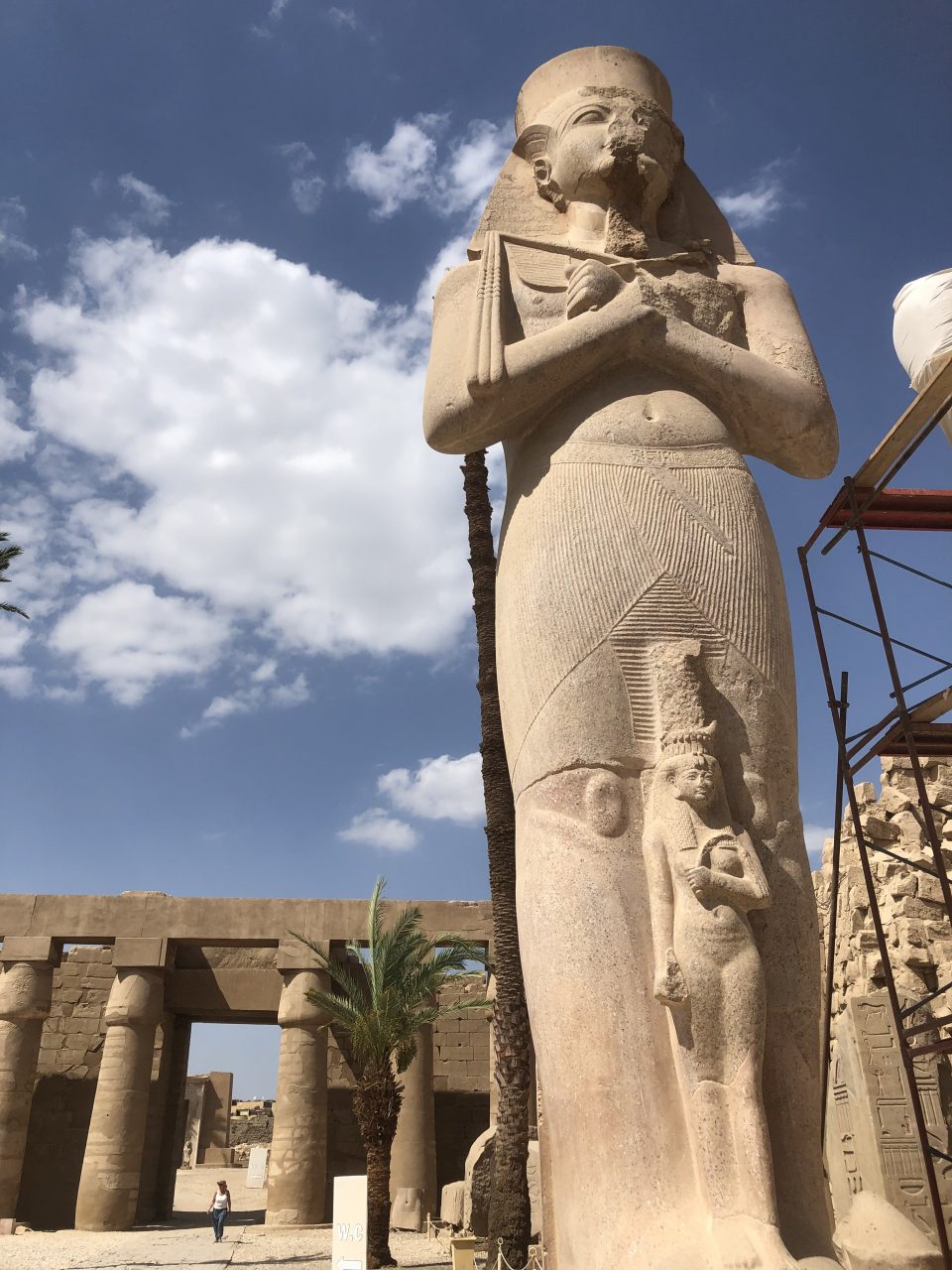
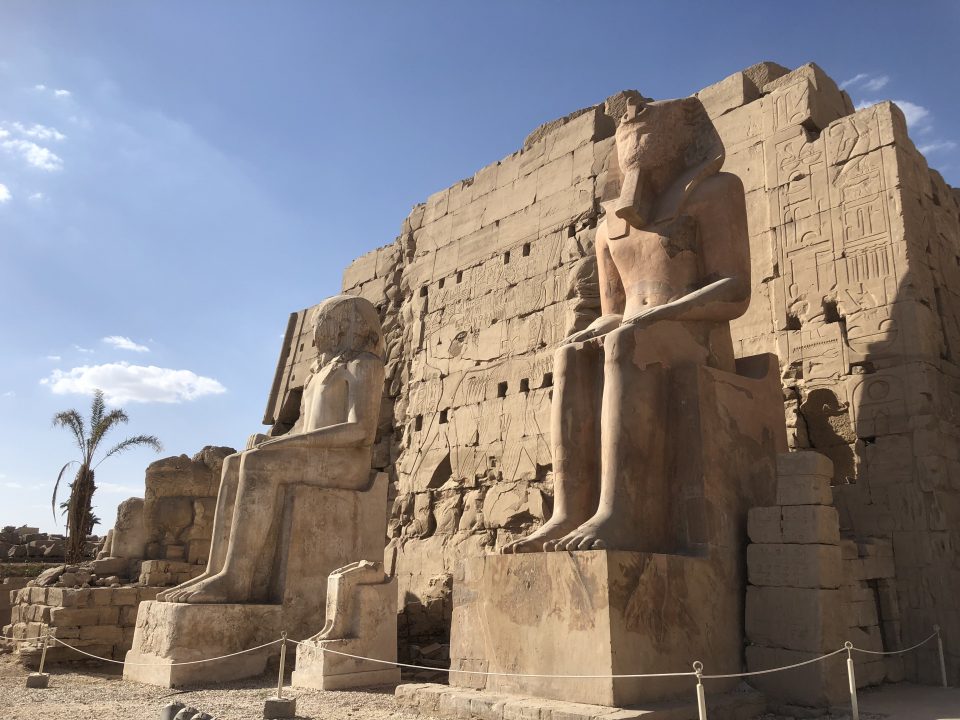
The First Pylon of Karnak Temple is the monumental gateway that marks the entrance to one of the most awe-inspiring religious complexes in the world. Standing at an impressive 43 metres high and 113 metres wide, it is the largest pylon ever built in Egypt. Constructed during the reign of Nectanebo I (30th Dynasty), this colossal structure was intended to symbolise the power and divine authority of the pharaoh, serving as a threshold between the earthly realm and the sacred domain of Amun-Ra.
The Obelisks of Karnak: Pillars of Power and Devotion
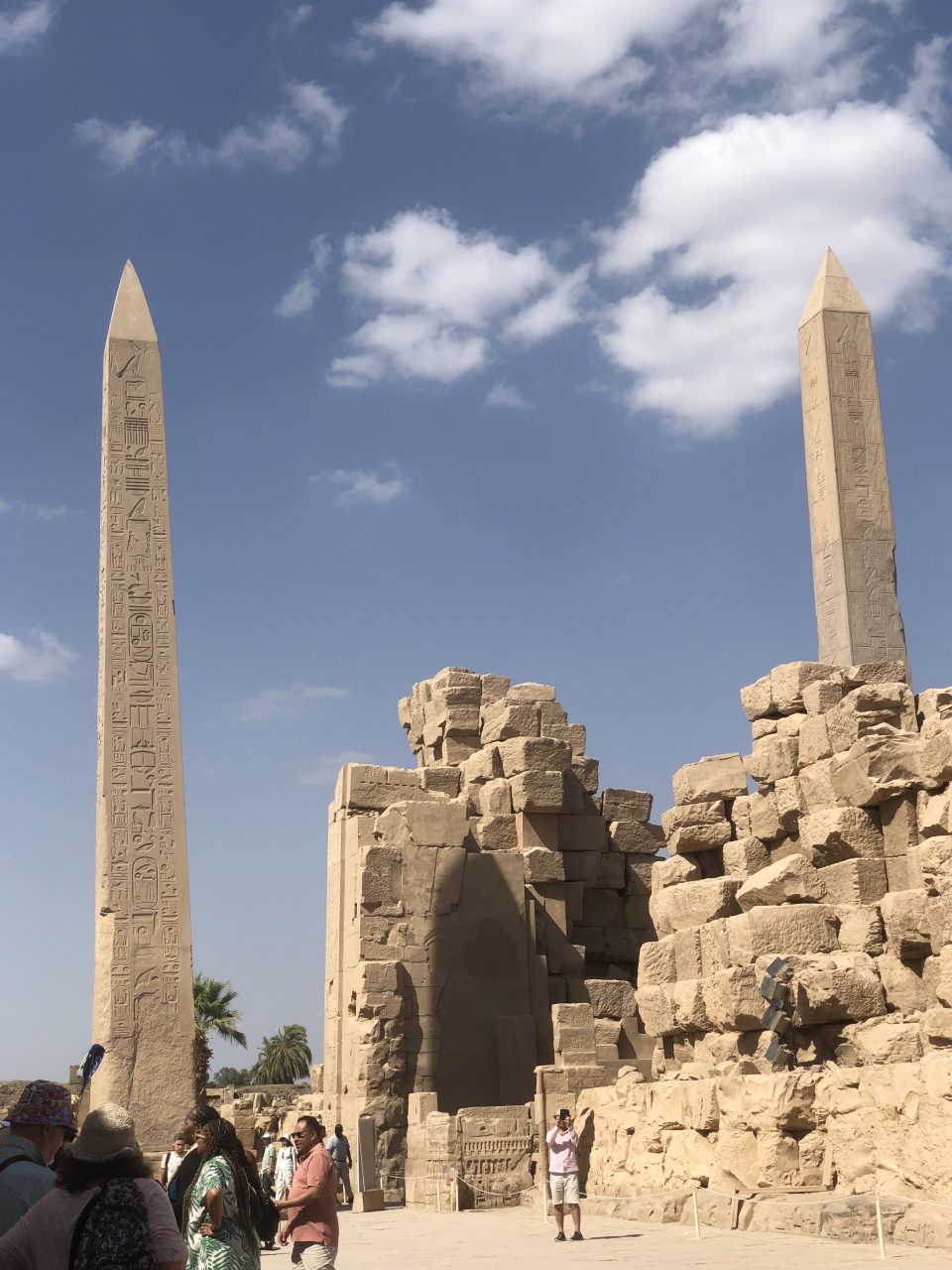
Karnak Temple is home to some of the most impressive obelisks in Egypt, each a towering testament to the ambition and faith of the pharaohs who commissioned them. These monolithic spires, carved from single blocks of granite quarried in Aswan, were dedicated to Amun-Ra, the supreme deity of Thebes, and symbolised the sun’s rays—a divine connection between heaven and earth.
Hatshepsut’s Obelisk: A Monument of Ambition and Legacy
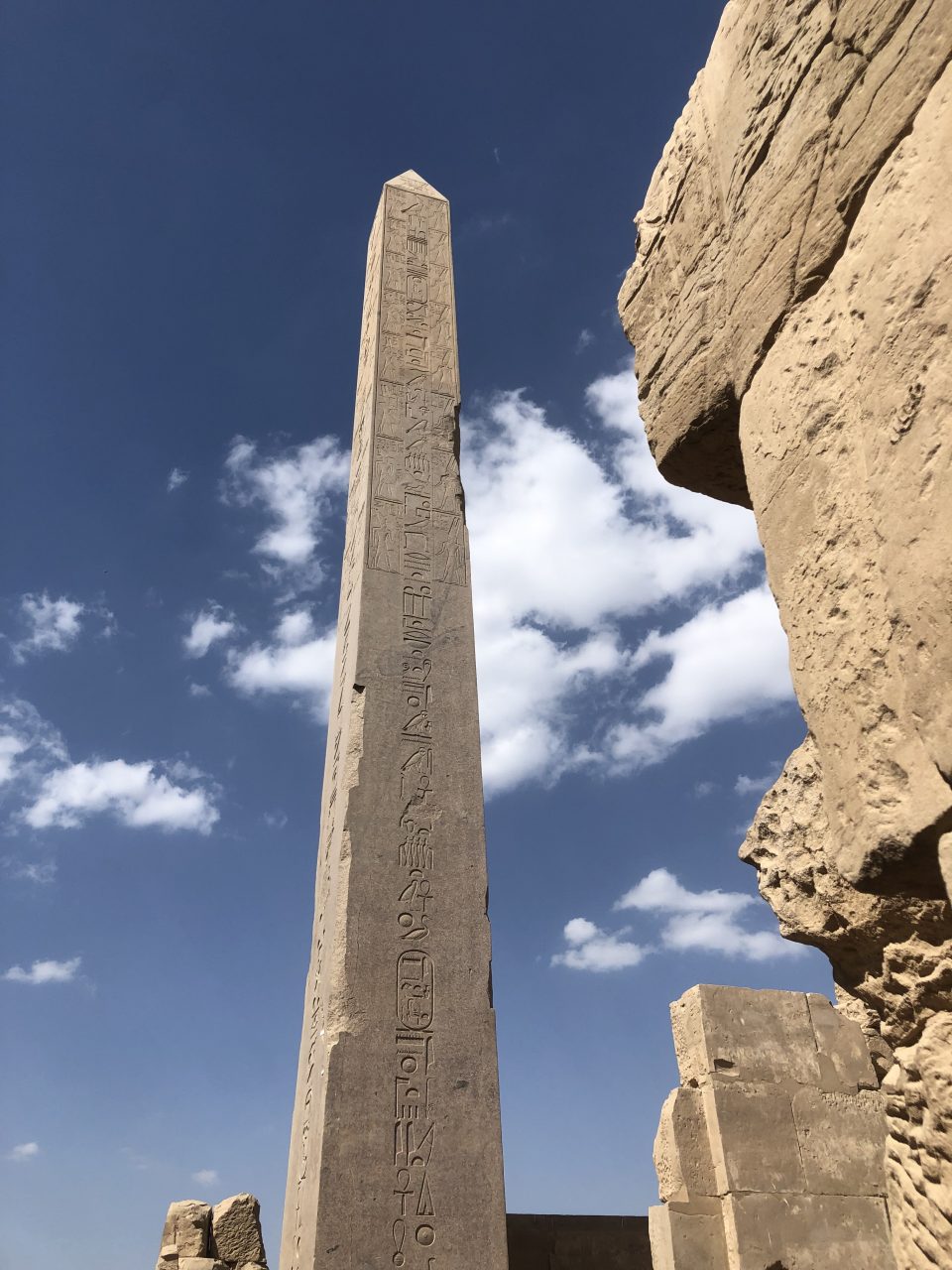
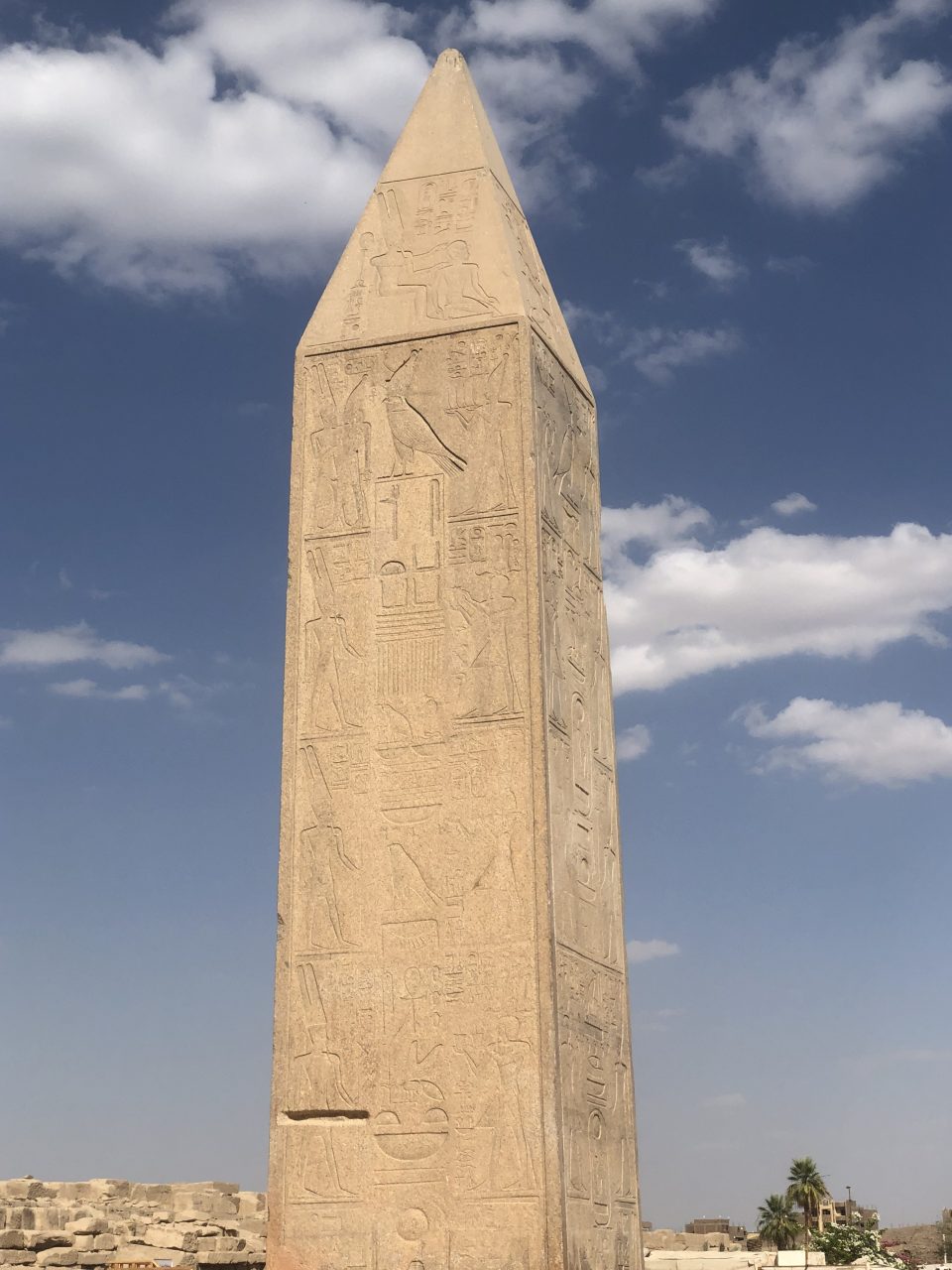
Among the towering wonders of Karnak Temple, one of the most striking features is the Obelisk of Hatshepsut, a testament to the ambition and vision of Egypt’s most powerful female pharaoh. Rising nearly 29.5 metres high and weighing around 320 tonnes, this granite monolith is the tallest surviving obelisk in Egypt and was erected during Hatshepsut’s reign in the 18th Dynasty (circa 1473 BCE).
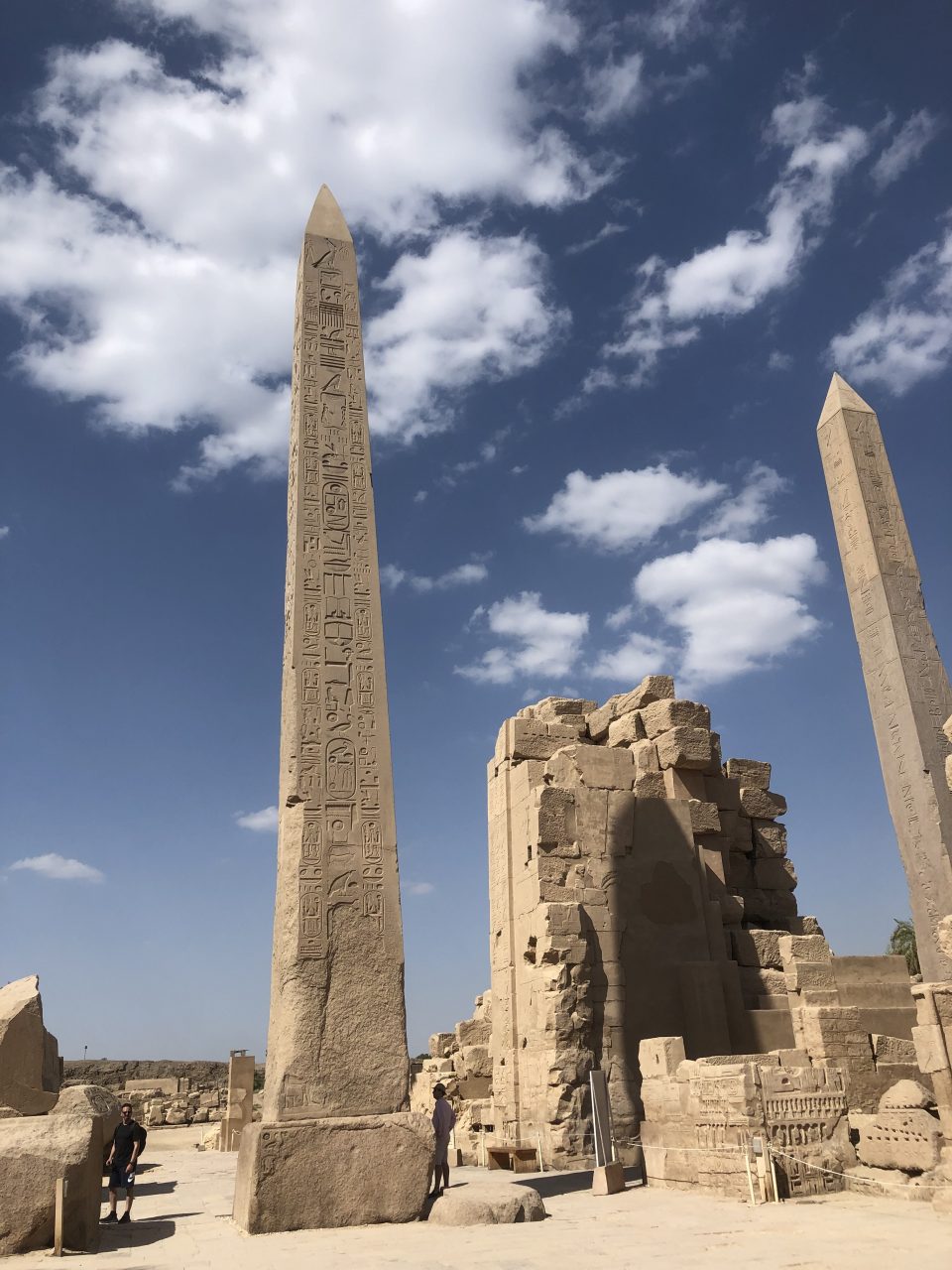
Carved from a single block of pink granite from Aswan, the obelisk was dedicated to Amun-Ra, the chief deity of Karnak. Its four sides are inscribed with hieroglyphic texts praising Hatshepsut’s devotion and proclaiming her divine right to rule. What makes this monument extraordinary is not just its size but its symbolism: Hatshepsut commissioned it to assert her legitimacy as pharaoh in a male-dominated world, and it still stands as a bold statement of her enduring legacy.
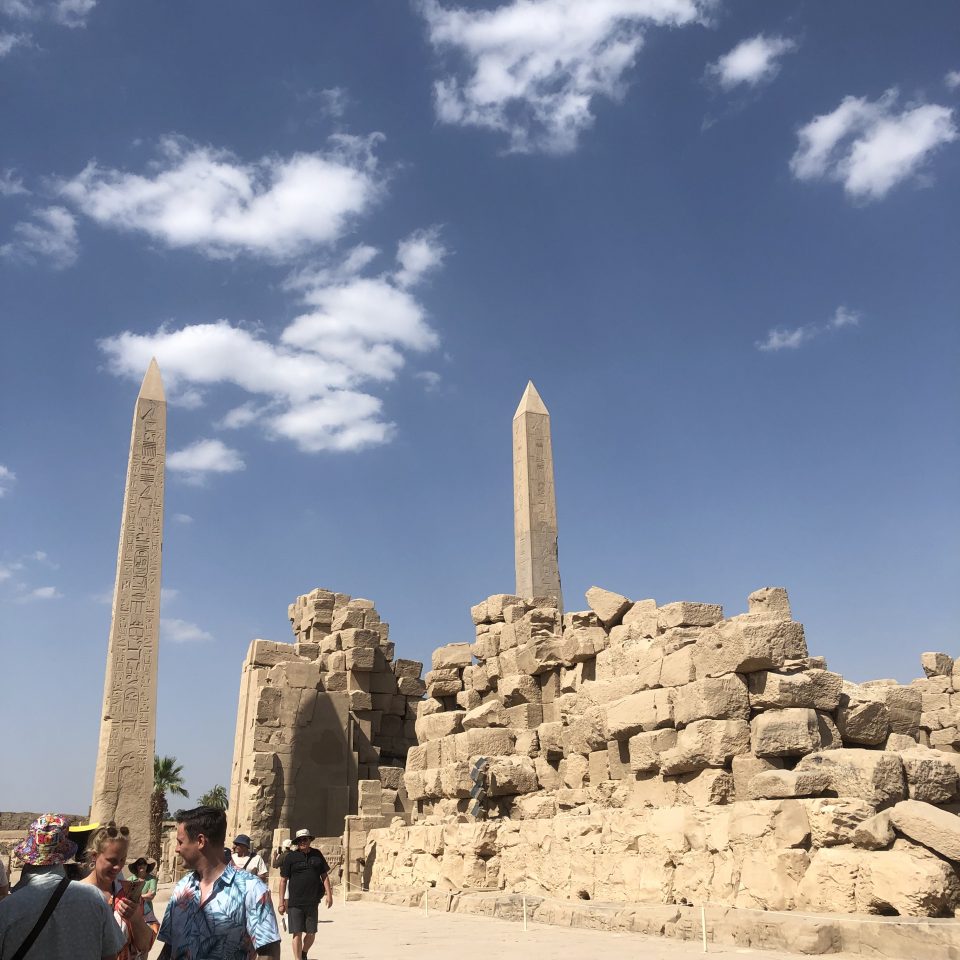
Thutmose I and Thutmose III Obelisks
Other notable obelisks include those commissioned by Thutmose I and Thutmose III, which once stood proudly in the temple’s courtyards. Though some have toppled over time, their bases and fragments remain, offering a glimpse into the scale and artistry of these monuments.
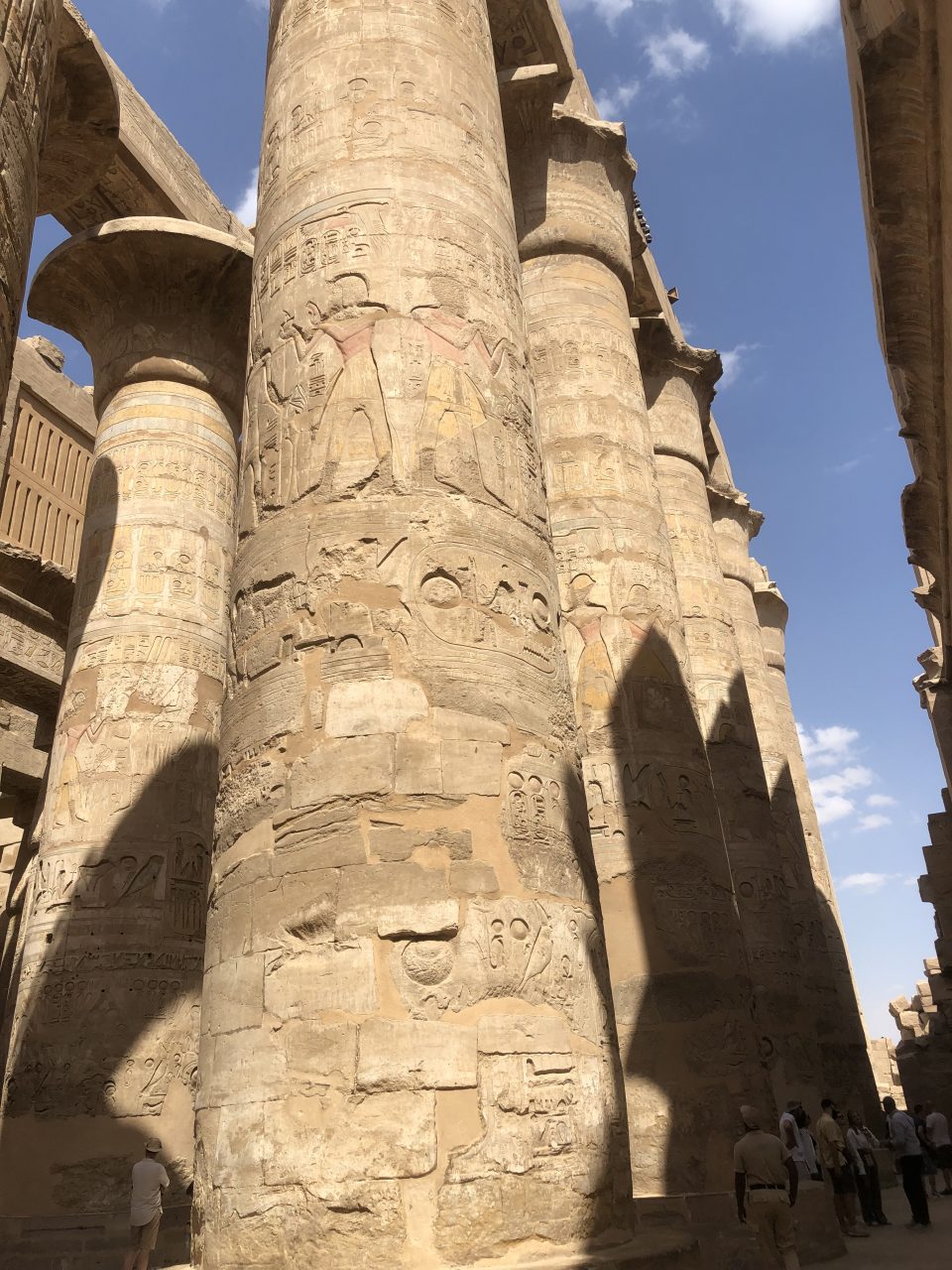
The Columns of Karnak: A Forest of Stone
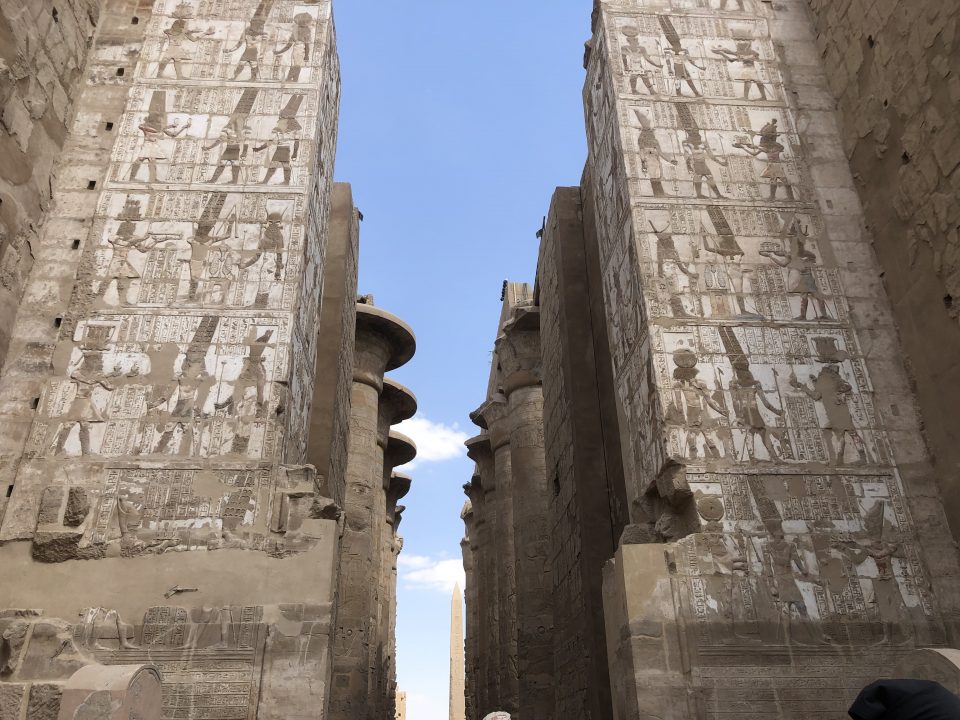
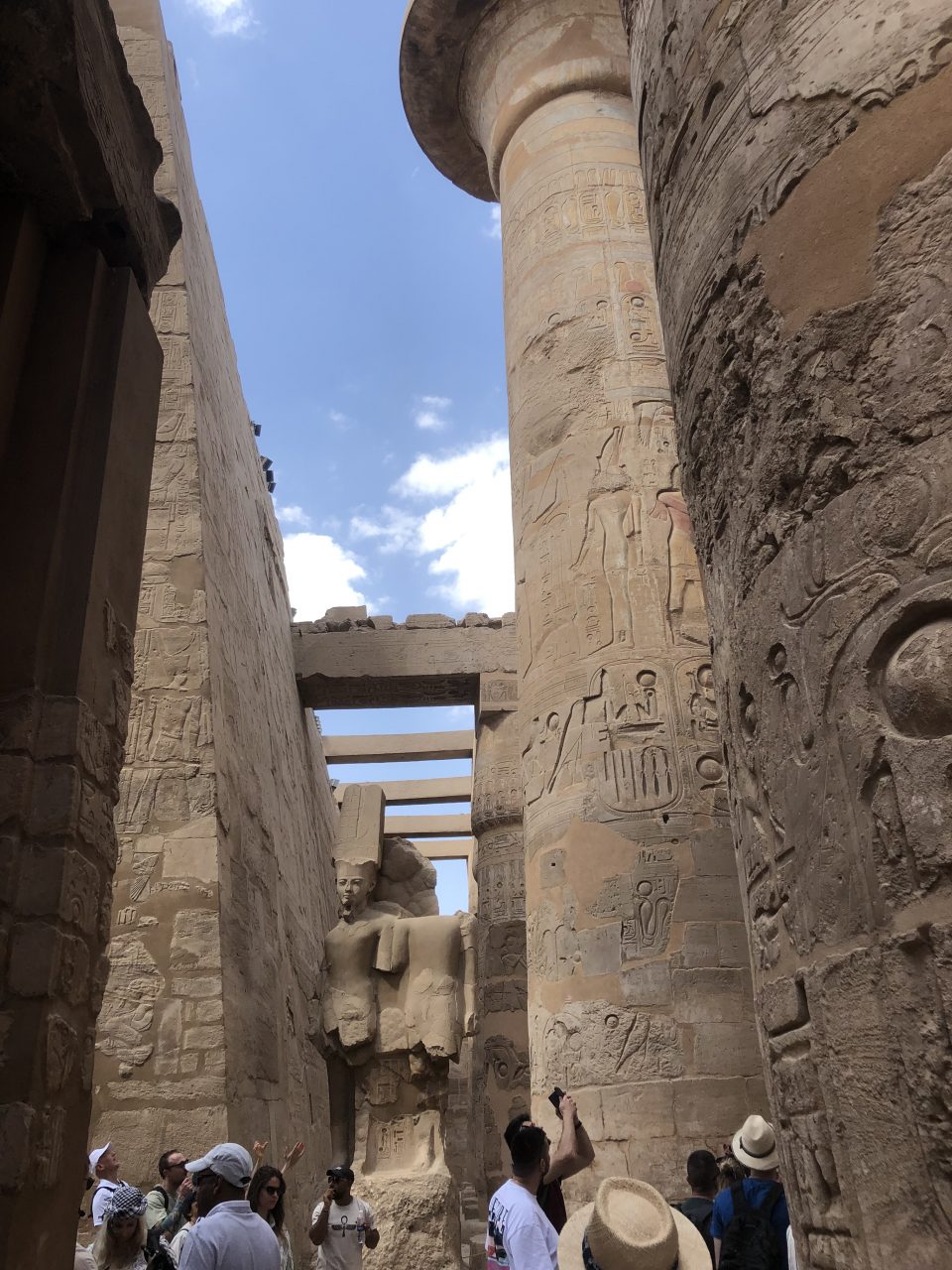
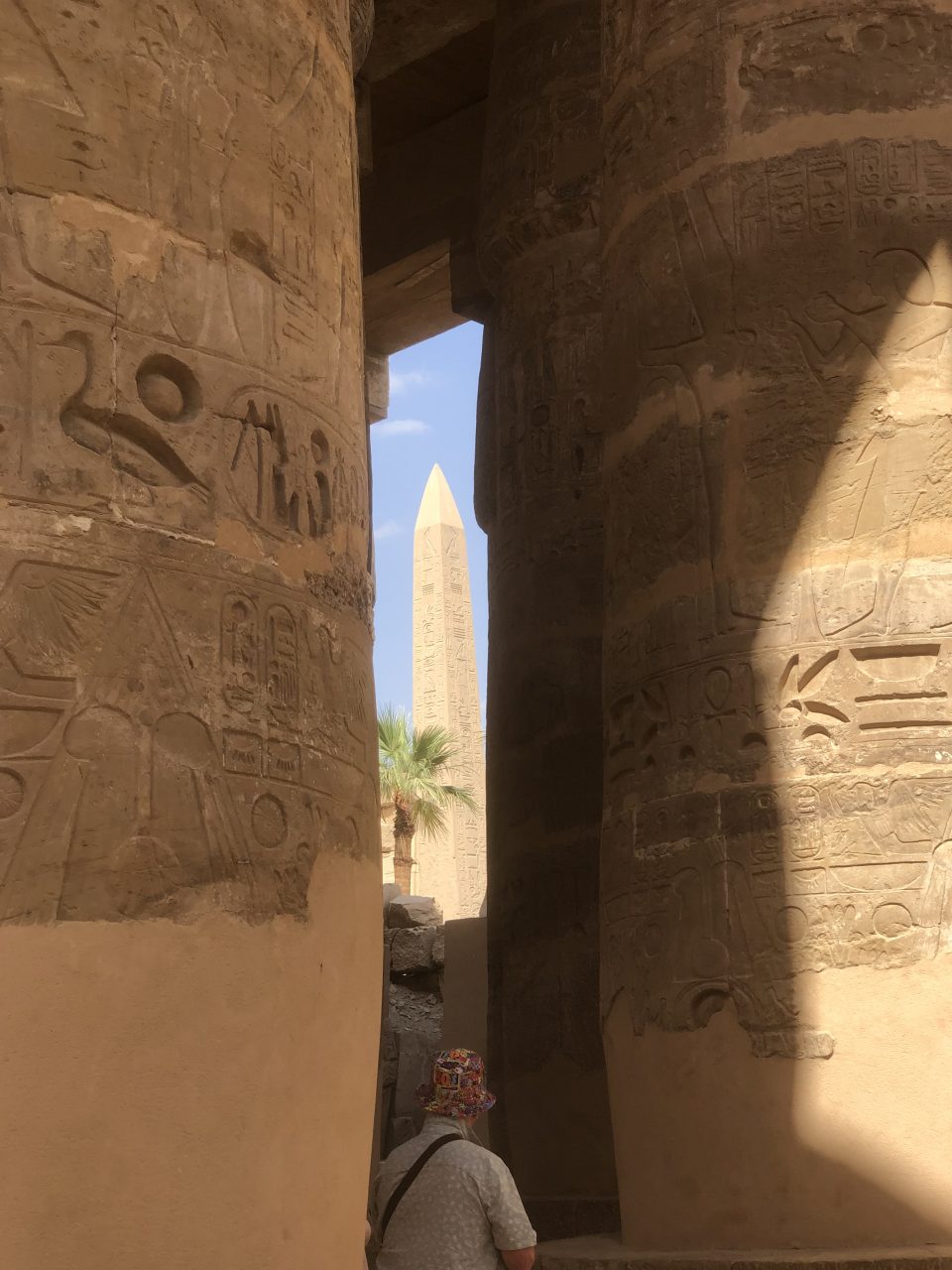
One of the most awe-inspiring sights at Karnak Temple is its Great Hypostyle Hall, a vast space filled with 134 colossal columns arranged in 16 rows. Built during the reigns of Seti I and Ramses II in the 19th Dynasty, this hall covers an area of 5,000 square metres, making it the largest of its kind in the world. Walking through this stone forest feels like stepping into a cathedral of the ancient world, where every pillar seems to echo the prayers and processions of a civilisation devoted to the divine.
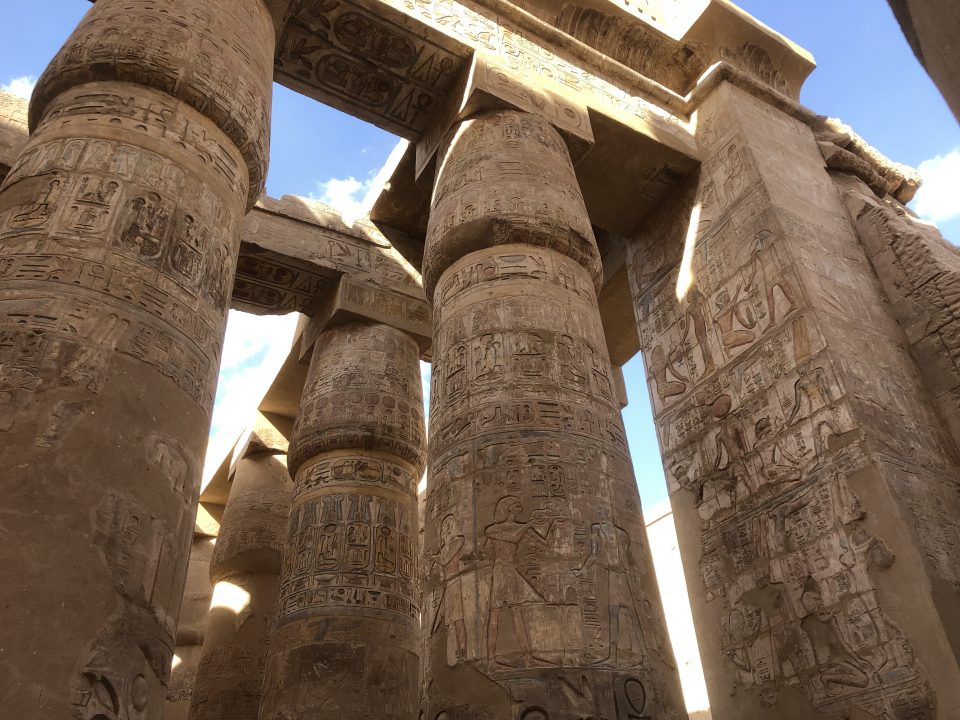
Design and Scale
The central twelve columns soar to an astonishing 21 metres high, crowned with open papyrus capitals that symbolise rebirth and creation. Surrounding them are slightly shorter columns topped with closed papyrus capitals, creating a layered effect that draws the eye upward and enhances the sense of grandeur. Originally, the columns and ceiling were painted in vibrant colours—traces of red, blue, and gold still cling to the stone, offering a tantalising glimpse of their former splendour.
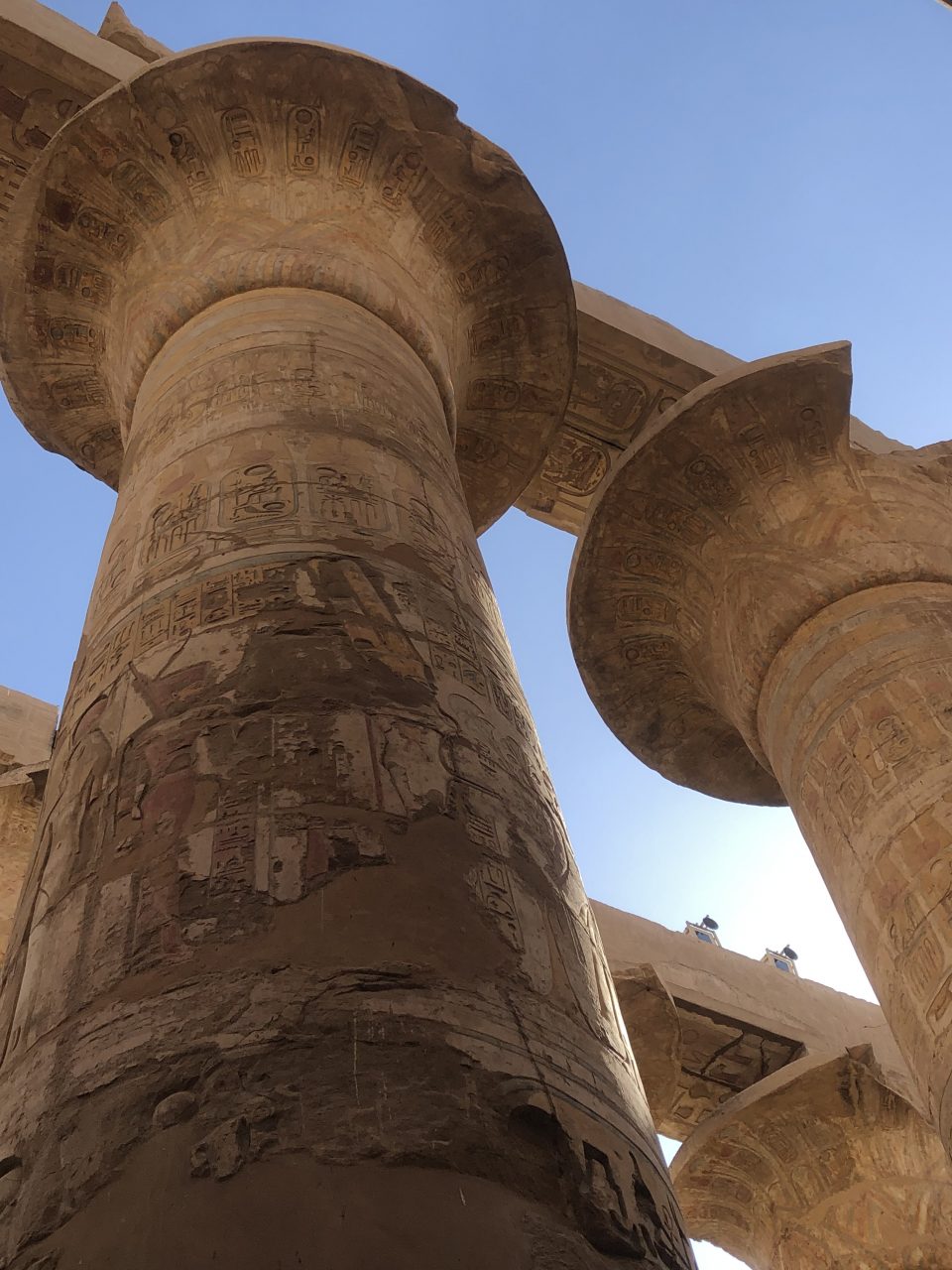
Symbolism and Meaning
The design of the Hypostyle Hall was not merely architectural; it was deeply symbolic. The columns represent the primeval papyrus swamp from which life emerged in Egyptian creation myths. Standing among them, you feel the intended effect: to evoke the moment of creation and the presence of the gods. Every detail, from the towering height to the hieroglyphic inscriptions carved into the shafts, reinforces the temple’s role as a bridge between earth and heaven.
Tutankhamun at Karnak: Restoring the Glory of Amun
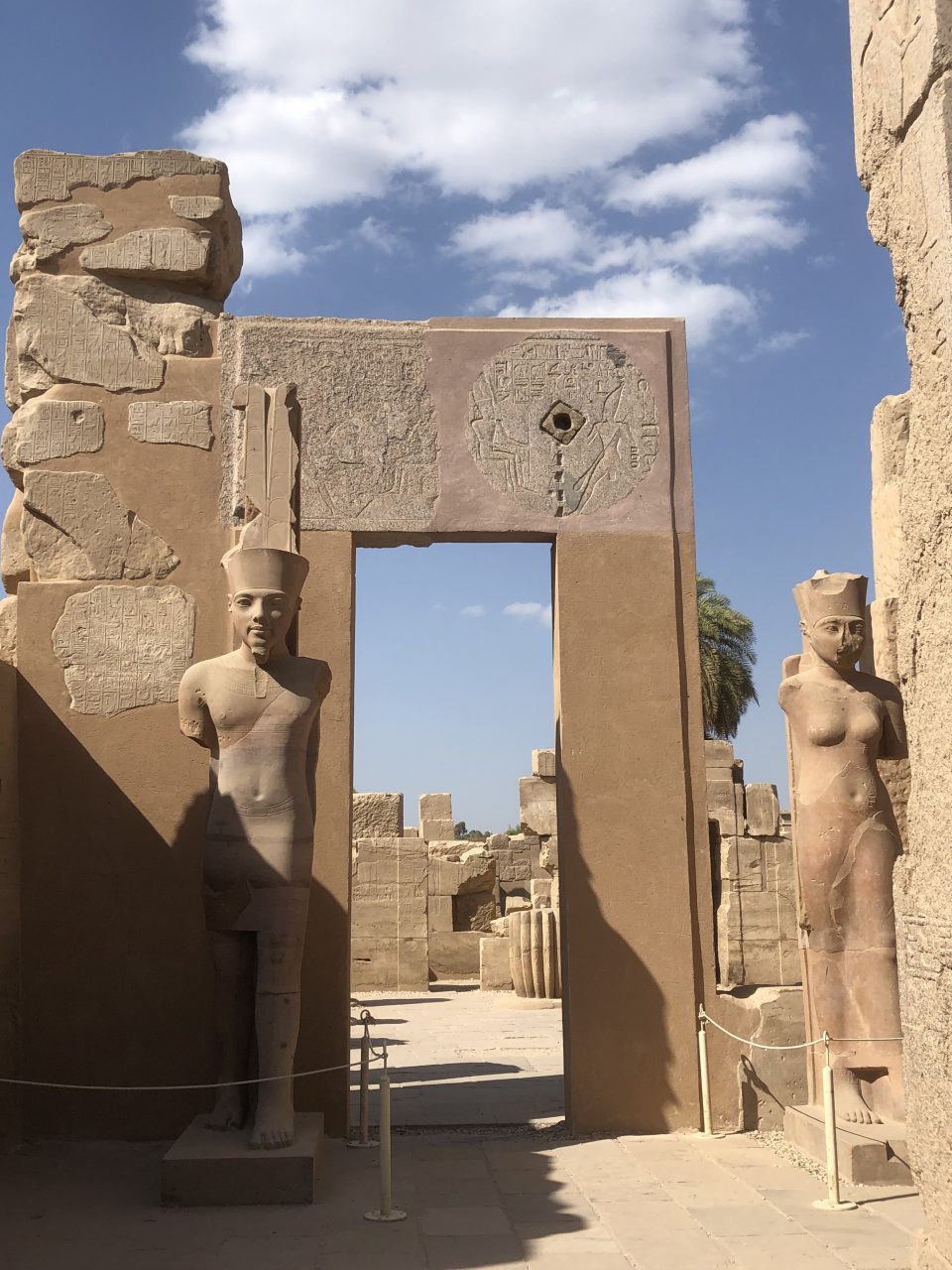
Although Tutankhamun is most famous for his tomb in the Valley of the Kings, his legacy also touches Karnak Temple. After the religious upheaval caused by his predecessor Akhenaten—who abandoned the worship of Amun in favour of Aten—Tutankhamun restored the traditional cult of Amun-Ra, bringing life back to Karnak’s sacred precincts. During his short reign (c. 1332–1323 BCE), the young pharaoh commissioned works at Karnak to reaffirm Egypt’s devotion to Amun and re-establish the temple’s central role in Theban worship.
What Remains Today
Fragments of Tutankhamun’s contributions can still be seen in Karnak’s Open-Air Museum, where blocks from dismantled structures bear his cartouche. These include parts of a small temple and chapels dedicated to Amun and Mut. Though modest compared to the grand pylons and obelisks of other rulers, these remnants are historically significant—they mark the return to traditional religion after the Amarna period.
Why It Matters
Tutankhamun’s work at Karnak symbolises a turning point in Egyptian history. His restoration projects helped revive the temple’s status as the spiritual heart of Egypt, paving the way for later expansions by powerful pharaohs like Horemheb and Ramses II.
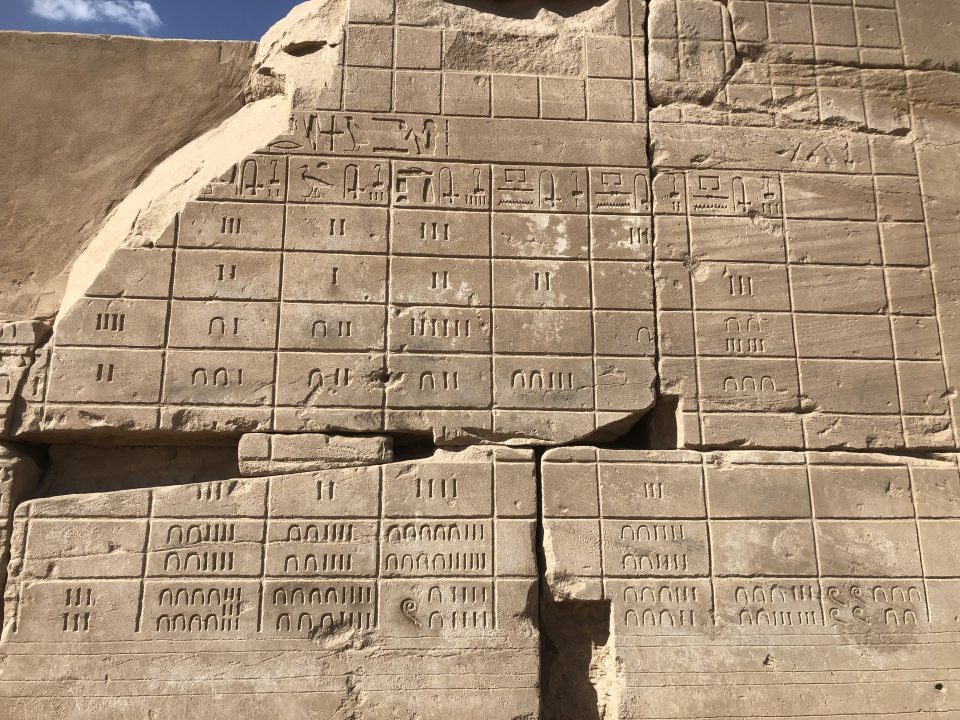
One example in Karnak’s walls of mathematical expression, showing how numbers were woven into the spiritual life of ancient Egypt.
The Blue Hues of Karnak: Echoes of the Sky
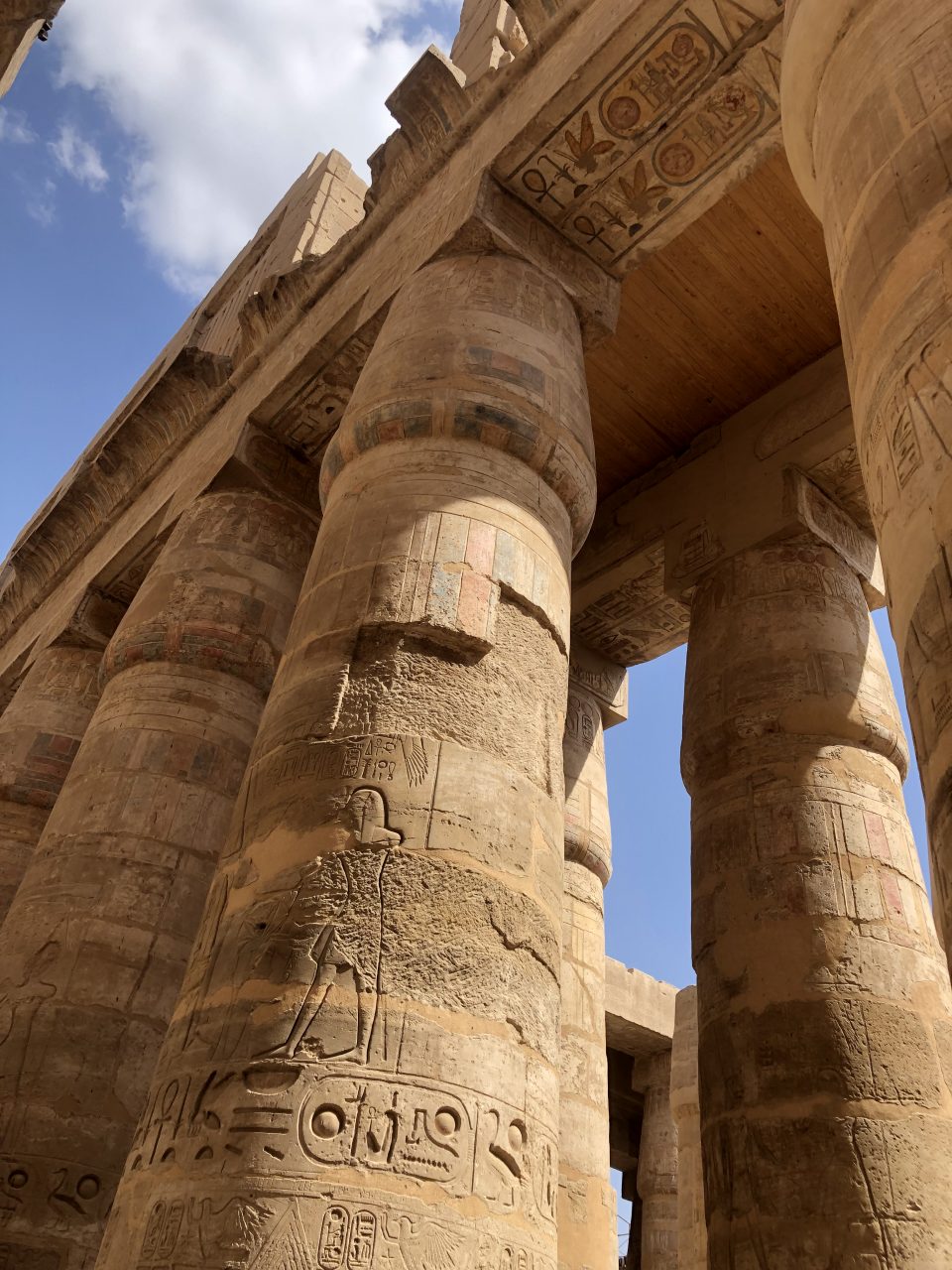
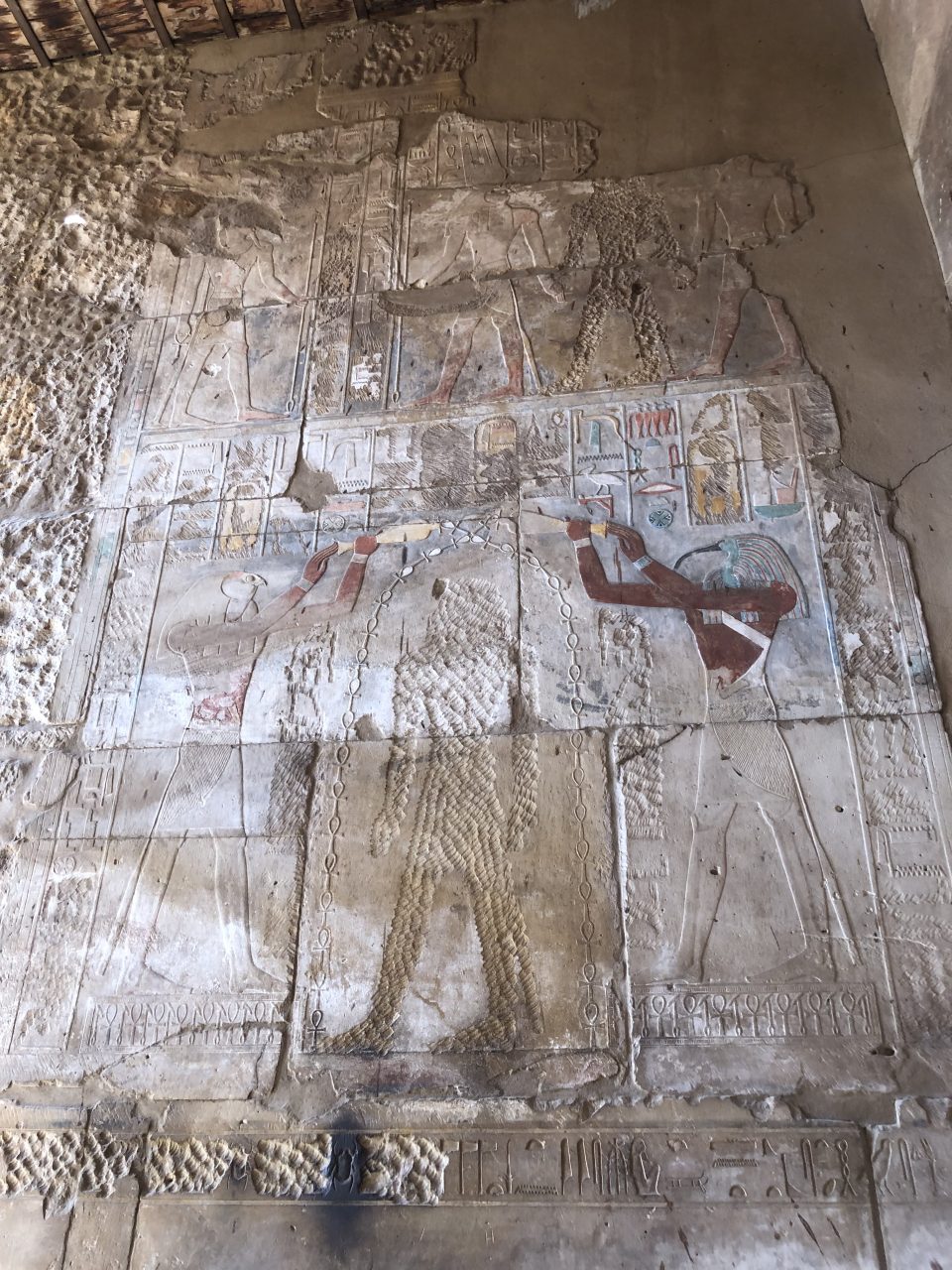
When exploring Karnak Temple, look closely at the walls and ceilings—you’ll notice faint traces of blue pigment, a reminder of the temple’s original splendour. In ancient times, Karnak was not the bare stone monument we see today; its surfaces were richly painted in vibrant colours, with blue symbolising the sky, water, and divine creation. This colour often adorned ceilings to represent the heavens, sometimes dotted with golden stars, turning the temple into a cosmic sanctuary.
The blue pigment was typically made from Egyptian blue, one of the world’s first synthetic pigments, created from a mixture of silica, copper, and calcium. It was prized for its durability and brilliance, used to evoke the eternal nature of the gods. Though centuries of exposure have faded most of the colours, you can still spot patches of blue in the Great Hypostyle Hall, especially on the undersides of papyrus-bloom capitals and ceiling blocks.
Turn to the next page for the adventure of Luxor Temple:
 Users Today : 21
 Users This Month : 1351
 Users This Year : 27486
 Total Users : 52787
 Views This Year : 33353
 Total views : 68531
 Who's Online : 0