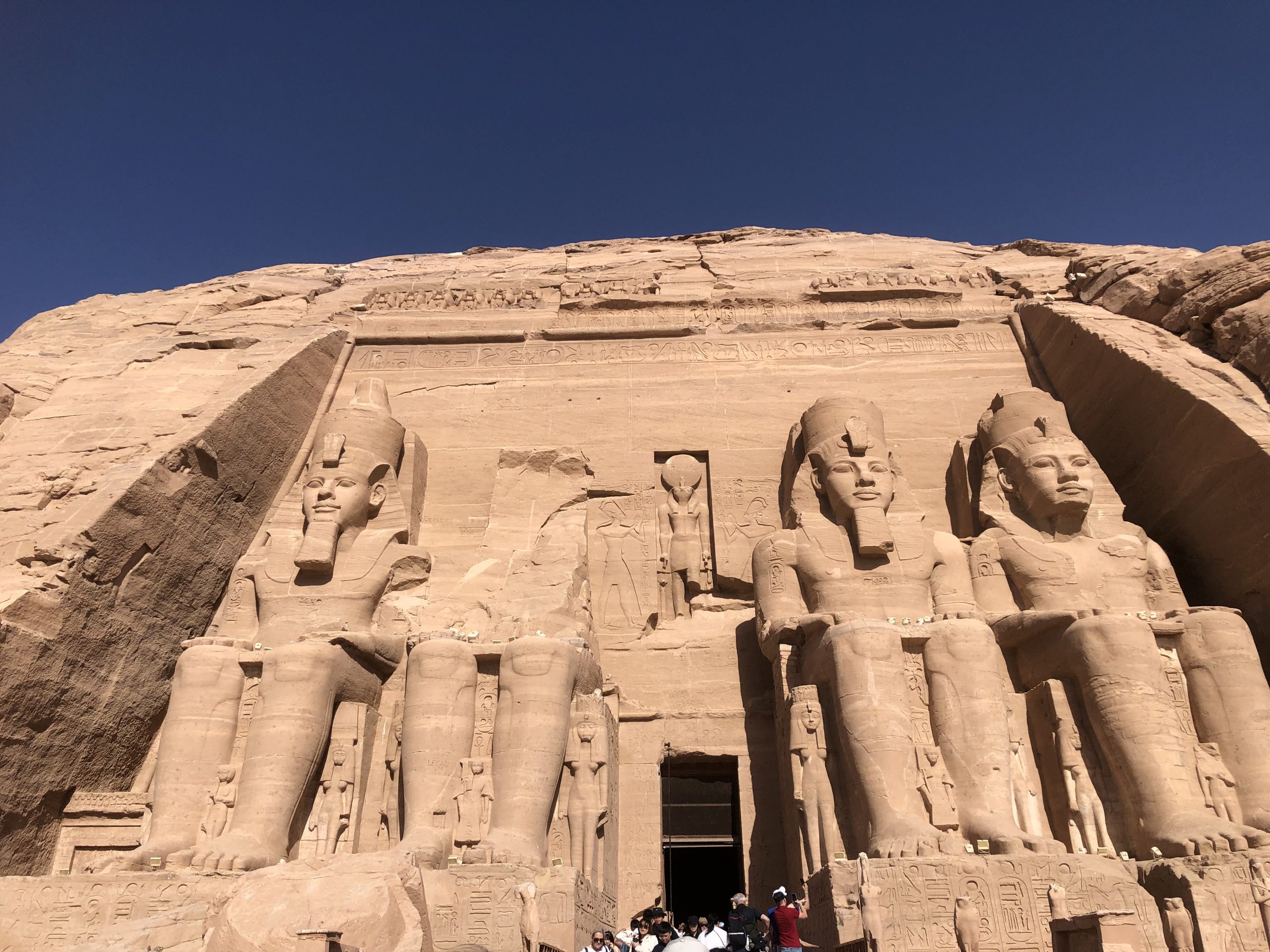
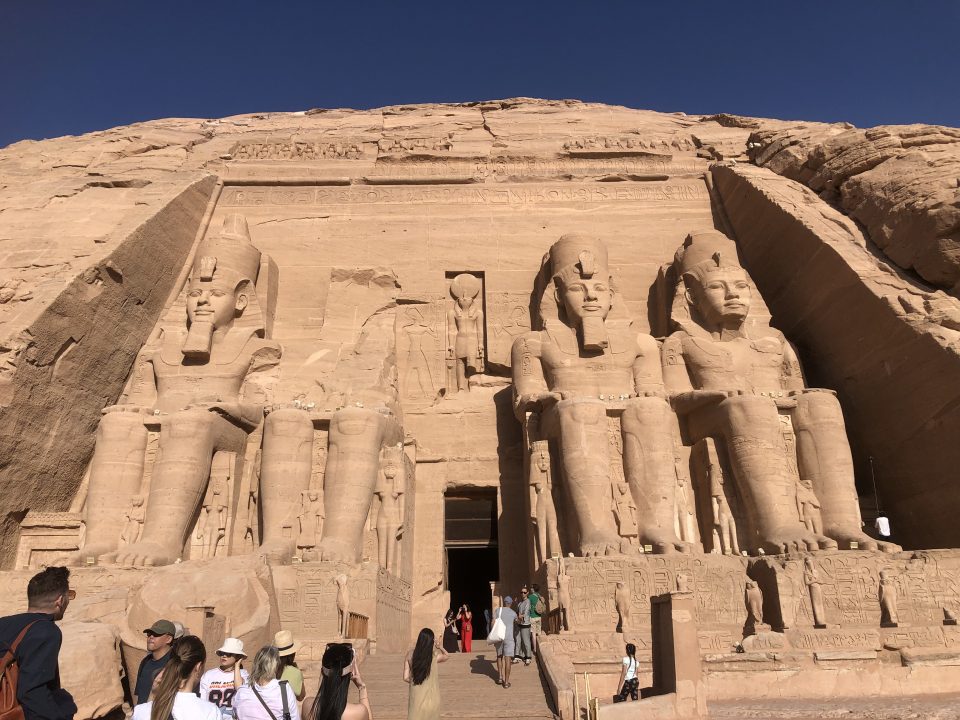
Abu Simbel stands as one of the most awe-inspiring legacies of Ancient Egypt, carved into the sandstone cliffs of Nubia over 3,000 years ago.
Commissioned by Pharaoh Ramesses II during the 13th century BCE, the twin temples were designed to showcase his divine authority and commemorate his military triumphs—most notably the Battle of Kadesh.
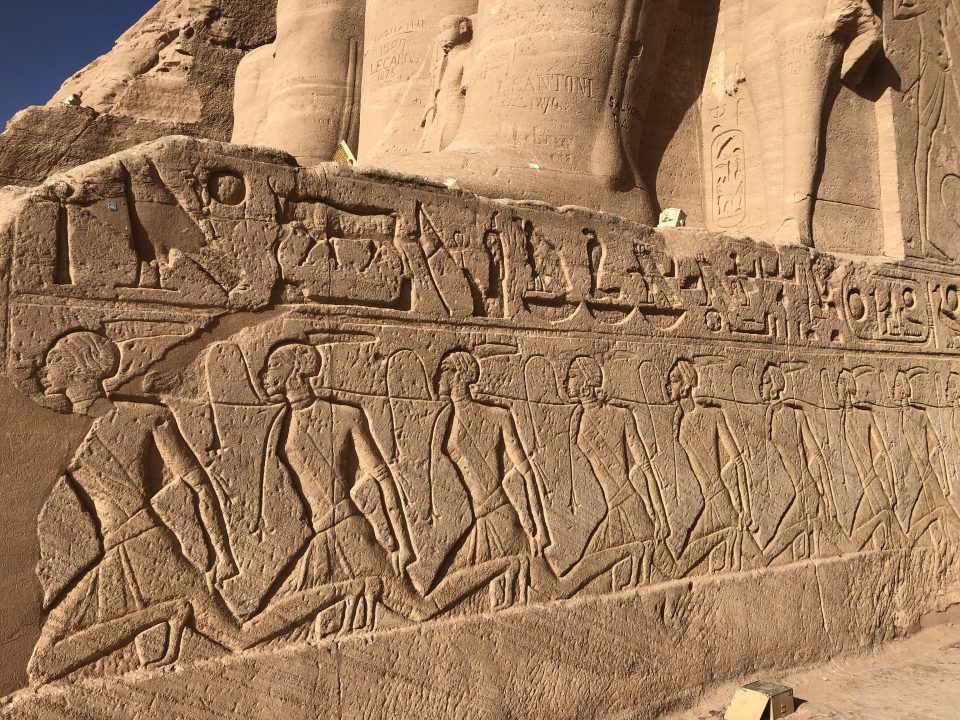
The Battle of Kadesh (1274 BC) was one of the most famous military engagements of the ancient world, fought between the forces of Egypt, led by Pharaoh Ramesses II, and the Hittite Empire, under King Muwatalli II. It took place near the city of Kadesh, in what is now modern-day Syria.
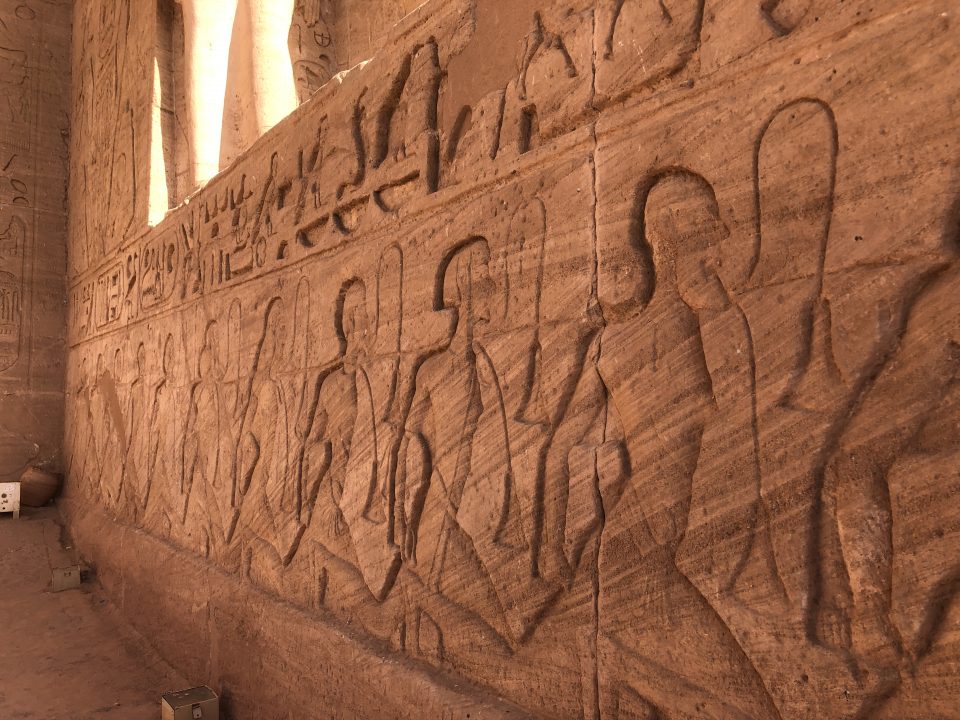
Buried under sand for centuries, Abu Simbel was rediscovered in 1813 by Johann Ludwig Burckhardt and fully excavated by Giovanni Belzoni in 1817.
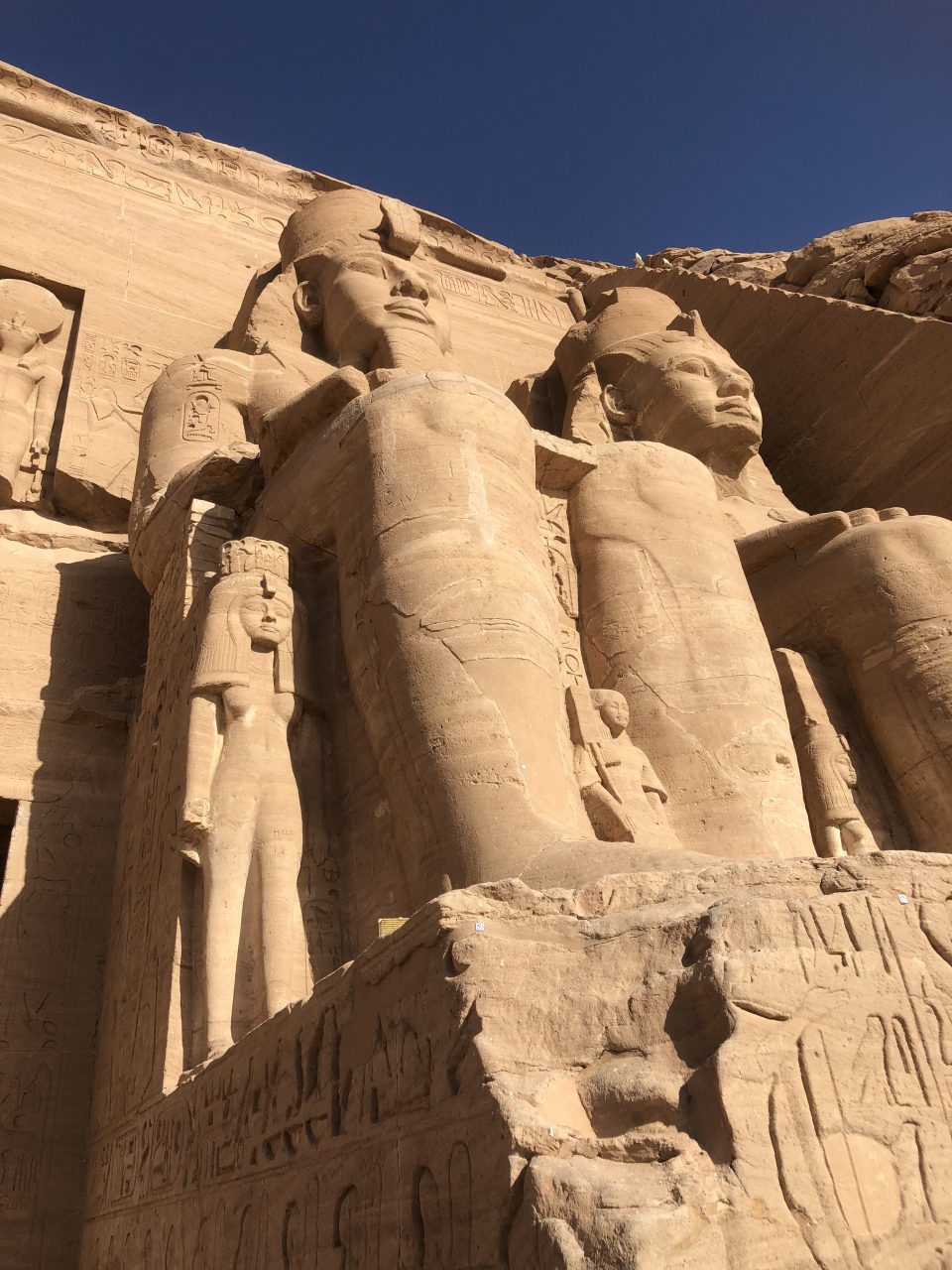
In the 1960s, the construction of the Aswan High Dam threatened to submerge the site. In a monumental UNESCO-led effort, the temples were dismantled and relocated to higher ground between 1964 and 1968, preserving this cultural treasure for future generations.
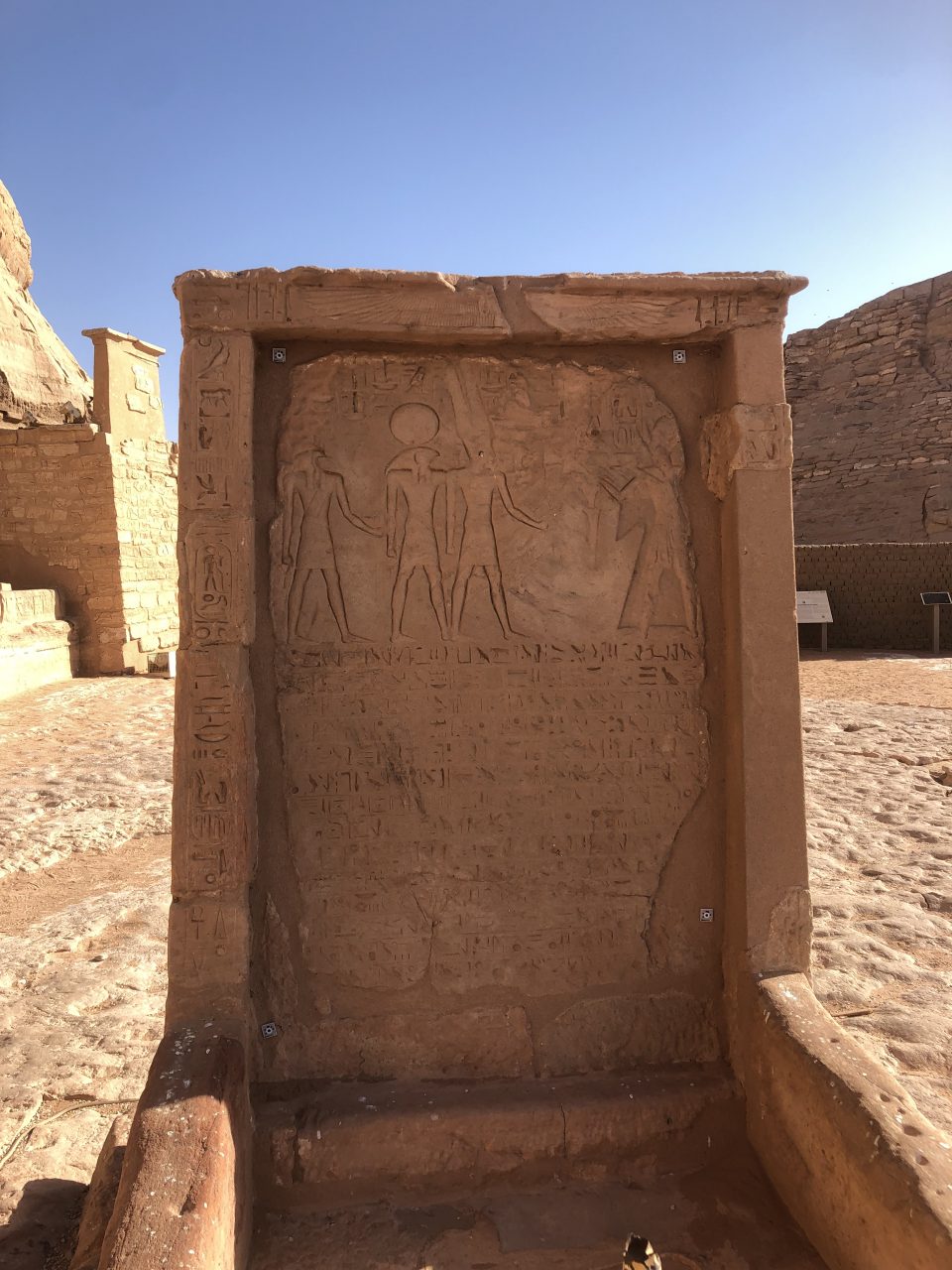
The Two Temples of Abu Simbel
Abu Simbel is not just one monument—it’s a complex of two magnificent rock-cut temples, both created during the reign of Pharaoh Ramesses II in the 13th century BCE. Each temple has its own purpose and symbolism
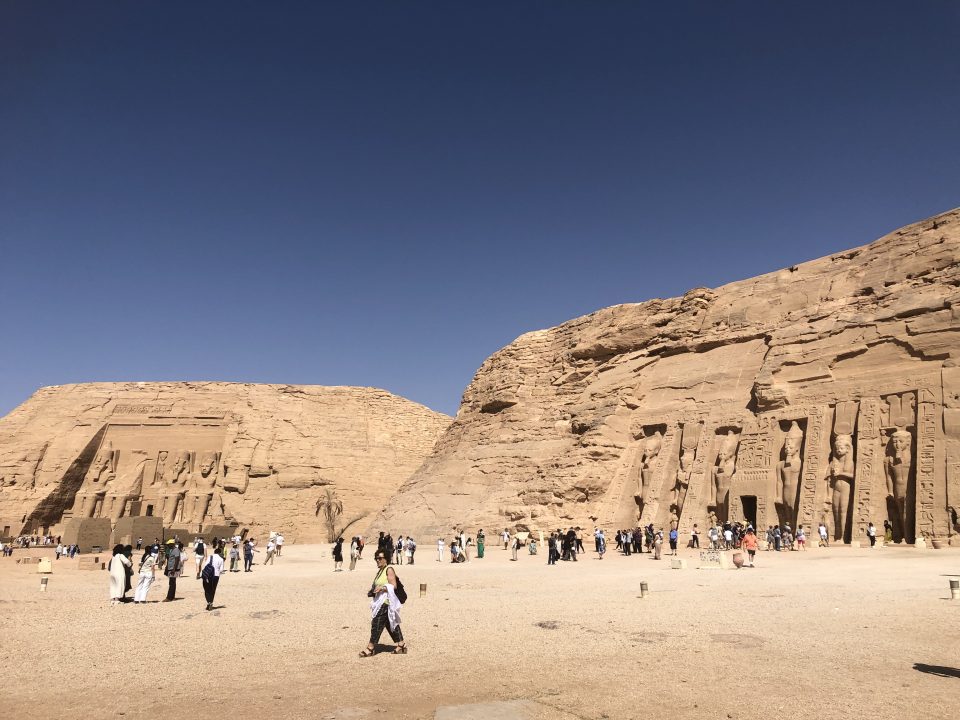
The Great Temple
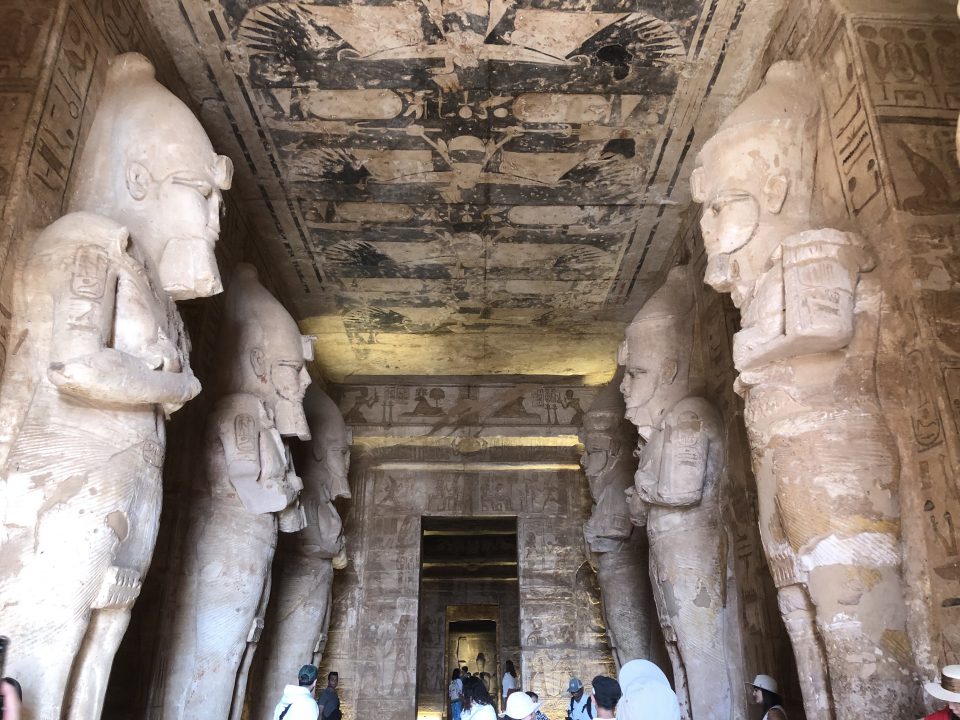
The Great Temple of Abu Simbel is the larger and more imposing of the two monuments, carved directly into the sandstone cliffs.
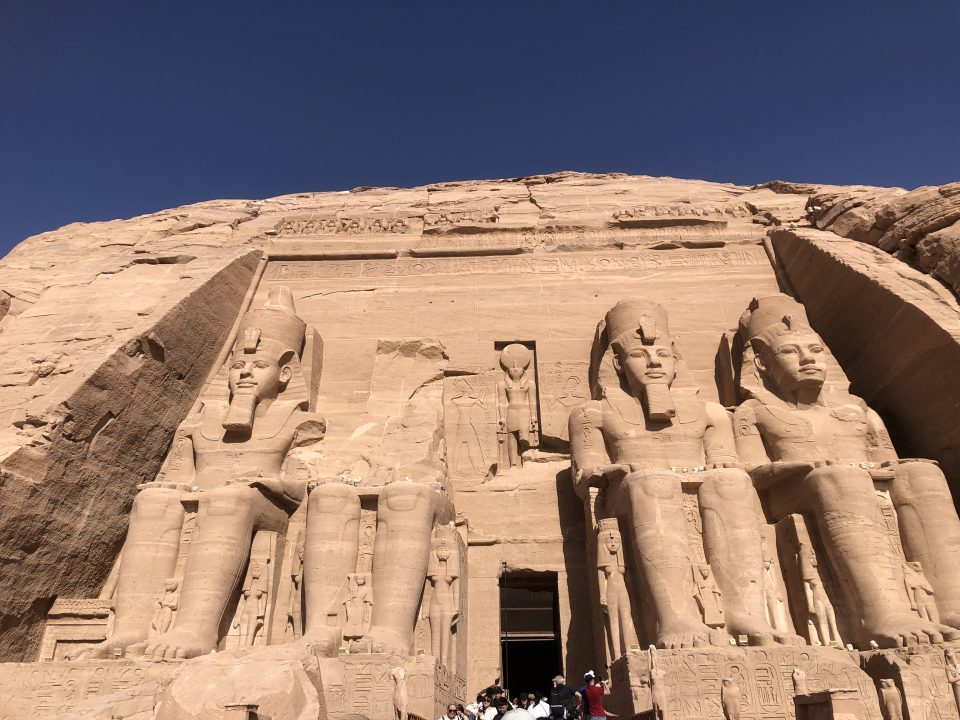
Statues of Ramesses II Inside the Temple
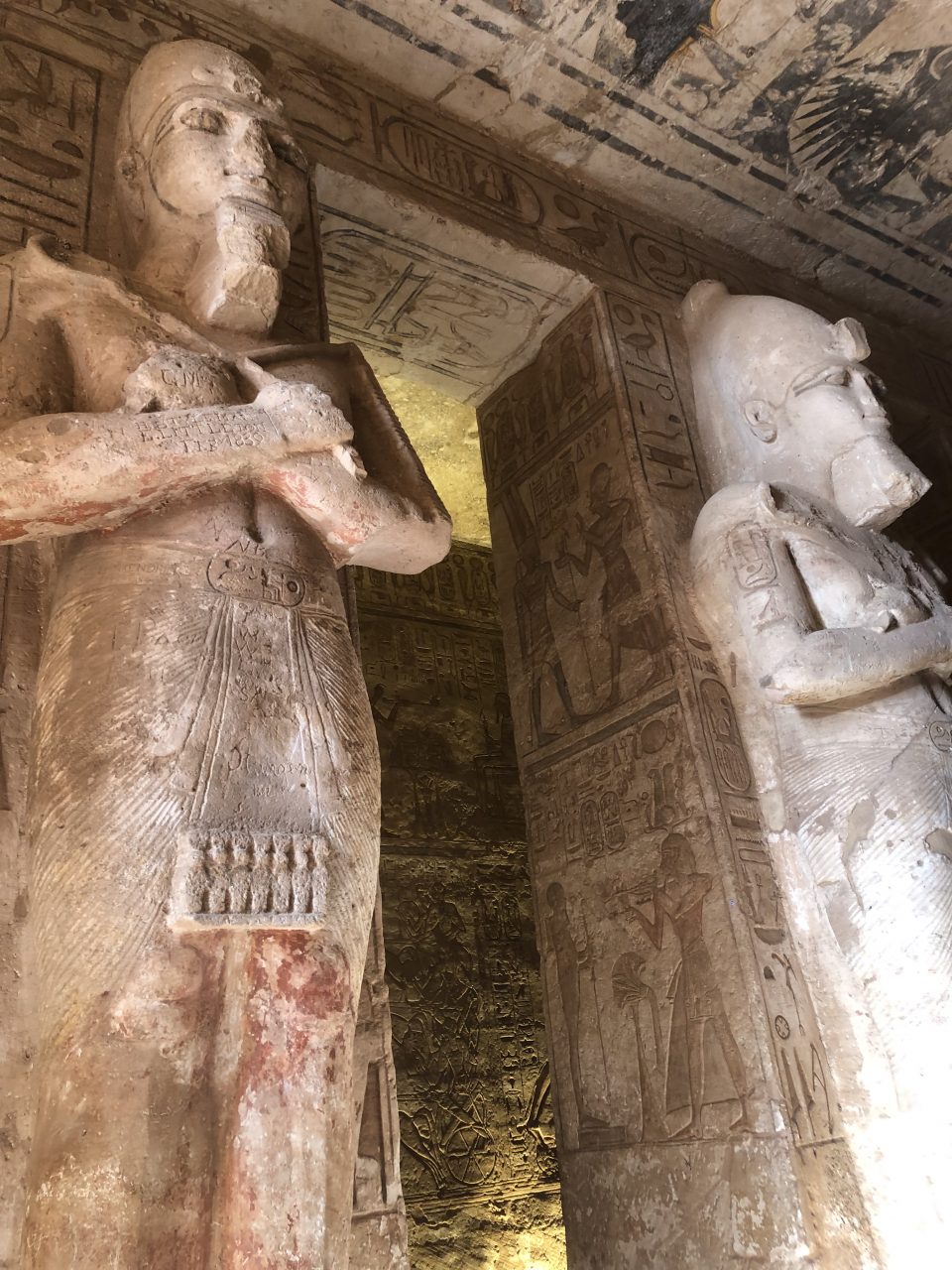
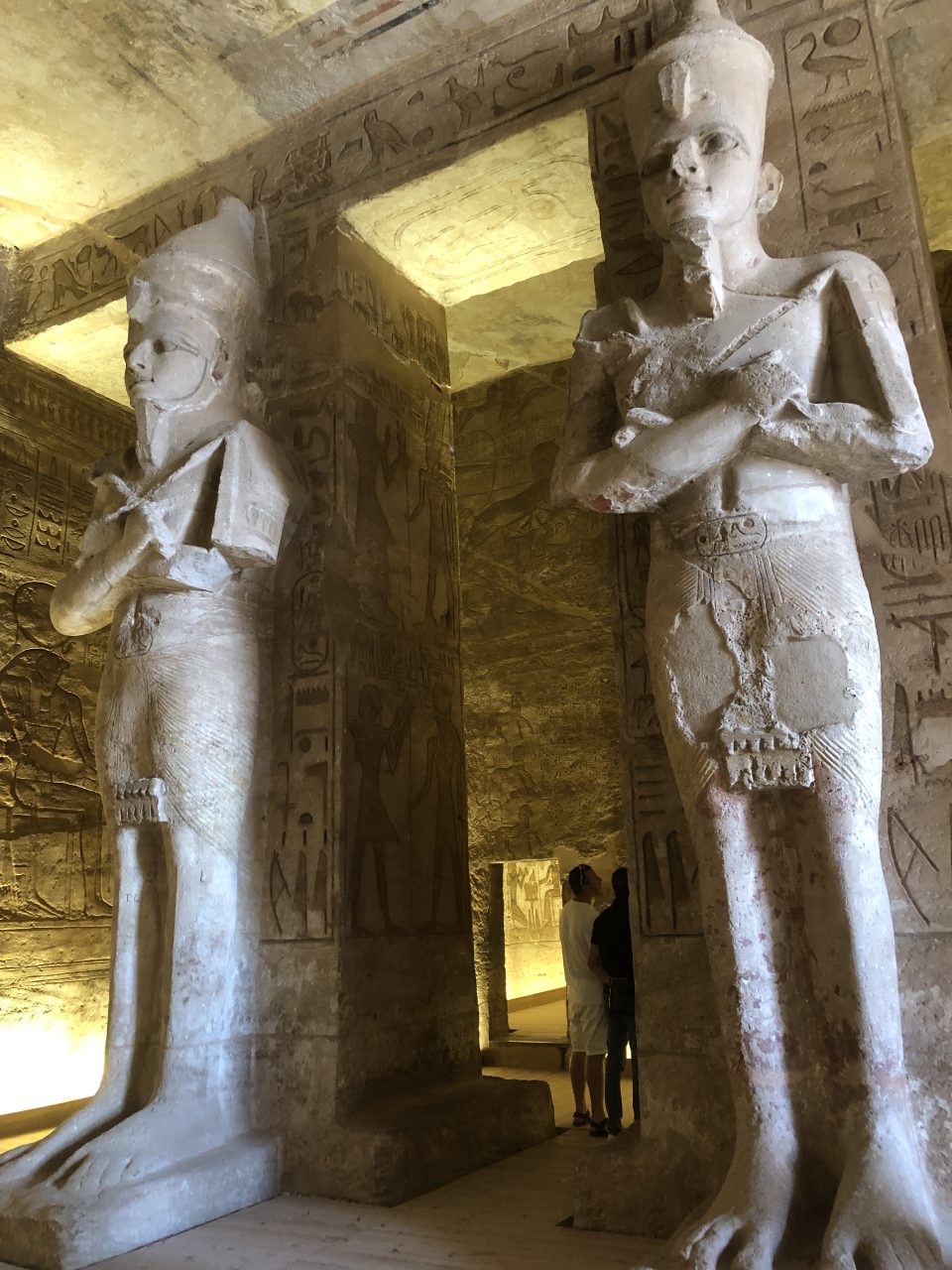
As you enter the temple, the first hall—known as the hypostyle hall—is lined with eight massive statues of Ramesses II, each about 10 metres tall. These statues depict the pharaoh standing in the traditional pose of kingship, wearing the double crown of Upper and Lower Egypt. They are arranged in pairs along the walls, creating a dramatic corridor that leads deeper into the temple.
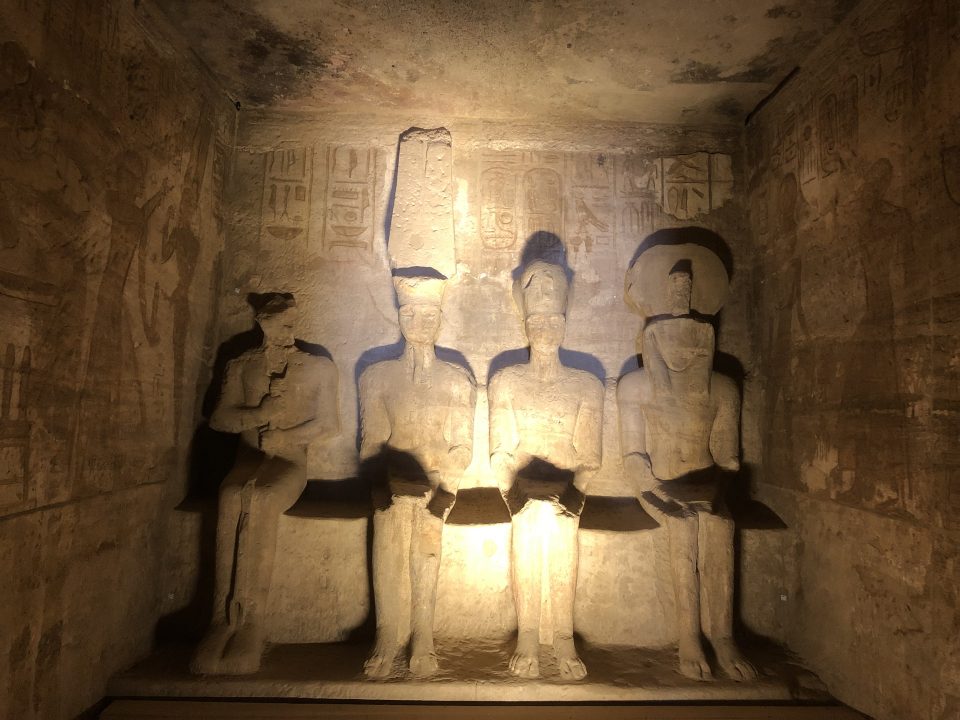
Further inside, in the sanctuary, you’ll find a smaller but highly significant statue of Ramesses II seated alongside three major gods: Amun-Ra, Ra-Horakhty, and Ptah. This grouping symbolises Ramesses’ divine status, placing him among the most powerful deities of the Egyptian pantheon. Twice a year, the rising sun illuminates these statues—a testament to the temple’s precise astronomical alignment.
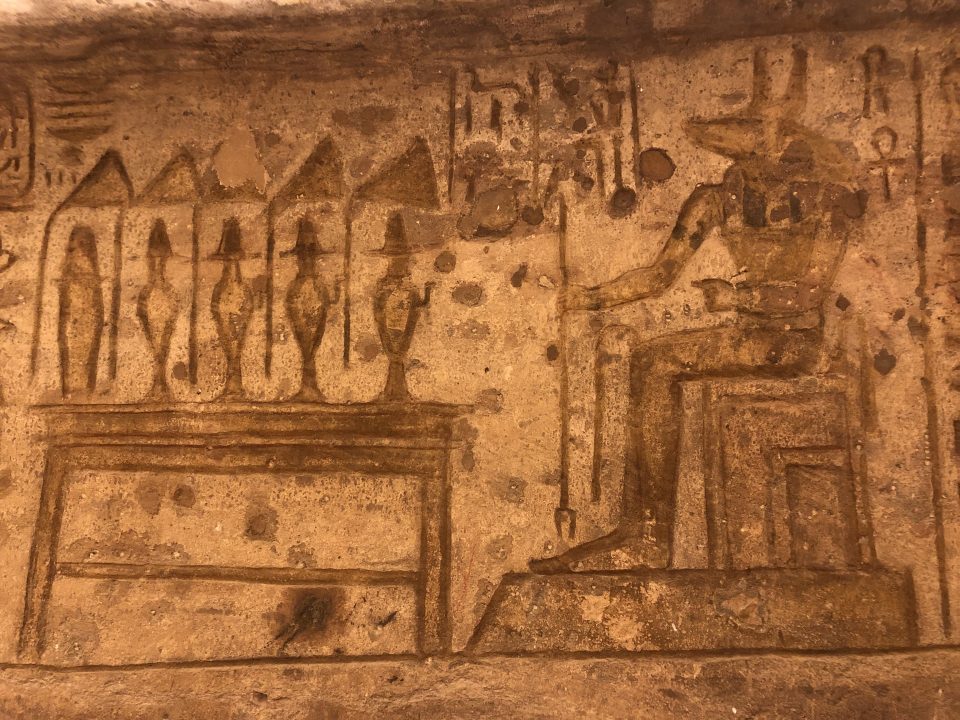
The walls surrounding these statues are covered with detailed reliefs showing Ramesses II’s military victories, religious ceremonies, and offerings to the gods. These carvings reinforce the temple’s dual purpose: a place of worship and a monument to Ramesses’ eternal legacy.
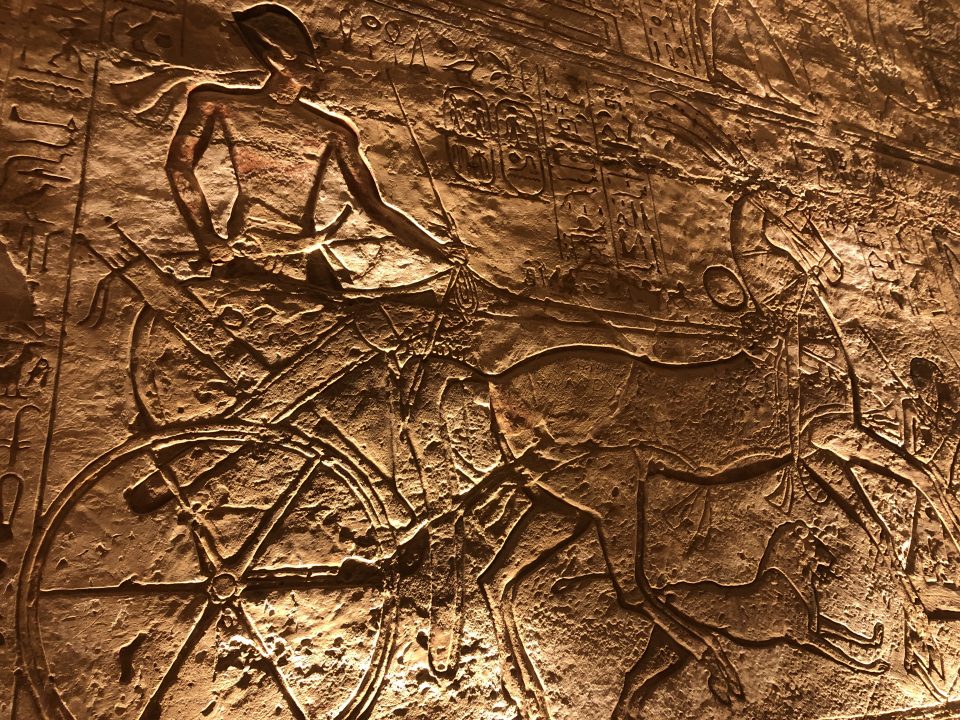
The walls of the Great Temple are dominated by scenes of Ramesses II’s victories, especially the Battle of Kadesh.
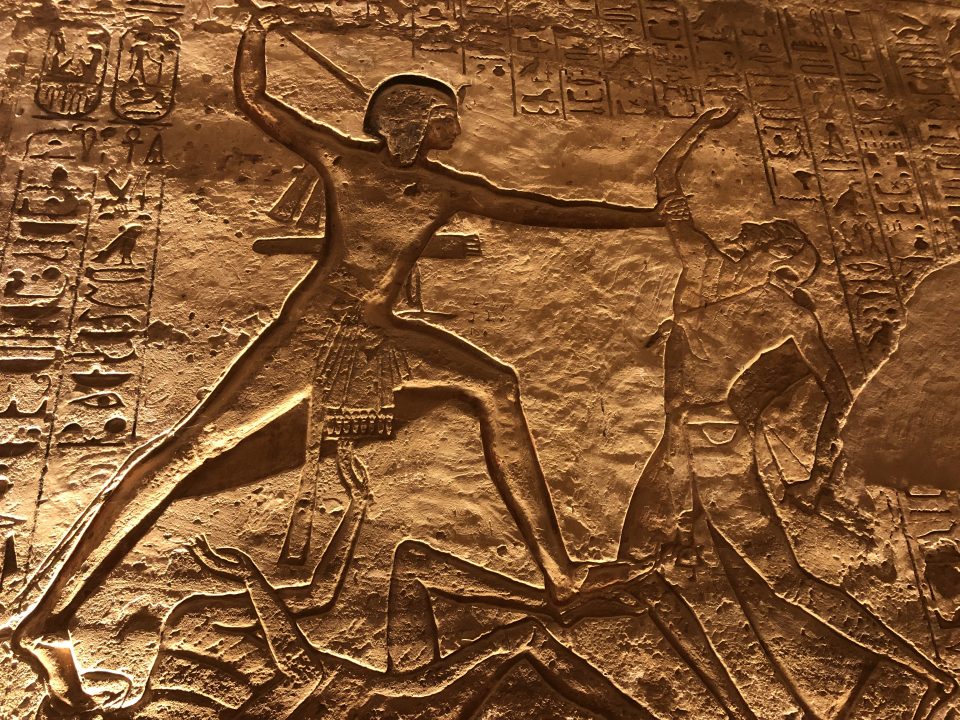
These reliefs show the pharaoh charging into battle in his chariot, bow drawn, while enemy soldiers scatter in chaos. Although the battle was historically a stalemate, the carvings present Ramesses as a heroic conqueror.
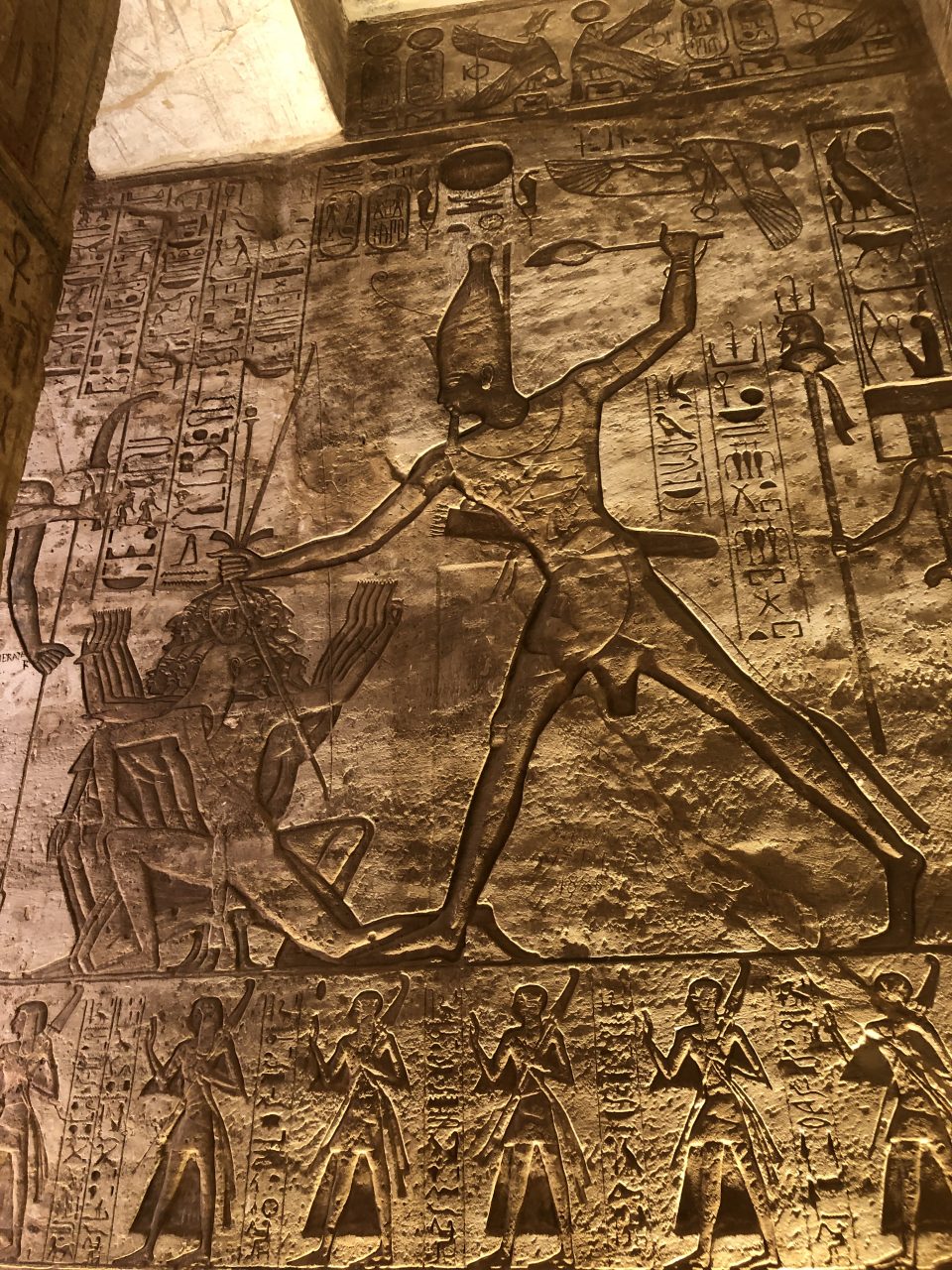
Ramesses II charging into battle on his chariot, bow drawn, with Hittite soldiers fleeing in chaos. This dramatic scene glorifies the pharaoh’s military prowess, even though the battle was historically a stalemate.
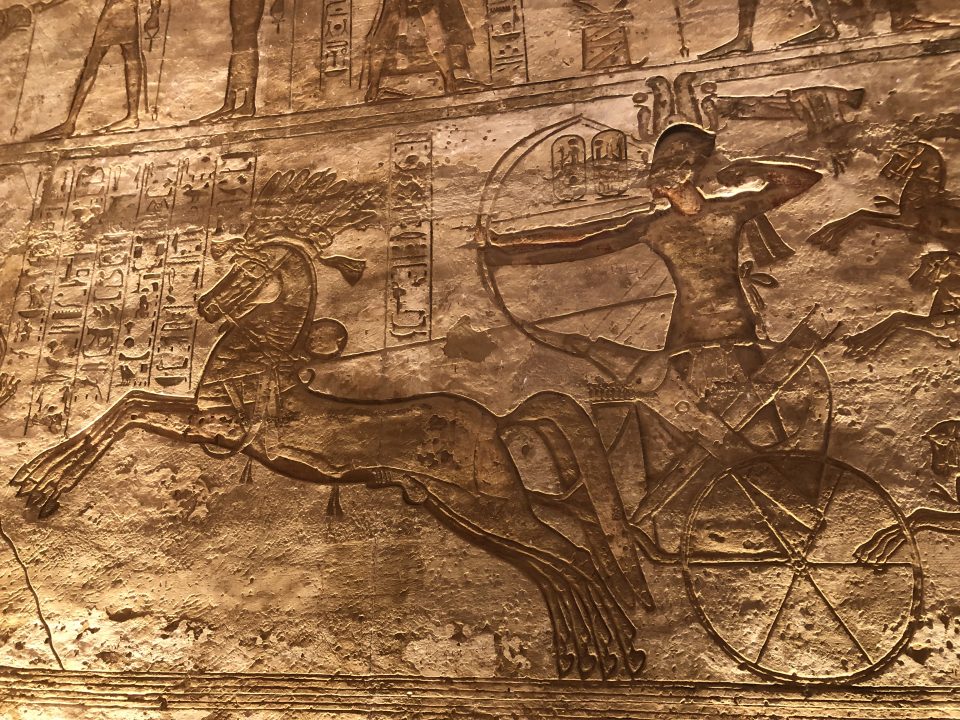
Notice the detailed depiction of horses and chariots—an incredible example of ancient Egyptian war art.
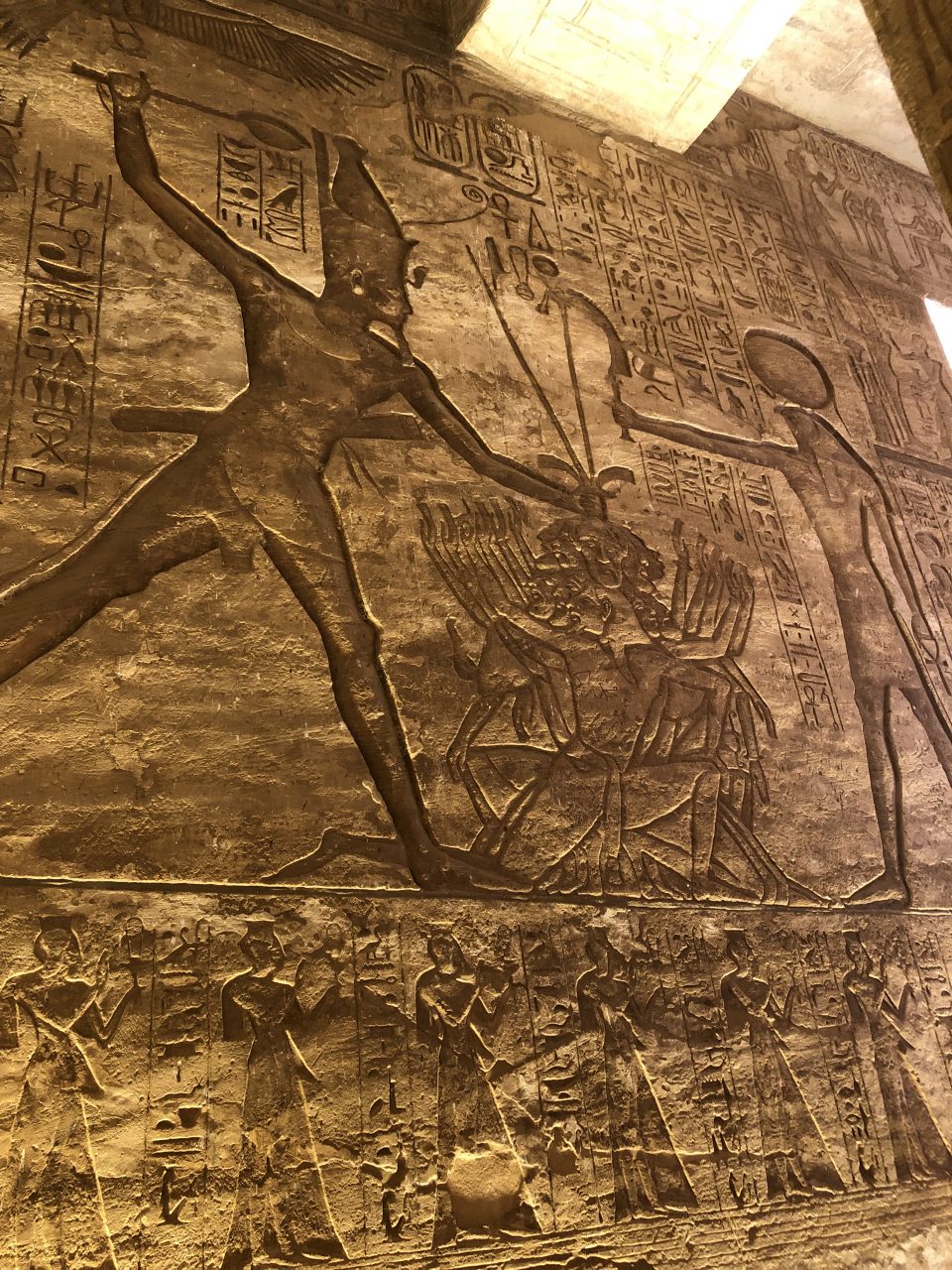
Ramesses II making offerings to Ra-Horakhty, the falcon-headed sun god. This reinforces the temple’s solar alignment, where sunlight illuminates the sanctuary twice a year.
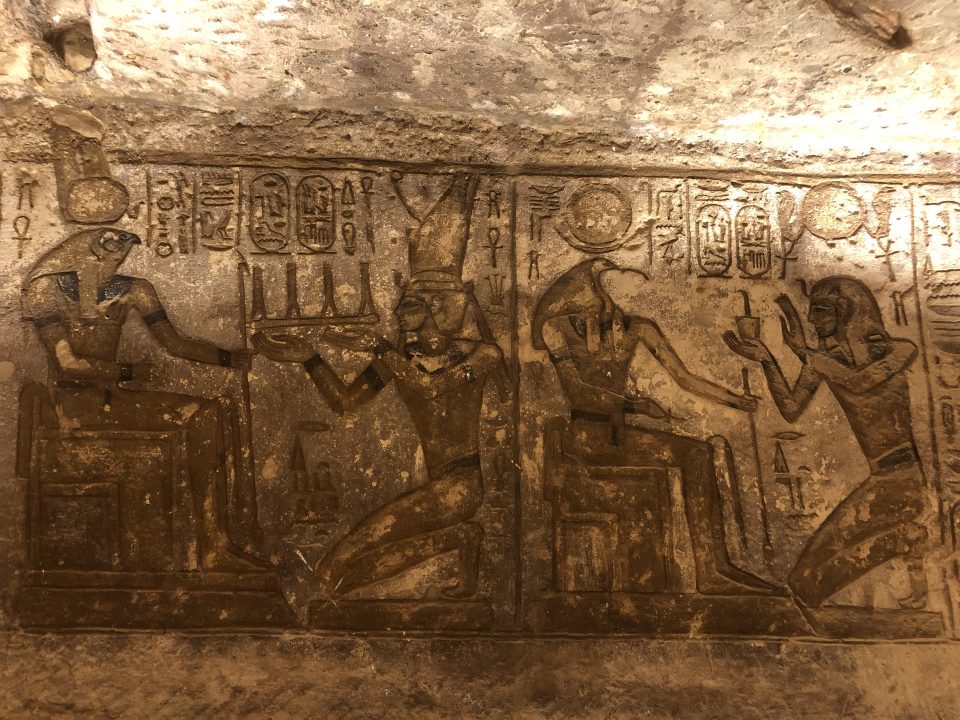
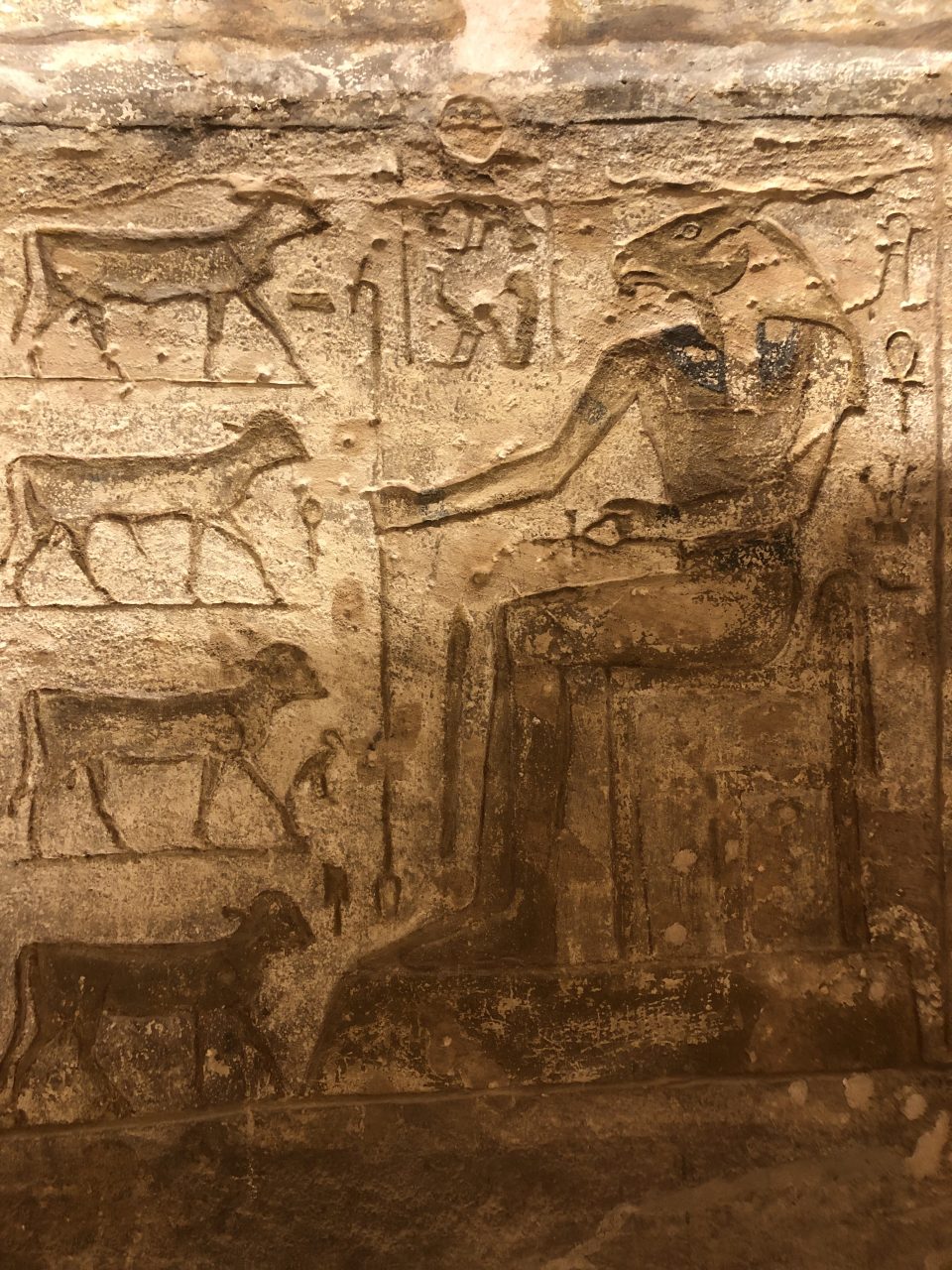
Ramesses II presenting offerings to various gods, accompanied by priests and family members. These scenes were political propaganda, reinforcing his divine right to rule.
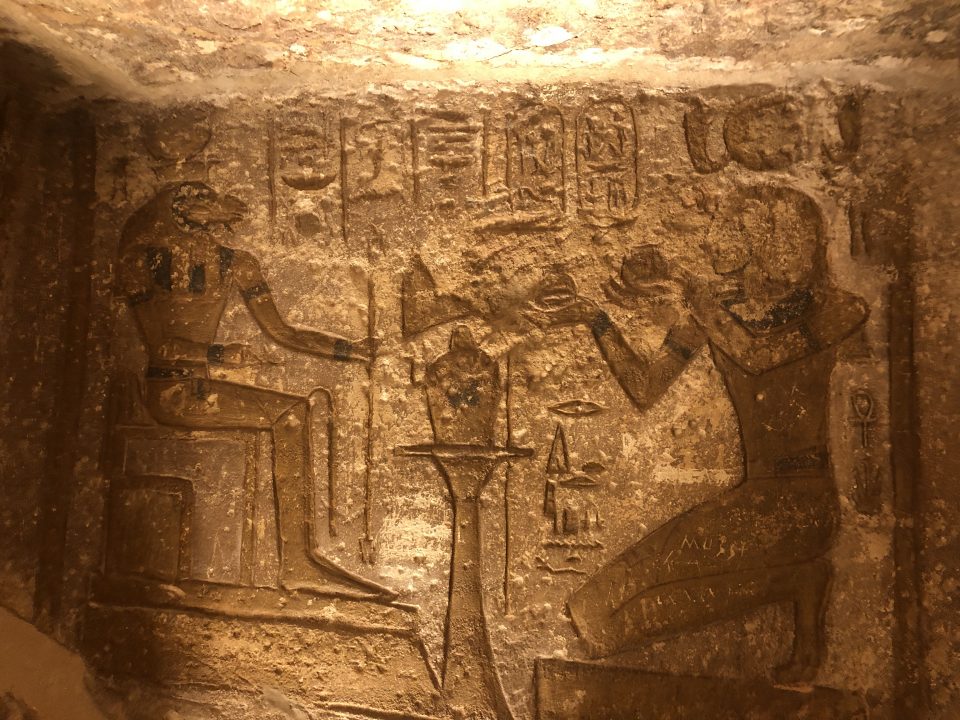
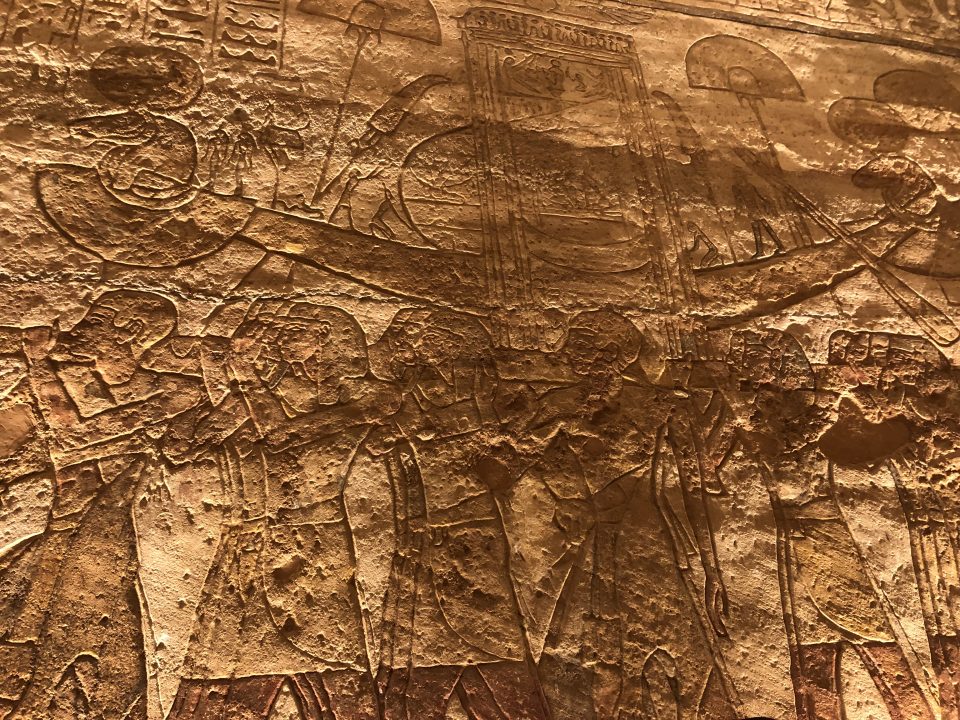
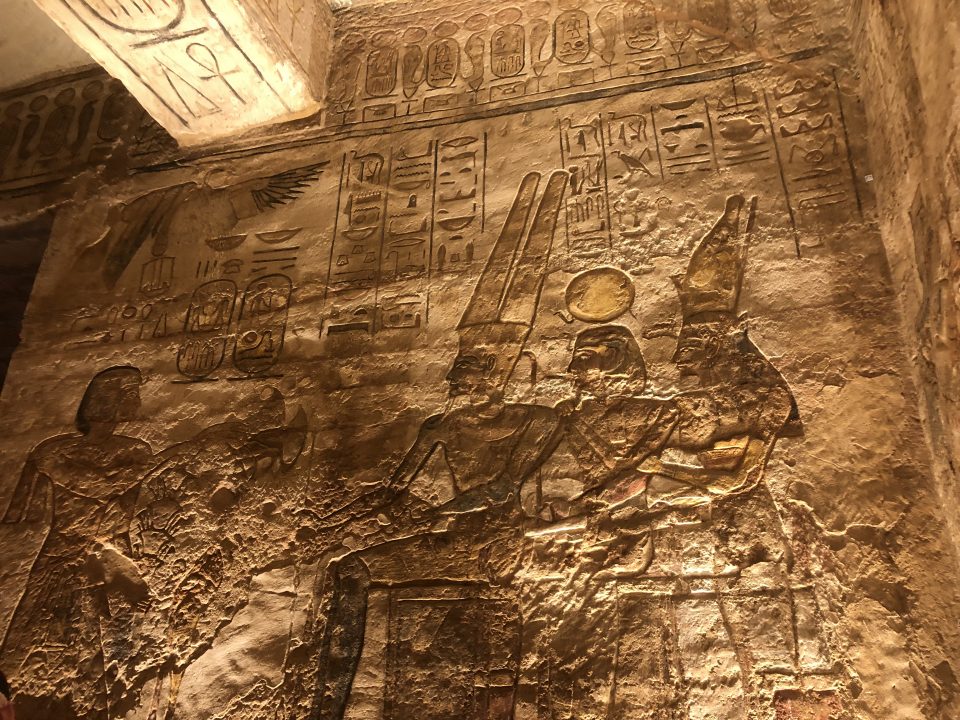
Ramses offerings to the Gods
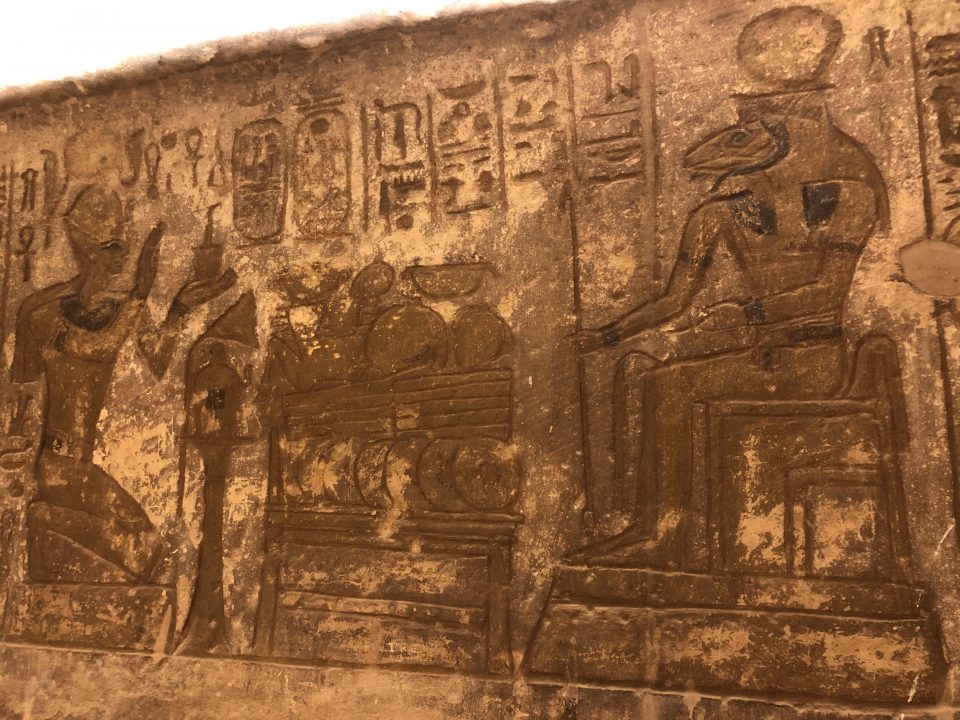
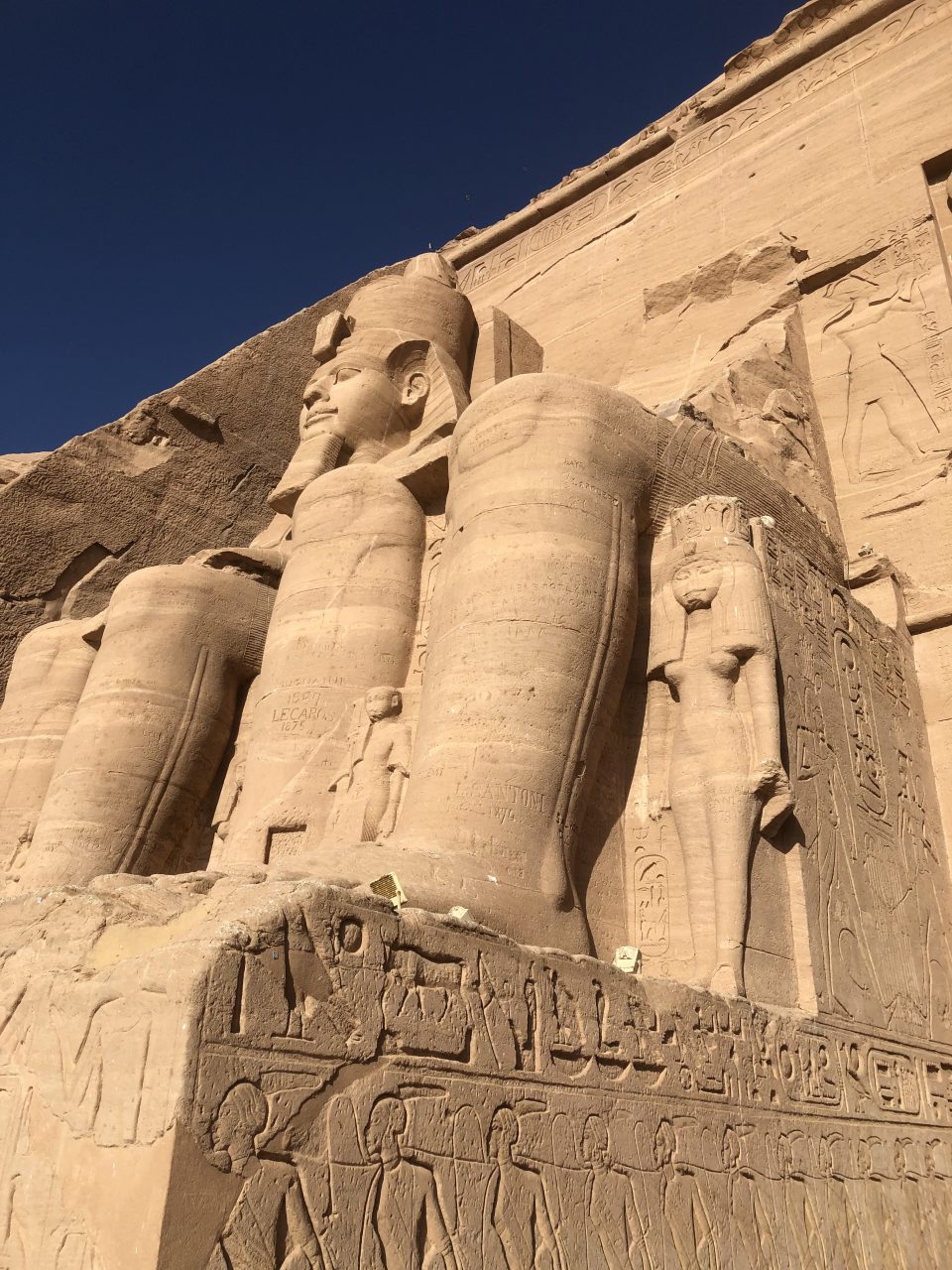
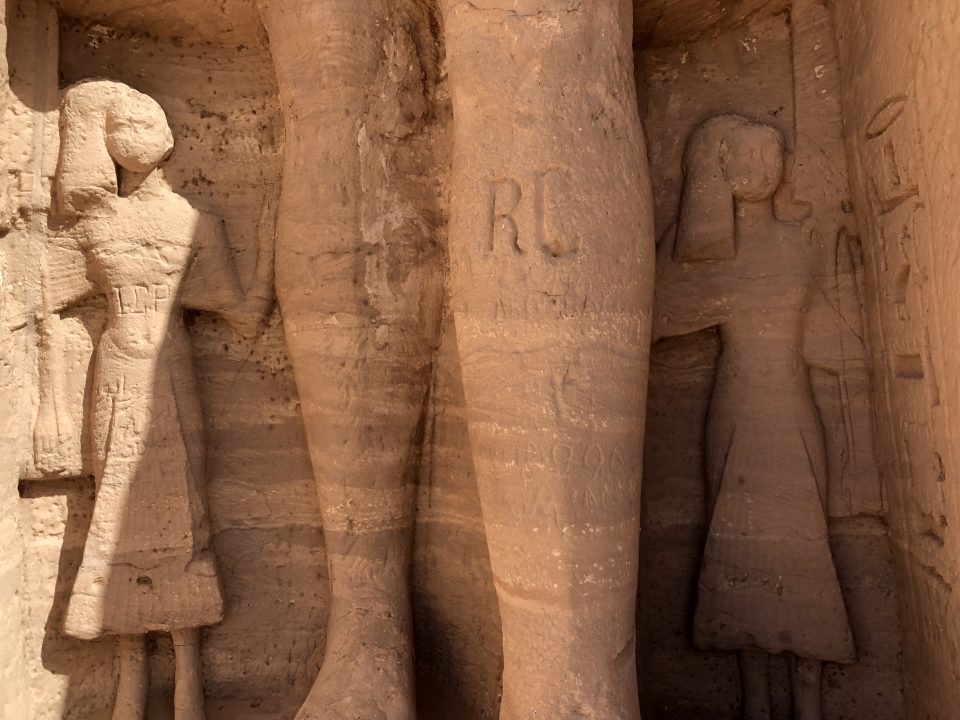
Outside the Great Temple, under the feet of Ramesses II, stand his Wife and Daughters.
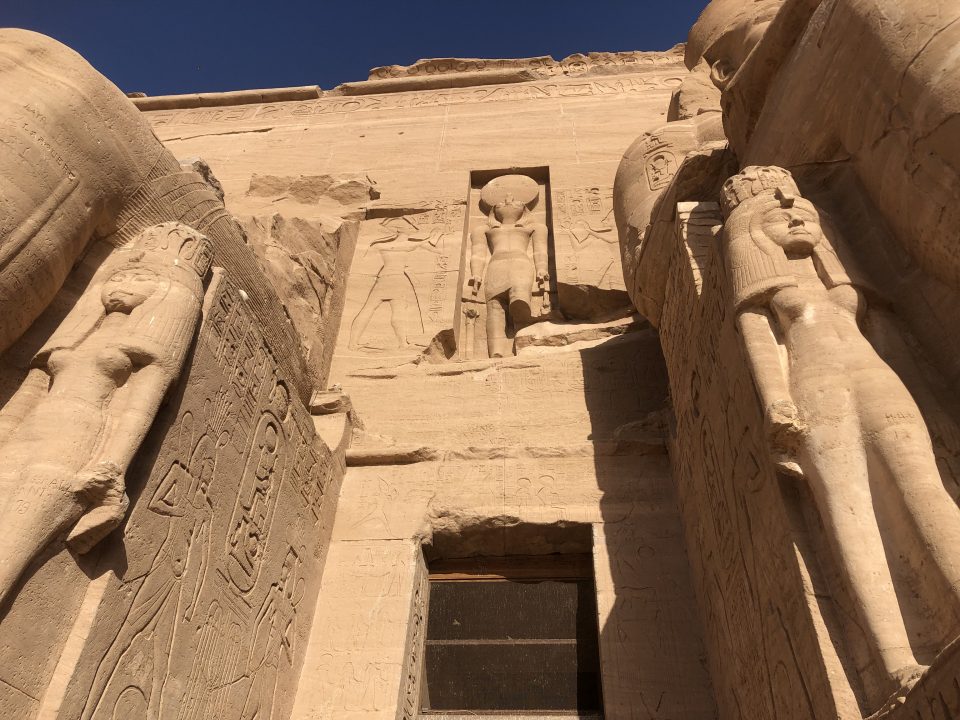
Outside the Great Temple of Abu Simbel, beneath the colossal seated statues of Ramesses II, there are smaller figures carved into the façade. These represent members of his family, including his wives, daughters, and sons.
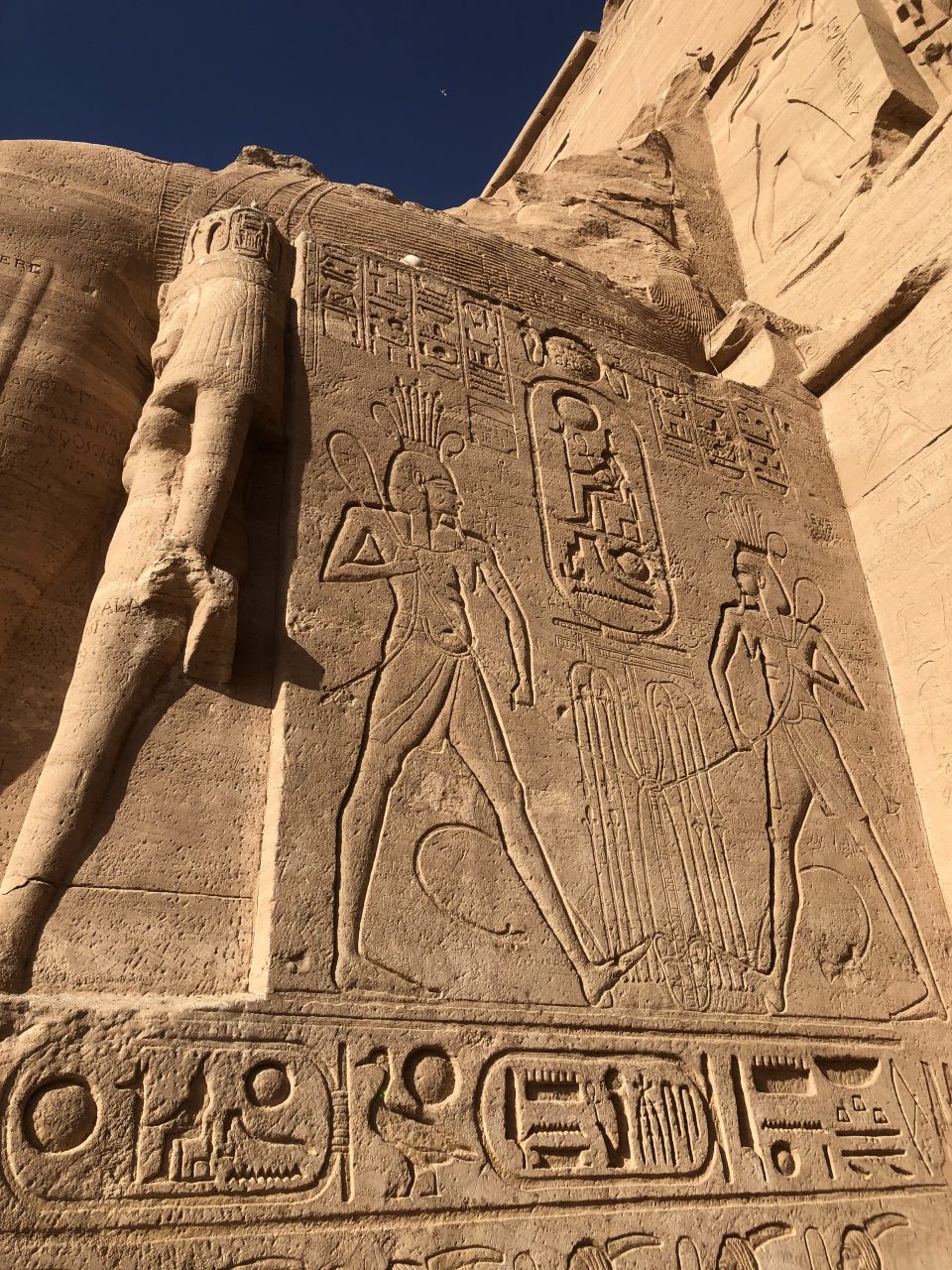
Outside the Great Temple of Abu Simbel, you’ll notice more than just the colossal statues of Ramesses II and his family—there are also carvings and statues of sacred birds.
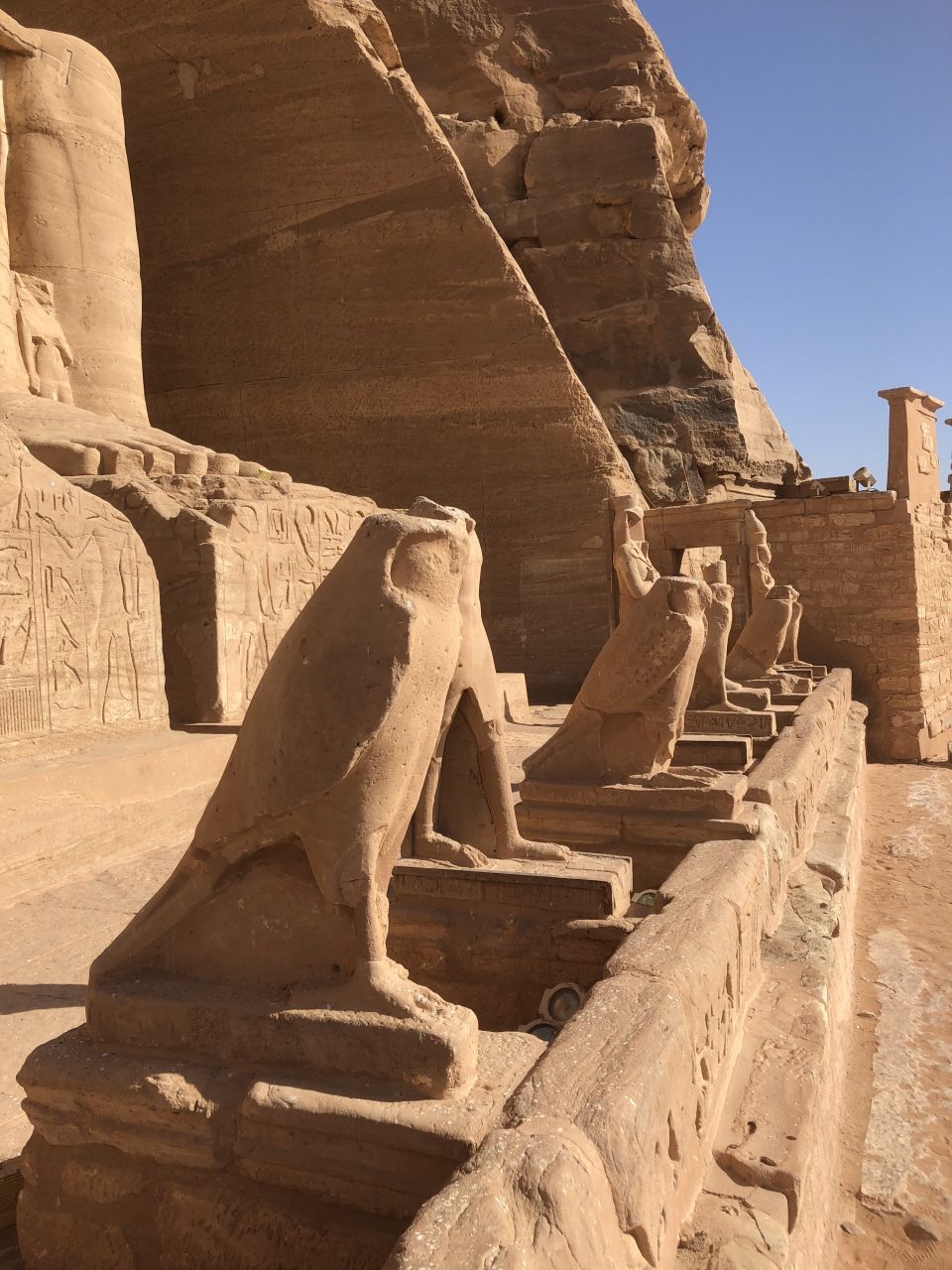
These birds probably are representations of:
- Falcons (Horus): The falcon was associated with the god Horus, symbolising kingship, protection, and divine power. You’ll often see falcons carved near the feet of the statues or on the temple façade.
- Vultures (Nekhbet): The vulture represented the goddess Nekhbet, protector of Upper Egypt and a symbol of maternal care and guardianship.
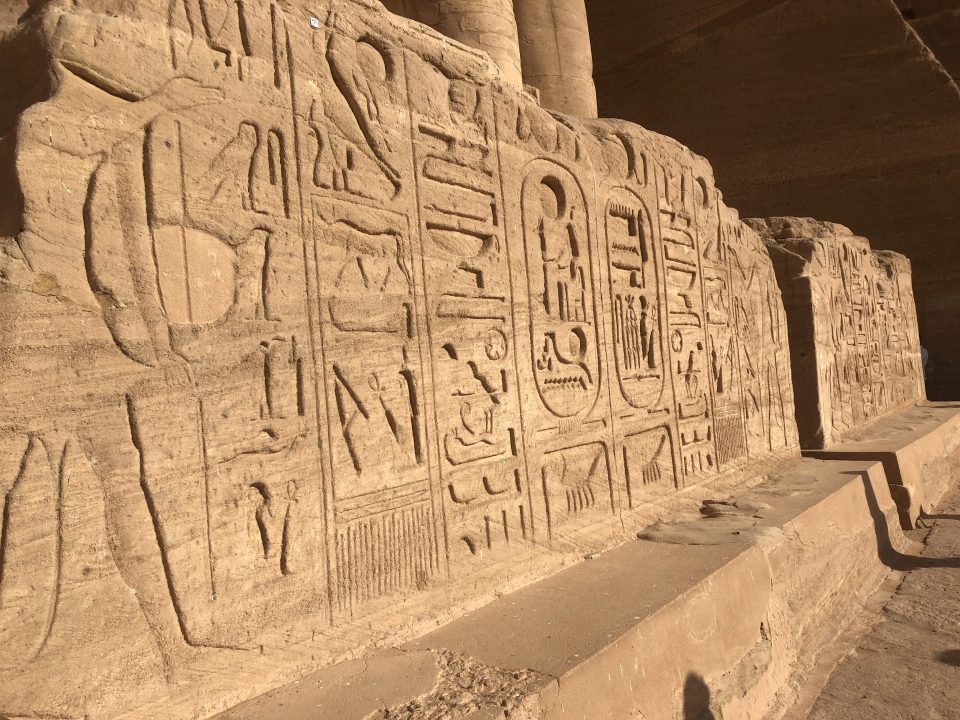
The Small Temple of Abu Simbel
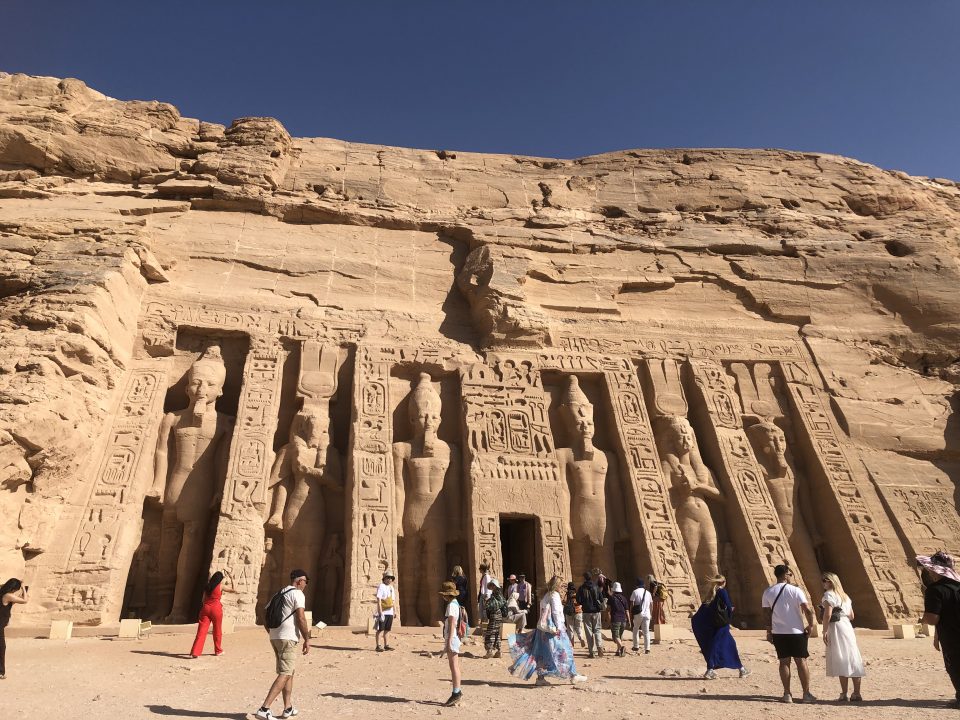
The Small Temple of Abu Simbel: A Tribute to Love and Divinity
A Temple for a Queen
The Small Temple at Abu Simbel is a rare and beautiful monument dedicated not only to a goddess but also to a queen—Nefertari, the beloved wife of Pharaoh Ramesses II. This gesture was extraordinary in ancient Egypt, where temples were almost always devoted to gods. By honouring Nefertari alongside Hathor, the goddess of love and music, Ramesses immortalised his devotion in stone.
Situated just a short walk from the Great Temple, the Small Temple is carved into the same sandstone cliffs overlooking what is now Lake Nasser. Though smaller in size, it is no less impressive. Its façade rises about 12 metres high and stretches 28 metres across, creating a harmonious balance with its grand neighbour.
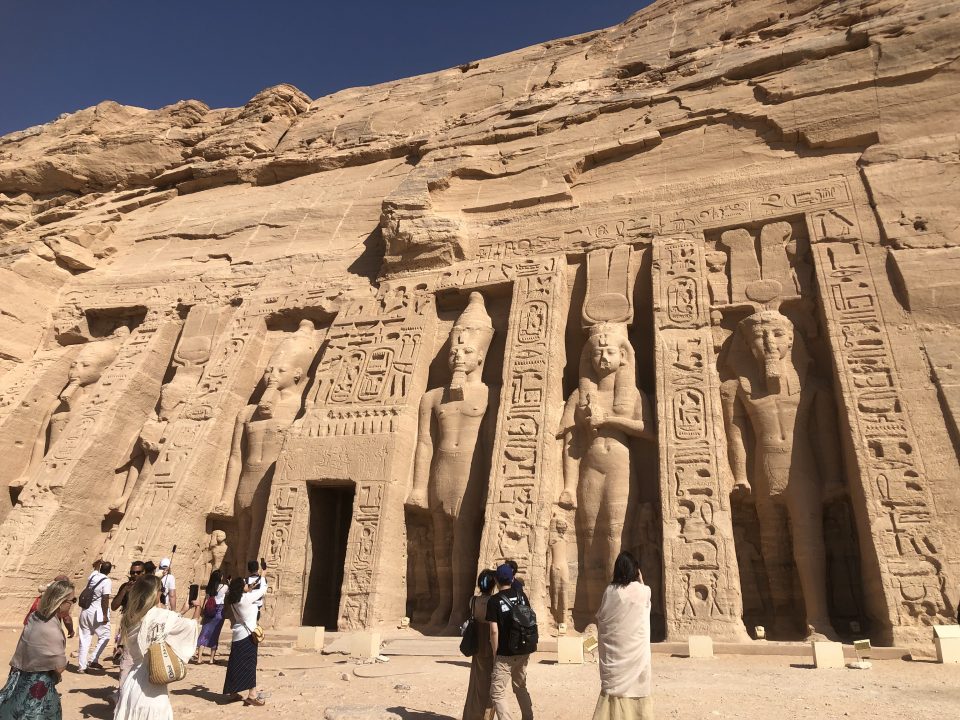
The Façade’s Six Statues
The front of the temple features six towering statues, each about 10 metres tall. Four depict Ramesses II, and two represent Queen Nefertari. This equal prominence is highly unusual—queens were rarely shown alongside pharaohs at such scale. Here, Nefertari stands as an almost equal partner, a testament to her importance in Ramesses’ life.
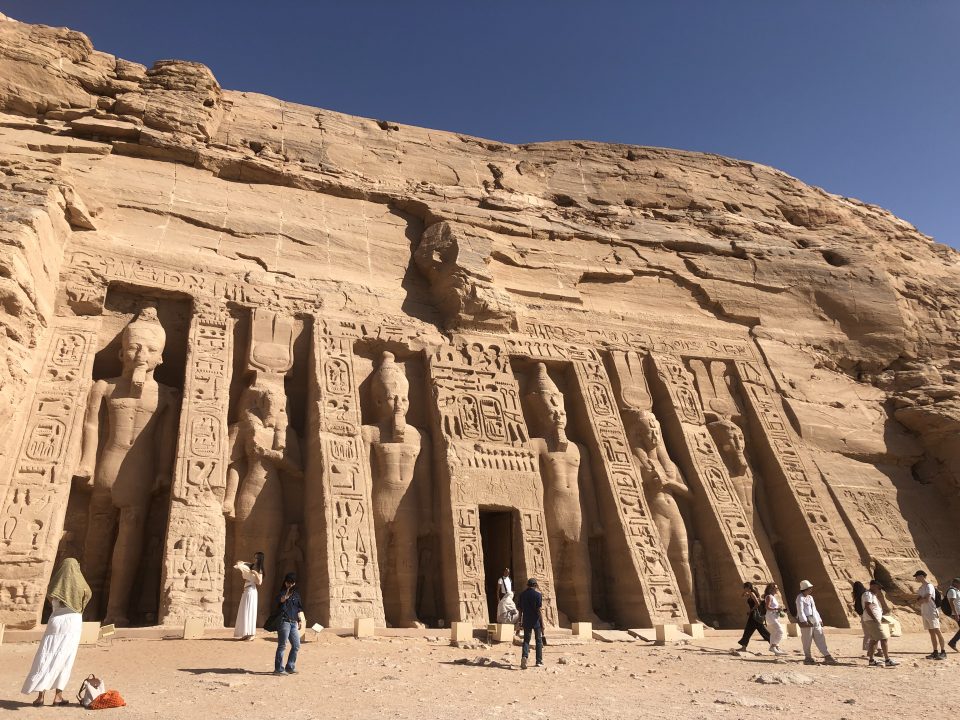
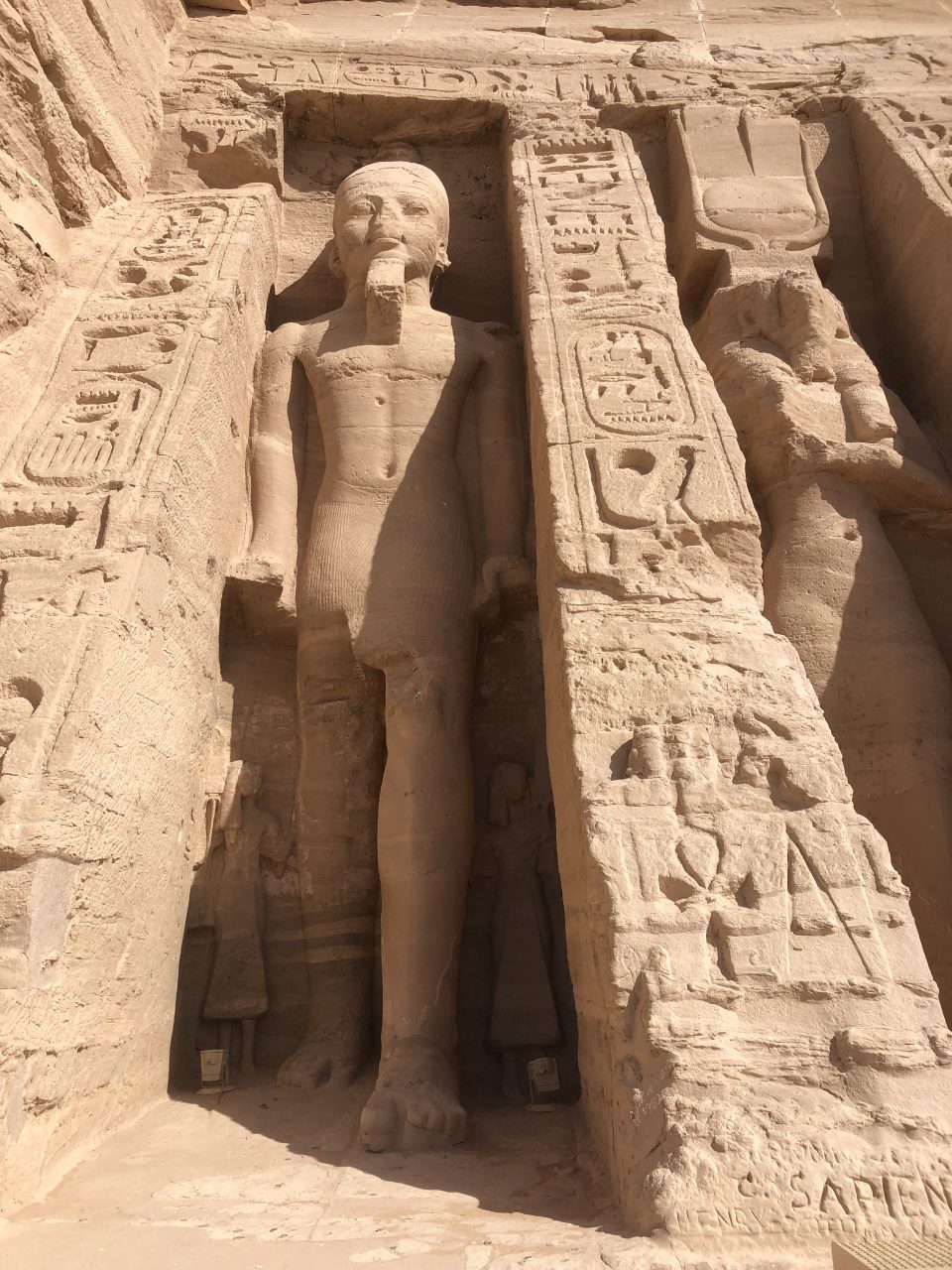
The temple is dedicated to Hathor, the goddess of love, beauty, music, and motherhood. Hathor was often associated with joy and feminine power, making her the perfect deity to honour Nefertari.
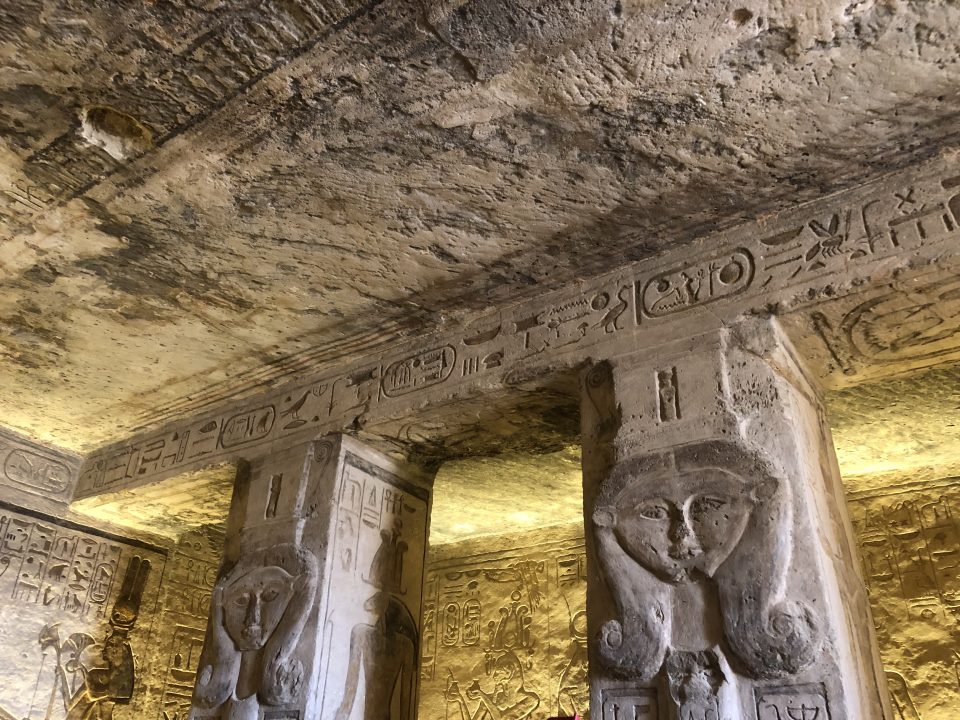
Inside, Hathor’s image appears repeatedly, reinforcing the temple’s spiritual theme of harmony and affection.
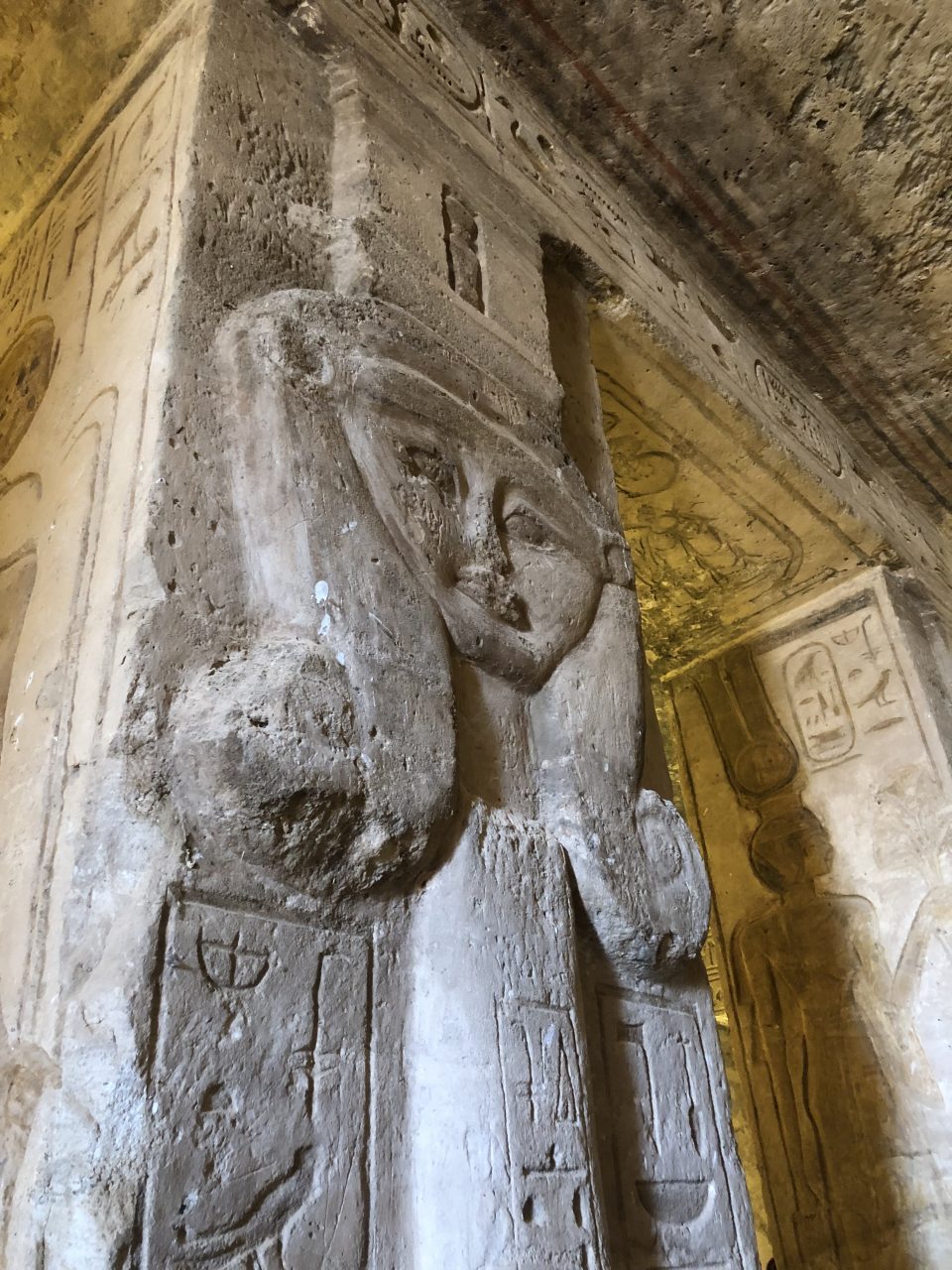
The Hypostyle Hall
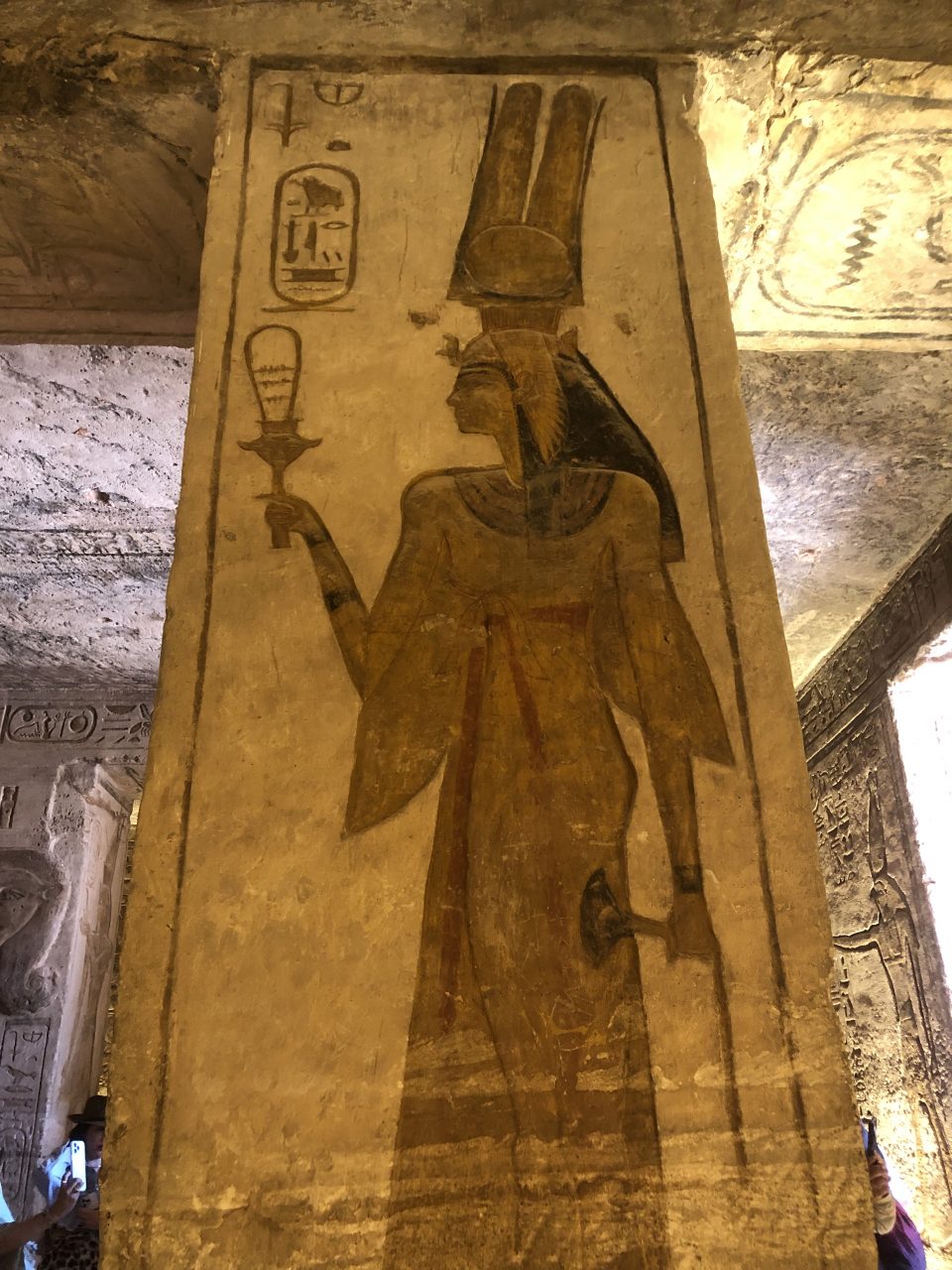
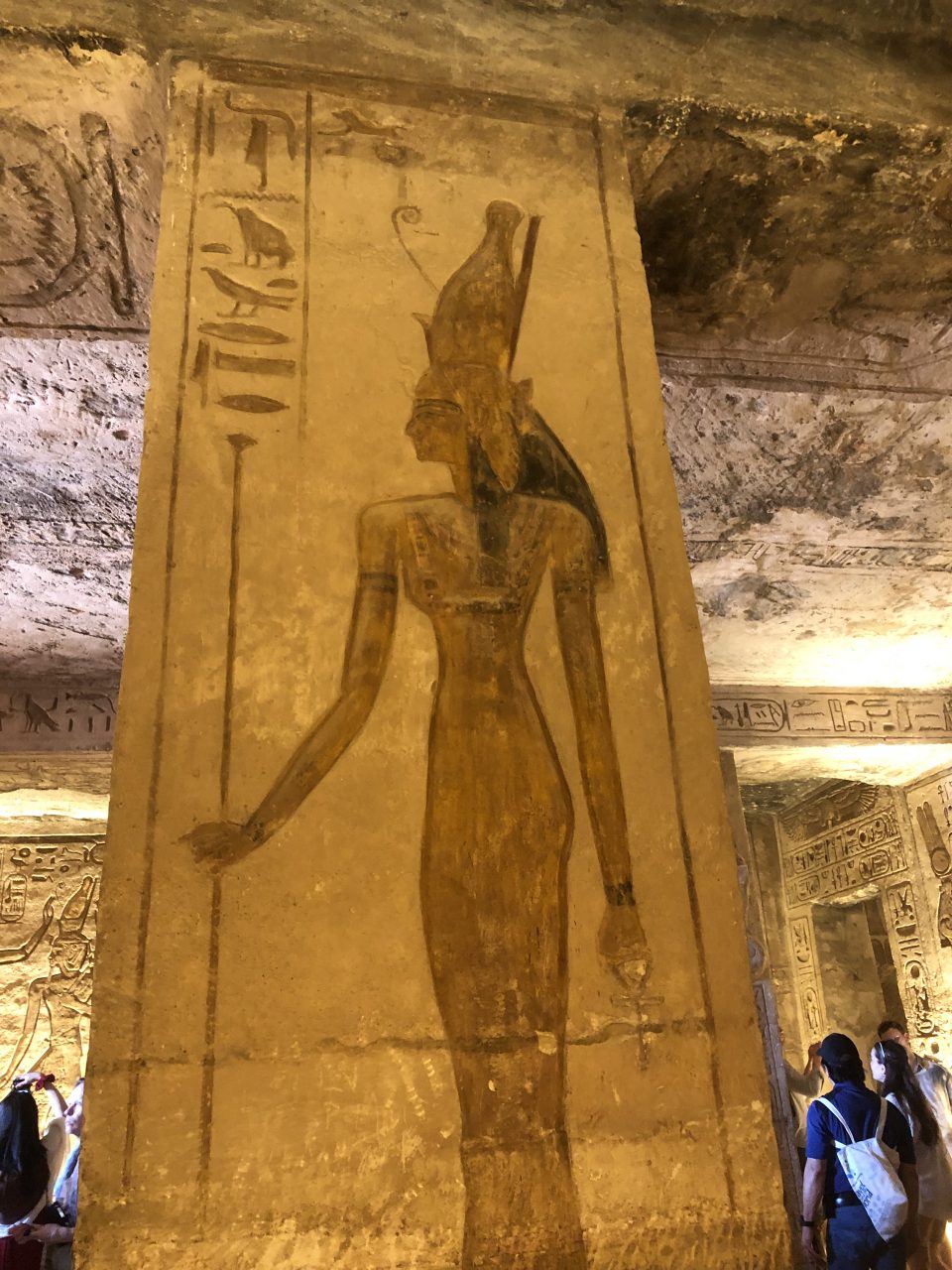
Stepping inside, visitors enter a hypostyle hall supported by six pillars, each adorned with Hathor-headed capitals. These columns are carved with graceful reliefs showing Nefertari and Ramesses making offerings to the gods.
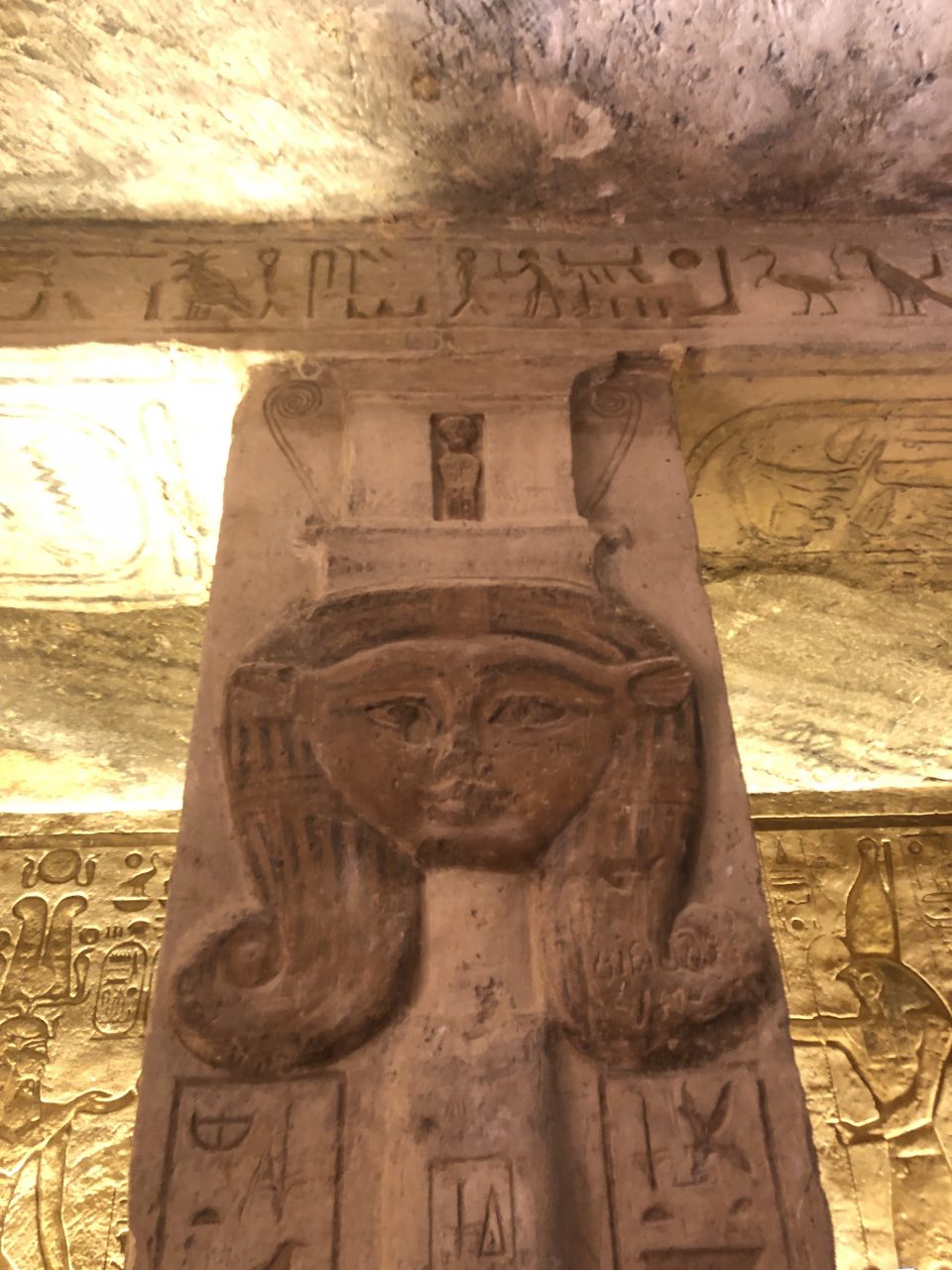
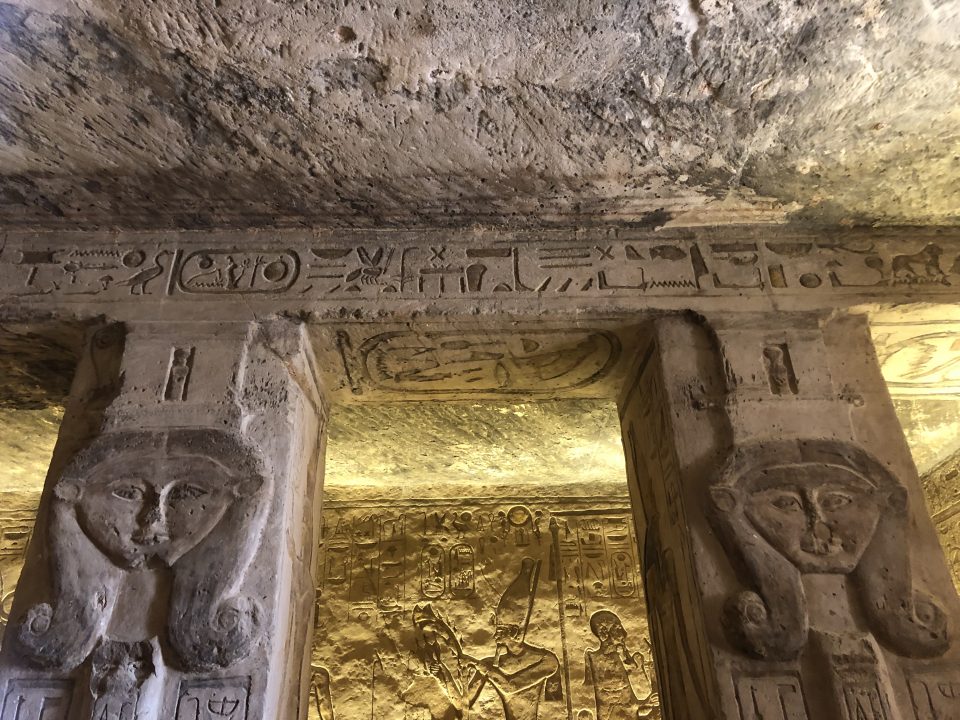
The artistry here is softer and more intimate compared to the martial scenes in the Great Temple.
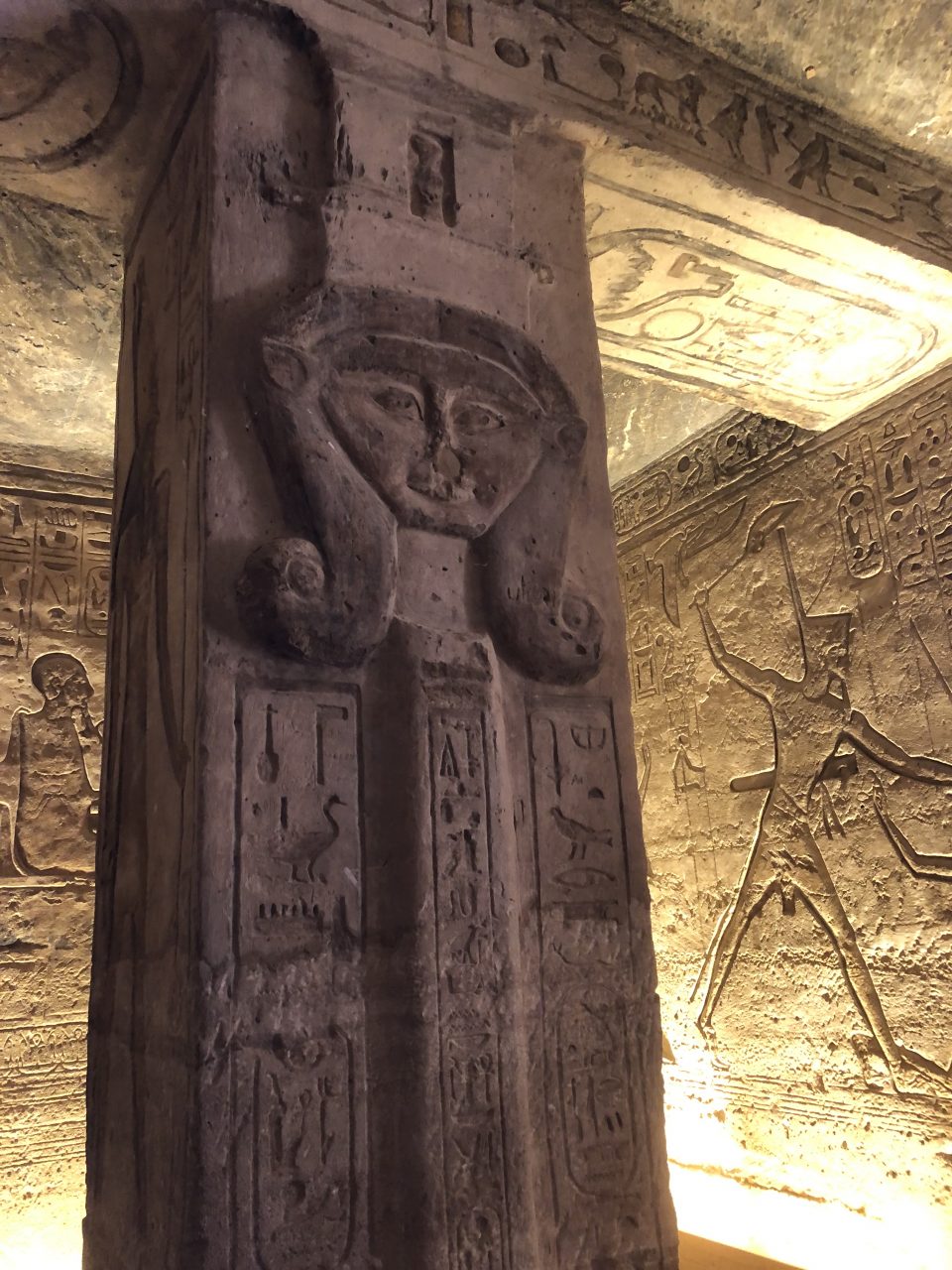
Scenes of Devotion
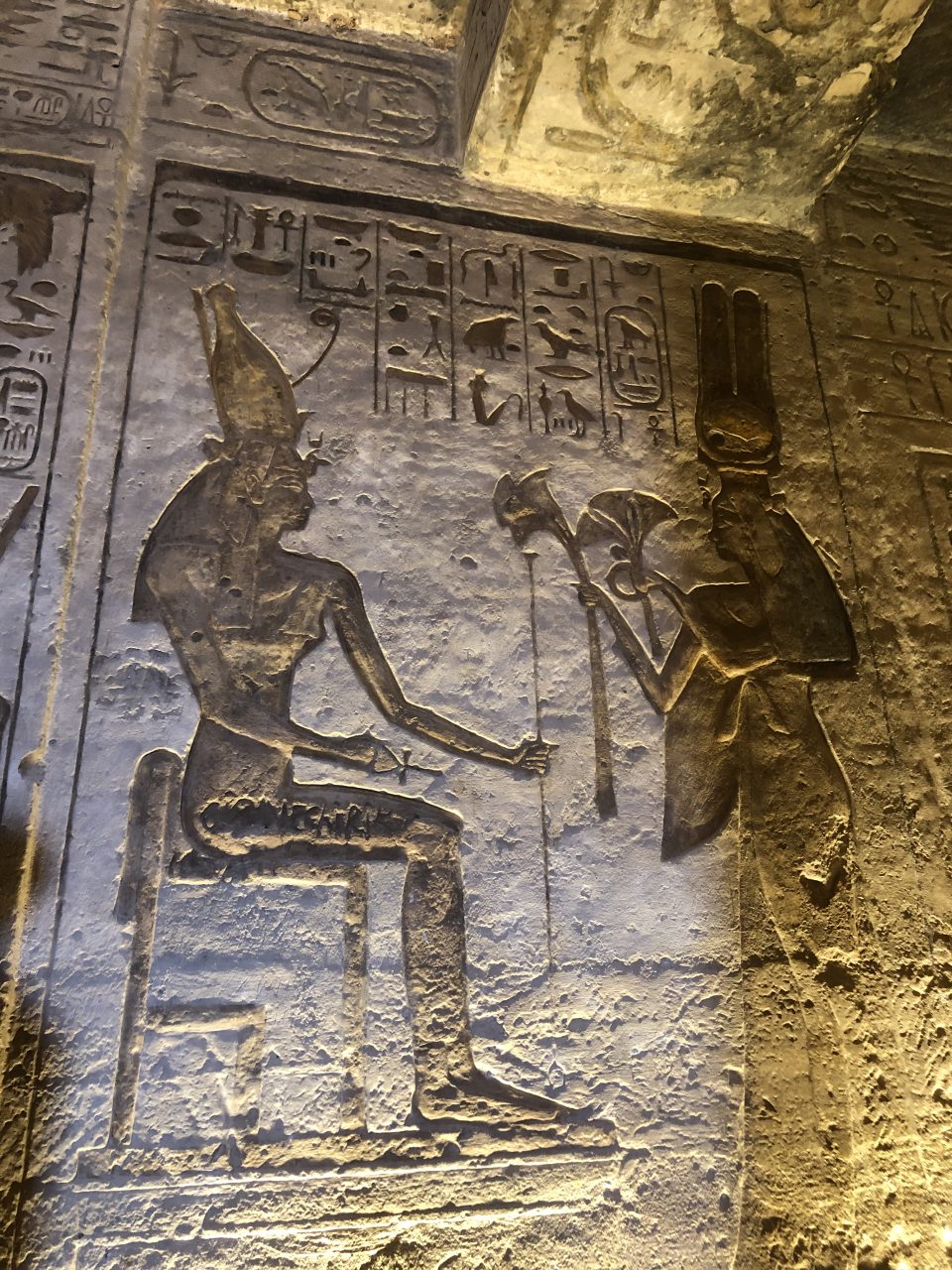
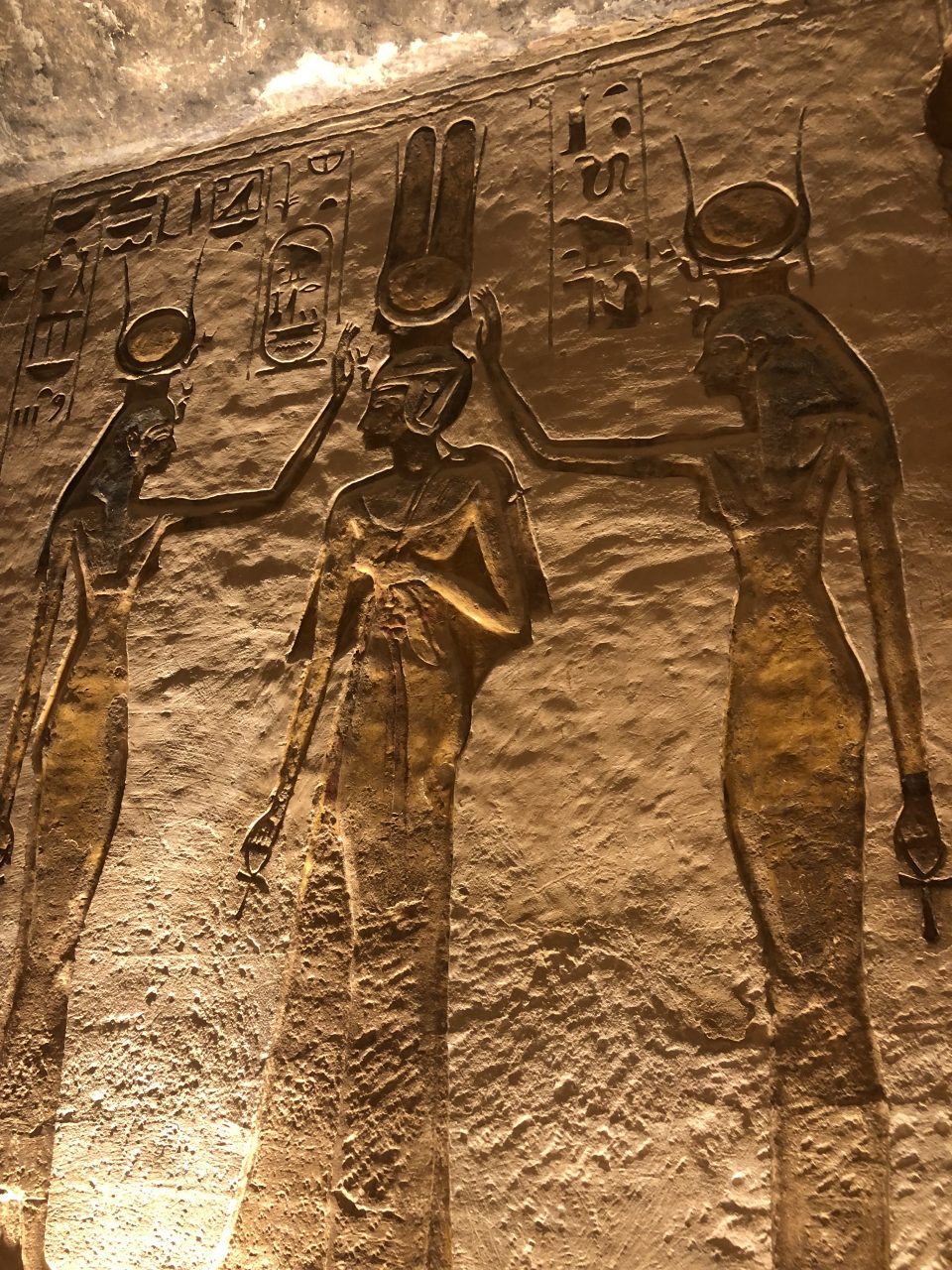
The walls of the Small Temple are alive with scenes of religious rituals. Nefertari is shown playing the sistrum, a sacred musical instrument, in honour of Hathor. Other panels depict Ramesses presenting offerings, reinforcing his role as a pious king and loving husband. These images convey a sense of serenity and devotion.
Artistic Details
The reliefs inside the Small Temple are remarkable for their elegance. Figures are finely carved, with delicate lines and graceful poses. Unlike the bold, heroic scenes of the Great Temple, these images emphasise beauty and intimacy, offering a glimpse into the softer side of Ramesses’ reign.
On the outside of the Temple, beneath the feet, you can see Ramesses and Nefertari’s daughters. You can also see small vandalism/graffiti probably during Roman or even later period.
 Users Today : 24
 Users This Month : 314
 Users This Year : 28102
 Total Users : 53403
 Views This Year : 34231
 Total views : 69409
 Who's Online : 0