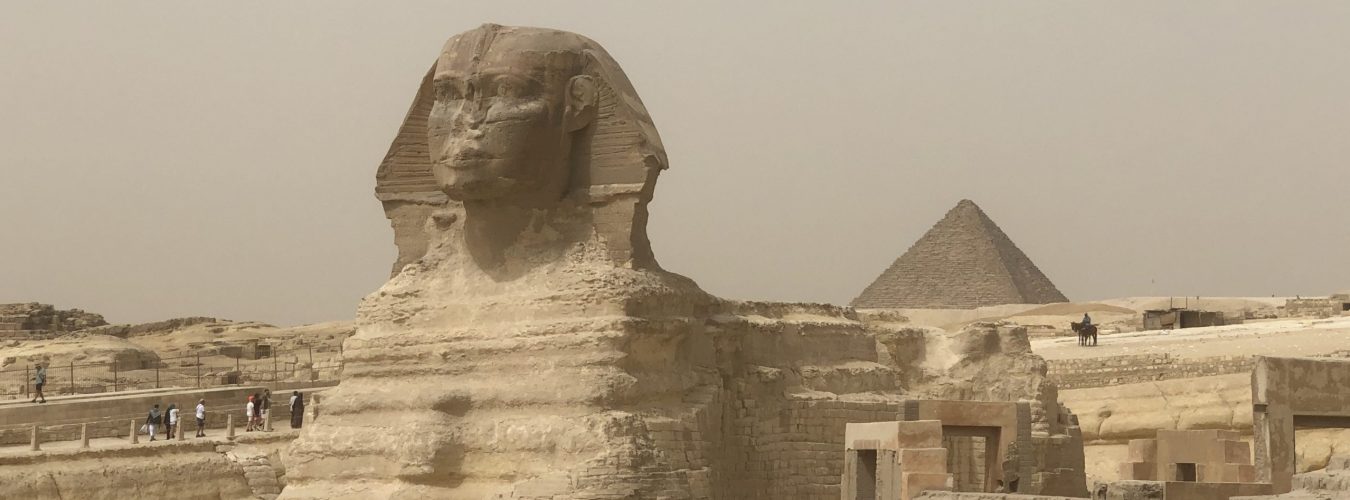
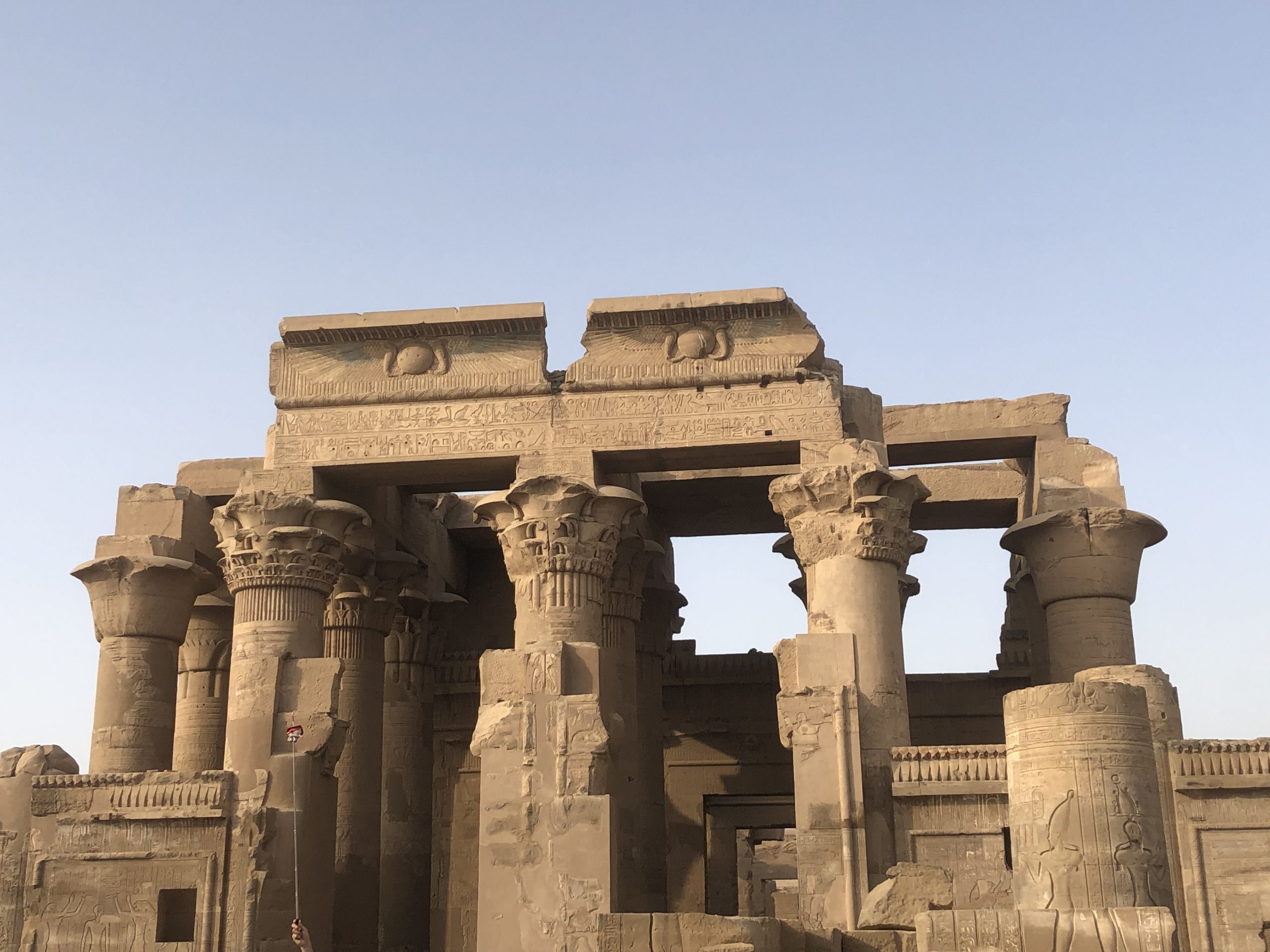
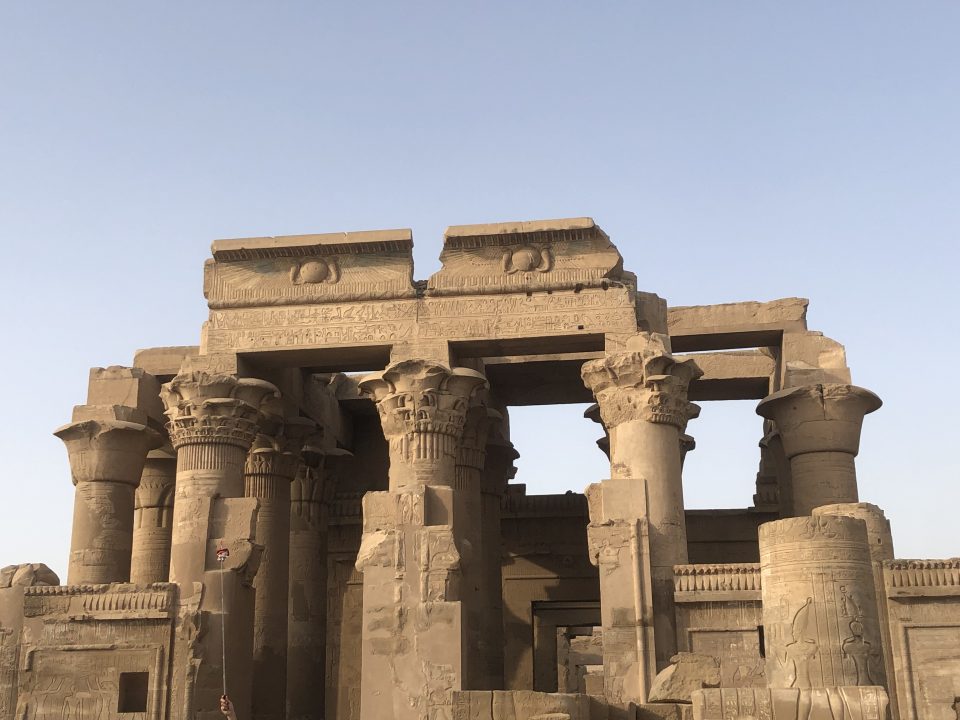
Kom Ombo Temple, perched on the eastern bank of the Nile about fifty kilometres north of Aswan, is one of Egypt’s most captivating archaeological sites. What makes it truly unique is its dedication to two gods at once: Sobek, the crocodile god associated with fertility and the Nile’s life-giving waters, and Horus, the falcon-headed god symbolising protection and kingship.
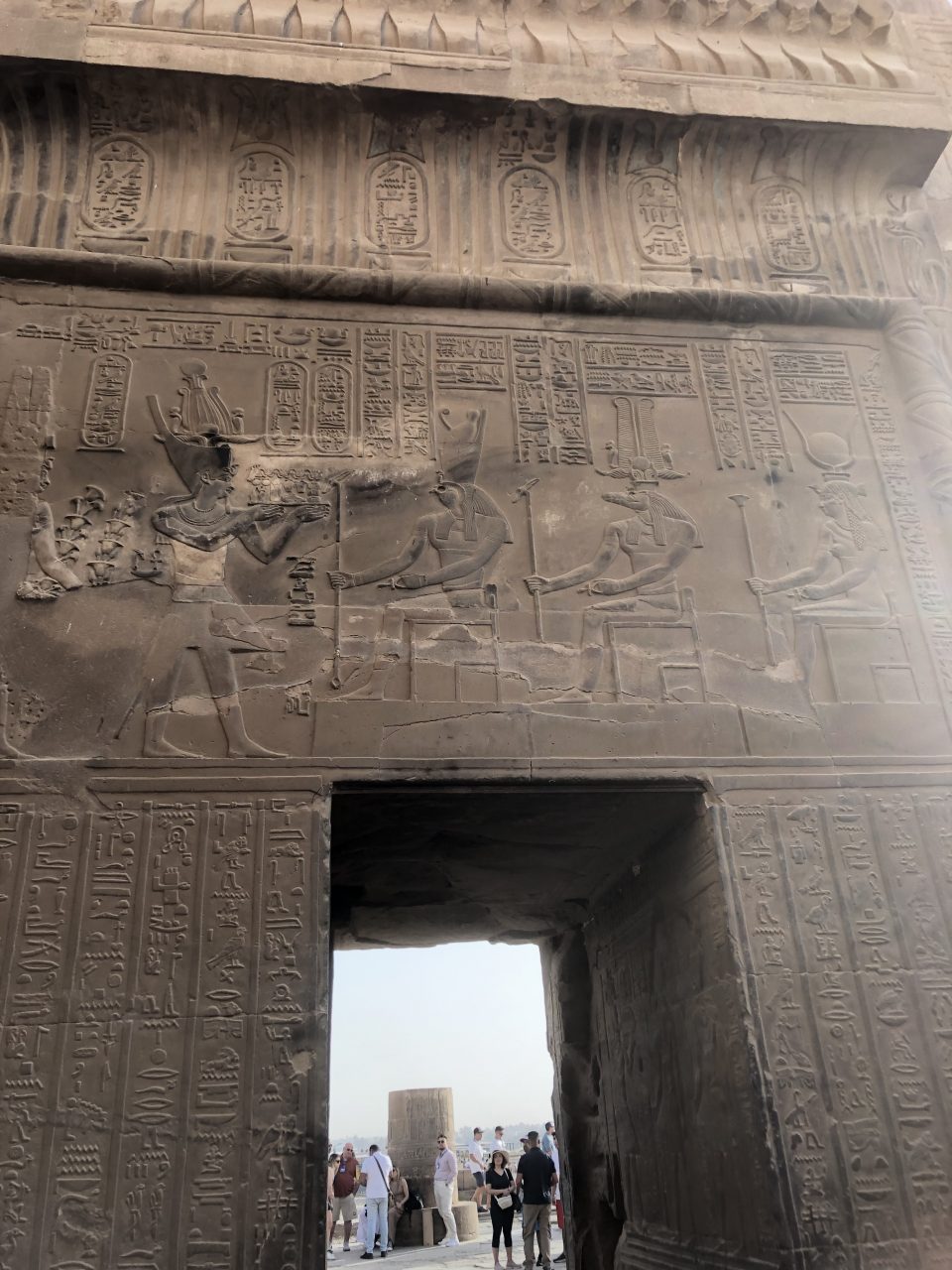
This dual devotion is reflected in the temple’s perfectly symmetrical design, creating the impression of two temples fused into one.
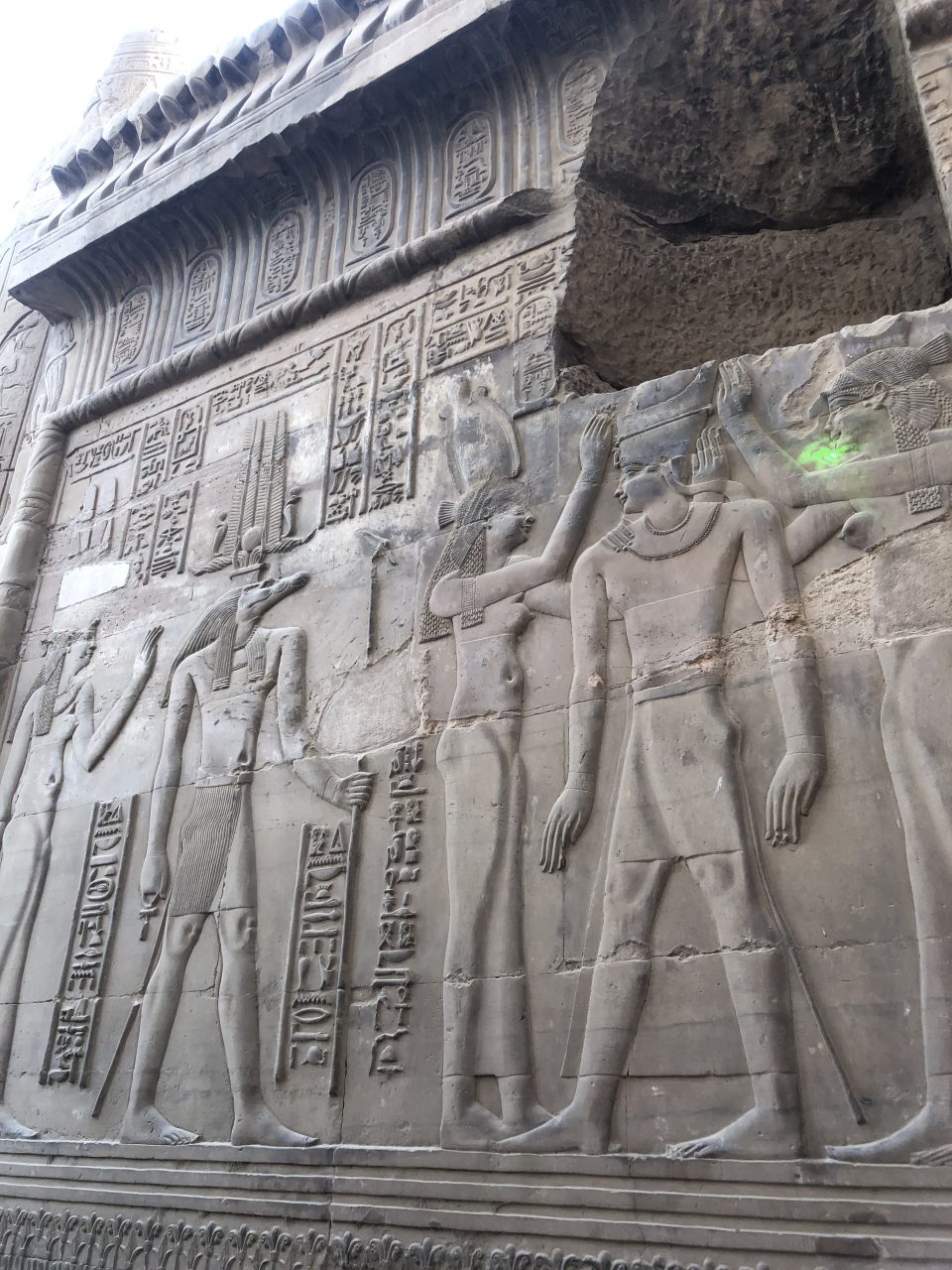
The Pillars of Kom Ombo: Silent Guardians of a Dual Temple
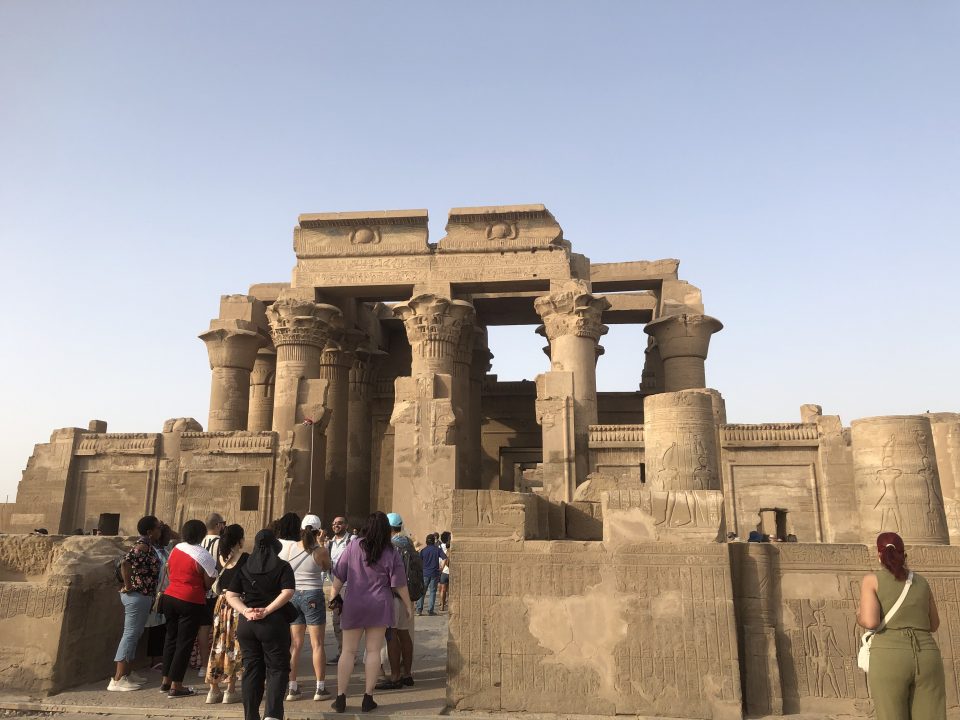
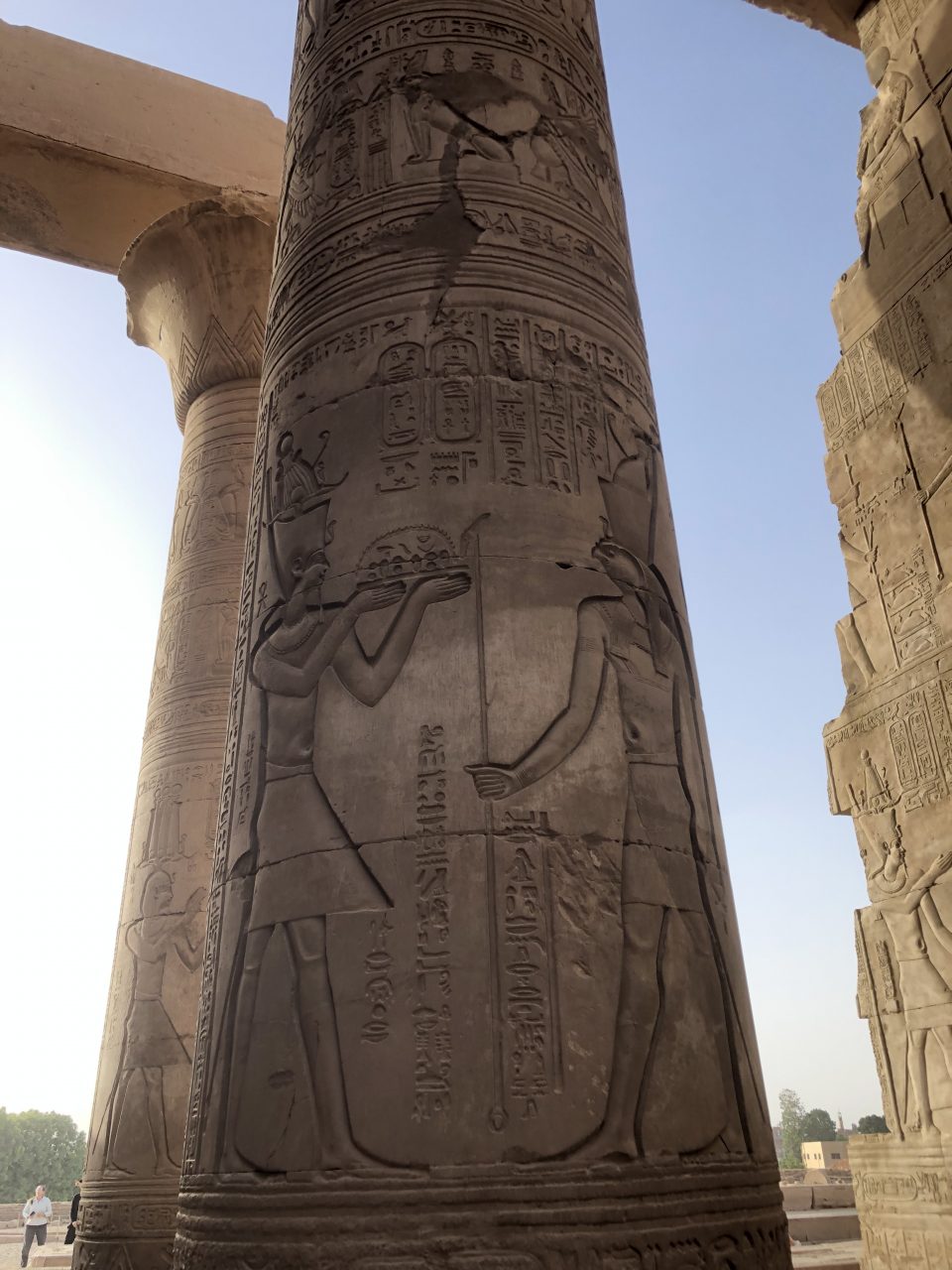
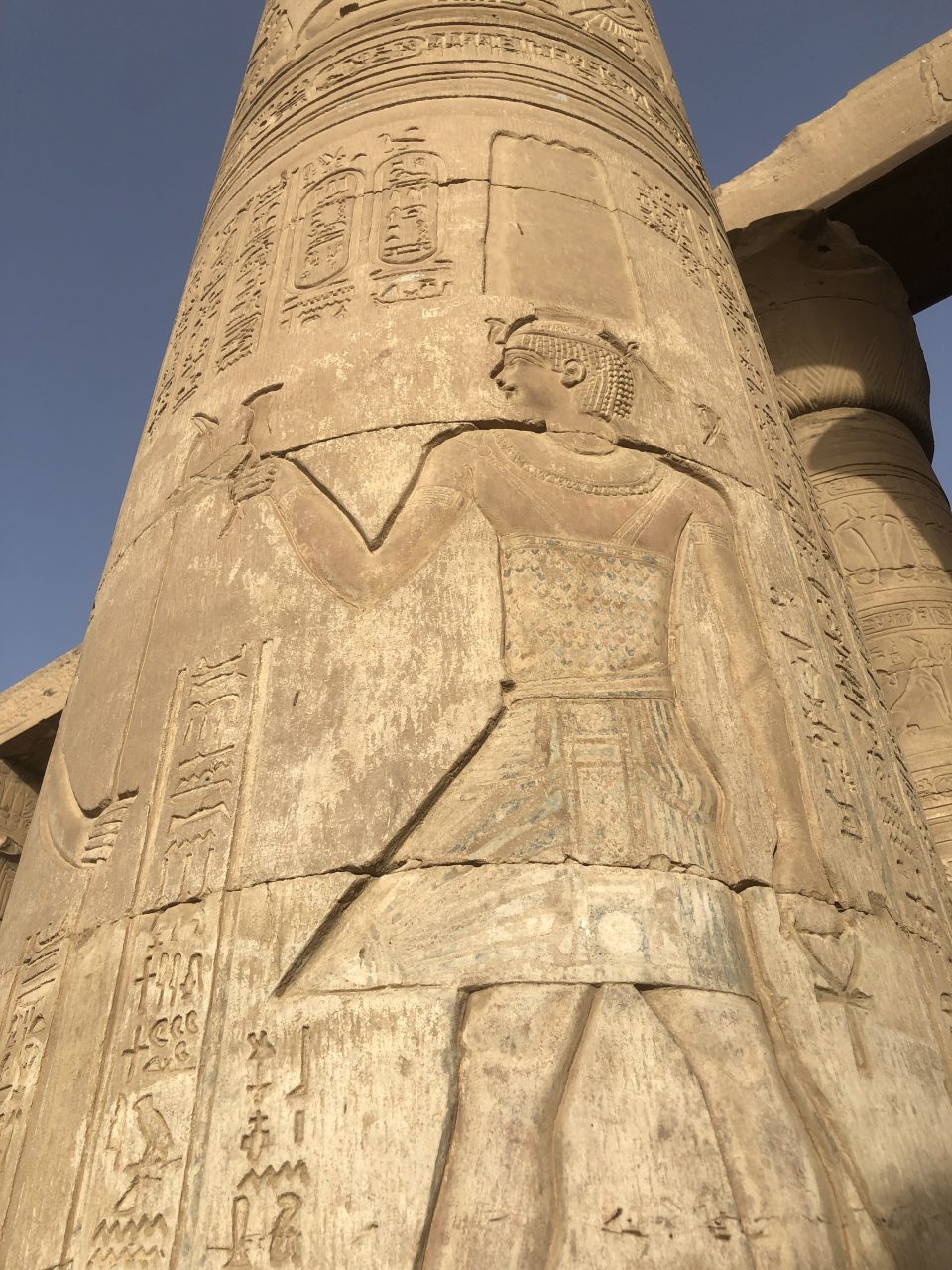
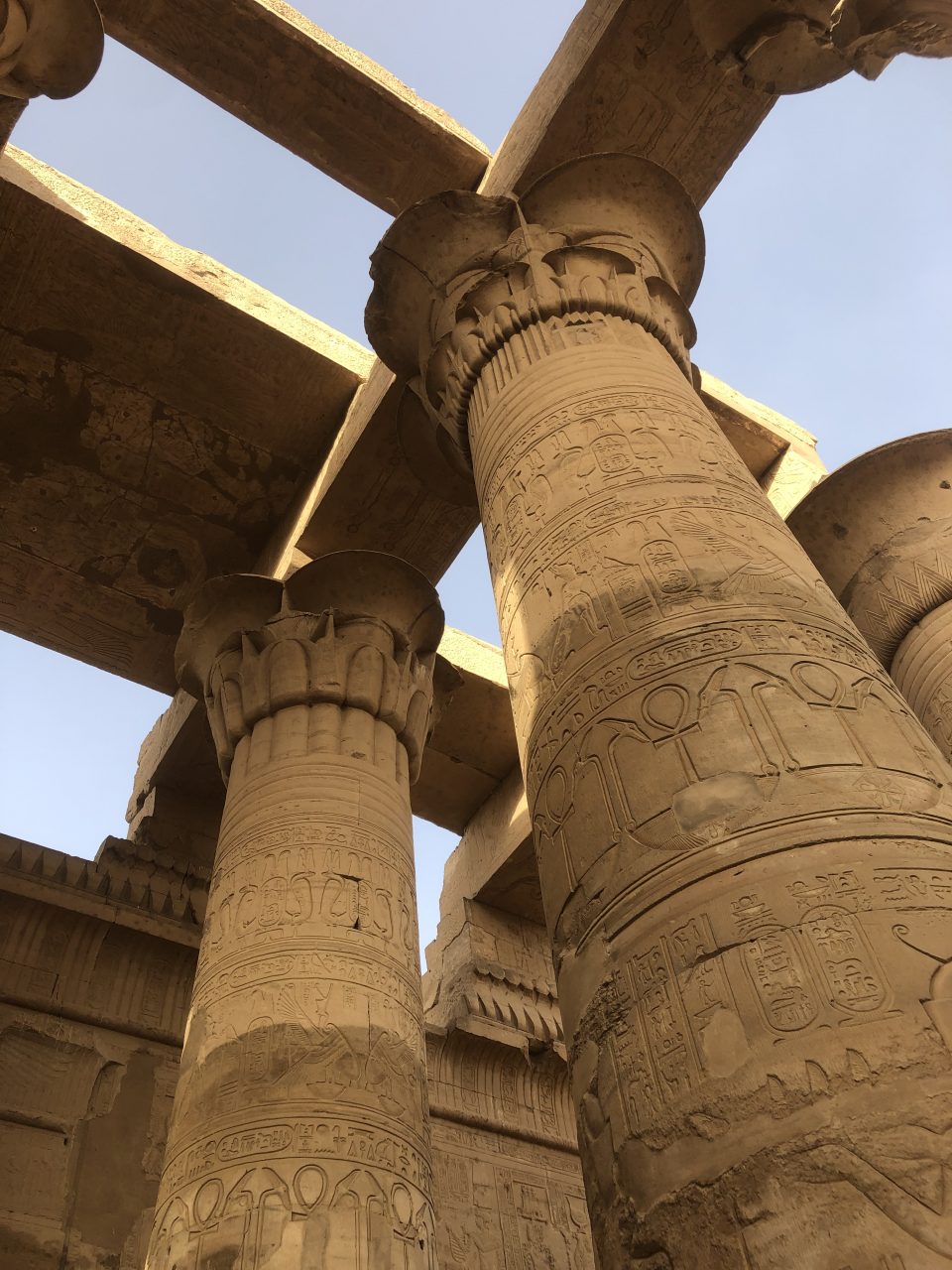
Standing along the banks of the Nile, the Temple of Kom Ombo is a masterpiece of symmetry and devotion. Its sandstone pillars rise like ancient sentinels, each carved with intricate hieroglyphs and sacred imagery that whisper stories from over two millennia ago.
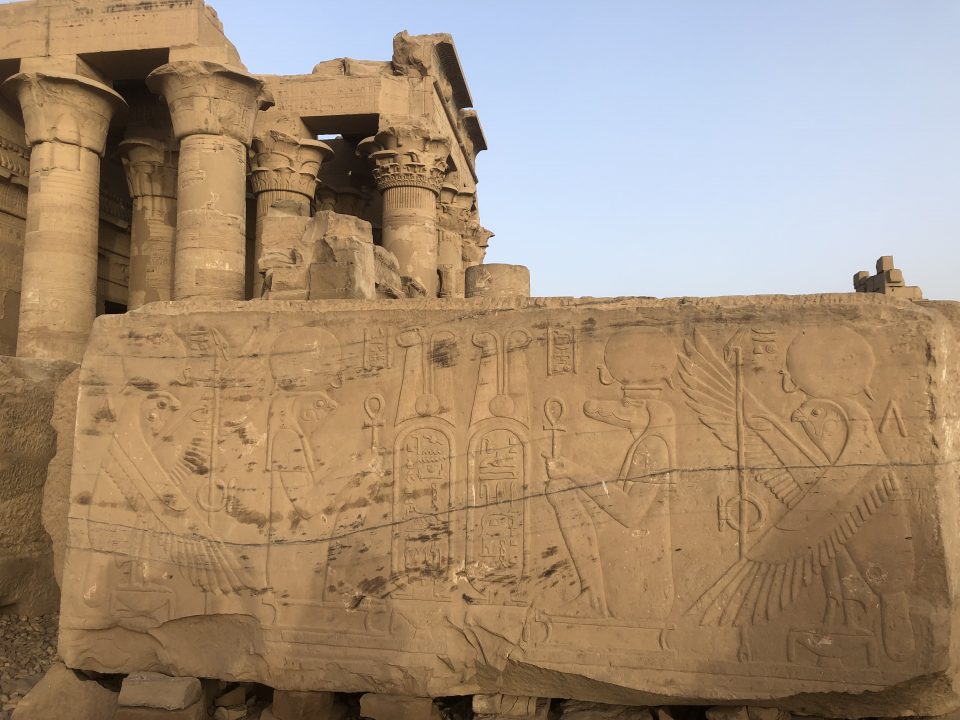
What makes these columns extraordinary is their role in a temple dedicated to two gods—Sobek, the crocodile deity, and Horus, the falcon-headed protector. This duality is reflected in the architecture: twin halls, twin sanctuaries, and rows of columns that mirror each other in perfect harmony.
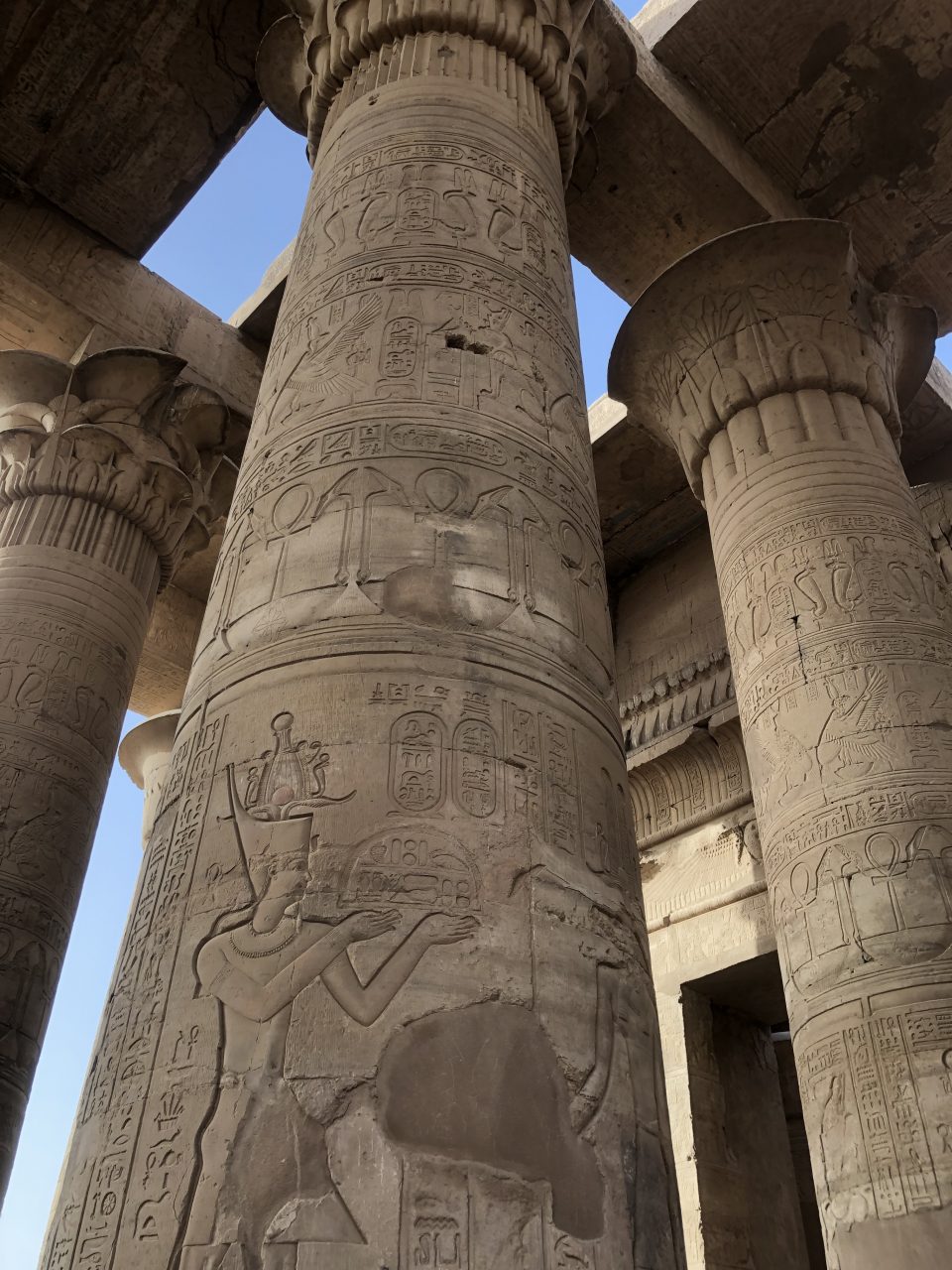
Look closely at the capitals and you’ll find delicate lotus and papyrus motifs, symbols of Upper and Lower Egypt entwined in eternal unity. As the sun dips towards the horizon, the pillars glow in hues of amber and gold, casting long shadows that dance across the temple floor—a photographer’s dream and a traveller’s moment of awe.
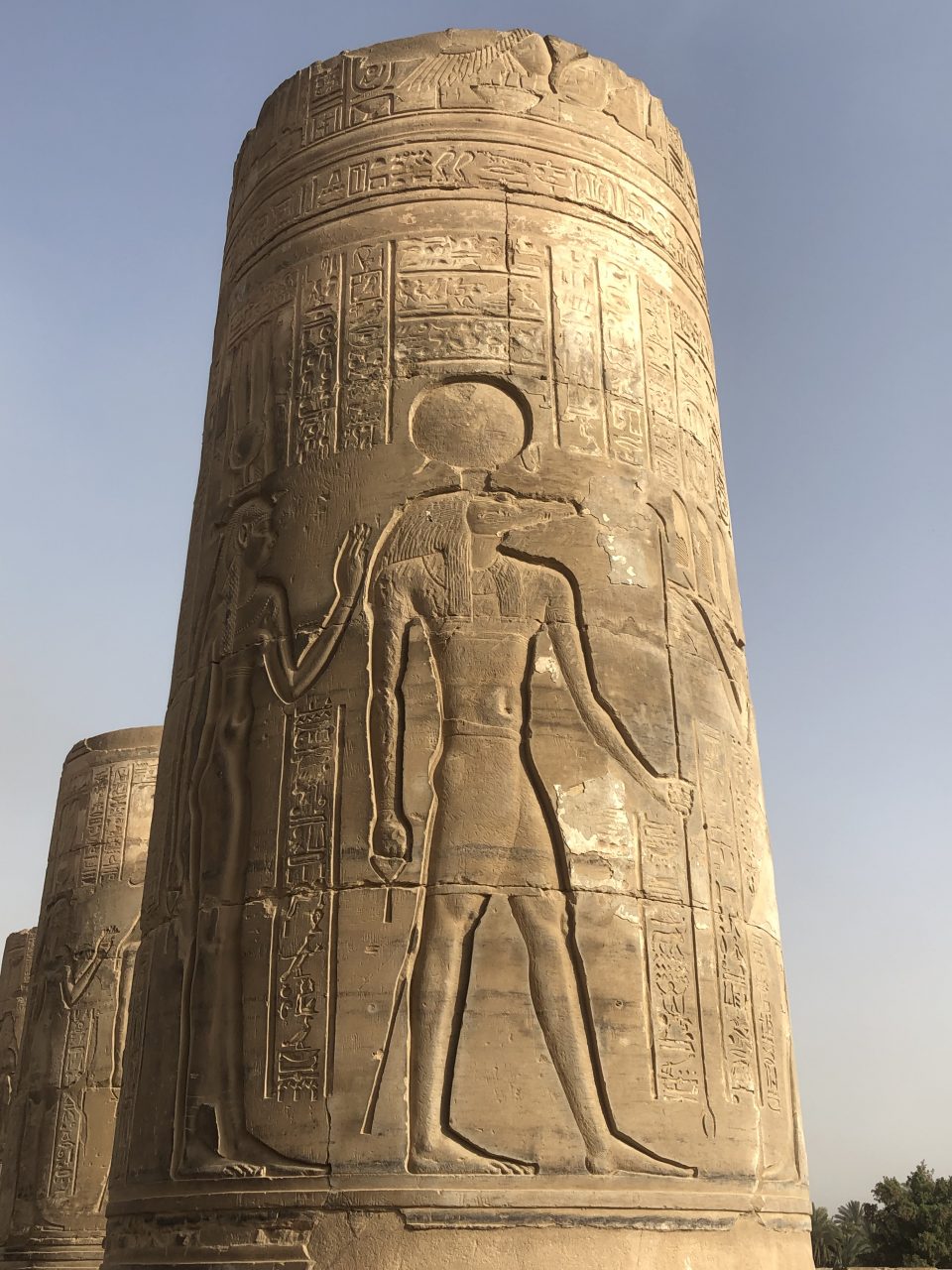
Sobek the Crocodile God
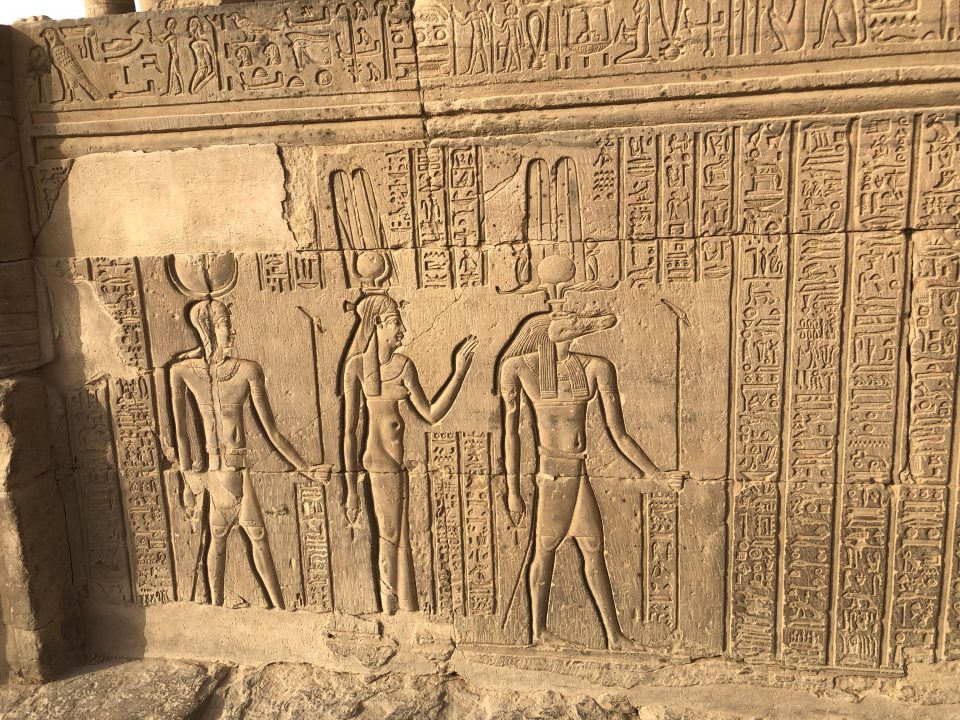
Sobek is one of the most intriguing deities in ancient Egyptian mythology. Known as the crocodile god, Sobek was associated with the Nile, fertility, and military prowess. His image—often depicted as a man with the head of a crocodile—symbolised both the life-giving and dangerous aspects of the river. Crocodiles were feared predators, yet they were also vital to the ecosystem, so Sobek embodied this duality of protection and peril.
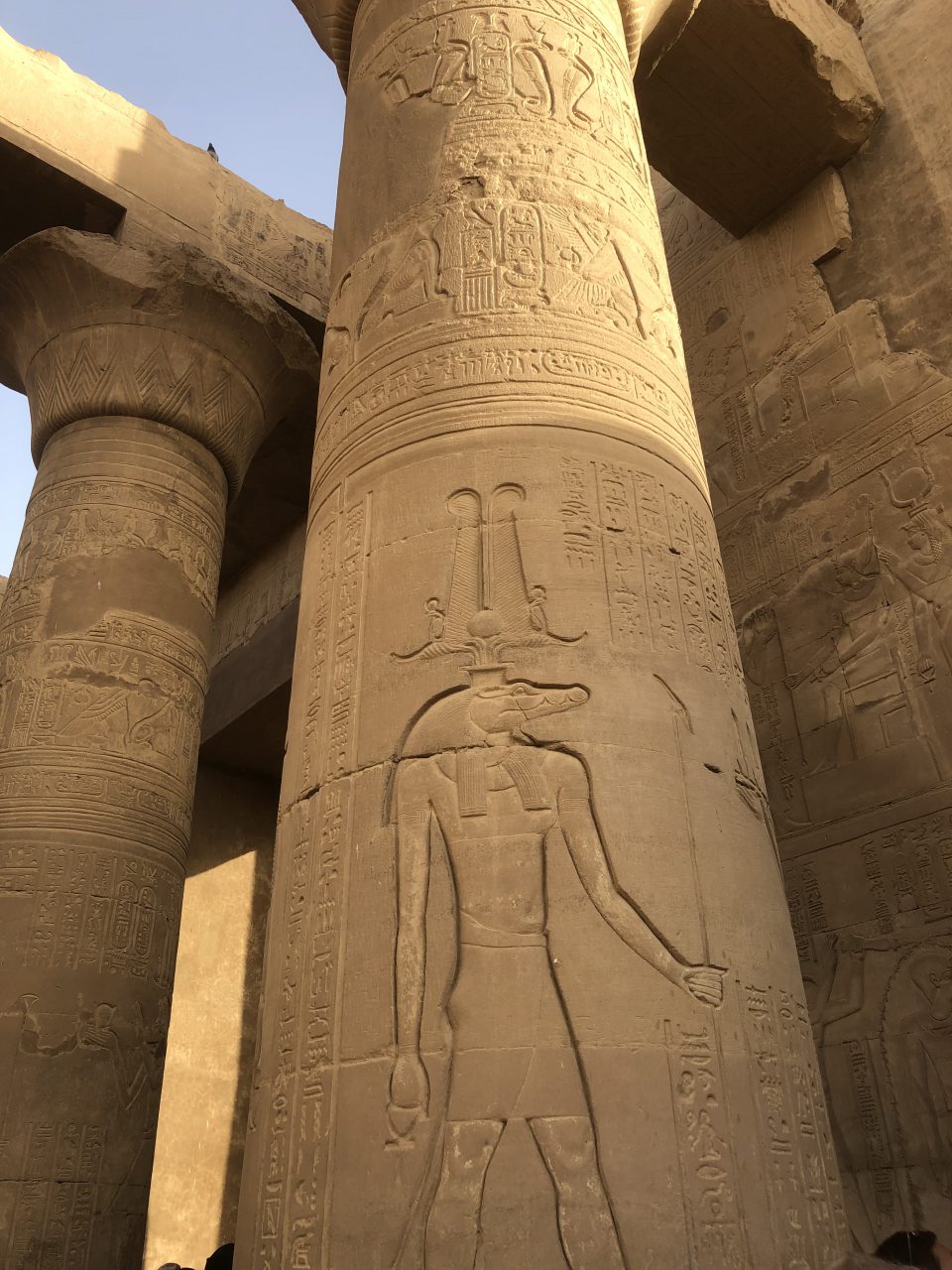
Sobek was believed to control the waters of the Nile, ensuring its annual flood that brought fertility to the land. He was also linked to strength and power, making him a patron of soldiers and kings. Temples dedicated to Sobek often included pools for sacred crocodiles, which were mummified after death as offerings to the god. At Kom Ombo, you can even visit the Crocodile Museum, where dozens of these mummified creatures are on display—a fascinating glimpse into ancient rituals.
Sekhmet: The Lion-Headed Goddess in Egypt’s Pantheon
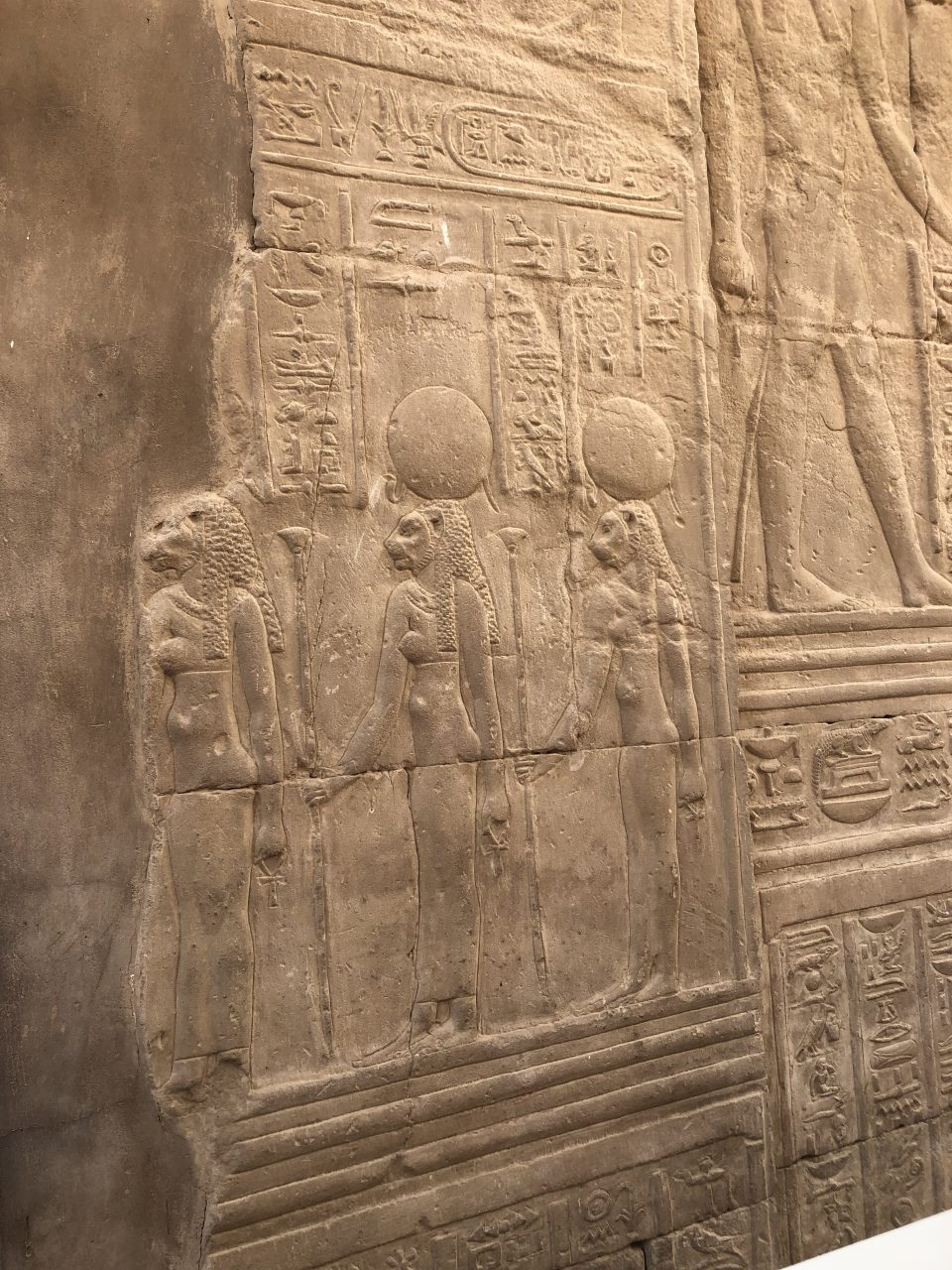
While Kom Ombo honours Sobek and Horus, Egypt’s spiritual landscape was rich with fierce protectors, and none more formidable than Sekhmet, the lion-headed goddess. Known as the “Eye of Ra,” she embodied both destruction and healing—a divine force of war and medicine. It is very enchanting to see the presence of Sekhmet at Kom Ombo.
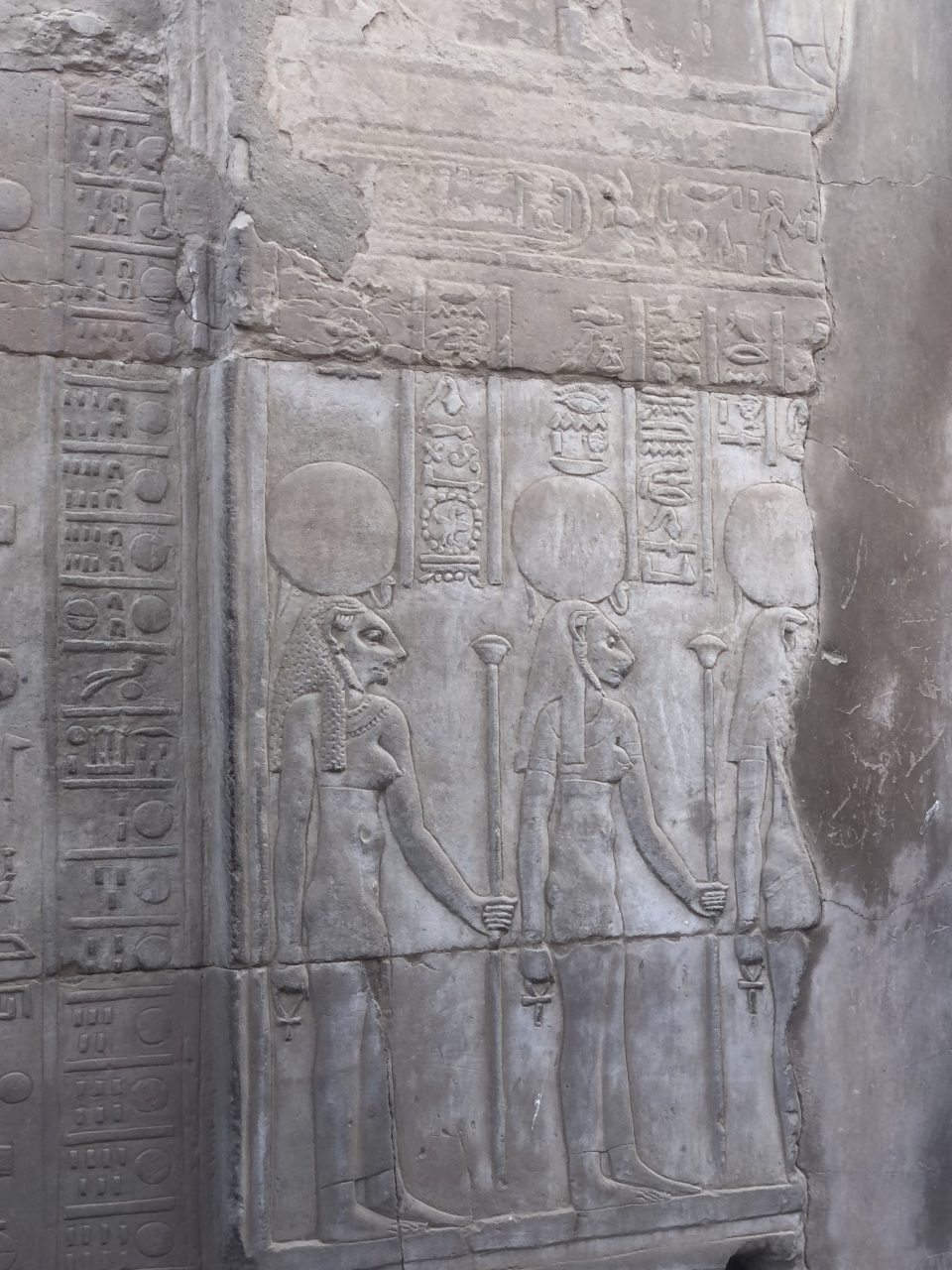
The history of Kom Ombo stretches back to the Ptolemaic era, with construction beginning around 180 BCE under Ptolemy VI Philometor. Later rulers, including the Romans, added their own touches, blending Egyptian and Greco-Roman artistic styles into the temple’s reliefs and columns. Its location was no accident; the bend in the Nile where Kom Ombo stands was once home to countless crocodiles, making Sobek’s presence here particularly significant.
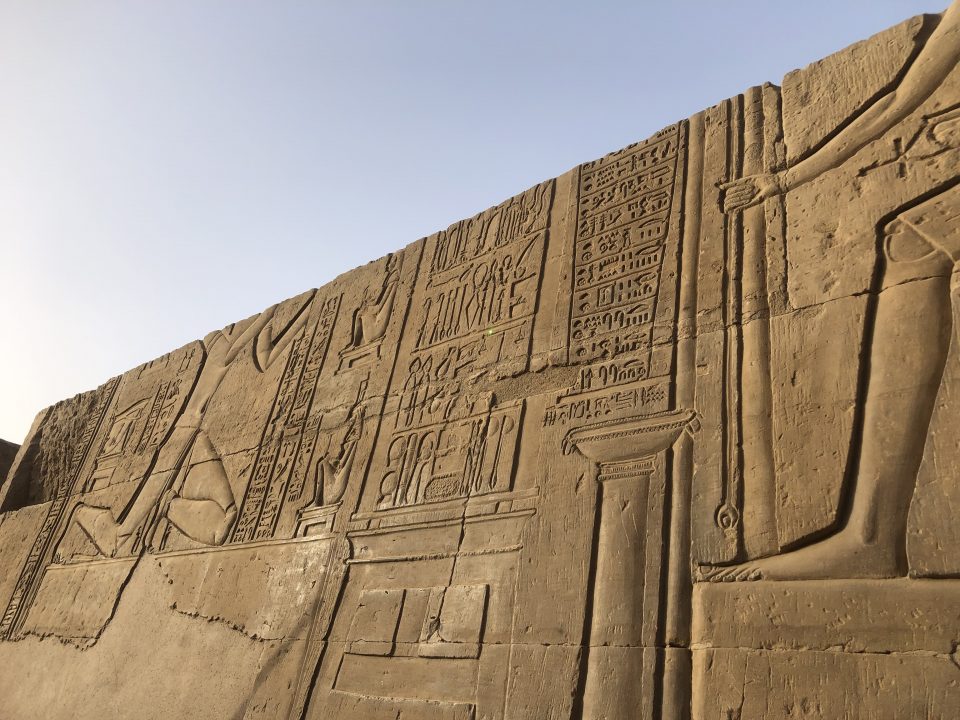
Among the temple’s most intriguing features are the medical reliefs carved into its walls, depicting surgical instruments and hinting at the advanced medical practices of the time. These details suggest that Kom Ombo may have been associated with healing rituals, adding another layer of mystery to its story.
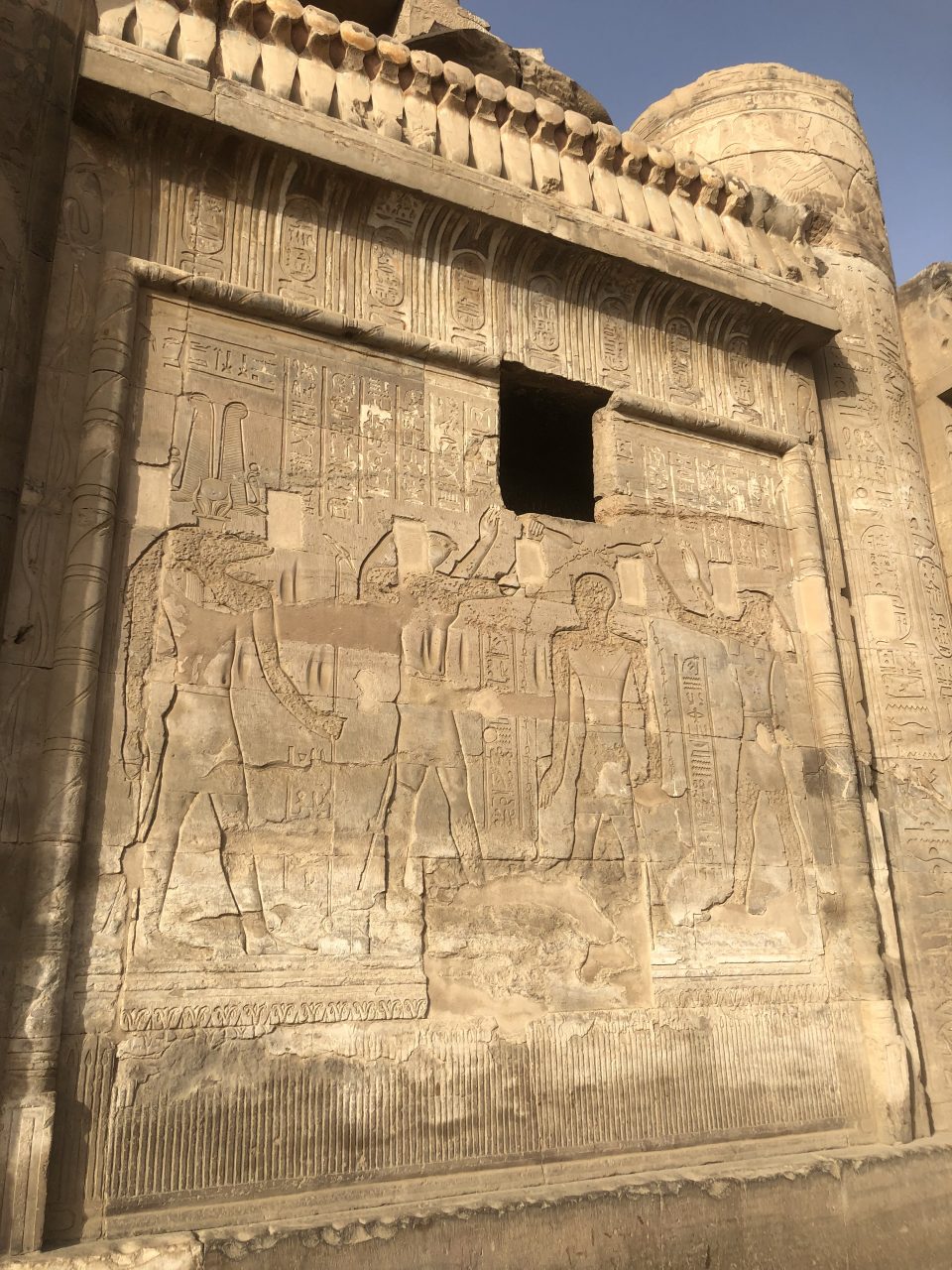
Visiting Kom Ombo is an experience that lingers in the memory. The temple rises dramatically against the backdrop of the Nile, and its sandstone walls glow golden in the late afternoon sun. Inside, two parallel halls lead to separate sanctuaries for Sobek and Horus, a design rarely seen in Egyptian architecture. Just beside the temple, the Crocodile Museum offers a fascinating glimpse into ancient beliefs, displaying mummified crocodiles that once inspired reverence and fear. Standing among these relics, it is easy to imagine the world of rituals and myths that shaped life along the Nile thousands of years ago.
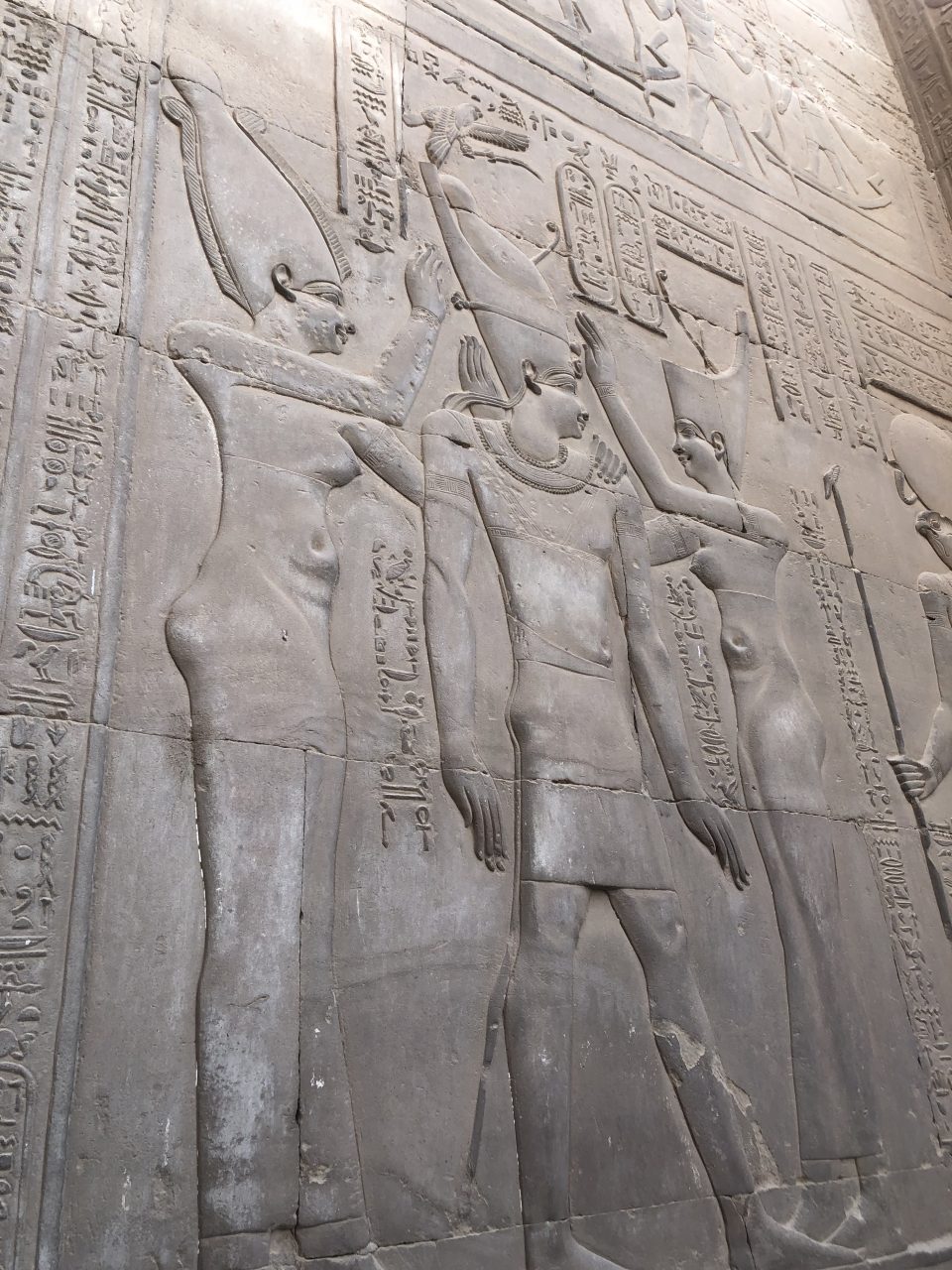
For travellers, Kom Ombo is best visited in the early morning or late afternoon when the light is soft and the heat less intense. It is a popular stop on Nile cruises between Luxor and Aswan, making it easy to include in your itinerary. The Upper Egypt sun can be unforgiving, so carrying water, sunscreen, and a hat is essential. Beyond its practical considerations, Kom Ombo offers something far more profound: a chance to walk through history, to stand in a place where two powerful deities shared a sanctuary, and to marvel at the artistry and ingenuity of a civilisation that continues to captivate the world.
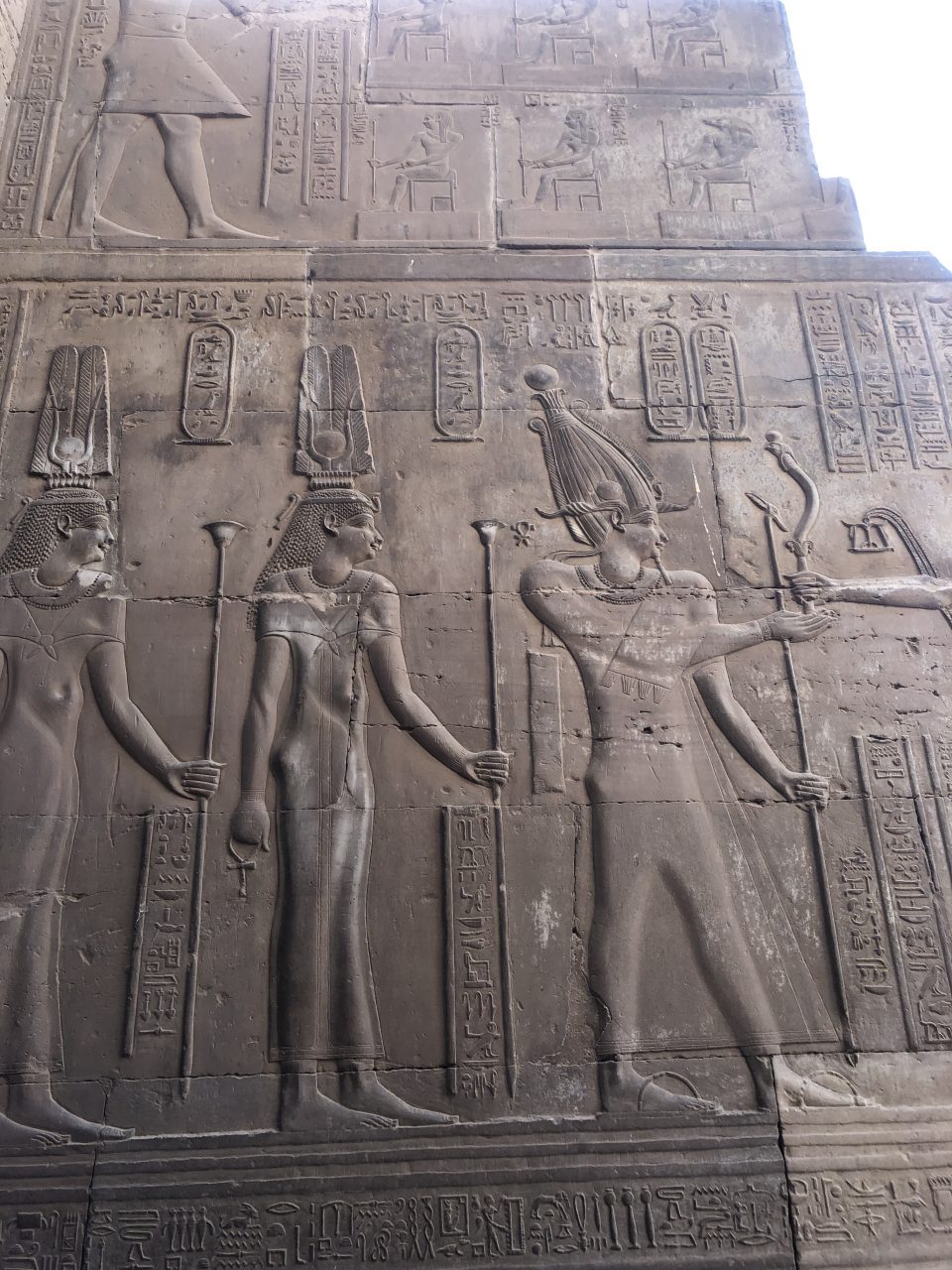
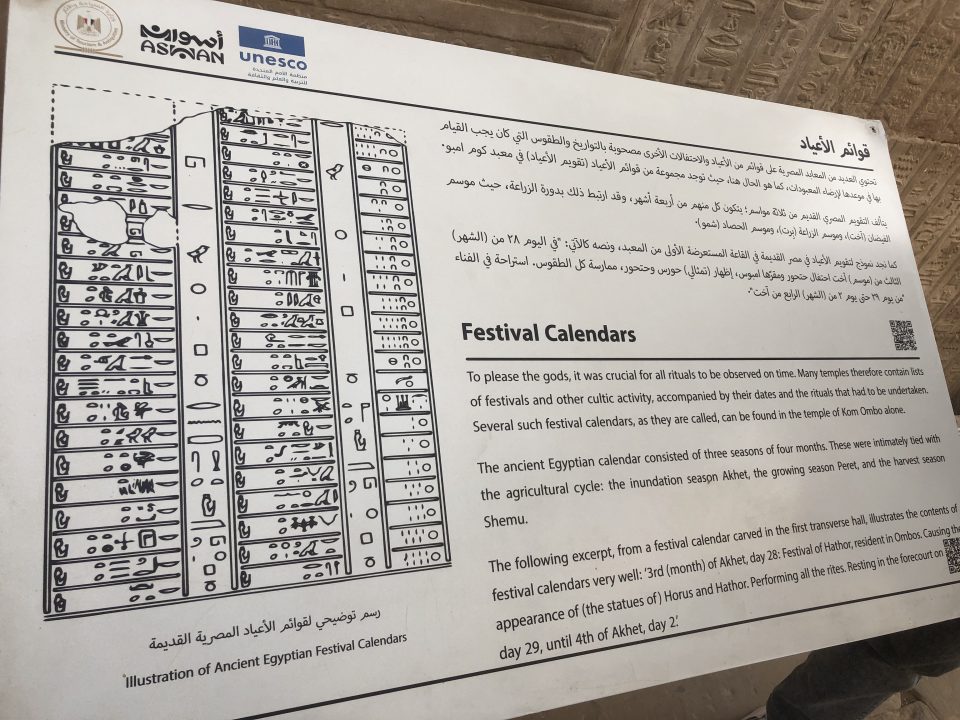
Festival Calendars at Kom Ombo
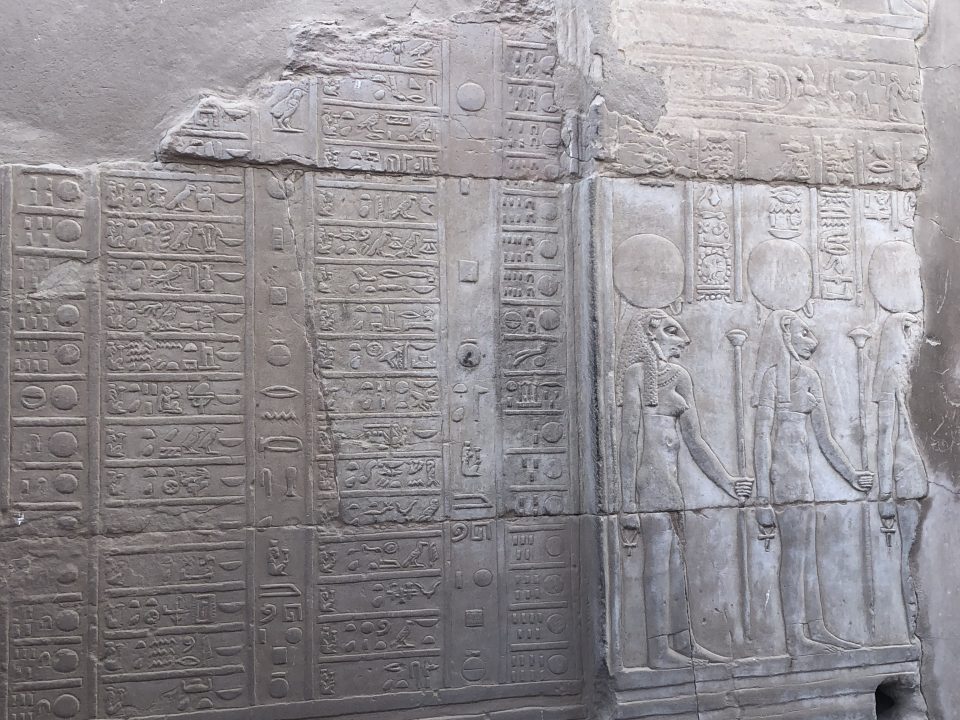
The temple of Kom Ombo is more than an architectural wonder; it is a living record of ancient Egyptian ritual life. Its walls are adorned with intricate reliefs that reveal the rhythm of festivals and ceremonies dedicated to the gods Sobek and Horus. These carvings are not mere decoration—they are visual calendars that once guided the spiritual and agricultural cycles of the region.
The reliefs often depict scenes of offerings, processions, and sacred rituals. Priests are shown carrying barques of the gods, musicians play sistrums, and celebrants bring food and drink to honour divine powers. These images correspond to major feast days and seasonal celebrations, many of which were tied to the Nile’s annual inundation. Sobek, the crocodile god, was worshipped for his association with fertility and water, while Horus symbolised protection and kingship. Together, their festivals marked moments of renewal and prosperity.
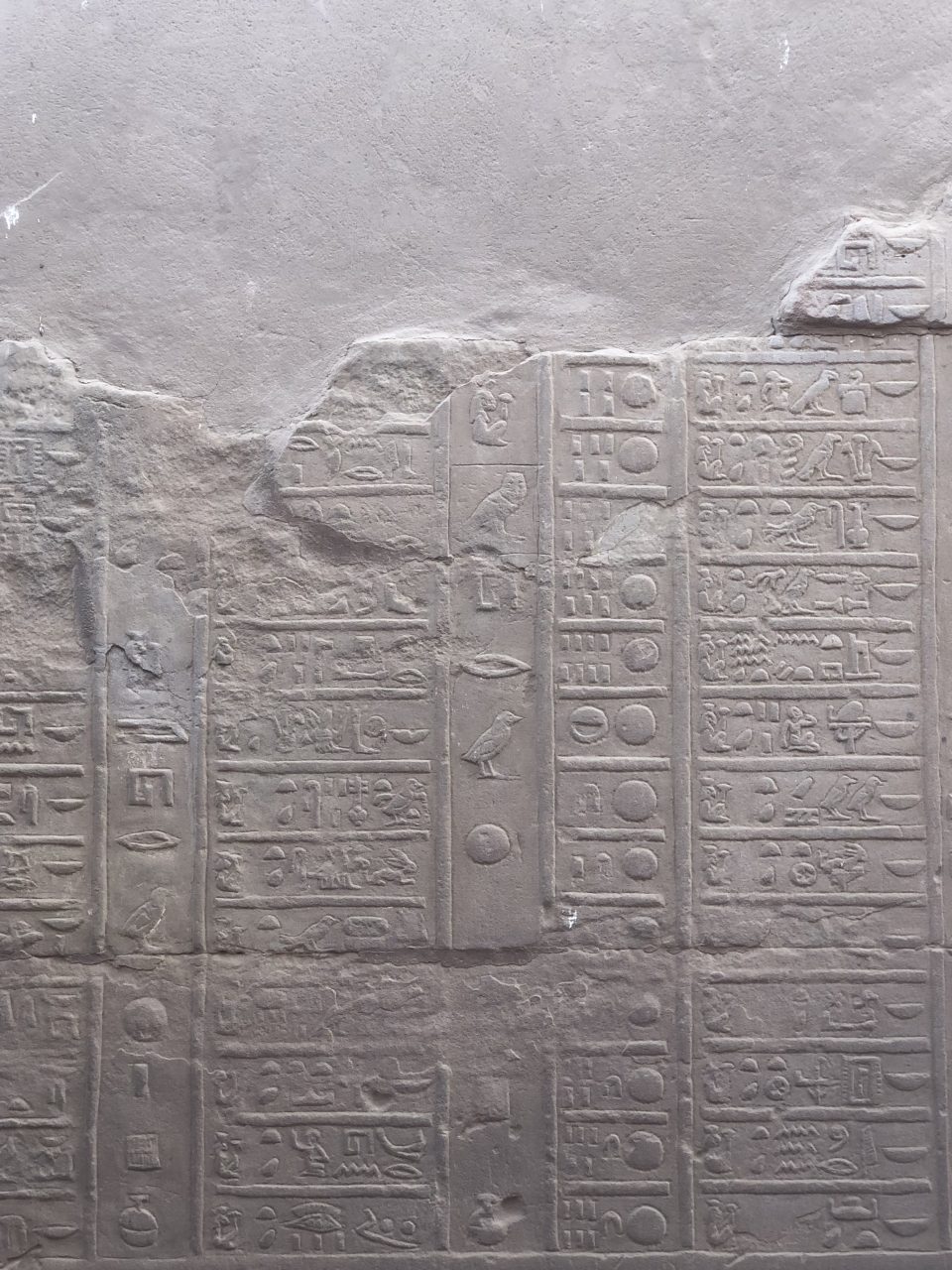
Ancient Egyptian timekeeping divided the year into three seasons: Akhet (Inundation), Peret (Growth), and Shemu (Harvest). The reliefs at Kom Ombo often reference these cycles through symbolic imagery—water jars for Akhet, sprouting plants for Peret, and harvested crops for Shemu. These visual cues helped priests and worshippers align their rituals with the natural world, ensuring harmony between divine will and human activity.
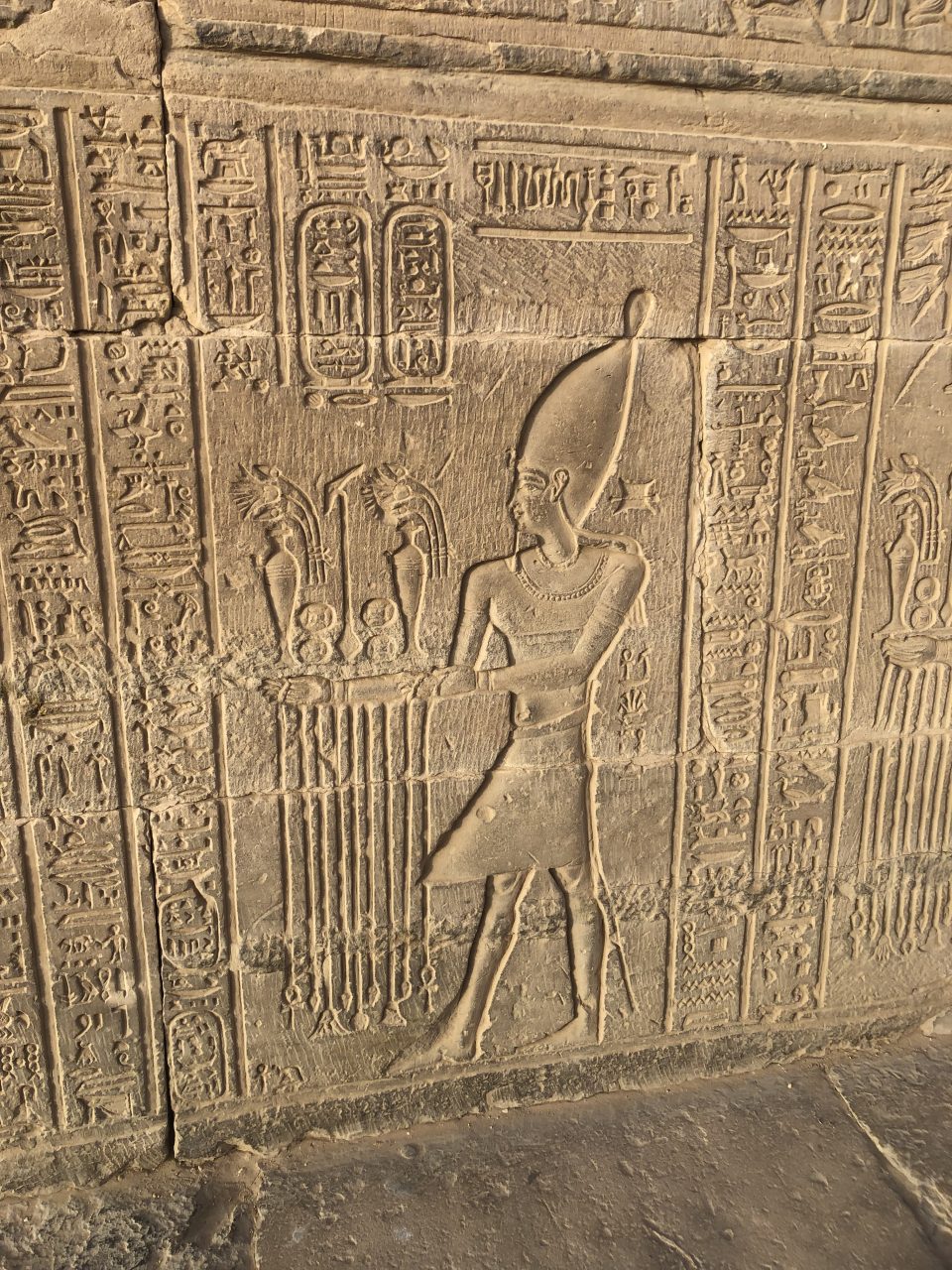
Kom Ombo is unique in that its reliefs also include depictions of surgical instruments and healing rites, suggesting that some festivals incorporated rituals for health and protection. This blend of spiritual and practical concerns reflects the temple’s role as both a religious and medical centre in antiquity.
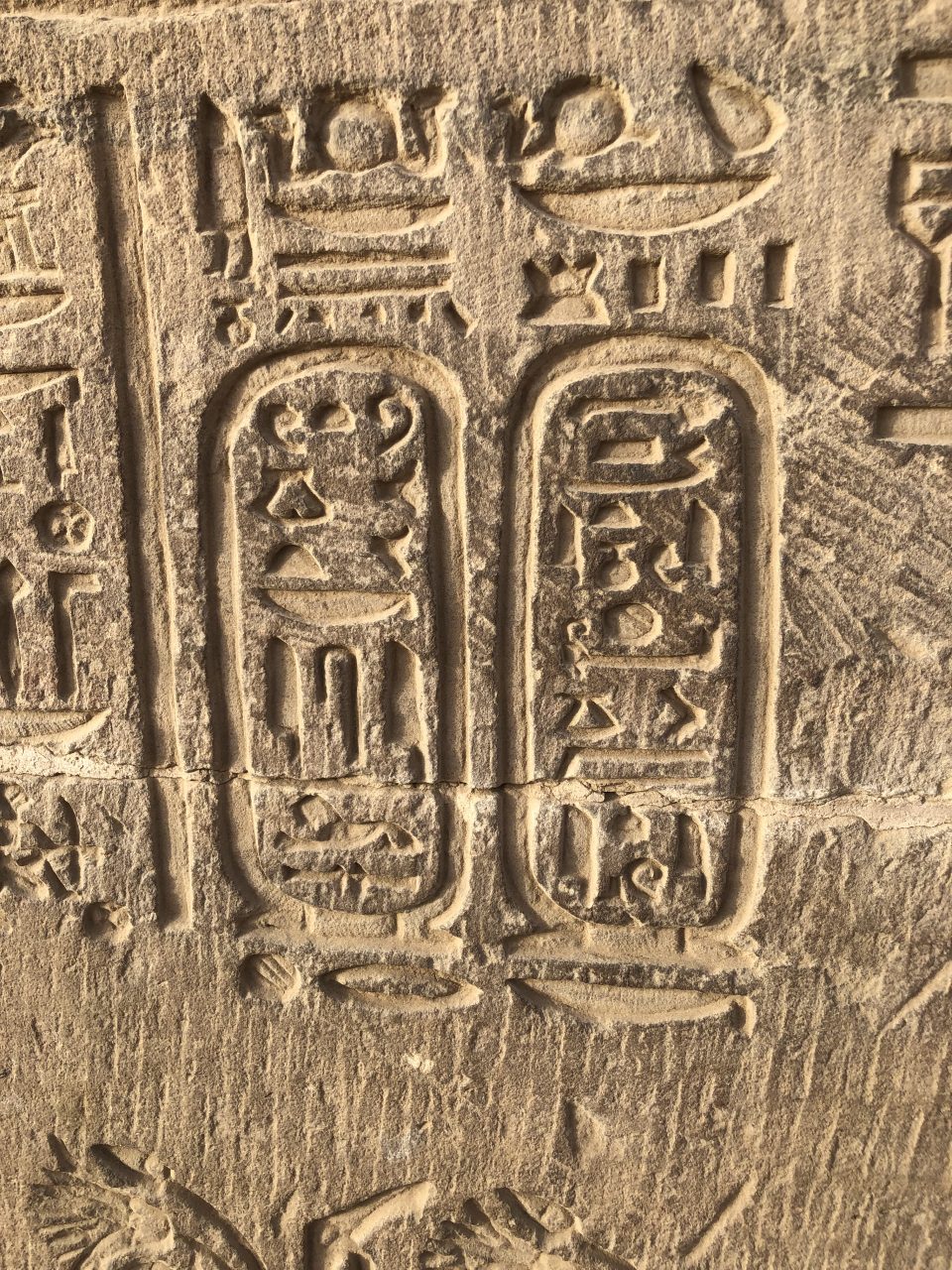
For travellers today, these reliefs offer a fascinating window into the past. When visiting Kom Ombo, look closely at the inner walls of the Sobek sanctuary for crocodile imagery linked to his feast days, and explore the hypostyle hall for processional scenes celebrating Horus. Inscriptions near the Nilometer sometimes record ritual dates, providing further insight into the ancient festival calendar. Standing before these carvings, you are not just observing art—you are reading the ceremonial heartbeat of an ancient civilisation.
The lion with wings at Kom Ombo is a fascinating detail that often surprises visitors because it reflects a blend of Egyptian and Greco-Roman artistic influences. This motif is not traditionally Egyptian; rather, it comes from the iconography of the Ptolemaic period, when Greek rulers incorporated Hellenistic elements into temple art.
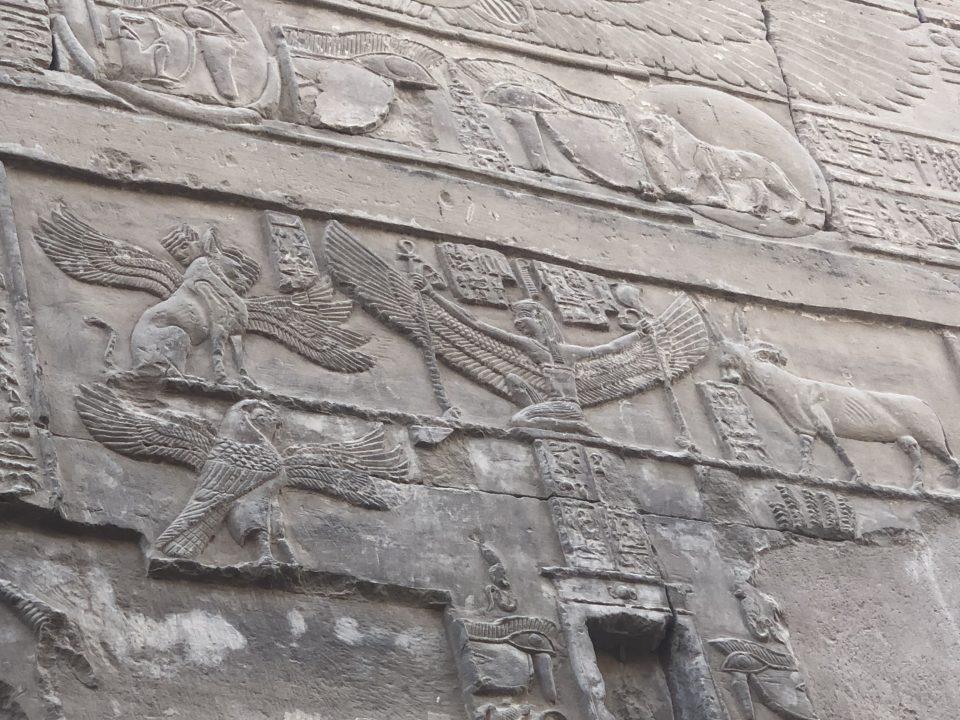
Symbolism of the Cobra
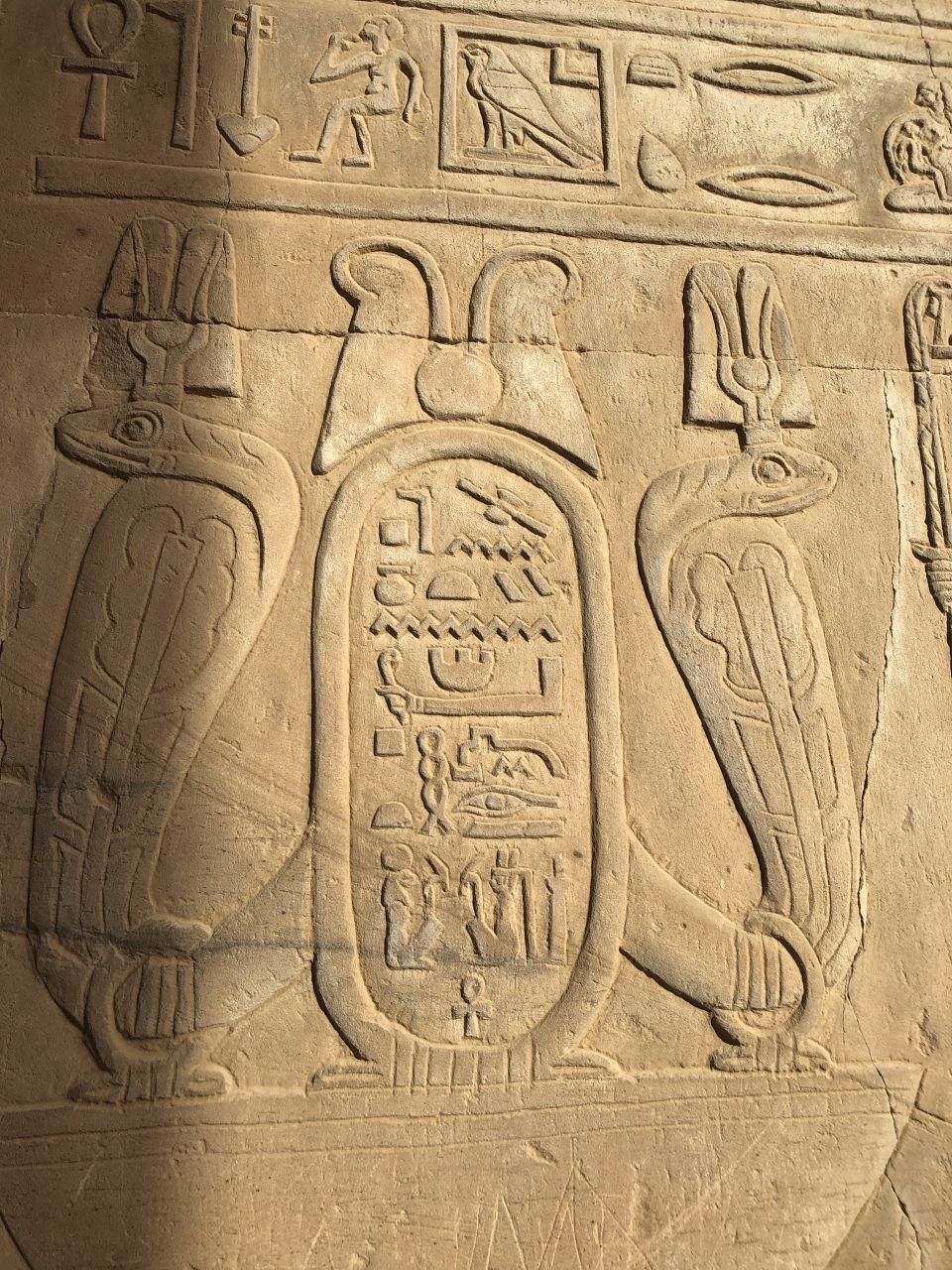
The cobra represented the goddess Wadjet, one of the earliest protective deities of Lower Egypt. She was often depicted as a rearing serpent, ready to strike, symbolising defence against chaos and enemies. In temple art, the cobra frequently appears on crowns, guarding the pharaoh, or as a standalone figure on walls and columns, signifying the temple’s sanctity and its alignment with divine order.
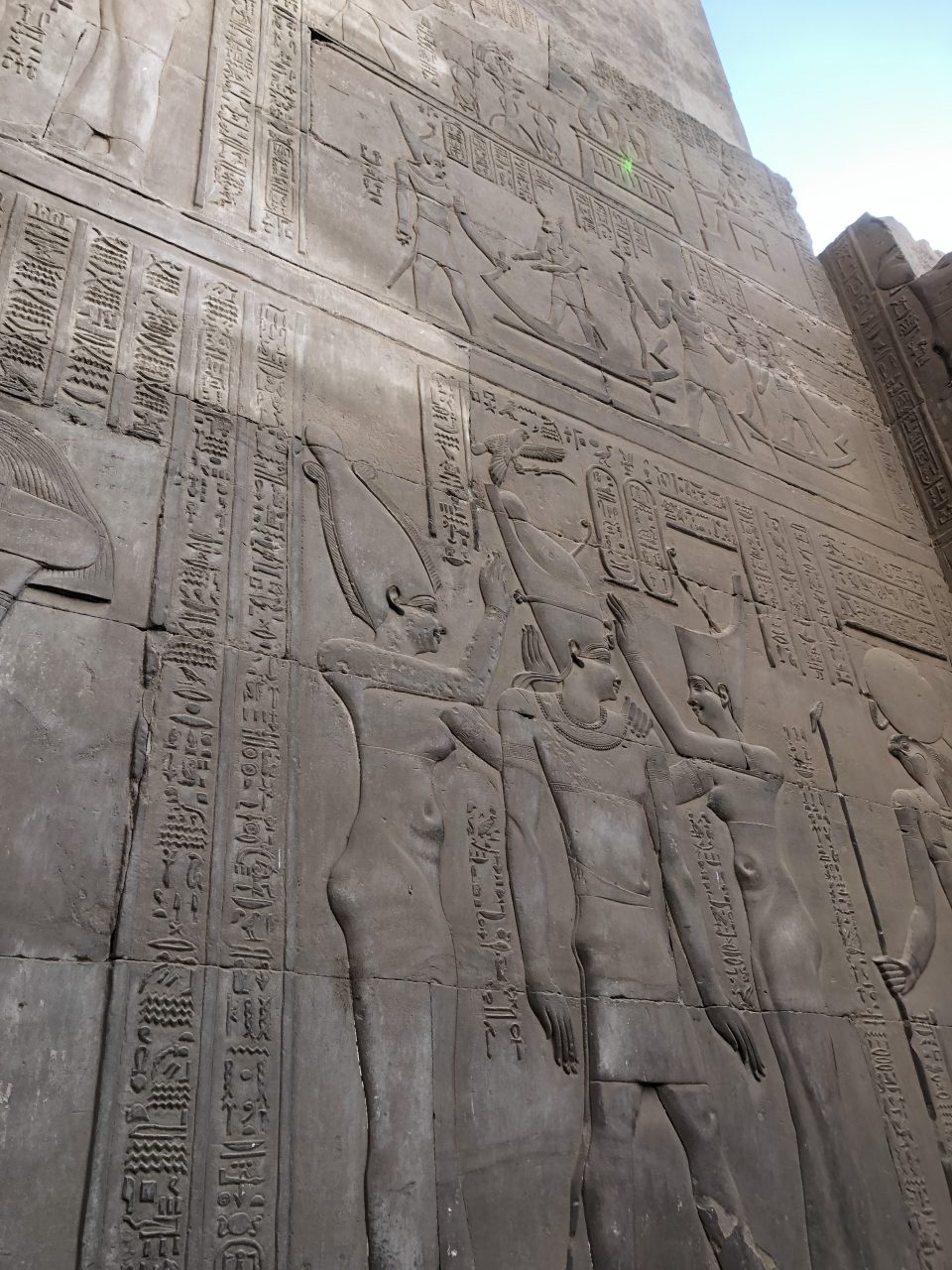
The Roman emperor depictions at Kom Ombo are a fascinating reminder of the temple’s Ptolemaic and Roman-era history. Kom Ombo was not only an Egyptian religious centre but also a site where foreign rulers asserted their authority through art and inscriptions.
Why Are Dogs Shown in Kom Ombo Reliefs?
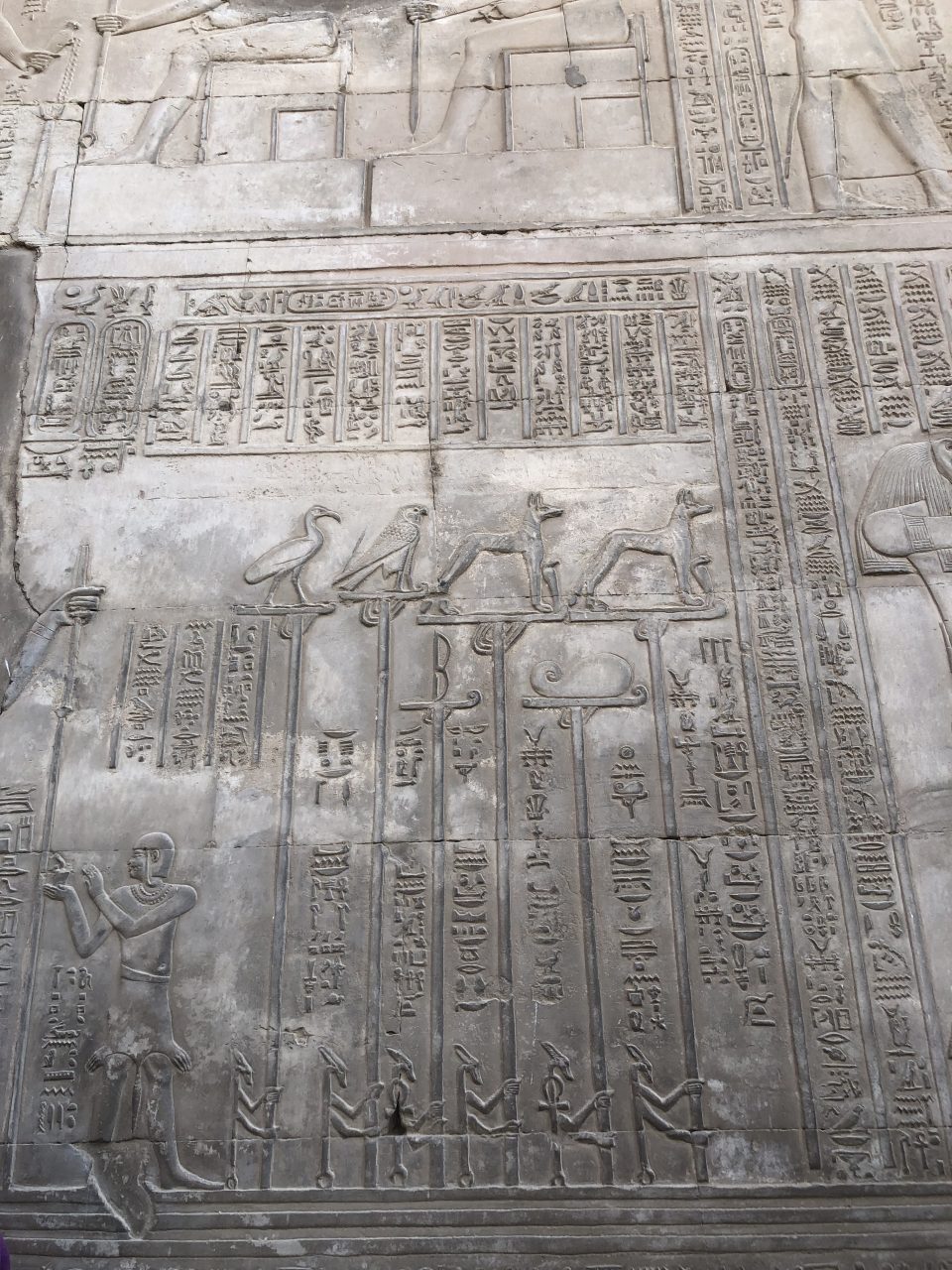
Dogs were highly valued in ancient Egyptian society, both as hunting companions and as protectors. In temple art, they sometimes appear in scenes of offering or processions, symbolising loyalty and guardianship. At Kom Ombo, which is dedicated to Sobek (the crocodile god) and Horus (the falcon god), dogs may also represent the practical aspects of life along the Nile—hunting and security in a region teeming with wildlife.
Kom Ombo is not just a temple; it is a story carved in stone—a tale of gods, medicine, and life along the Nile. Its symmetry, its setting, and its secrets make it an unmissable destination for anyone seeking to uncover the wonders of Egypt’s rich heritage.
 Users Today : 32
 Users This Month : 1577
 Users This Year : 23257
 Total Users : 48558
 Views This Year : 27669
 Total views : 62847
 Who's Online : 0