On the east bank of the Nile in modern-day Luxor stands one of Egypt’s most extraordinary monuments: Luxor Temple. Unlike many ancient Egyptian temples dedicated primarily to the worship of a specific deity, Luxor Temple served a unique role in the religious and political life of the New Kingdom. It was a place where the divine nature of kingship was celebrated and renewed, linking the pharaoh directly to the gods who governed the cosmos.
More than 3,000 years after its construction, Luxor Temple remains one of the best-preserved and most fascinating archaeological sites in Egypt, offering visitors a remarkable journey through the country’s pharaonic, Roman, Christian, and Islamic past.
Building a Monument to Royal Power
The core of Luxor Temple was constructed during the reign of Pharaoh Amenhotep III (c. 1390-1353 BCE) of the Eighteenth Dynasty. At the time, Thebes, now Luxor, was the religious capital of Egypt and the principal centre of the cult of Amun-Ra, the kingdom’s most important deity.
Although commonly described as a temple dedicated to Amun, Luxor Temple had a more specialised purpose. Egyptologists believe it was closely associated with the rejuvenation of kingship and the concept of divine birth, reinforcing the pharaoh’s legitimacy and sacred status.
Amenhotep III commissioned grand colonnades, courts, and ceremonial chambers constructed from sandstone quarried upstream at Gebel el-Silsila. The temple’s elegant proportions and sophisticated decoration reflect the artistic achievements of the Eighteenth Dynasty at the height of Egypt’s power and prosperity.
Expansion Under Ramesses II
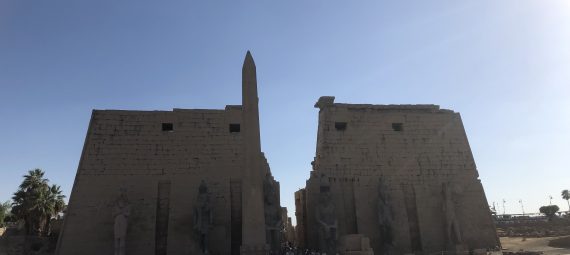
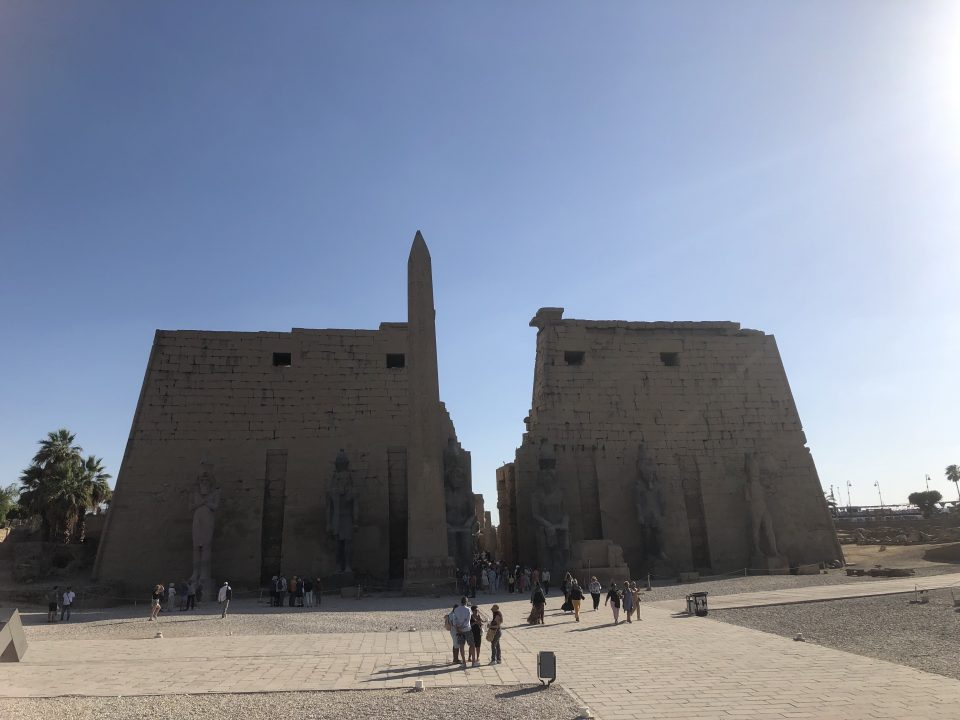
About a century later, Ramesses II (c. 1279-1213 BCE) transformed the temple’s appearance with major additions. He constructed the monumental first pylon that forms the modern entrance, along with a vast open courtyard and six colossal statues depicting himself seated and standing.
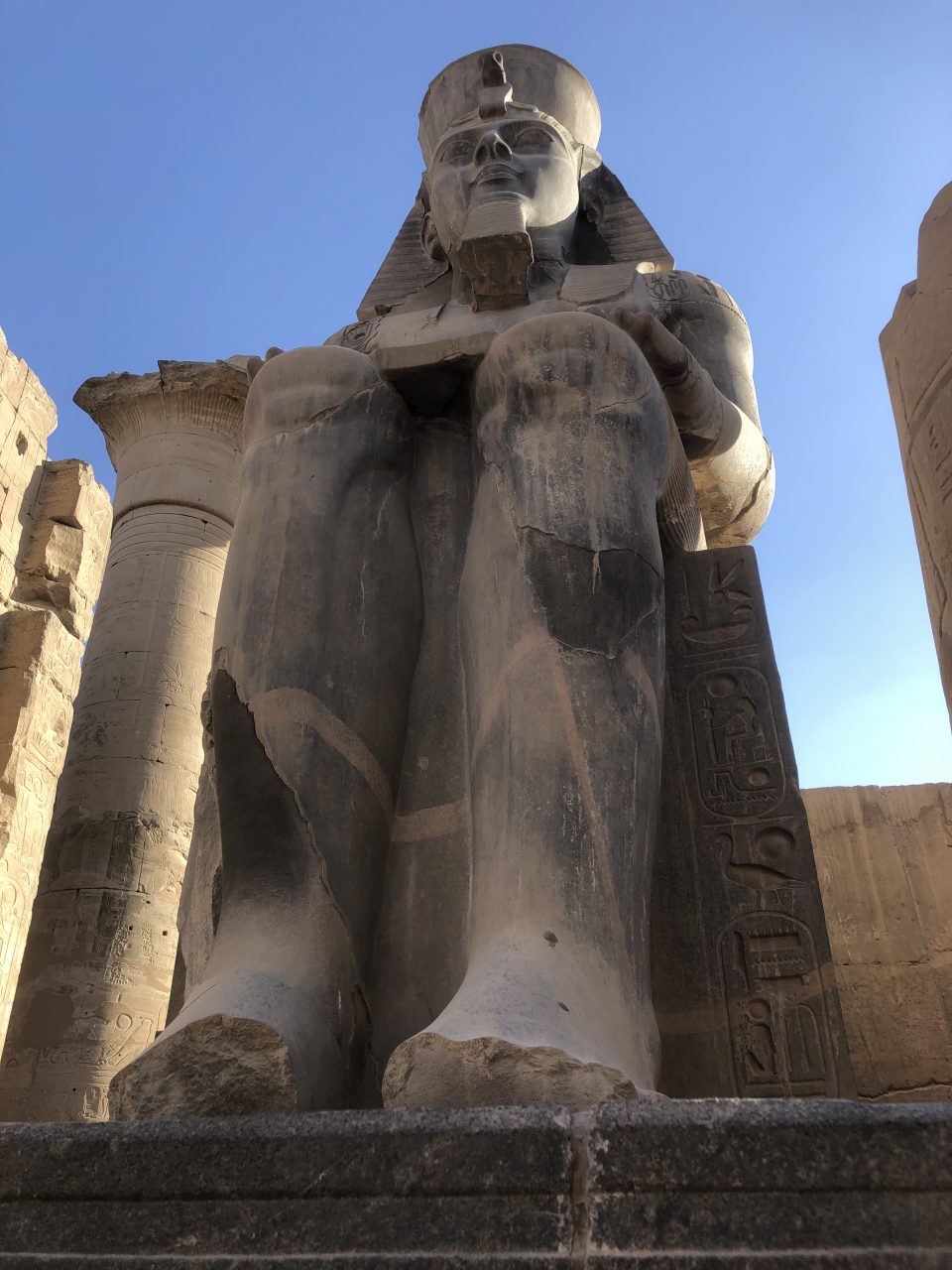
Ramesses II also installed two red granite obelisks before the pylon. Today, only one remains in Luxor. Its counterpart was presented to France by Muhammad Ali Pasha in the nineteenth century and was erected in Paris’s Place de la Concorde in 1836.
The decorations commissioned by Ramesses II emphasised both his military achievements and his divine connection to the gods, continuing a tradition in which temples served both religious and political functions.
The Opet Festival and the Avenue of Sphinxes
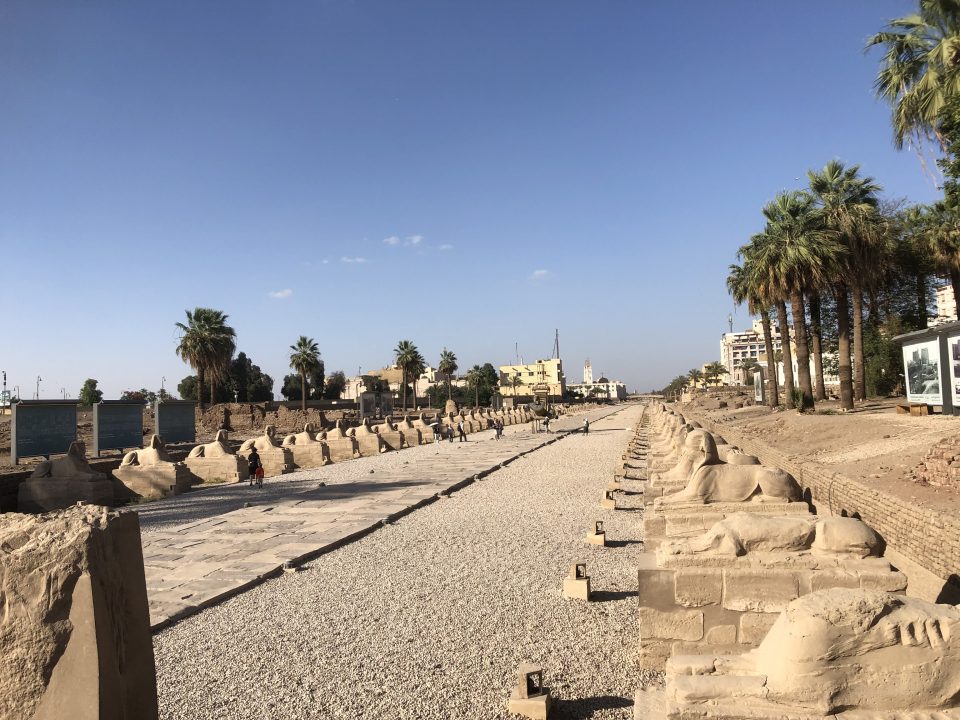
Luxor Temple played a central role in the annual Opet Festival, one of the most important religious celebrations of the New Kingdom.
During the festival, the cult statues of Amun, Mut, and Khonsu were ceremonially transported from Karnak Temple to Luxor Temple. The journey took place along a processional route connecting the two sanctuaries, now known as the Avenue of Sphinxes.
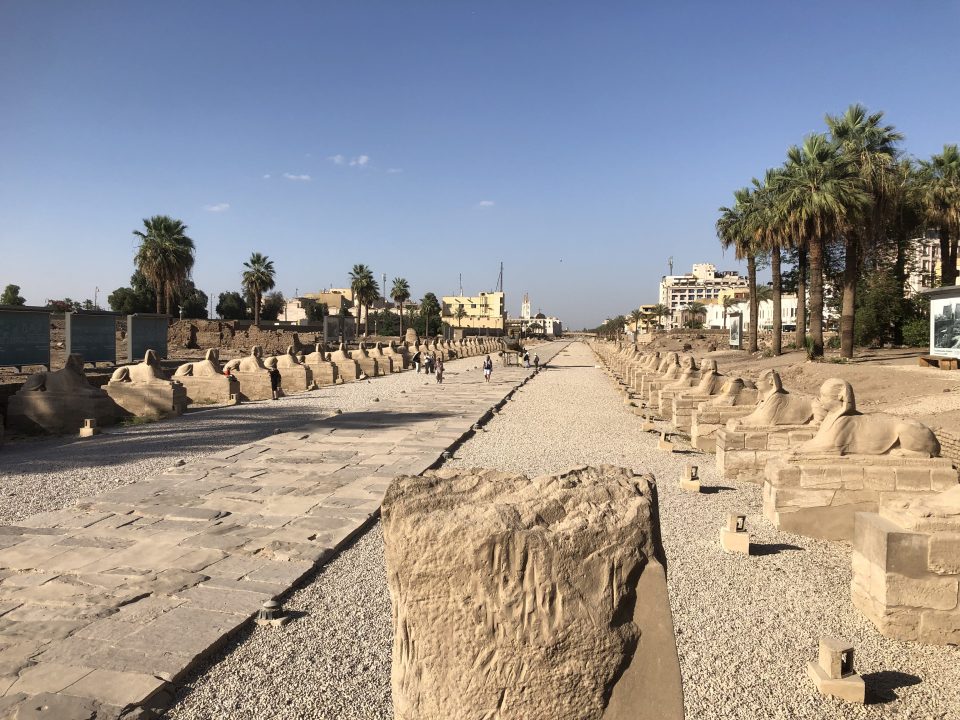
The exact rituals performed within Luxor Temple remain partly debated by scholars, but inscriptions indicate that the festival was linked to the renewal of royal authority. Through sacred ceremonies, the king’s role as intermediary between the gods and Egypt was reaffirmed, helping to maintain cosmic order, or maat, a central concept in Egyptian religion.
A Temple Through Changing Civilisations
One of Luxor Temple’s most remarkable characteristics is its continuous use across different historical eras.
Following Egypt’s incorporation into the Roman Empire, the temple was adapted for military and administrative purposes. Roman soldiers constructed a fort within the temple precinct and decorated portions of the structure with imperial imagery.
During the Christian period, sections of the temple were converted into churches. Later, during the Islamic era, the Abu Haggag Mosque was built atop earlier structures within the complex.
The mosque remains an active place of worship today, creating a rare example of a sacred site that has maintained religious significance for more than three millennia. This continuity makes Luxor Temple not simply an archaeological monument but a living historical landscape.
Architectural Highlights
The First Pylon
The immense entrance gateway built by Ramesses II once supported towering flagpoles and serves as a dramatic introduction to the temple.
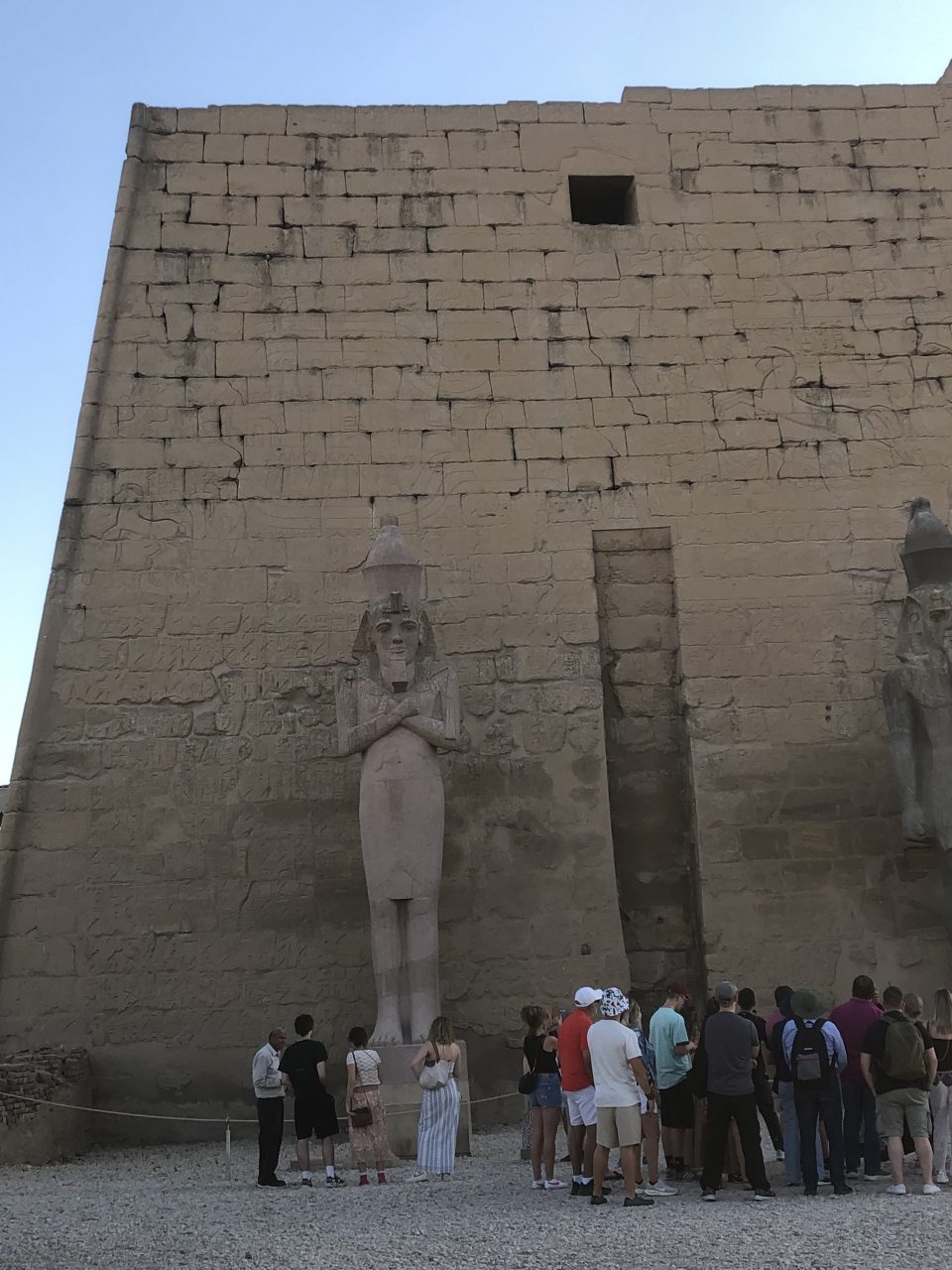
The Colossi of Ramesses II
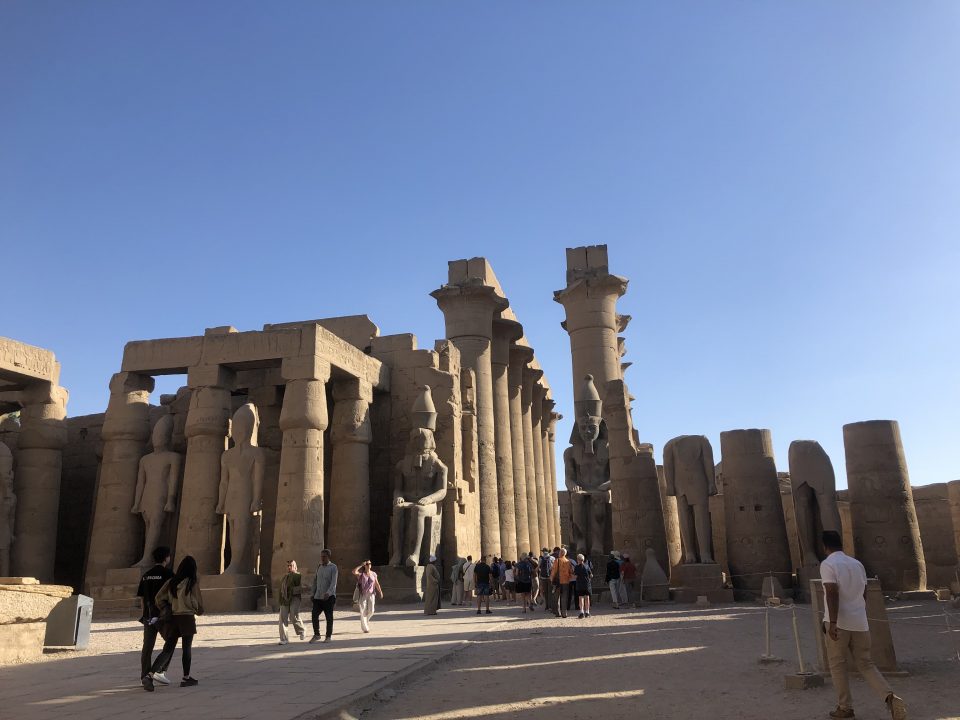
The surviving colossal statues near the entrance were intended to impress visitors and proclaim the pharaoh’s power and legitimacy.
The Great Colonnade
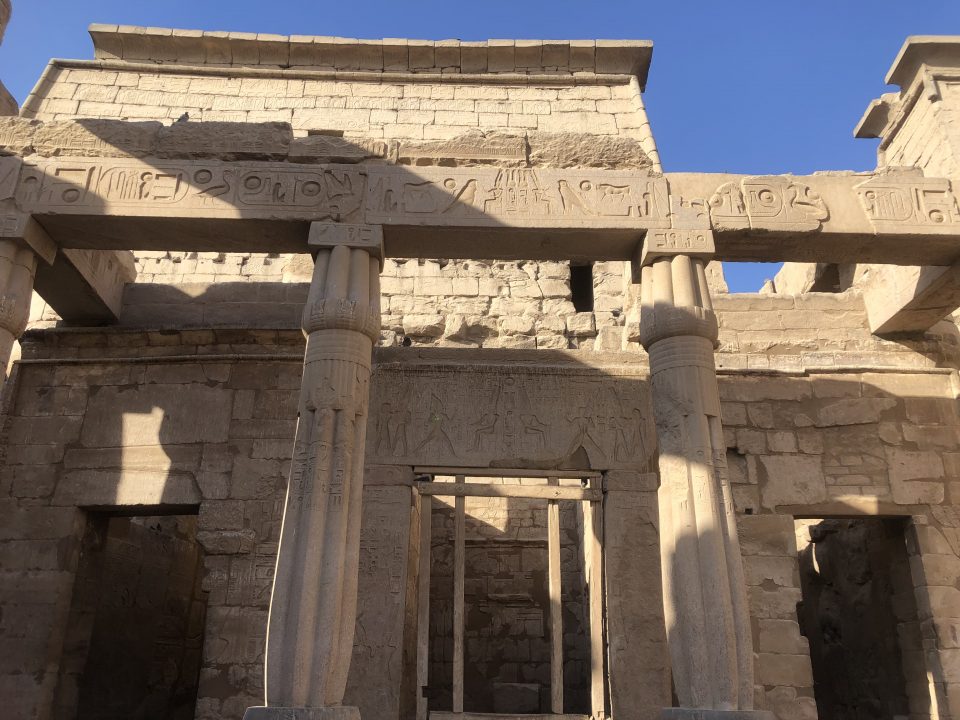
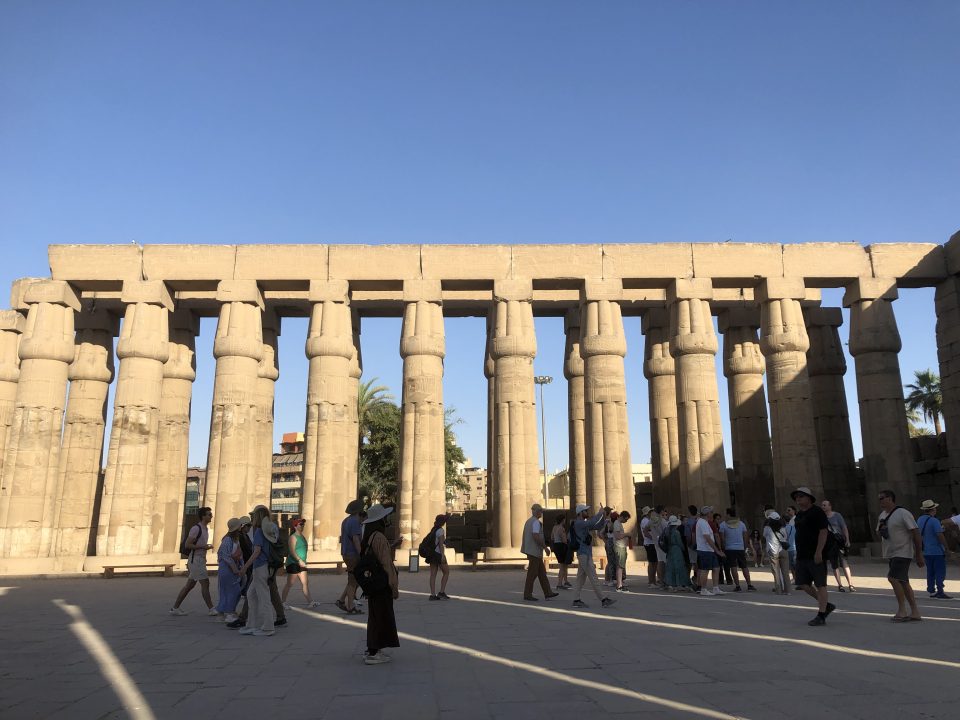
Seven pairs of gigantic papyrus-bundle columns create one of the most breathtaking architectural spaces in ancient Egypt. Their capitals imitate the flowering papyrus plant, a symbol of regeneration and life.
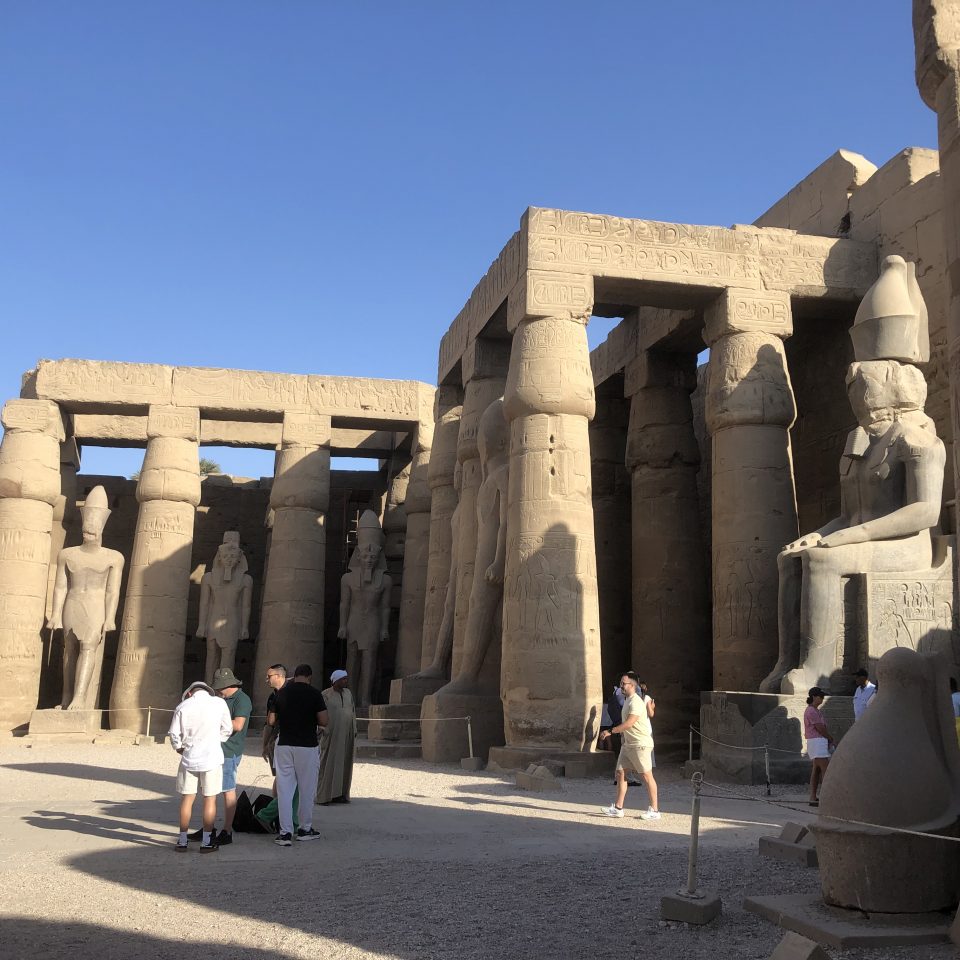
The Court of Amenhotep III
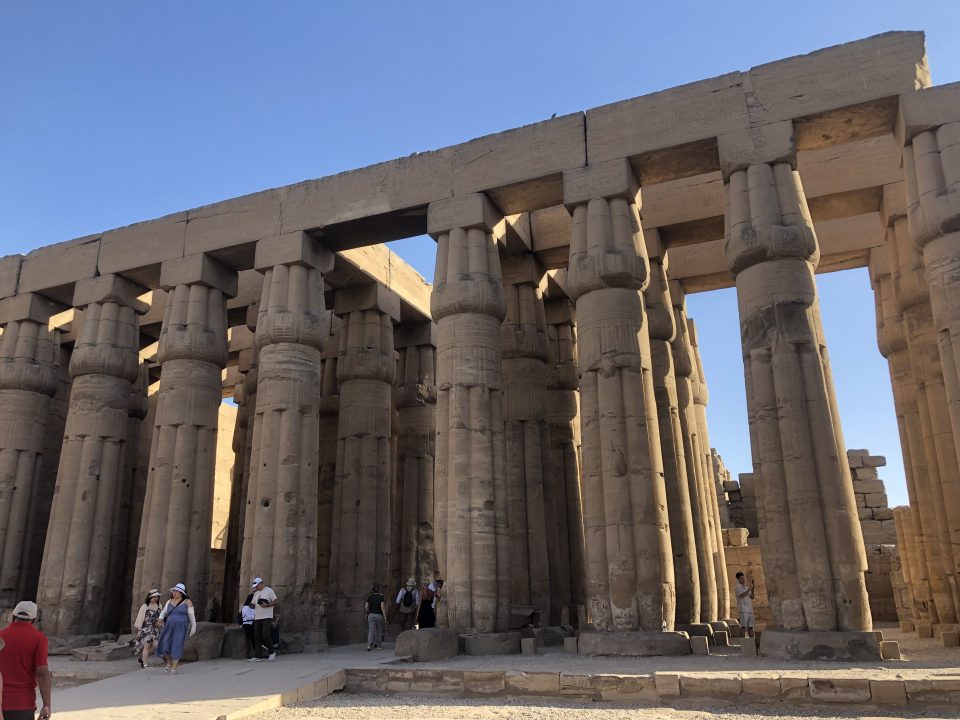
This graceful courtyard demonstrates the refined architecture of the Eighteenth Dynasty and remains one of the temple’s most harmonious spaces.
The Sanctuary Complex
At the heart of the temple lie sacred chambers that were accessible only to priests and the king, where rituals connected to the divine nature of kingship were performed.
The Walls of Luxor Temple
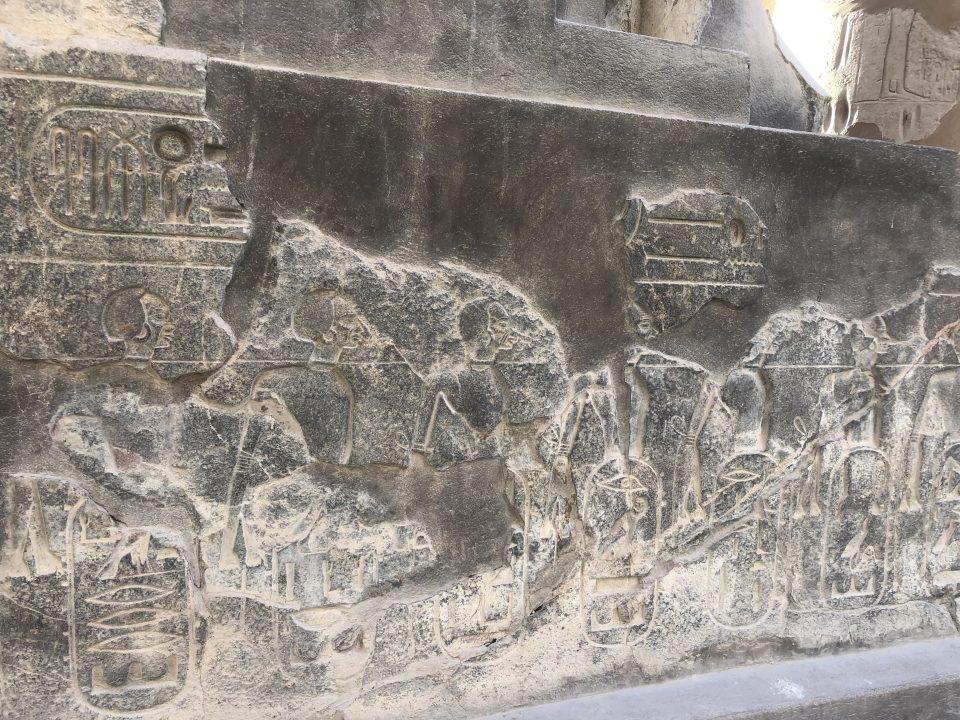
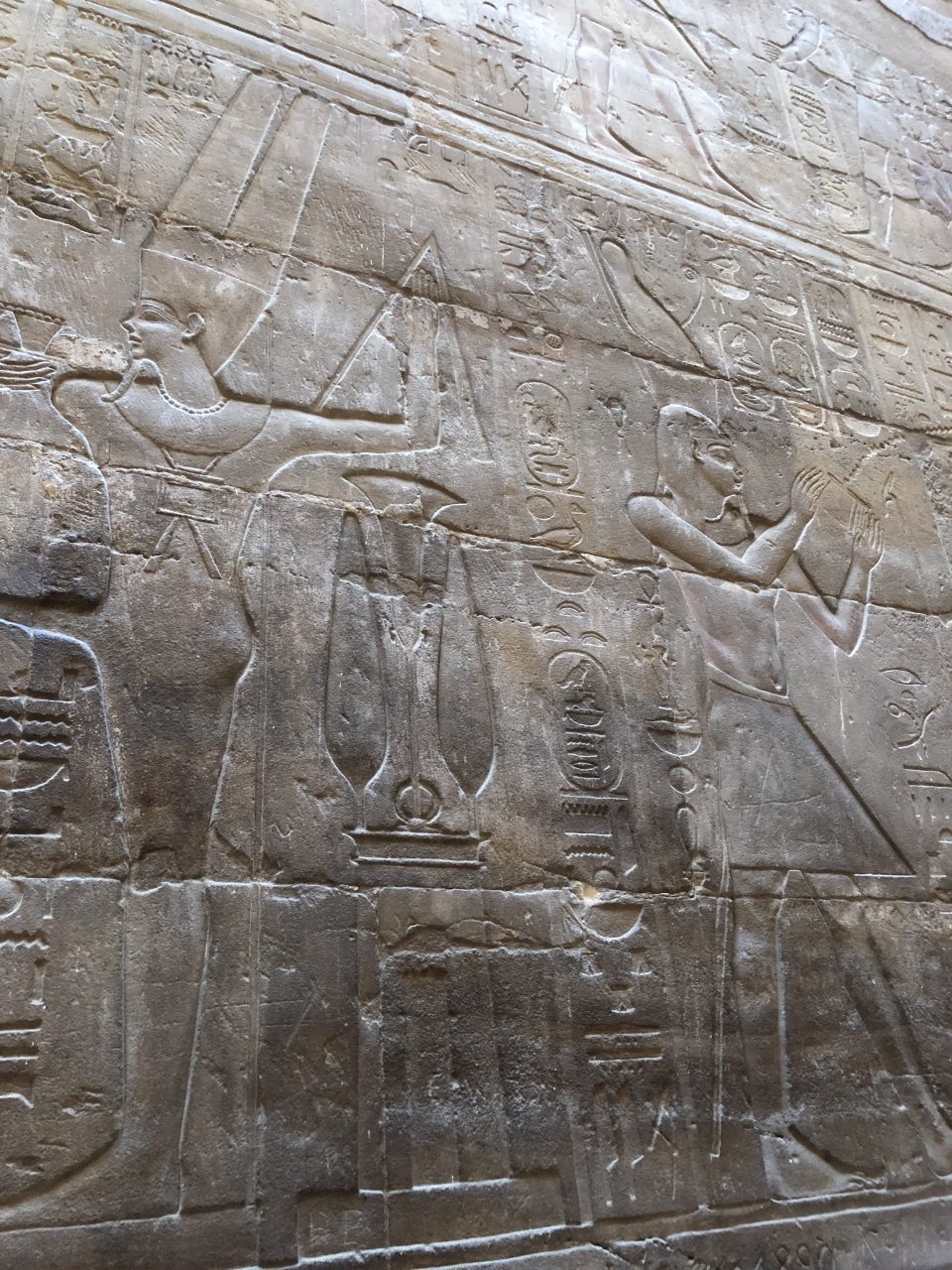
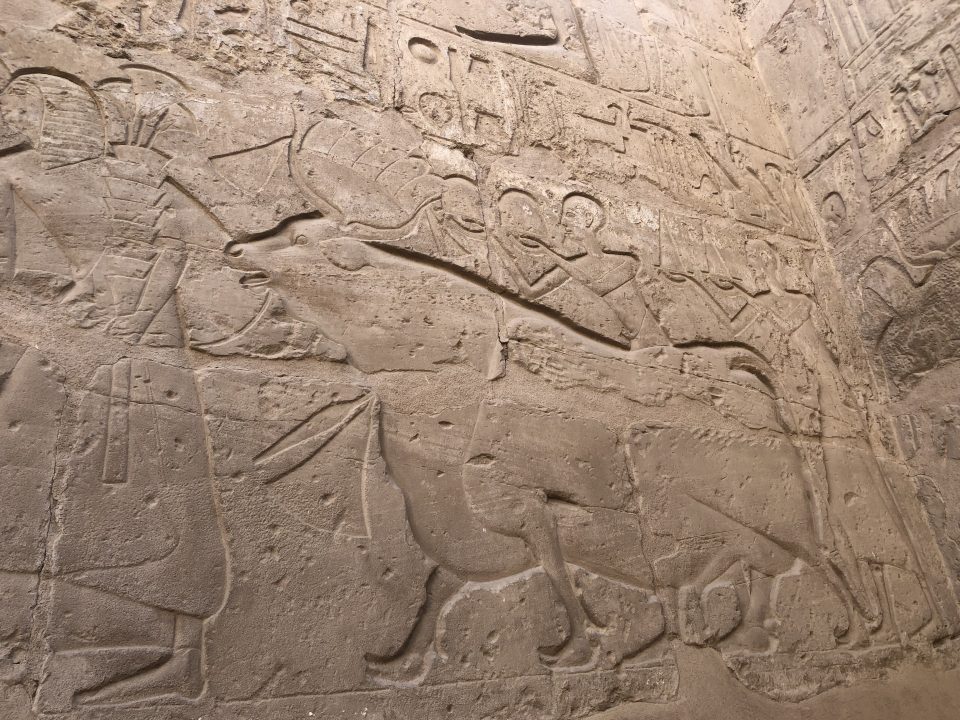
The walls of Luxor Temple are among its most remarkable features, covered with detailed reliefs that tell the story of ancient Egypt’s religious ceremonies, royal achievements, and sacred beliefs. Rather than serving as decoration alone, these carvings acted as visual records, illustrating the relationship between the pharaohs and the gods.

One of the most important sets of reliefs is found in the Great Colonnade, where scenes from the Opet Festival are depicted. These carvings show priests carrying the sacred barques of Amun, Mut, and Khonsu in a grand procession from Karnak Temple to Luxor Temple, accompanied by musicians, dancers, soldiers, and worshippers. They provide valuable insights into the religious and social life of New Kingdom Egypt.
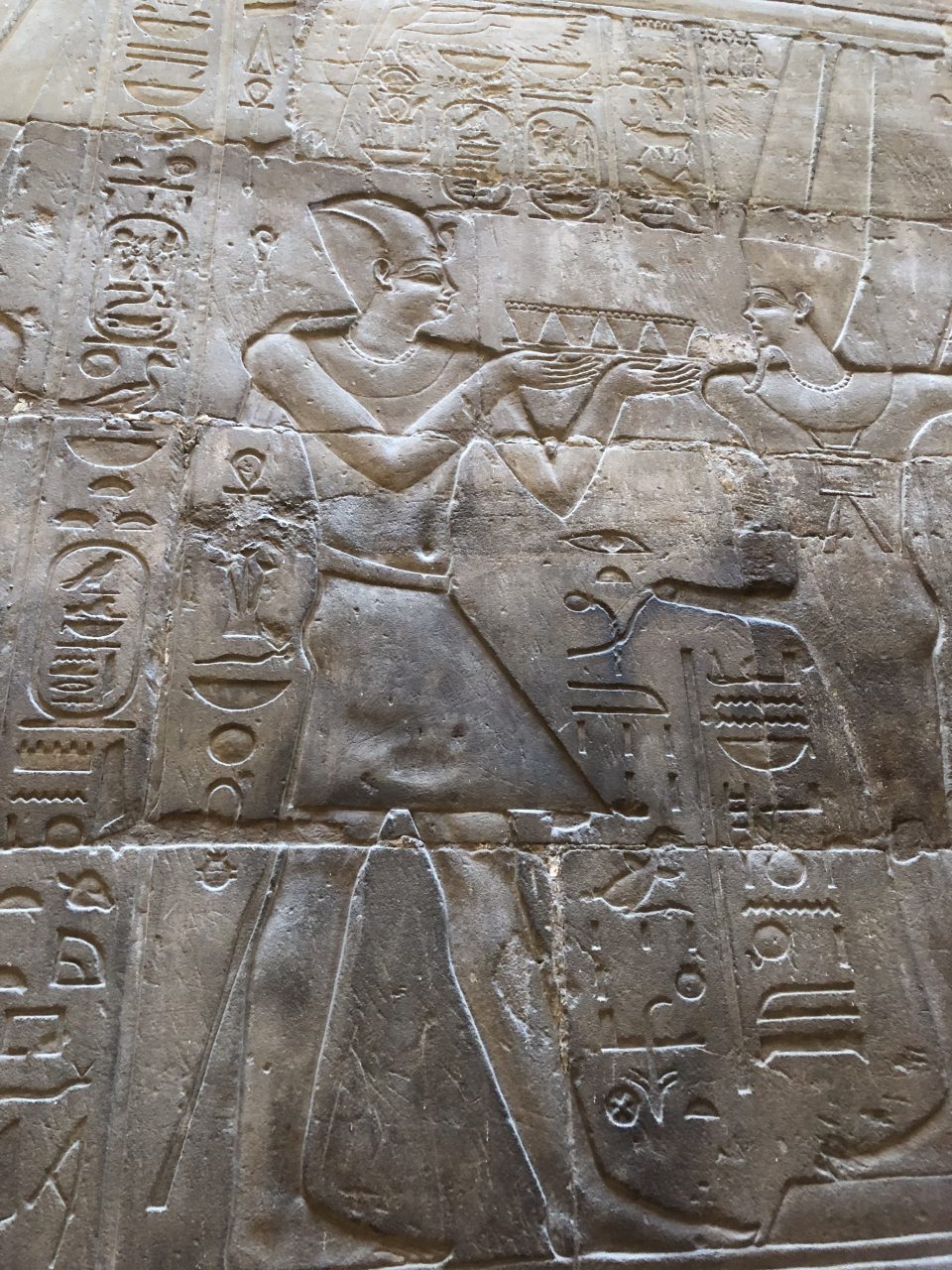
Near the entrance, Ramesses II also commemorated the Battle of Kadesh, portraying himself as a victorious warrior. Together, these reliefs transformed the temple into a powerful statement of kingship, religion, and the enduring legacy of ancient Egyptian civilisation.
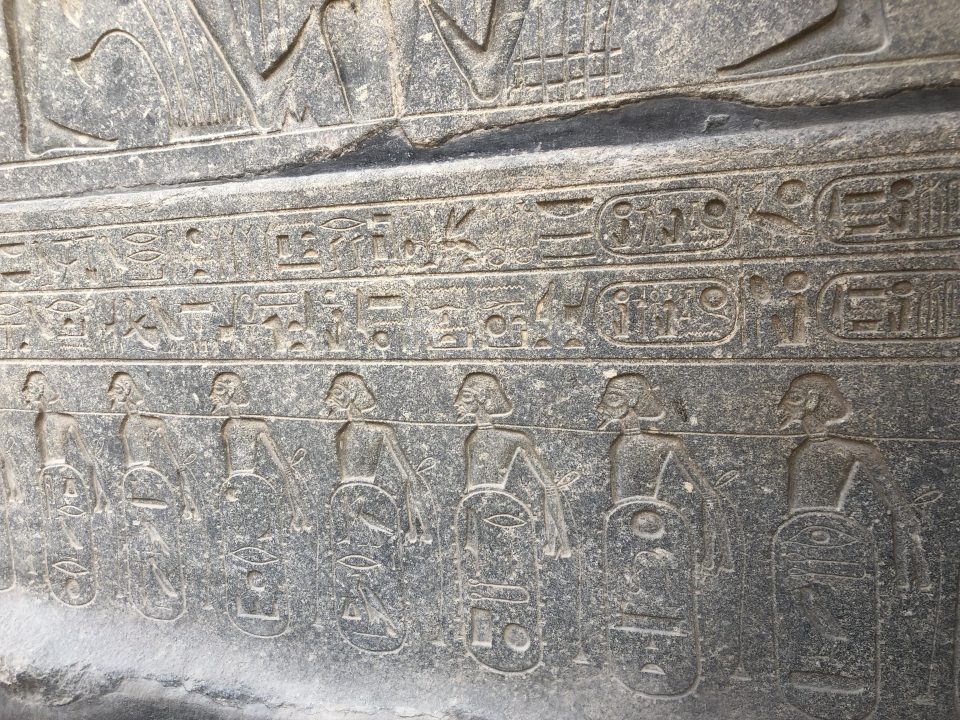
Elsewhere, the walls portray pharaohs such as Amenhotep III and Ramesses II presenting offerings to the gods and performing sacred rituals that reinforced their divine authority.
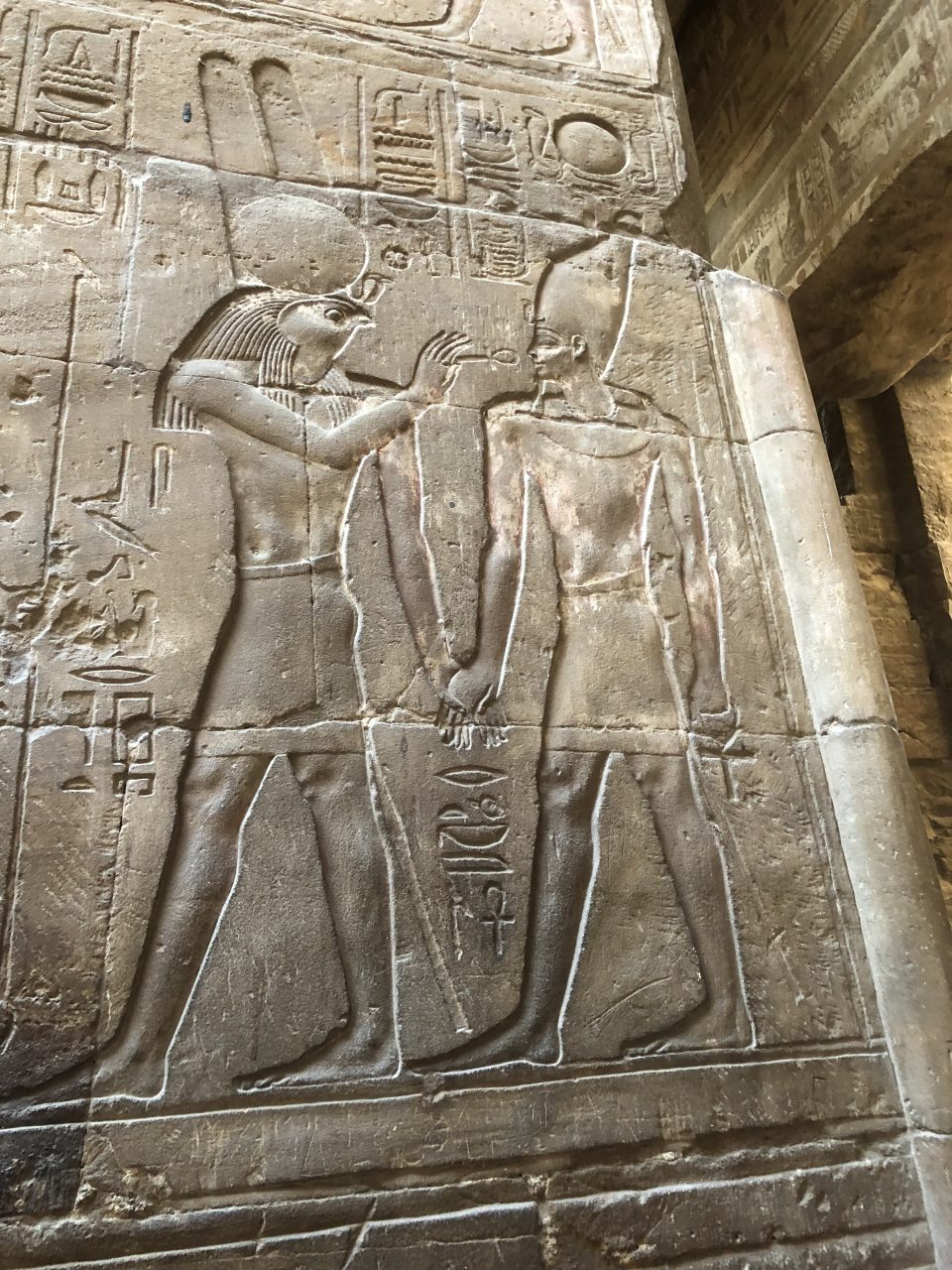
One of the most striking walls at Luxor Temple depicts the pharaoh in the presence of the gods of the Theban Triad: Amun, Mut, and Khonsu. Carved in exquisite detail, these reliefs show the king presenting offerings and performing sacred rituals before the deities, symbolising his role as the divinely chosen ruler of Egypt.
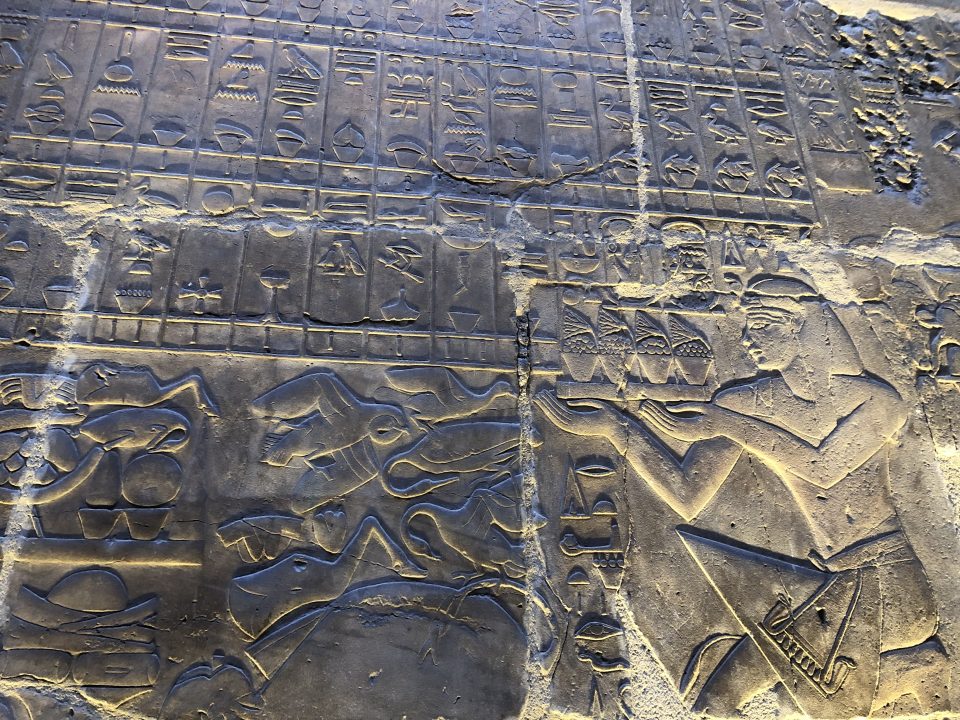
The gods are easily identified by their distinctive crowns and attributes, with Amun often wearing a tall feathered crown, Mut crowned with the double crown of Upper and Lower Egypt, and Khonsu depicted with a sidelock associated with youth. These scenes were not merely decorative; they reinforced the belief that the pharaoh ruled with divine approval and helped maintain maat, the cosmic order that governed the universe.
Luxor Temple Today
For modern travellers, Luxor Temple offers a unique experience because it sits directly within the contemporary city rather than in an isolated desert setting. Ancient columns and statues rise beside busy streets, shops, and cafés, creating a striking juxtaposition of past and present.
The temple is particularly impressive after sunset, when subtle lighting reveals the textures of the stone reliefs and emphasises the monument’s extraordinary scale. Evening visits often provide the most atmospheric introduction to the ancient city of Thebes.
 Users Today : 28
 Users This Month : 489
 Users This Year : 28277
 Total Users : 53578
 Views This Year : 34452
 Total views : 69630
 Who's Online : 0