Deep beneath the golden cliffs of the Valley of the Kings, hidden within a mountain that has watched over pharaohs for more than three thousand years, lies one of the most spectacular royal tombs ever created: KV9, the tomb of Ramesses V and Ramesses VI. More than a burial place, it is a stone gateway to the ancient Egyptian afterlife, filled with magnificent artwork, cosmic mysteries, and religious texts that reveal how the Egyptians imagined eternity.
A Tomb Claimed by Two Kings
The story of KV9 begins during the reign of Ramesses V, who ruled Egypt during a difficult period in the Twentieth Dynasty. Construction of his royal tomb was underway when he died around 1143 BC. Before the project was completed, his successor and uncle, Ramesses VI, took possession of the tomb, enlarged it, and transformed it into his own eternal resting place. This unusual sequence of events created one of the very few royal tombs associated with two pharaohs.
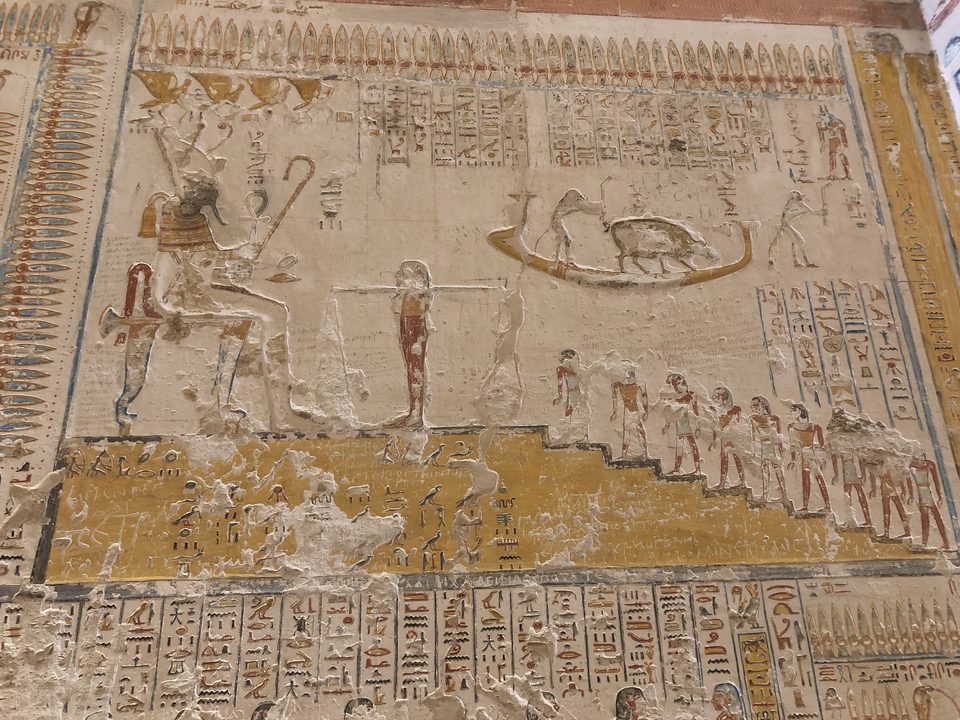
As visitors walk through the corridors today, traces of this royal takeover can still be seen. In several places, the names and images of Ramesses V were replaced or altered by Ramesses VI, providing archaeologists with fascinating evidence of political succession and royal ambition.
Entering the Realm of Eternity
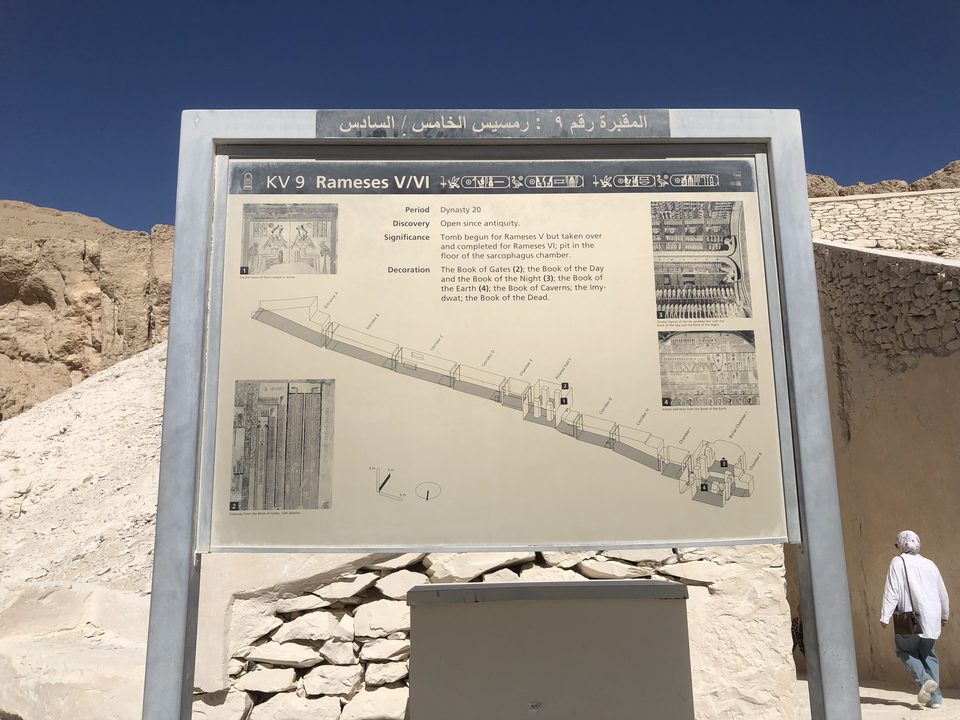
Approaching KV9 feels like stepping into another world. The entrance opens into a series of long, descending corridors that lead ever deeper into the heart of the mountain. Unlike many earlier royal tombs with complex layouts, KV9 follows a largely straight path, guiding the visitor on a symbolic journey through the underworld.
The tomb stretches for more than 100 metres and contains some of the widest passageways in the Valley of the Kings. Every chamber seems designed to impress not only mortal visitors but also the gods themselves. The deeper one travels into the tomb, the more elaborate and mysterious the decorations become.
Walls Covered with Sacred Secrets
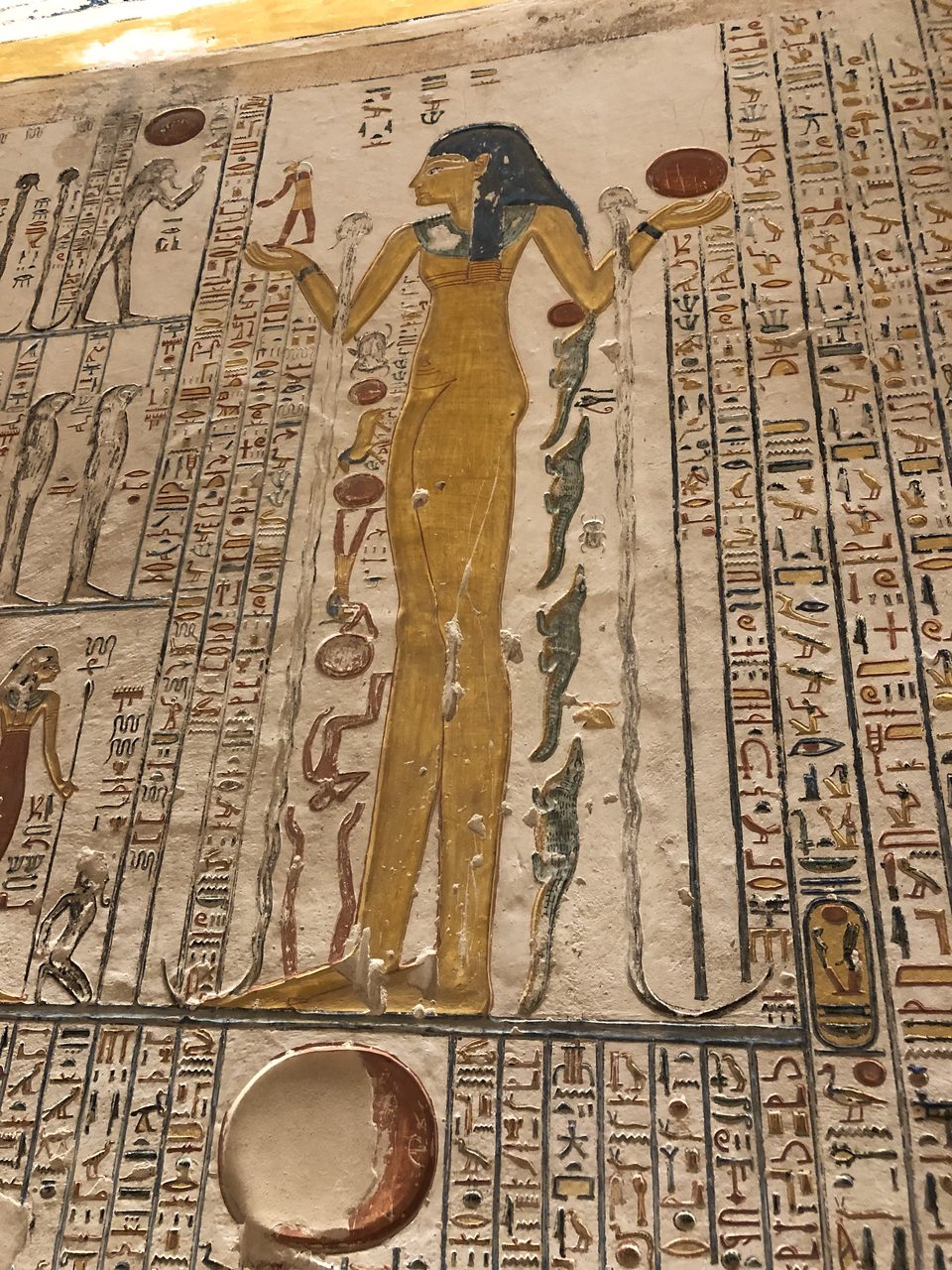
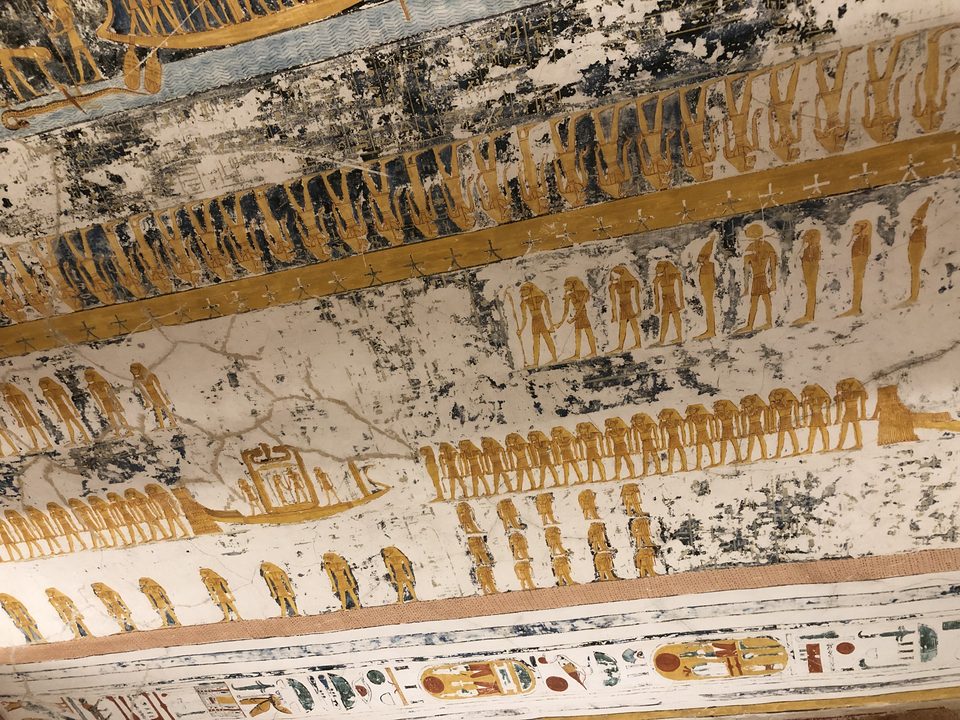
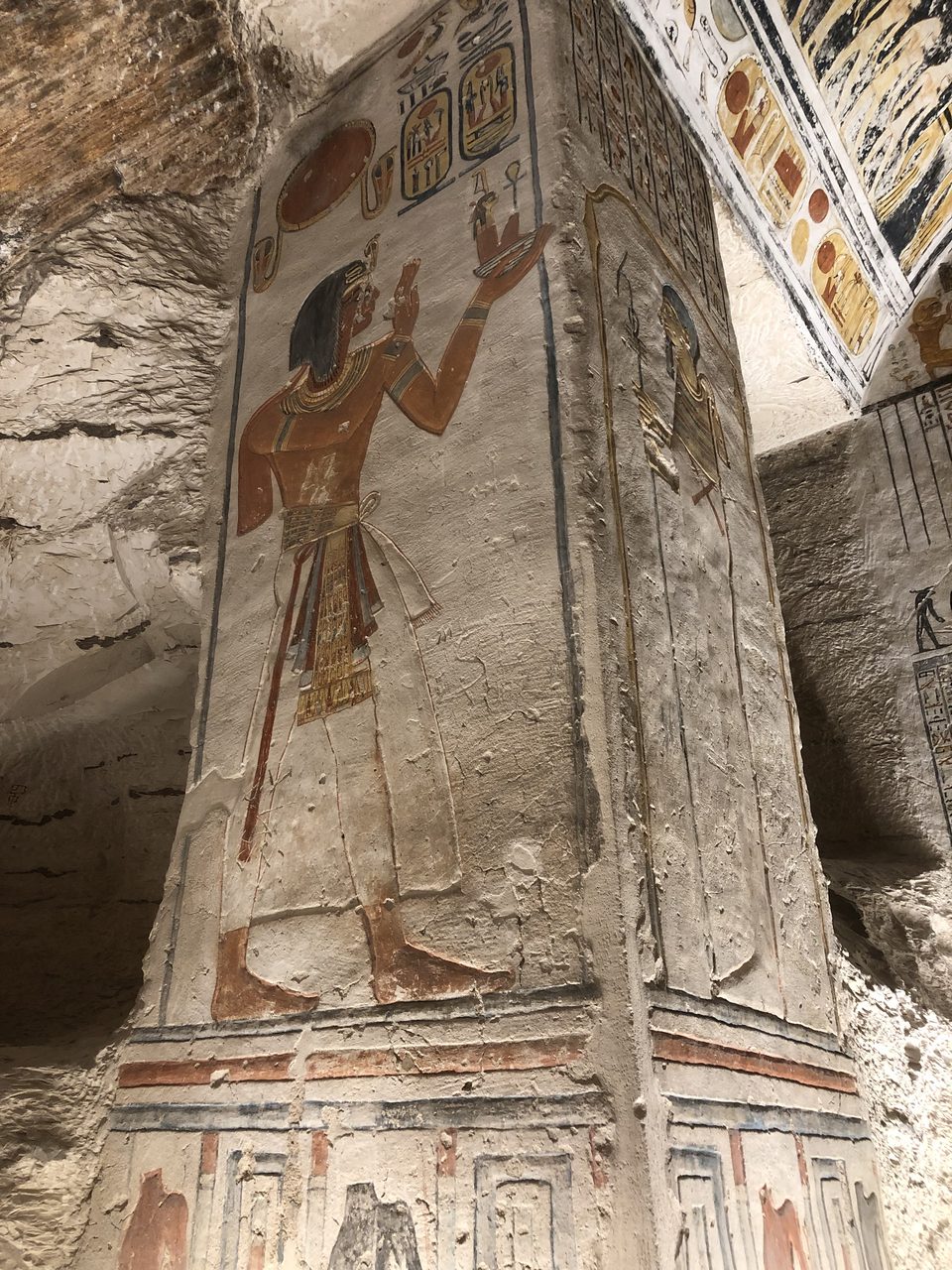
What makes KV9 truly extraordinary is the richness of its decoration. Almost every wall is covered with brilliantly carved and painted scenes that have survived remarkably well despite the passage of millennia. These images were not merely artistic embellishments; they functioned as magical guides, helping the king navigate the dangers of the underworld.
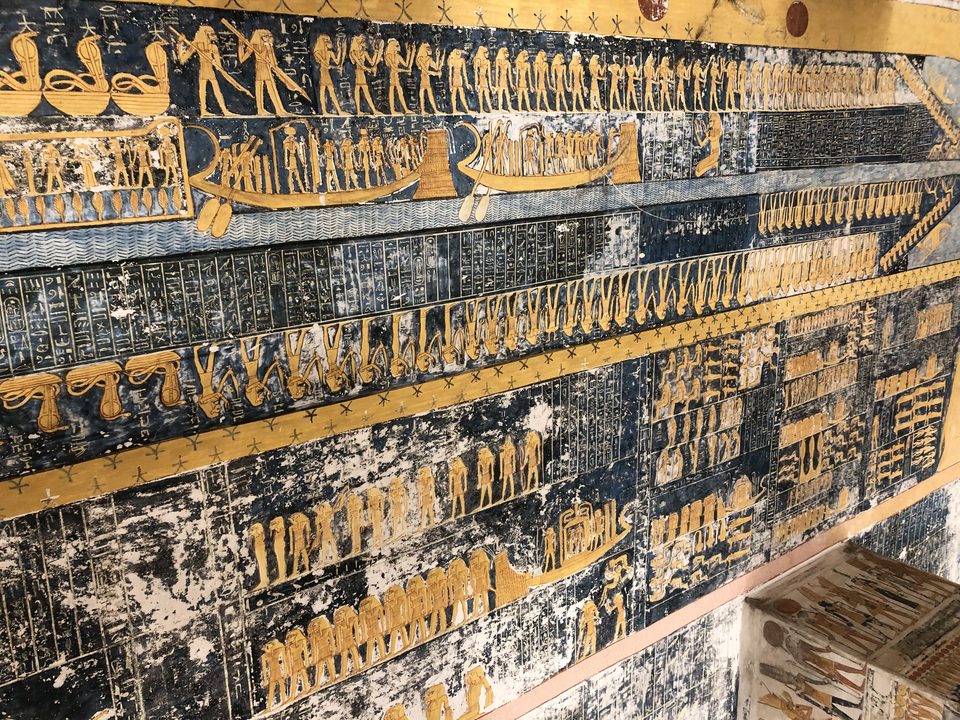
Among the sacred texts represented in the tomb are the Book of Gates, the Book of Caverns, the Amduat, the Book of the Dead, and the Book of the Earth. Each text describes different stages of the sun god’s nightly voyage through darkness and provides instructions for overcoming demons, passing through guarded gates, and achieving rebirth at dawn.
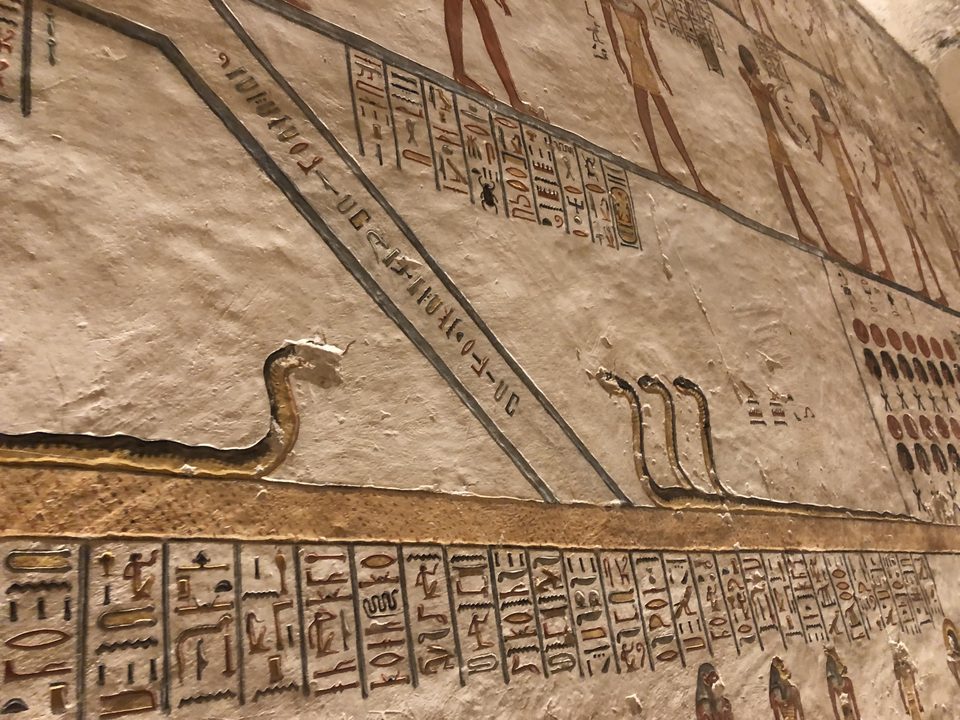
Walking through these corridors is like reading an ancient illustrated manuscript carved directly into stone. Every figure, hieroglyph, and colour had a sacred purpose. The walls were intended to ensure that the king would rise again each morning, just as the sun emerged renewed from the eastern horizon.
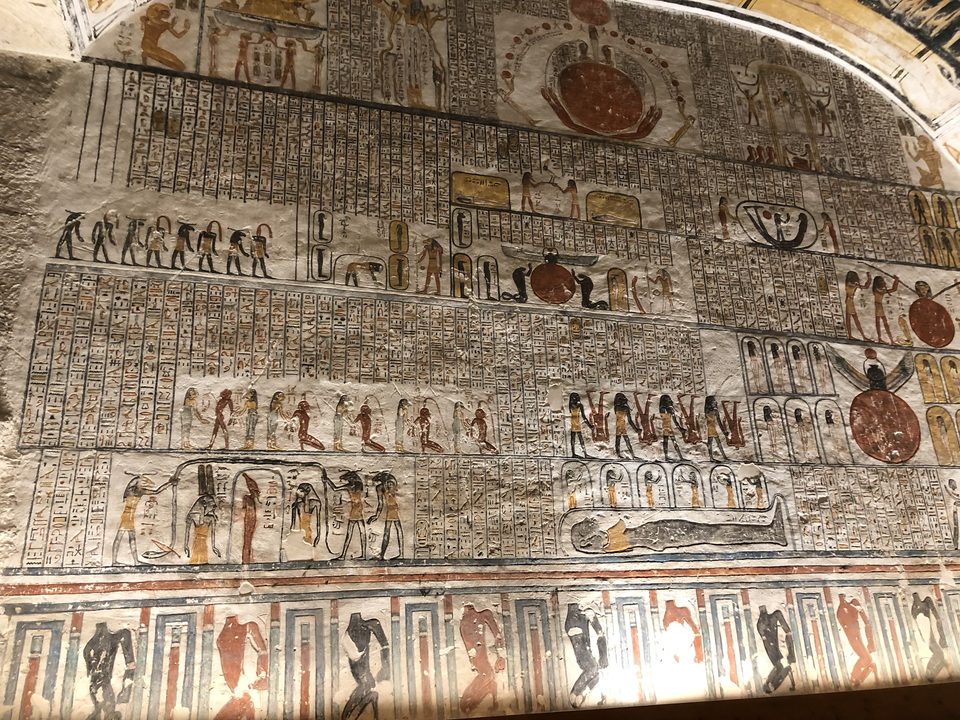
One of Egypt’s Most Spectacular Ceilings
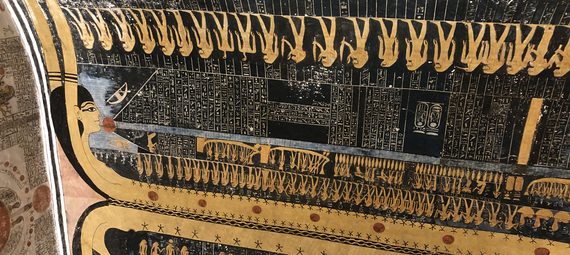
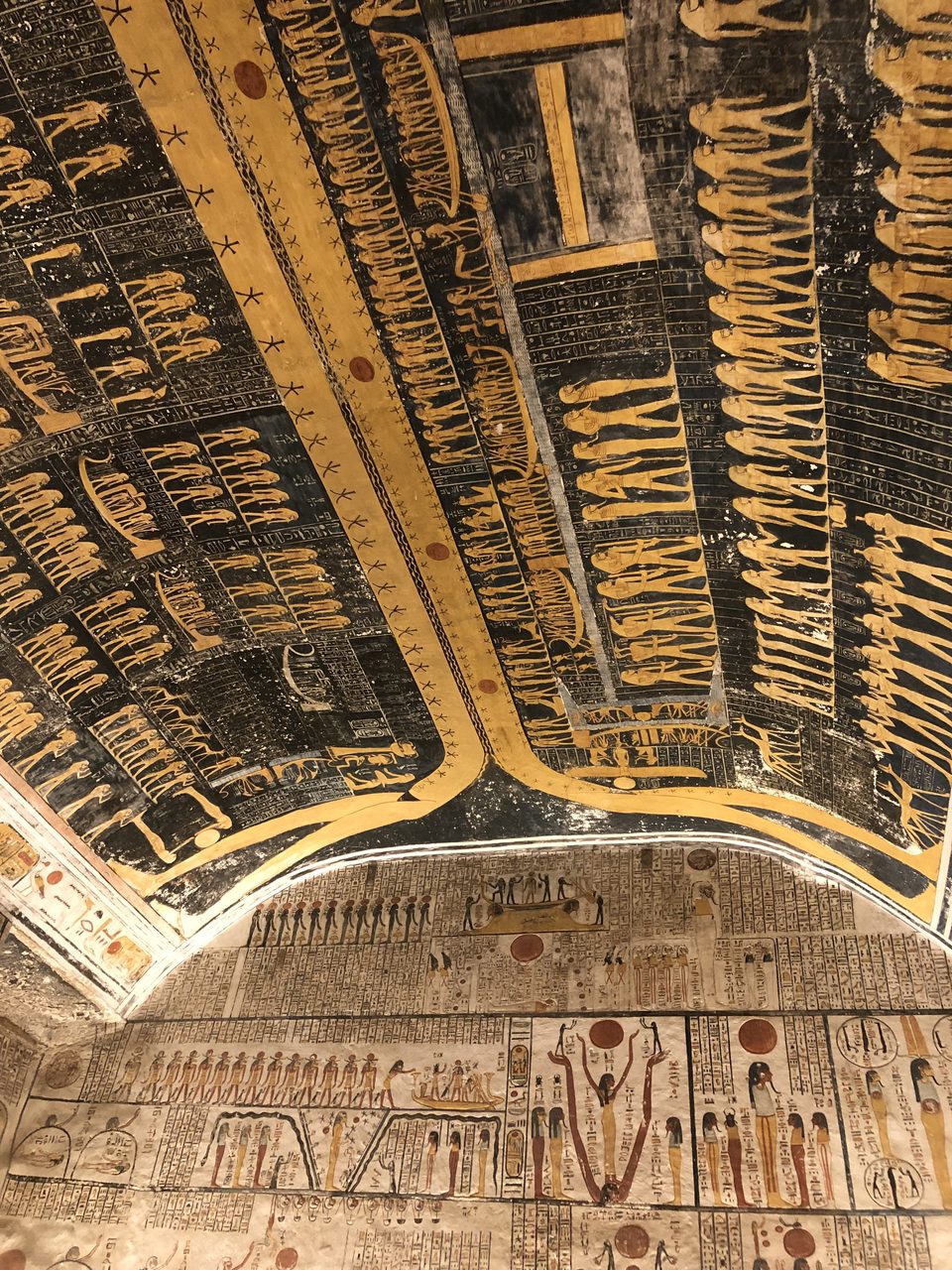
Perhaps the most breathtaking feature of KV9 lies above rather than around the visitor. The ceilings are covered with some of the finest astronomical artwork surviving from ancient Egypt. Across vast expanses of stone, stars sparkle against deep blue backgrounds while celestial deities guide the movement of the heavens.
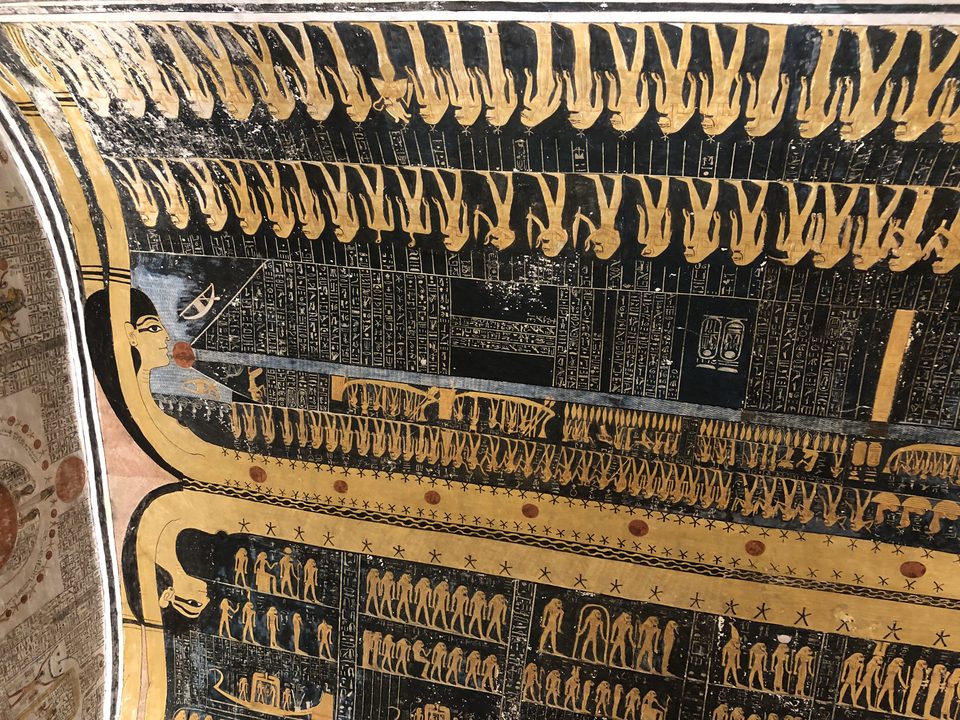
The sky goddess Nut is depicted stretching across the heavens. According to Egyptian belief, she swallowed the sun each evening and gave birth to it again every dawn. Her enormous figure transforms the ceiling into a cosmic map that illustrates the eternal cycle of death and rebirth.
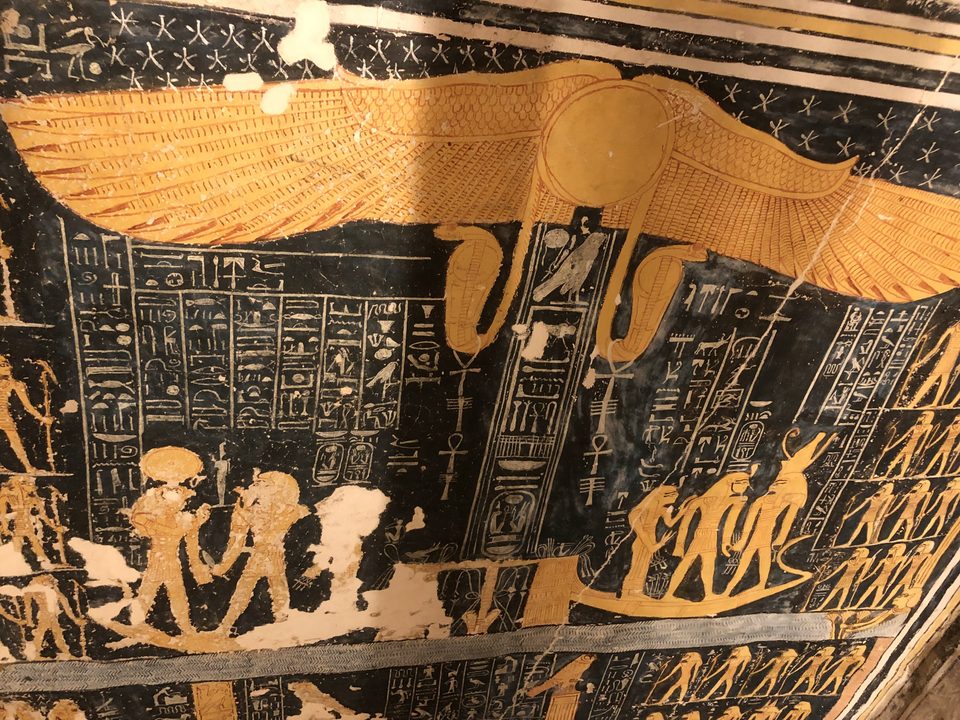
For ancient Egyptians, astronomy was not simply the study of stars. It was evidence of divine order. By decorating his tomb with celestial scenes, Ramesses VI hoped to join the eternal movements of the cosmos and live forever among the imperishable stars.
The Great Burial Chamber
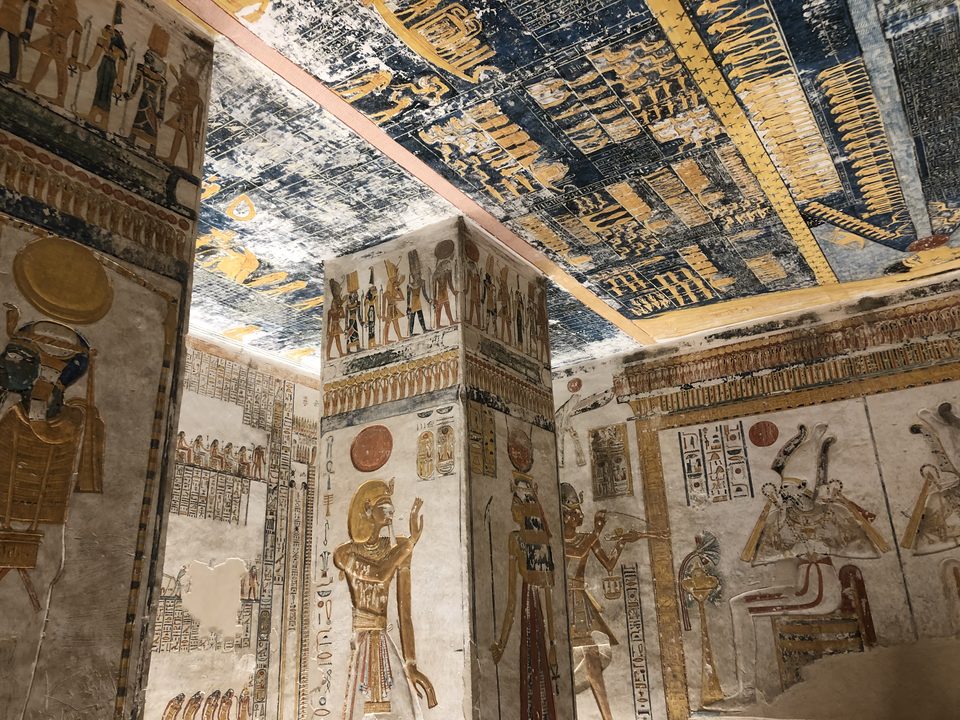
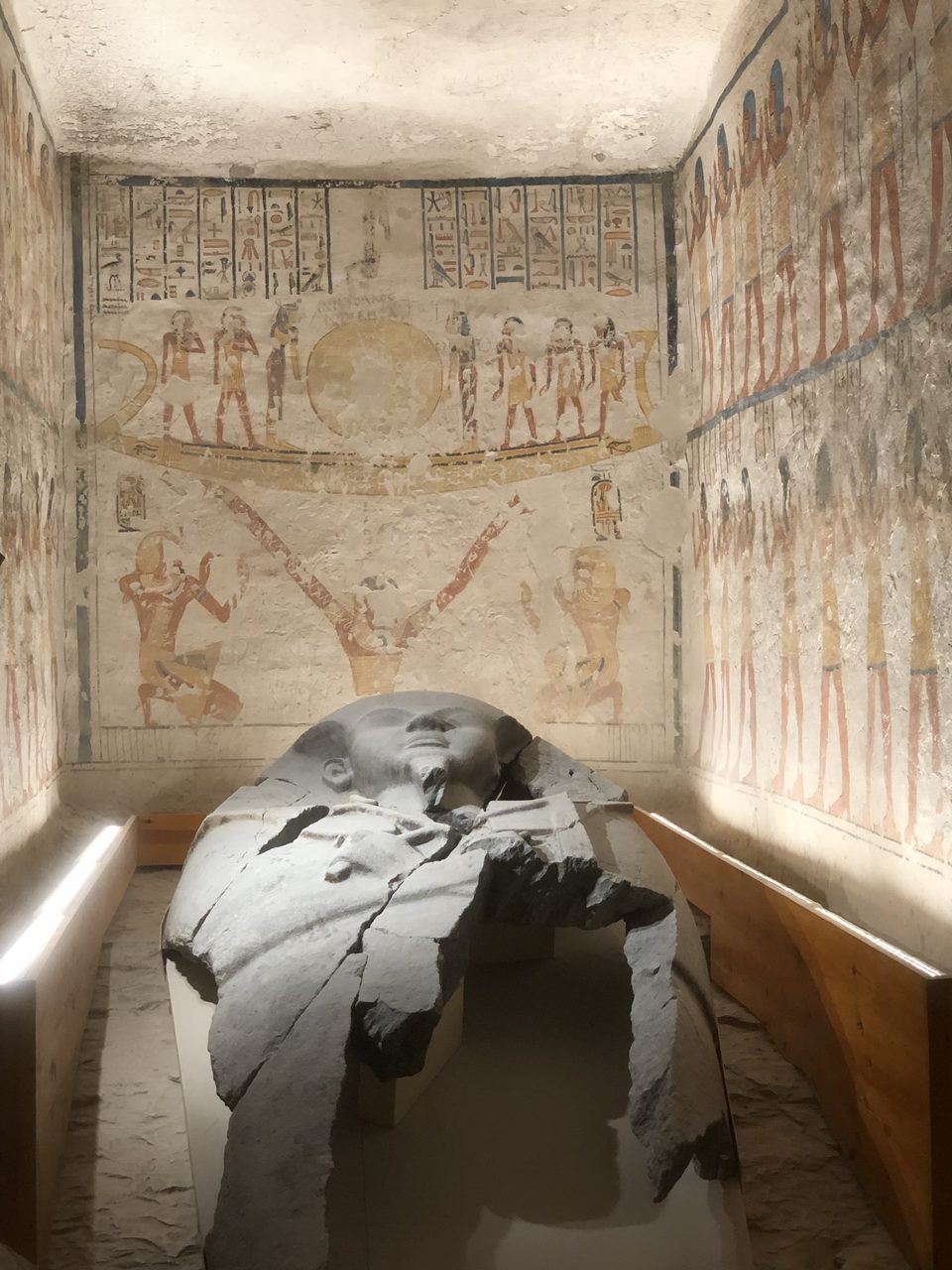
At the end of the tomb lies the burial chamber, a vast room that once housed the king’s sarcophagus. Massive pillars support the ceiling, while colourful scenes depict gods welcoming the pharaoh into the next world.
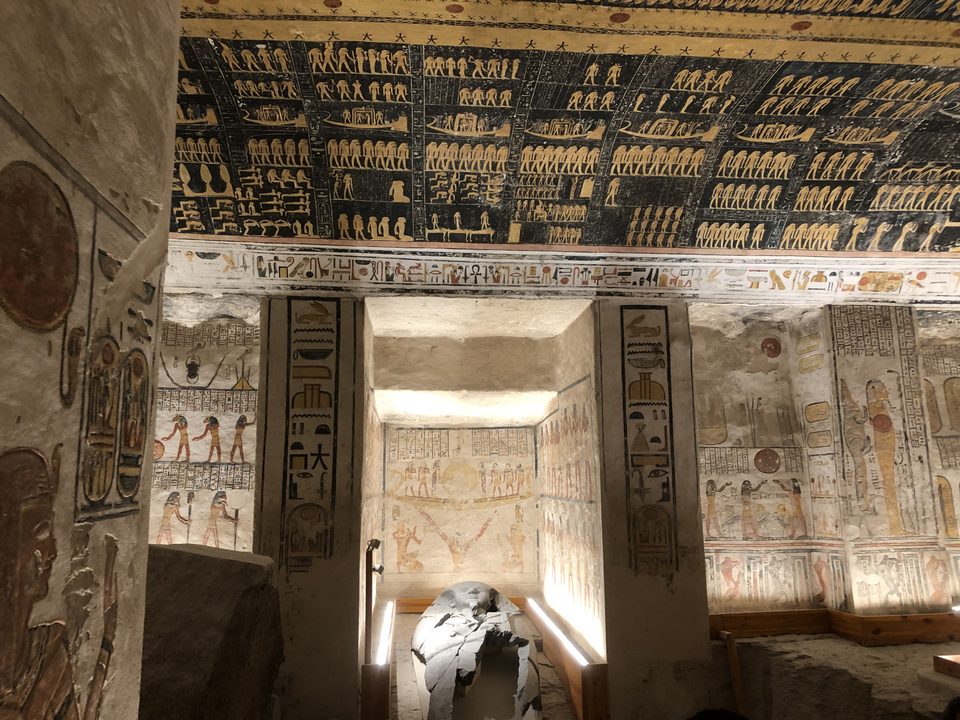
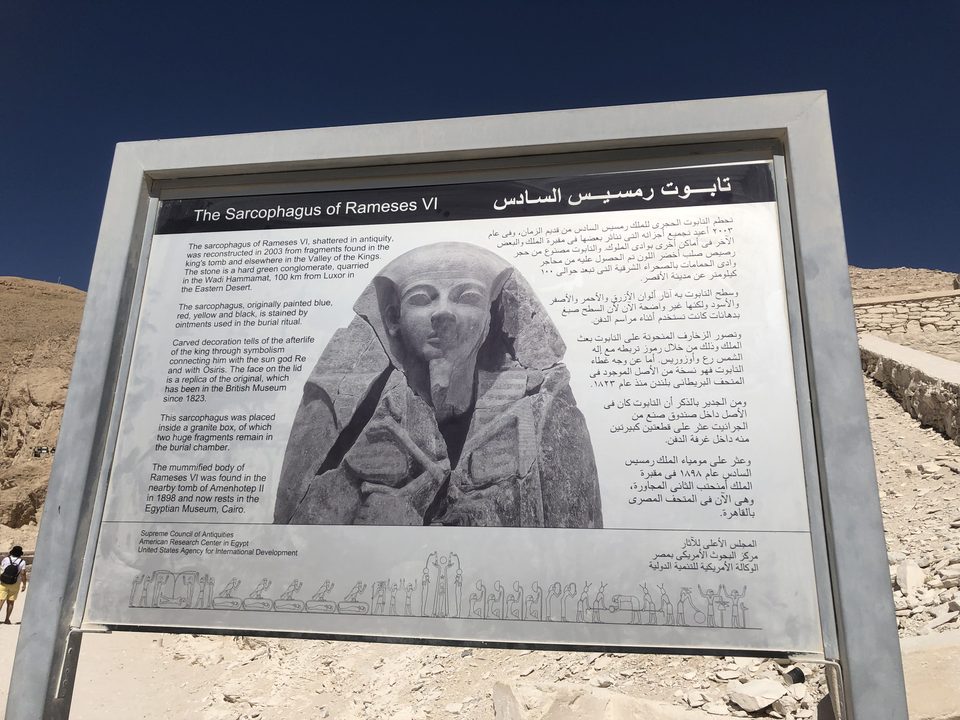
The chamber contains some of the tomb’s most dramatic religious imagery, including scenes from the Book of the Earth, which focuses on regeneration and resurrection. Here, the king was not merely dead. He was undergoing transformation, becoming one with Osiris, lord of the underworld, and preparing for eternal rebirth.
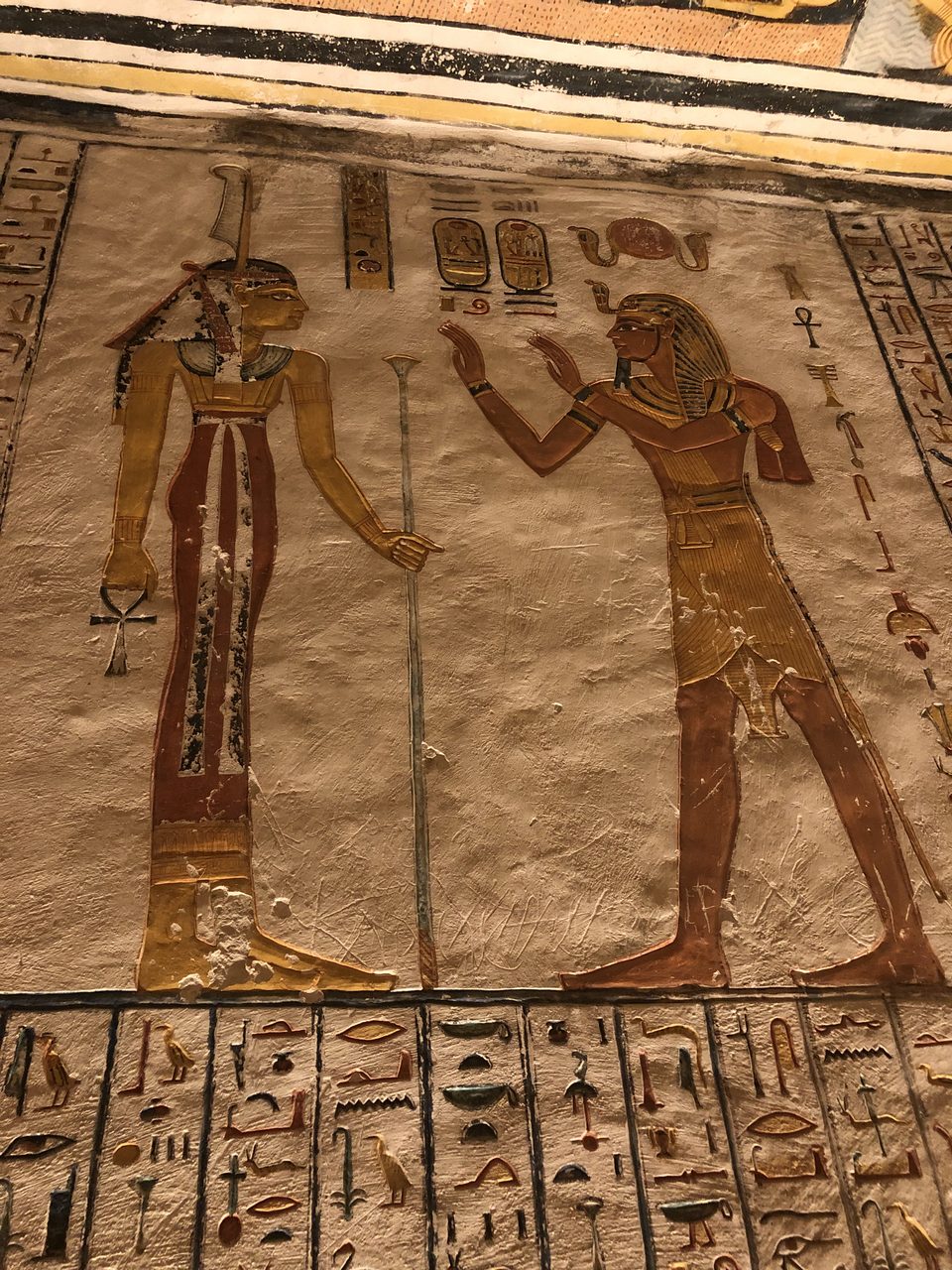
Even today, the atmosphere is haunting. The silence, the towering pillars, and the vivid colours create an impression that the sacred rituals of ancient Egypt have only just ended. Visitors often describe the chamber as one of the most awe-inspiring spaces in the entire Valley of the Kings.
The Tomb That Protected Tutankhamun
One of the most intriguing facts about KV9 is that it may have helped preserve the greatest archaeological discovery of all time. During the construction and use of the tomb, workers built huts and dumped rubble near its entrance. Over time, these deposits covered the entrance to the nearby tomb of Tutankhamun.
As a result, thieves largely overlooked Tutankhamun’s burial, allowing it to remain hidden until Howard Carter uncovered it in 1922. In an extraordinary twist of fate, the construction of one pharaoh’s tomb helped protect another pharaoh’s treasures for over three thousand years.
A Masterpiece of Ancient Egypt
Today, KV9 is often regarded as one of the most beautiful tombs in Egypt. Its dazzling colours, extensive religious texts, and magnificent astronomical ceilings provide an unparalleled glimpse into the spiritual world of the ancient Egyptians. Unlike many royal tombs, where decoration is damaged or incomplete, KV9 remains astonishingly vivid, allowing modern visitors to experience something remarkably close to what ancient priests and royal family members would have seen.
More than three millennia after the death of Ramesses VI, the tomb continues to inspire wonder. It is not simply a place of burial, but a journey through mythology, astronomy, religion, and royal ambition. Hidden beneath the desert mountains of Luxor, KV9 remains one of the greatest masterpieces of the ancient world, a monument where stone walls still whisper stories of gods, stars, and eternity.
 Users Today : 30
 Users This Month : 569
 Users This Year : 28357
 Total Users : 53658
 Views This Year : 34574
 Total views : 69752
 Who's Online : 0